
I’ve printed enough posters to know that choosing the right size makes or breaks your design. The seven most common standard wall poster sizes are 8.5×11, 11×17, 16×20, 18×24, 22×28, 24×36, and 27×40 inches. I always start with 11×17 for handouts and compact spaces, but 18×24 works well for campus events. When I need serious impact, I go straight to 24×36, the professional favorite for effective results. Each size connects to ANSI standards, so framing stays simple and affordable. The right poster size depends on your wall dimensions and budget constraints.
What Makes a Poster Size “Standard”?
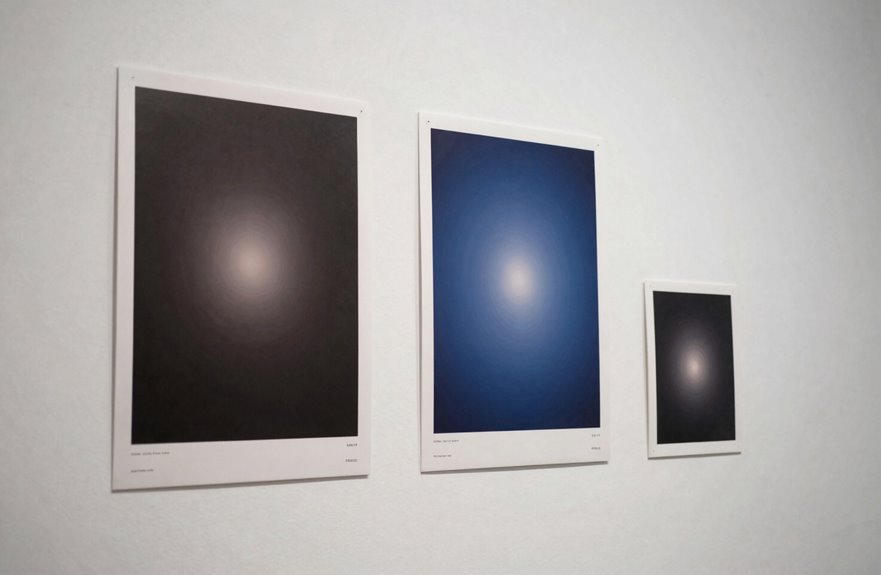
So what exactly turns a random rectangle of paper into a “standard” poster size? These poster sizes connect us to a shared visual language everyone recognizes.
Standard poster sizes connect us to a shared visual language everyone recognizes.
When designing, you’ll find that 11×17, 18×24, 24×36, and even 27×40 aren’t random numbers pulled from thin air. They’re the result of decades of printing workflow optimization and ANSI/Tabloid heritage that keeps everything running smoothly. Standard sizing ensures consistency in your typography.
The 24×36 size dominates professional campaigns because it’s visible, cost-effective, and frames are widely available. Meanwhile, 27×40 carries the authentic movie magic many designers seek.
The practical benefit is clear: framing becomes effortless, and your imagery fits without awkward cropping. Standards allow everyone to speak the same creative language.
Small Sizes: 8.5×11 and 11×17 for Tight Spaces
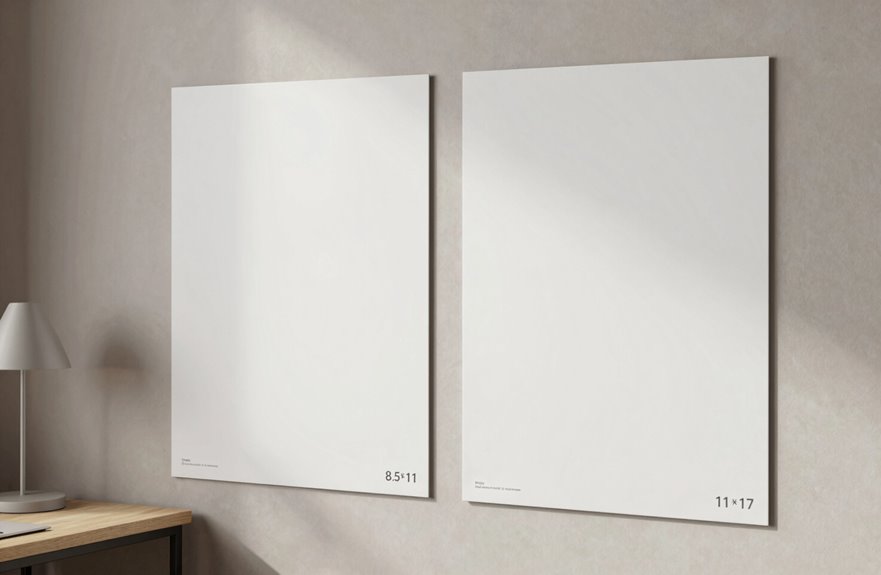
Where do you turn when your wall space is practically nonexistent? The 8.5×11 and 11×17 are standard sizes that work well for tight spots.
The 8.5×11 (it’s letter paper size) works well for bulletin boards. These small posters fit near cash registers and perform effectively. Keep designs simple with one strong visual element for maximum impact without clutter.
The 11×17 offers more creative flexibility. It has enough space for a grid layout with bold headlines and graphics. These are ideal for theatre promos and handouts.
These compact posters offer clear advantages: they’re portable, cost-effective to print in bulk, and suitable for front-and-center indoor promotions in crowded spaces. Both sizes deserve a place in your promotional toolkit.
Medium Sizes: 16×20 and 18×24 All-Purpose Picks

I want to show you why 16×20 and 18×24 posters are my go-to picks when I need something bigger than a flyer but not billboard-huge. The 16×20 gives you this sweet spot where you can fit a bold headline and a detailed image without things feeling cramped, and I’ve used it for everything from coffee shop menus to small gallery shows. When I really need to turn heads, like for a campus event or a street-facing promotion, I grab the 18×24 because that extra space lets your graphics breathe and people can actually read it from across the room.
16×20 Versatility Highlights
Why do we keep coming back to 16×20 and 18×24 posters? These sizes occupy the ideal middle ground between cramped and overwhelming layouts.
The 16×20 format provides sufficient space for composition. You can include a bold headline, supporting text, and a strong image without visual competition. The 2:3-ish ratio naturally directs viewer attention to your focal point, and the layout balance requires minimal adjustment. No design expertise is necessary.
For indoor promotions, this size performs reliably. It remains readable from across a room while maintaining appropriate scale for wall displays. Whether printing event posters or gallery pieces, 16×20 delivers the versatility required for diverse applications.
18×24 Visibility Advantages
How do we grab attention without going overboard? The 18×24 poster size offers an effective solution for wall displays.
This poster size hits that sweet spot. It’s large enough to command notice but won’t dominate your space or budget. The 18×24 format extends viewing distance compared to smaller options, giving your headline readability a significant advantage. Your text stays crisp, your images pop, and legibility shines even from across the room.
Planning an event or indoor promotion? This cost-effective choice handles detailed product shots beautifully. The 18×24 format works for everything from concert flyers to retail displays, and the visibility consistently performs well. You don’t need giant formats to make an impact; you need the right size.
Large Sizes: 22×28 and 24×36 for Distance Viewing
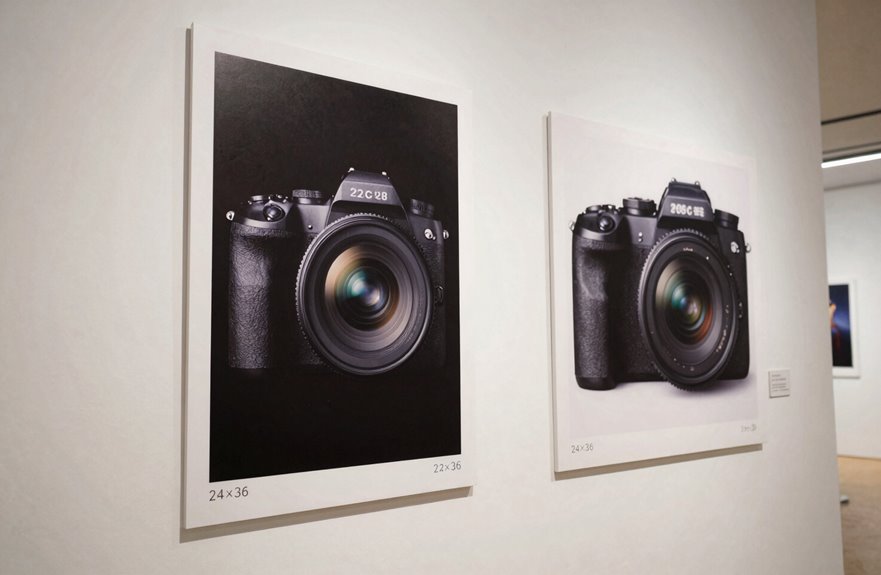
When you’re designing for people who’ll see your poster from across a room or even across a mall, you need to think big, and that’s where the 22×28 and 24×36 formats really shine. These sizes solve distance viewing requirements by ensuring your text remains legible rather than becoming a blurry blob. The most effective visual impact strategies center on bold fonts and high contrast. Whether you’re promoting a concert or dressing up a storefront, the 24×36 format delivers maximum visual impact without excessive printing costs.
Distance Viewing Requirements
Where exactly do you need your poster to display from? You want people to see your message clearly, not struggle to read it.
For serious distance viewing, 24×36 or 22×28 are optimal choices. These large-format poster sizes work best when viewers stand several feet away. The 24×36 offers that classic 2:3 ratio, and 22×28 delivers impact in tighter spaces.
Wall campaigns fail when viewing distance gets overlooked. Readability drops significantly without bold headlines and high-contrast visuals. Strip out dense text and allow images to have proper spacing. Both sizes balance impact with practicality for retail, events, or galleries.
Match your poster size to your space, and your message becomes readable from across the room.
Visual Impact Strategies
You’ve got these gorgeous 22×28 and 24×36 sizes in your hands, and I want to show you how to make them absolutely pop from across the room. When we’re talking poster viewing distance, these large poster sizes are your best friends. The 24×36 dimensions are the sweet spot everyone loves, super visible but won’t break your budget. The 22×28 dimensions work perfectly for event posters and gallery walls where people are walking by.
Here’s the strategy table:
| Element | What to Do | Why It Works |
|---|---|---|
| Bold headlines | Make them huge and simple | Grabs eyes from far away |
| High-contrast imagery | Light vs. dark, not muddy | Stays clear at any distance |
| Visual hierarchy | One main thing first | Brains process it faster |
| Minimal text | 5-7 words max | Legibility at distance stays sharp |
Nail these wall display formats and your message will reach your audience effectively.
Extra-Large Sizes: 28×40 and 36×48 for Maximum Impact
Why settle for something that blends into the background when you can choose a larger format. Extra-large wall poster sizes transform boring spaces into impressive displays.
Why fade into the background when you can command the room?
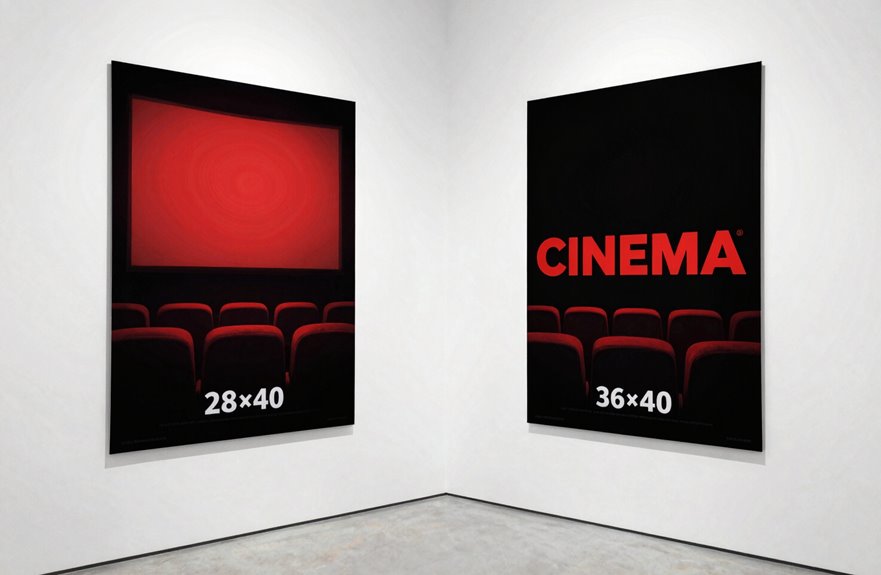
The 28×40 inch option hits that sweet spot. You get serious large format presence without logistical complications. This size works well when you want oversized posters that actually fit through doorways.
The 36×48 size delivers maximum impact. This format works best for advertising posters in high-traffic areas where visibility matters. Poster framing costs increase at this size and you’ll need substantial display space, but the visual presence justifies the investment.
Between 28×40 and 36×48, you’re choosing boldness. Your walls will benefit from upgrading beyond basic sizes to formats that command attention.
Choosing by Space, Distance, and Content Type
How do I know which poster size actually fits my space? I start with display planning and grab my tape measure. I check my wall space and think about where people will stand. For cozy corners and close-up reading, 11×17 or 18×24 sizes work well for bedrooms and small nooks where friends gather to chat. For big impact in hallways or living rooms, 24×36 or classic 27×40 movie posters are ideal choices. Viewing distance significantly affects poster effectiveness. Readability improves with strong visual hierarchy and typography contrast; use bolder designs for large prints and simpler designs for small ones. Match your poster sizes to your content type to create a cohesive space.
Standard Poster Sizes: Finish and Price Comparison
Four standard sizes dominate the wall poster world: 11 x 17, 18 x 24, 24 x 36, and 27 x 40 inches. These dimensions are the go-to standard sizes for wall posters that work effectively.
Finish and price comparison:
| Size | Glossy Finish Starting Price |
|---|---|
| 11 x 17 | $9.59 |
| 24 x 36 | $28.79 |
| 27 x 40 | $35.19 |
The 11 x 17 size remains affordable and portable for smaller spaces. The 24 x 36 offers the best balance between visual impact and cost. Glossy finishes enhance color vibrancy, and using these standard dimensions prevents unexpected cropping issues during printing.