I’ve got ten tricks that’ll make your skinny room feel spacious. First, place a bold focal point, like a 55-inch Samsung Frame TV, on that far end wall painted Hale Navy, while keeping your long walls soft white like Chantilly Lace. Run your sofa and chairs down the center on an 8-by-10-foot rug, not hugging the walls, and pick low-profile pieces around 28–32 inches tall with exposed legs. Mount curtain rods 8–12 inches above windows and stretch them 6–10 inches past the sides, then hang a 24×36-inch frameless mirror on each long wall to bounce light everywhere. Layer your lighting with wall sconces spaced 6–8 feet apart, hide clutter in slim storage, and stick to just three connected colors so your eye flows freely. The next tip explains why tiny rugs compromise the spaciousness you’ve just created.
Position a Focal Point at the Far End to Shorten Your Long Narrow Room
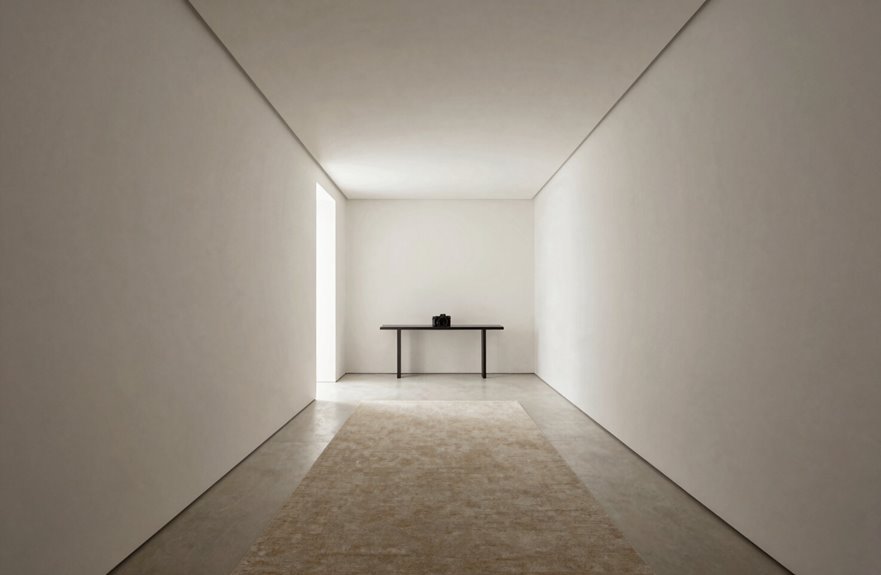
How do you stop a long narrow room from feeling like a bowling alley? I place a focal point at the far end, and the space feels wider than it actually is.
I mount a 55-inch Samsung Frame TV or install a sleek electric fireplace on that back wall. This creates a visual “stop sign” that pulls my eye forward instead of letting it race down endless length. I paint the side walls Benjamin Moore’s “Chantilly Lace” white, but I go bold with “Hale Navy” on that far end wall. The contrast tricks my brain into perceiving more room width.
I arrange my seating, maybe a 72-inch sofa and two 30-inch armchairs, to face that focal point directly. I add an 8-by-10-foot rug aligned the same way. One anchor point, not three or four competing ones, keeps circulation calm and makes the space function as a cohesive room.

【Extra Long for Sectionals】At 110.2 inches long and only 5.9 inches wide, this extra long console table fits oversized sectional sofas with ease. Perfect for families who need space for drinks, tablets, books, remotes, gaming devices, and everyday essentials behind the couch
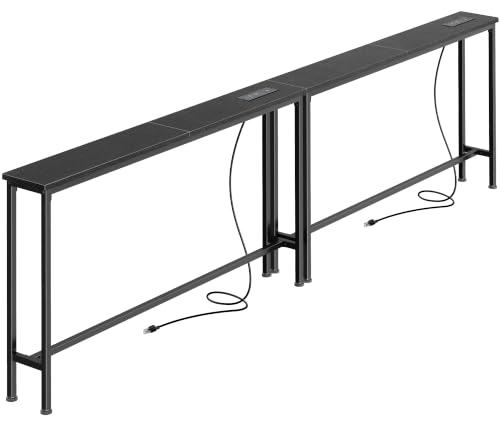
Note: Total Length: 86.6 inches — Made by combining two 43.3-inch sofa tables.

【Dual-Zone Extendable Length】Whether you have a compact apartment sectional or a sprawling living room layout, this table grows with you. Smoothly glide it between 86.8" to 97.8" (220.5-248.5cm) for standard 3-seat couches, or expand it from 98.8" to 110.5" (251-280.6cm) for large sectionals to get a perfect, custom-built look. It eliminates the guesswork of buying furniture, giving you ultimate flexibility if you ever relocate or upgrade your couch.
Run Furniture Along a Central Pathway: Not Pushed Against Walls
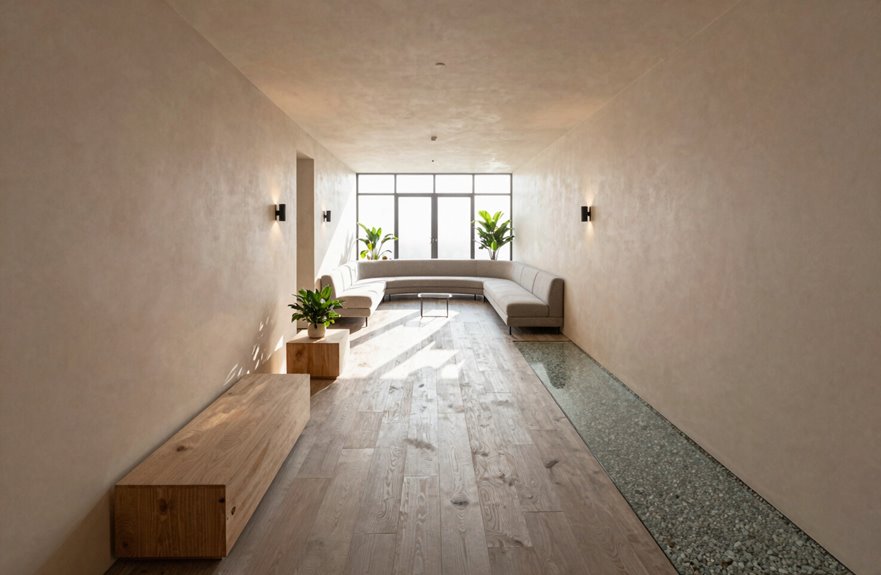
Once I’ve got that focal point locked in, I’m ready to tackle the furniture layout. Most people push their seating against walls, which is a mistake.
I’ll run my sofa and seating along a central axis right down the room’s middle, not hugging those side walls. A 2.5-by-8-foot runner rug ties it all together and guides my feet from door to TV. I’ll line up chairs and ottomans on that same line, keeping everything continuous. Wall placement matters. I’m leaving a few inches between furniture and walls so light and air flow through. Bulky barriers block sightlines and make rooms feel cramped.
| Do This | Skip This | Why It Works |
|---|---|---|
| Center your sofa | Push sofa to wall | Creates breathing room. |
| Add 8-inch gaps | Flush wall placement | Light travels farther. |
| Use narrow 3-foot rug | Wide short rug | Guides eye lengthwise. |
| Align chairs on axis | Random angles | Feels intentional and calm. |
| Low built-ins | Tall bookcases | Frames without blocking. |
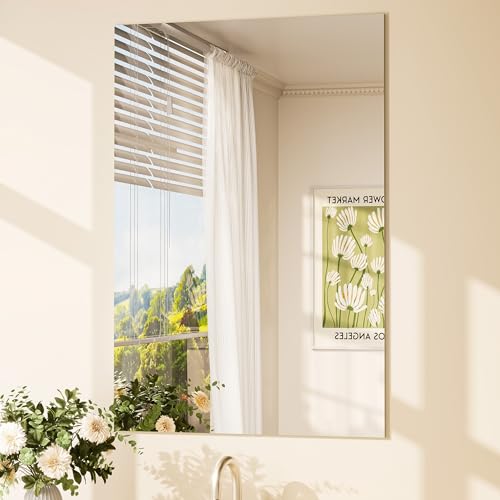
Durable Tempered Glass: TETOTE frameless mirror is made of 4mm impact-resistant tempered glass, this mirror is waterproof and moisture-proof, built to last for years while maintaining its flawless look.

Note: For enhanced durability, our frameless mirror has been upgraded 4 MM tempered glass and reinforced support bars, load-bearing hanging tested to ensure stability and safety Tip: For optimal reflection, we recommend hanging the mirror on the wall. Ensure it's mounted evenly during installation

True 1:1 Reflection & Clarity: Experience flawless, distortion-free reflection with this 24x36 mirror, crafted from premium float glass. Unlike ordinary mirrors, it resists blackening and oxidation for lasting, crystal-clear clarity that stays true over time
Pick Slim-Profile Pieces That Float Off Narrow Walls
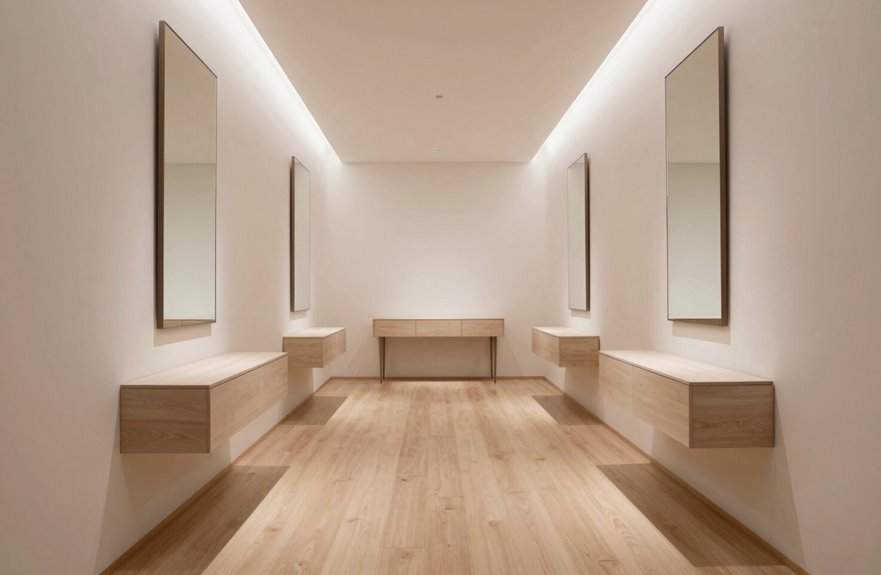
I keep my furniture low to the ground when working with tight walls. Consider IKEA’s KIVIK sofa at just 32 inches high or a sleek velvet bench with minimal bulk to block sightlines. Exposed legs are essential here. I’ll pick a mid-century coffee table on hairpin legs that shows 4-6 inches of floor underneath. Skip the chunky armchairs that eat your walkways and grab pieces that practically float. Your room will feel noticeably more spacious with this approach.
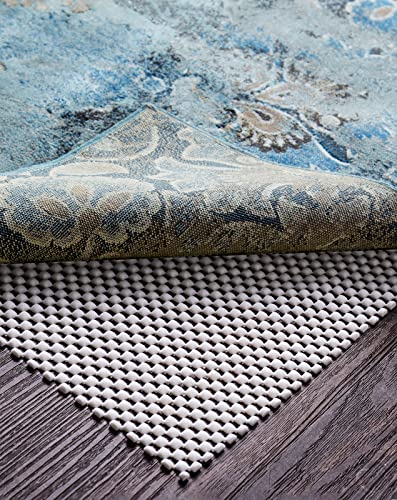
Non-slip Protection: Our pad's signature grip keeps rugs securely in place, preventing bunching and sliding during daily use. It also protects your floors from wear and tear, including damage from high heels, children at play, and more.
Non-slip Protection: Our pad's signature grip keeps rugs securely in place, preventing bunching and sliding during daily use. It also protects your floors from wear and tear, including damage from high heels, children at play, and more.

Machine Washable: The Vintage runner rug is lightweight and easy to remove and throw in the washing machine for cleaning! Suitable for families with frequent gatherings, multiple pets, children. Stains can be removed with a small handheld vacuum, broom or rag
Choose Low-Profile Furniture
The right furniture can transform a cramped, tunnel-like room into something that feels more spacious. Low-profile and slender-profile pieces work best throughout.
Here’s what actually works:
- Pick a sofa that’s only 28 inches tall so your eye travels over it
- Grab a console table just 12 inches deep; measure it carefully
- Mount storage on walls instead of letting it consume your floor
- Choose armless chairs that tuck away when you need space
- Hunt for pieces with clean lines and no chunky trim
In my own hallway-turned-living-room, I discovered this through experience. After swapping my bulky sectional for a low-profile loveseat, the entire space felt noticeably larger. The difference in how the room functions is substantial.
Prioritize Leggy Designs
Low-profile furniture gets you halfway there, but the real magic happens when you let pieces breathe off the floor. I’m talking about leggy furniture that practically floats.
Look for slim profiles everywhere: narrow console tables (aim for 12 inches deep max), armless chairs, and sofas perched on delicate legs. A hairpin-leg coffee table or an ottoman on casters that you can roll wherever you need it works particularly well.
Keep seating chair-height and pull it away from those narrow walls. Suddenly your room stops feeling like a tunnel. Wall-mount your TV and swap chunky bookcases for open-backed storage. Those sightlines create measurable visual expansion.
Once you see that floor space shining through, the effect becomes obvious. Lightness equals width in a skinny room, and leggy pieces deliver both.
Zone Your Long Room With Properly Sized Rugs
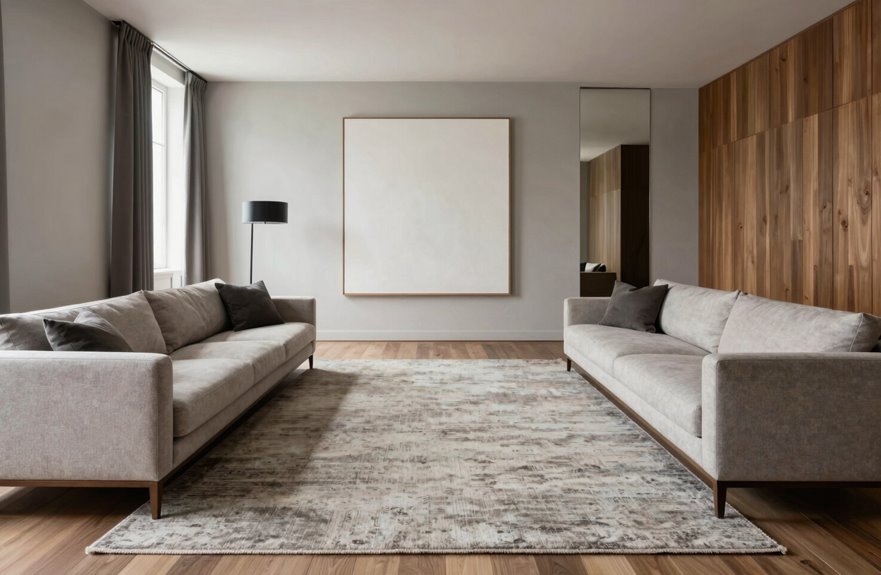
I’ve found that choosing proportionate rug sizes makes a significant difference in a skinny room. You can anchor furniture with placement by positioning front legs on the rug and back legs off, and define zones through layering without overwhelming the space. Understanding the specifics will help you move beyond guessing and start measuring accurately.

【Purchase Note】Short tension rod, adjustments range in size just 4 inches, be necessary to get correctly measurements and order the right size
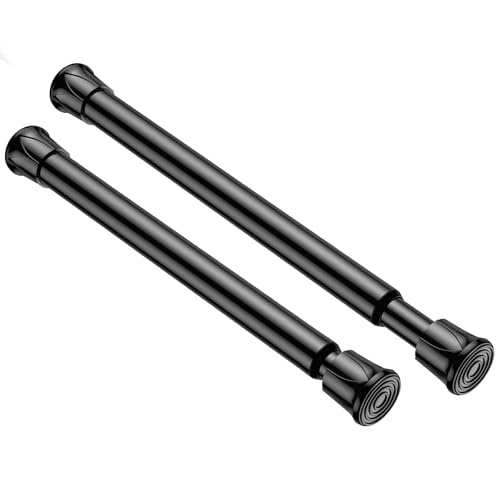
【Purchase Note】Short tension rod, adjustments range in size just 4 inches, be necessary to get correctly measurements and order the right size

【No-Rust and Non-Slip material 】Shower Curtain Rod is made of premium stainless steel, waterproof and rust-proof,the end of the black shower curtain rod comes with two Non-Slip rubber pads that fit tightly against the wall to prevent the rod from slipping.
Choose Proportionate Rug Sizes
Wondering how to make your long room feel less like a bowling lane and more like an actual hangout spot? Getting your rug size and rug scale right changes everything.
Here’s what actually works:
- Pick a rug that’s at least 8×10 feet so all your couch legs fit on it. No floating furniture islands.
- Grab one big rug or two matching ones side by side to stretch across the width.
- Skip those tiny 3×5 scatter rugs. They make your space look choppy and uninviting.
- Try a wide 9×12 solid or horizontally striped rug to fake extra width.
- Layer a 5×7 patterned rug over a bigger natural jute base for cozy zones.
Go mid- to large-scale with patterns, and place horizontal designs at the far end. Your room will feel much more inviting.
Anchor Furniture With Placement
Once you’ve got your rug size figured out, the real magic happens when you actually put it down and arrange your furniture around it. I anchor my seating group with a large area rug that extends 6–12 inches past my sofa and chairs. This creates a cozy zone that breaks up the room’s length.
Make sure those front legs stay on the rug. Floating furniture feels disconnected. I learned this the hard way with my IKEA KIVIK sofa. Pick a solid color or horizontal stripe pattern that matches your walls, and you’ll instantly create the illusion of width. One rug is plenty here. Competing patterns will make your narrow space feel claustrophobic instead of calm. You’re building your room’s foundation, so take your time and get that placement right.
Define Zones Through Layering
How do you stop a long living room from feeling like a bowling alley? Break it into cozy zones using rugs.
Here’s my game plan:
- Pick a 5×7 or 8×10 rug for each seating group; don’t let it stretch wall-to-wall.
- Angle your sofa and chairs toward a focal point like a fireplace or TV to build horizontal sightlines.
- Layer a smaller patterned rug (like Safavieh’s Moroccan shag) over a neutral jute base for texture that defines transitions.
- Keep rugs 12-18 inches from walls so the floor breathes around the edges.
- Choose flat-weave cotton or low-pile wool near busy walkways for clean traffic flow.
Wall decor pulls eyes upward while rugs do the heavy lifting below. This approach creates intimate spaces where everyone feels welcome instead of navigating a bowling alley.
Hang Mirrors on Long Walls to Push Them Outward Visually
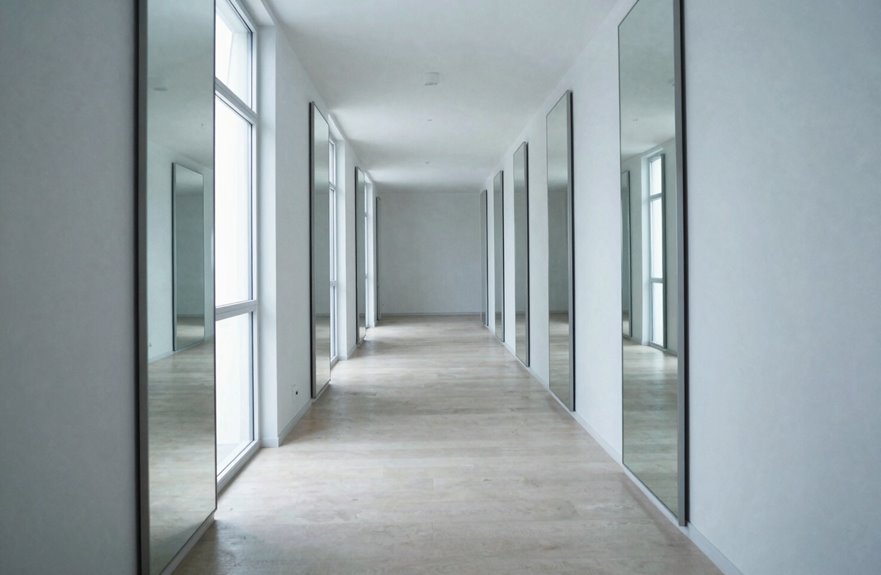
Why let those long walls feel like they’re closing in on you? I hang mirrors on long walls to make them practically disappear.
Here’s what I do: I grab a 24-by-36-inch frameless mirror from IKEA’s LOTS series and position it opposite or right beside a window. Instant daylight bounces everywhere. For bigger impact, I’ll mount a 6-foot floor mirror like the HOVET ($99) vertically to push that wall outward visually.
Want to get fancy? I stagger three smaller 12-inch round mirrors from Target’s Project 62 along the wall, creating a reflective path that tricks your eyes into seeing width. I always pick slim frames. Nothing chunky breaks the line.
Your room will feel significantly bigger.

Dimmable Wall Sconces Set of 2: The wall sconce come with a dimmer knob switch on the backplate, just rotate it to turn on/off light and adjust light brightness level 0-100% with a recommended bulb.

MODERN DESIGN. ASD Indoor LED wall sconce combines contemporary style with comfortable, even illumination. The wide 215° beam angle spreads light across the wall with minimal glare, while the durable, rust- and impact-resistant housing provides reliable everyday performance.

【Pulley Wall Lamp Design】: The design of pulleys is so perfect classic style. Traditional country style,so durable, you can freed adjust you light height in your house .It's a special great design, it's perfect for Dining room, Kitchen, Bed room, farmhous,and more.
Paint Long Walls Light and Short Walls Darker to Add Depth
I love this trick because it’s like magic for your eyes. You’ll paint those long side walls in a soft white like Benjamin Moore’s “Chantilly Lace” and then hit the short end walls with a cozy navy like Behr’s “Starless Night.” Suddenly your 10-by-20-foot room feels wider than it actually is. Just keep your ceiling and trim in that same light shade so everything flows, and maybe add a cream-colored rug so the dark walls don’t swallow you whole. I’ve tried this in my own hallway and the space felt noticeably different.

Note: Total Length: 78.8 inches — Made by combining two 39.4-inch sofa tables.

[Extra-Long Expandable Design for Larger Spaces]: Designed for bigger living areas, this upgraded sofa table features an extended adjustable range from 106" to 157", making it ideal for long sectional sofas, large couches, or open-concept spaces. The stepless sliding design allows you to customize the length effortlessly—no awkward gaps, no size limitations. Whether used as a sofa table, console table, or behind couch table, it delivers a seamless, built-in look that perfectly complements oversized furniture and spacious layouts.

Note: Total Length: 78.8 inches — Made by combining two 39.4-inch sofa tables.
Optical Illusion Technique
When I first tried this paint trick in my own hallway-turned-living-room, I couldn’t believe how much wider the space felt. This color strategy creates a powerful optical illusion that transforms cramped spaces into inviting retreats where people naturally gather.
To implement this technique in your home:
- Paint long walls in soft whites like Benjamin Moore’s “Chantilly Lace” and short walls in deep navy or charcoal
- Keep ceilings 2-3 shades lighter than long walls to stretch height upward
- Drench door frames and baseboards in your darker shade to push walls back visually
- Add a warm accent wall at the far end using “Accessible Beige” to draw eyes sideways
- Maintain flow by limiting your palette to 3 connected hues throughout
The spatial expansion from this approach is measurable and immediate.
Color Contrast Strategy
How do you make a skinny room feel like it actually breathes? I’ve got a color contrast trick that completely changed my hallway.
Paint those long walls a soft white like “Swiss Coffee” by Behr to bounce light around. Hit those short end walls with a deep navy or charcoal. This creates an instant focal point that pulls your eye sideways instead of forward, and suddenly the room feels wider. Test big 2-foot swatches first because morning light and evening lamps change everything.
Keep the undertones friendly so nothing clashes, and try darker trim against those light walls for extra pop without heaviness. This approach works because the darker end walls visually compress the distance between them, making the room feel proportionally wider.
Use Layered Lighting to Widen Shadows and Reduce Tunnel Effect
Banish that gloomy tunnel feeling with layered lighting that stretches your walls wide. This approach transforms your narrow room into a more inviting space.
- Mix ambient, task, and accent lights at different heights to build depth that pushes walls apart
- Install wall sconces like the Philips myLiving Hua (about $45 each) spaced 6-8 feet apart. This eliminates floor clutter while providing even, consistent glow
- Replace that single ceiling bulb with a semi-flush mount combined with 4-inch recessed lights instead
- Layer sheer curtains with strategically placed table lamps to bounce daylight throughout the room
- Spotlight cool features at each end, perhaps a gallery wall or vintage mantel, to pull eyes sideways
The results are measurable. Walls feel wider, the space feels more open, and the room becomes more functional and welcoming.

Modern Minimalist Frameless Design:Designed with clean polished edges and a sleek frameless appearance, this modern frameless bathroom mirror creates a bright and elegant focal point for bathrooms, powder rooms, entryways, and vanity spaces.
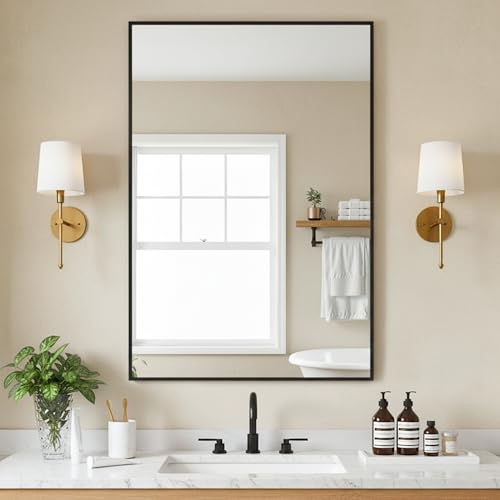
Mirror Measurement: Measuring 24x36 inches, this bathroom mirror is perfect for decorating your bathroom or any space you want to enhance, meeting your needs in a variety of scenarios and styles.

Sturdy Glass: The arched bathroom mirror made of tempered glass will not distort the image at any angle. Most importantly, the improved glass is sturdy and not easily broken into sharp fragments
Mount Curtains High and Wide to Stretch Narrow Walls
Curtains are functional design elements that dramatically transform wall perception. This technique consistently delivers results in compact spaces.
Mount your curtain rod 8-12 inches above the window frame. This positioning draws the eye upward and creates the visual effect of taller, wider walls. Extend the rod 6-10 inches past each side of the window to maximize this effect. The Umbra Twilight Double Curtain Rod (28-48 inches, about $35) works well for this application.
Select full-length curtains that kiss the floor or pool slightly. This adds vertical dimension without reducing perceived width. Light neutrals like ivory or soft gray work best; heavy patterns visually compress narrow rooms.
When you hang the curtains back, more wall becomes visible, creating horizontal expansion. The room will feel significantly more open and spacious.

Machine Washable: Keep your rug fresh with ease! Simply vacuum regularly, or for a deeper clean, toss it in the machine.

Ultra Soft & Non-slip: Featuring a shaggy carpet surface, the Ophanie soft area rug is highly soft with a high-density sponge interlayer. This rug effectively reduces shedding, and the non-slip bottom with small, durable anti-slip dots enhances friction to prevent sliding.

Machine Washable: The Vintage runner rug is lightweight and easy to remove and throw in the washing machine for cleaning! Suitable for families with frequent gatherings, multiple pets, children. Stains can be removed with a small handheld vacuum, broom or rag
Maximize Vertical Storage in Tight, Narrow Rooms
When you’re working with a long narrow room, going UP is your superpower. Vertical storage lets you claim every inch without stealing precious floor space.
Here’s how to make it work:
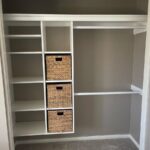
- Grab a 12-inch-wide Billy bookcase from IKEA and stack it tall. Your stuff lives UP, not OUT.
- Mount floating shelves at staggered heights (try 18, 48, and 72 inches) so you’re not tripping over anything.
- Pick tall storage with built-in drawers and cubbies. Everything gets a home, and piles won’t form.
- Slide a pocket door in front of your shelving so walkways stay totally clear.
- Choose white or pale wood finishes with tiny knobs. Your eye keeps moving, and the room feels more spacious.
Tall storage maximizes your usable space in confined areas.

The adjustment distance of the rod is small, so make sure to measure your area first and don't forget the overlap space

【Purchase Note】Short tension rod, adjustments range in size just 12 inches, be necessary to get correctly measurements and order the right size

The adjustment distance of the rod is small, so make sure to measure your area first and don't forget the overlap space
Conceal Clutter to Keep Your Narrow Room Feeling Open
Because clutter has this sneaky way of making a long narrow room feel like a closed-in hallway, I’m obsessed with hiding it. Concealing clutter isn’t about being perfect; it’s about being smart.
I grab tall bookcases like the IKEA BILLY (15¾” deep, 79½” tall) to draw eyes up and save precious floor space. Then I hunt for storage ottomans and coffee tables with hidden compartments. Dual function is essential. I skip bulky sideboards and choose slim pieces instead.
I tuck cords into cable boxes and stash remotes in drawer organizers. Every few months, I edit my decor, rotating favorites and storing the rest. This keeps my long room’s sightline clean and open. You’ll notice the difference when the clutter disappears.

Simple and Modern: The delicately designed LED wall sconce adds a finishing touch to your home's existing decor.

Dimmable Wall Sconce Plug in: The wall sconce come with a dimmer knob switch on the backplate, Simple rotating the knob to turn on/off light and adjust light to your preference brightness level 0-100% with a recommended bulb(Bulb Not included)

EASY TO INSTALL- The package of this Industrial wall mount lamp includes everything to set up properly(Need Assemble)(No Wall Plug in Cord).