These ideas run from a painted chair planter you finish in an afternoon to a paver patio that asks more of your budget and your back, and the one that fits you depends on whether you own the yard or answer to a landlord.
Renters lean toward portable fire bowls, container succulents, and artificial turf you roll back up at move-out; first-home owners can grade for drainage and plant Knock Out roses where they will stay.
1. Paver Patio
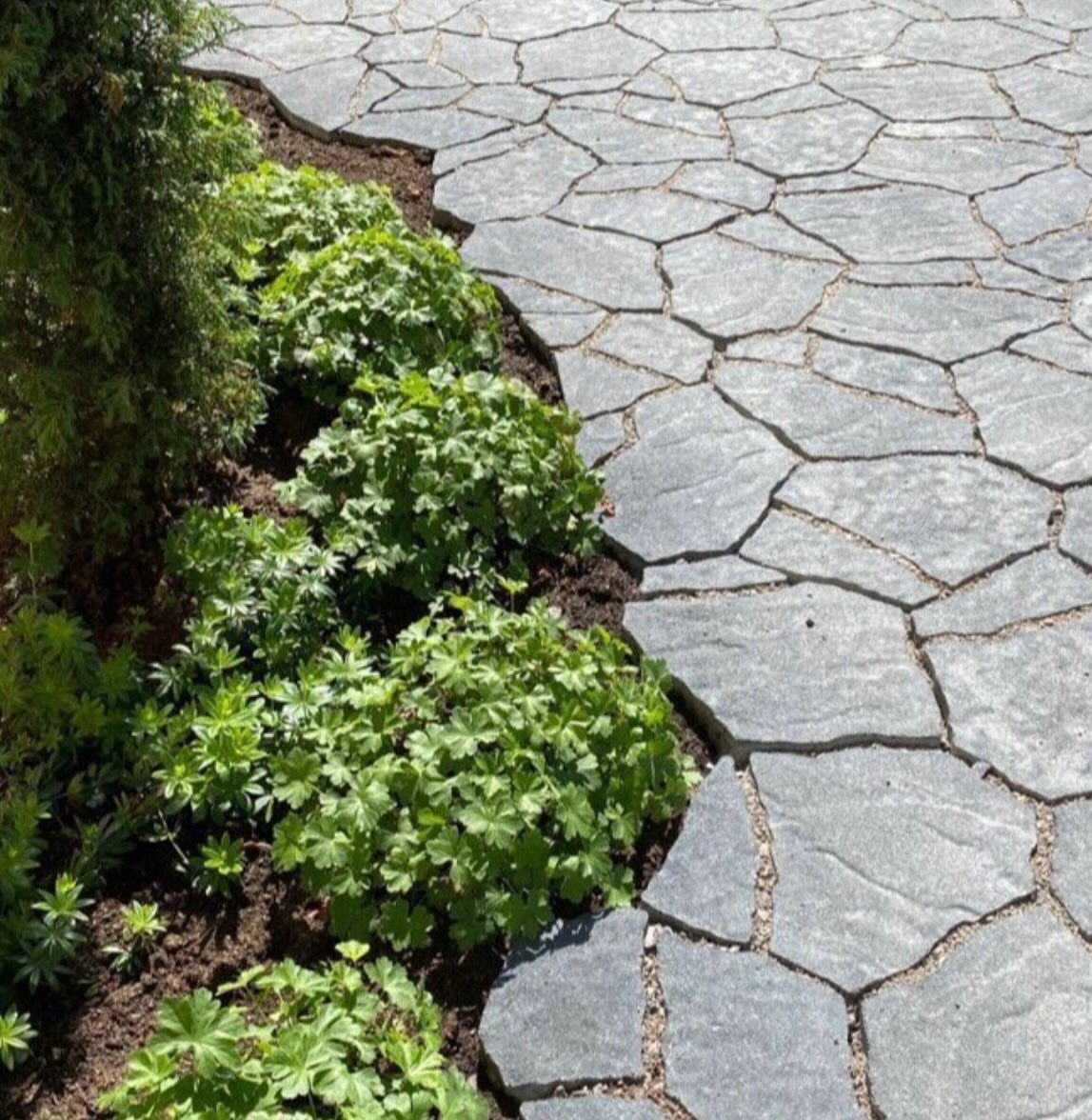
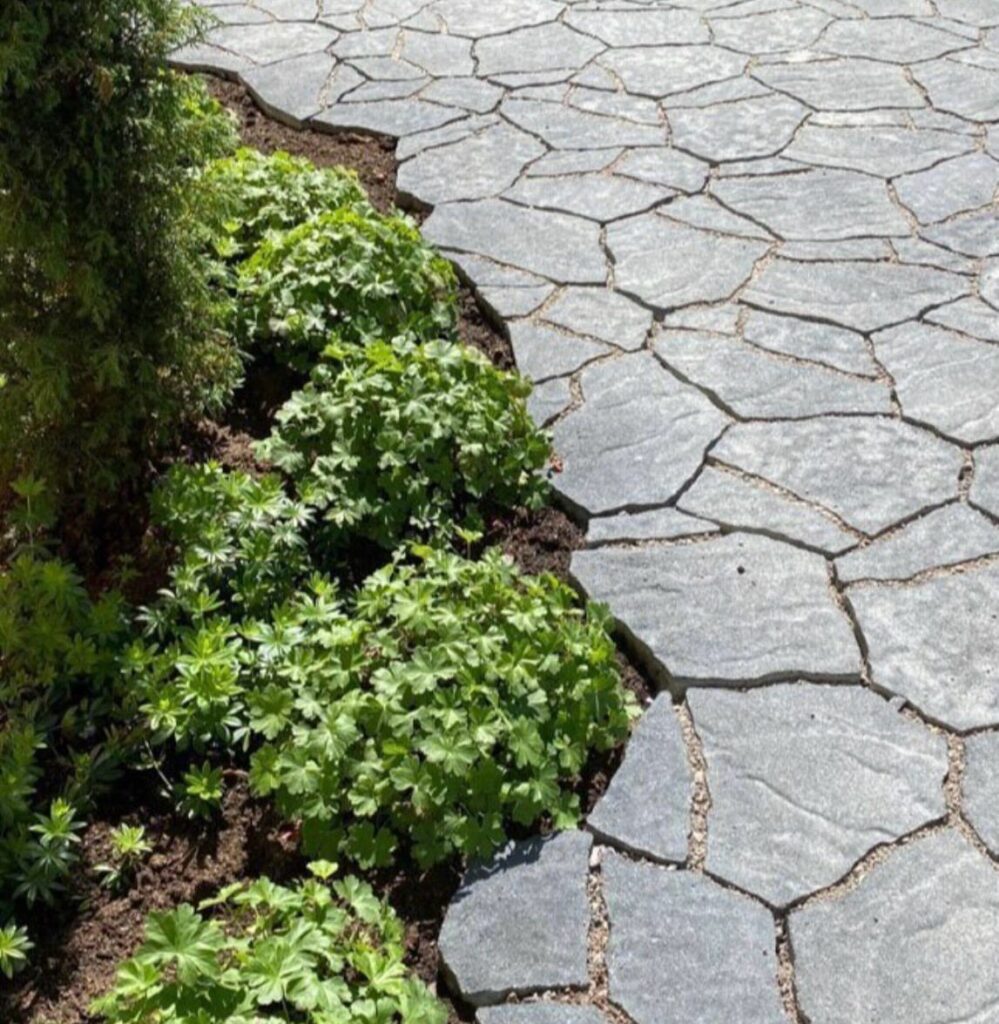
A paver patio gives you solid ground for seating or a grill without pouring concrete. Flagstone laid in irregular shapes hides uneven ground better than uniform squares.
Check your slope before you start.
Water needs somewhere to go, and a patio that traps it turns slick in months. I usually grade the surface away from the house so water runs off, then lay pavers on a compacted base with sand between.
Soil meeting stone without a raised border tells me the installer skipped plastic or metal edging; that works on flat ground with tight joints, but on clay soil or any slope, the pavers wander.

PERFECT FOR WINTER FIRE - Great for the family and entertaining or just to sit and to relax during a cold winter night. 22-inch little fire pit is super suitable for a small backyard. Surround it with your family and friends, you will definitely feel considerable warmth from it.

Fun Moments Around the Campfire: If you want to create a welcoming atmosphere in your backyard for gatherings where you can enjoy delicious marshmallows and endless conversations together with your family and friends, the Gas One portable fire pit for camping is the ideal solution!

Fun Moments Around the Campfire: If you want to create a welcoming atmosphere in your backyard for gatherings where you can enjoy delicious marshmallows and endless conversations together with your family and friends, the Gas One portable fire pit for camping is the ideal solution!
2. Select Fewer Plants

Nothing else competes for attention or water.
This approach suits renters and first-home owners because one weekend of planting stays manageable, and replacements cost little if something fails.
The white wall and pebble border read as deliberate, not sparse, because the shapes repeat. I would copy the rhythm exactly: same shrub, same spacing, same pebble width.
Where people go wrong is adding "just one more" plant for interest. Each addition doubles the maintenance math and breaks the calm this look depends on.

Made with Recycled Materials: A blend of recycled plastic, stone powder, and wood dust, PSW Pots are eye-catching and long-lasting for mindful gardening.

Quality material: This succulent planter pot is made of ceramic which is durable and will not fade. The glazed ceramic planter pot is both beautiful and artist.
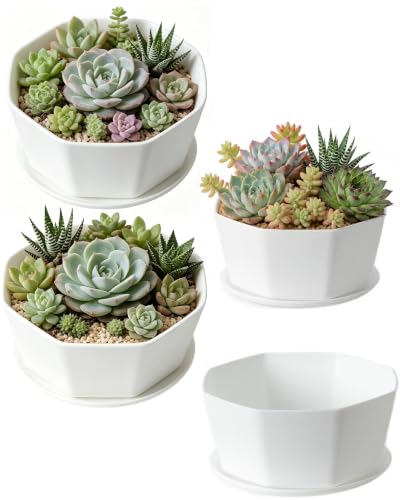
Size & Dimension: 5.9" Upper Diameter, 4.7" Lower diameter, 2.6" Height. Perfect for smaller bonsais or bigger succulents
3. Plant Hardy Succulents
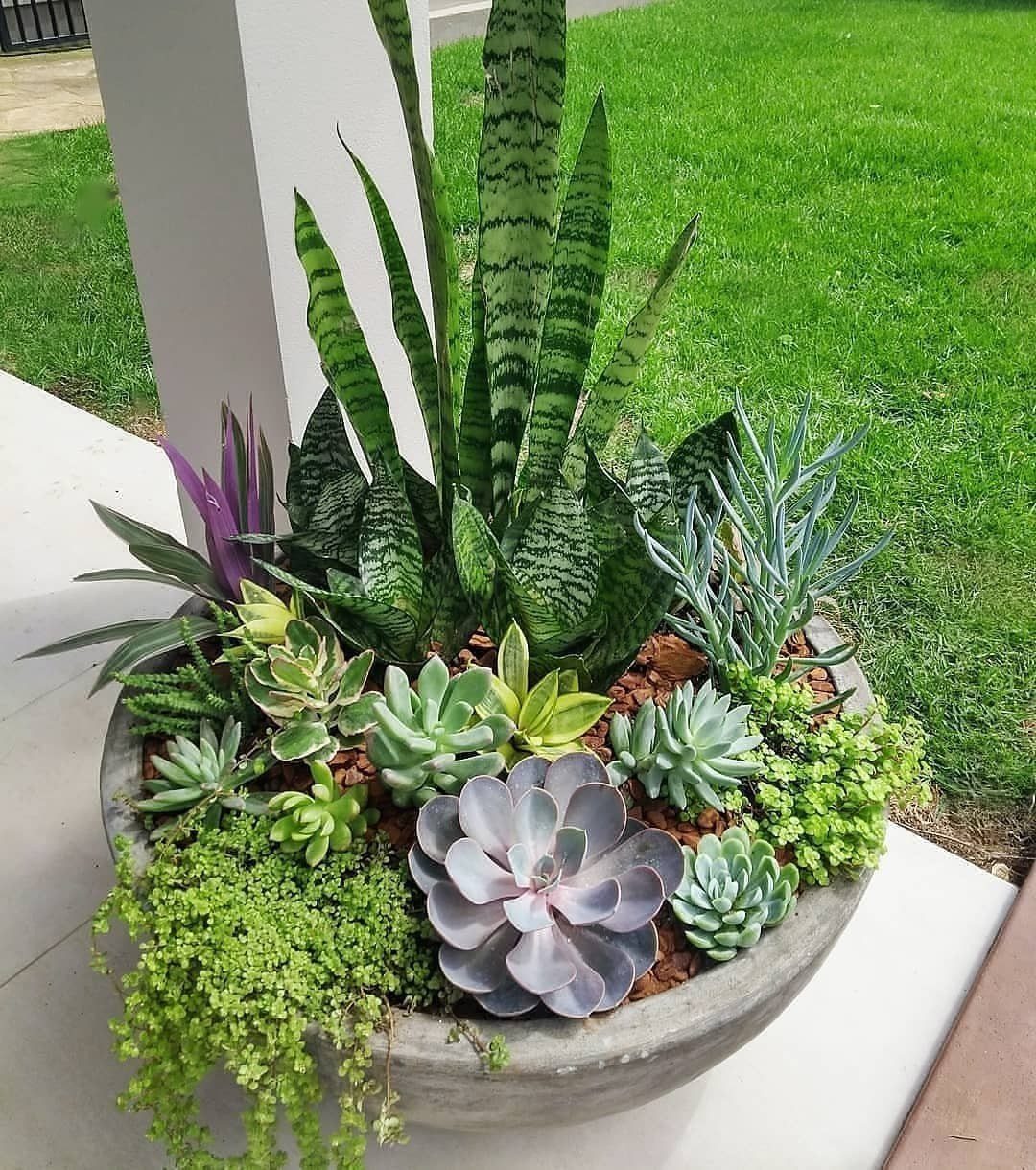
A shallow concrete bowl packed with snake plants, rosettes, and trailing greens turns a patio corner into something finished without soil prep or a watering schedule.
Succulents in a container this size need fast-draining mix, not garden soil, or the roots rot in wet seasons.
I buy cactus mix by the bag rather than amending what I have; the small cost difference removes the guesswork. The visible bowl sits on hardscape, so drainage holes matter more than ground planting.
Without them, winter rain sits and the cold finishes what the moisture started. This is the setup I recommend for anyone who travels weekends or forgets to water.

APPLICATION: Set of 6 reusable flagstone molds for concrete, cement. Easy to use to create beautiful flagstone pavers, stone pavers, garden path stones, stepping stones, pathway, garden walkway, backyard path. Molds are made of durable plastic which allows you to use the molds over and over.

Sold 5 pieces (FOTO 2) multiple molds for making Pavement Stone
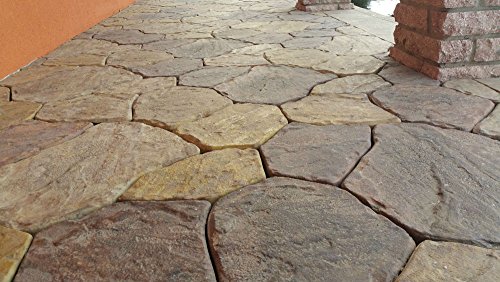
Sold Set 6 pieces ( FOTO 2 ) multiple molds for making Pavement Stone
4. Knock Out Roses
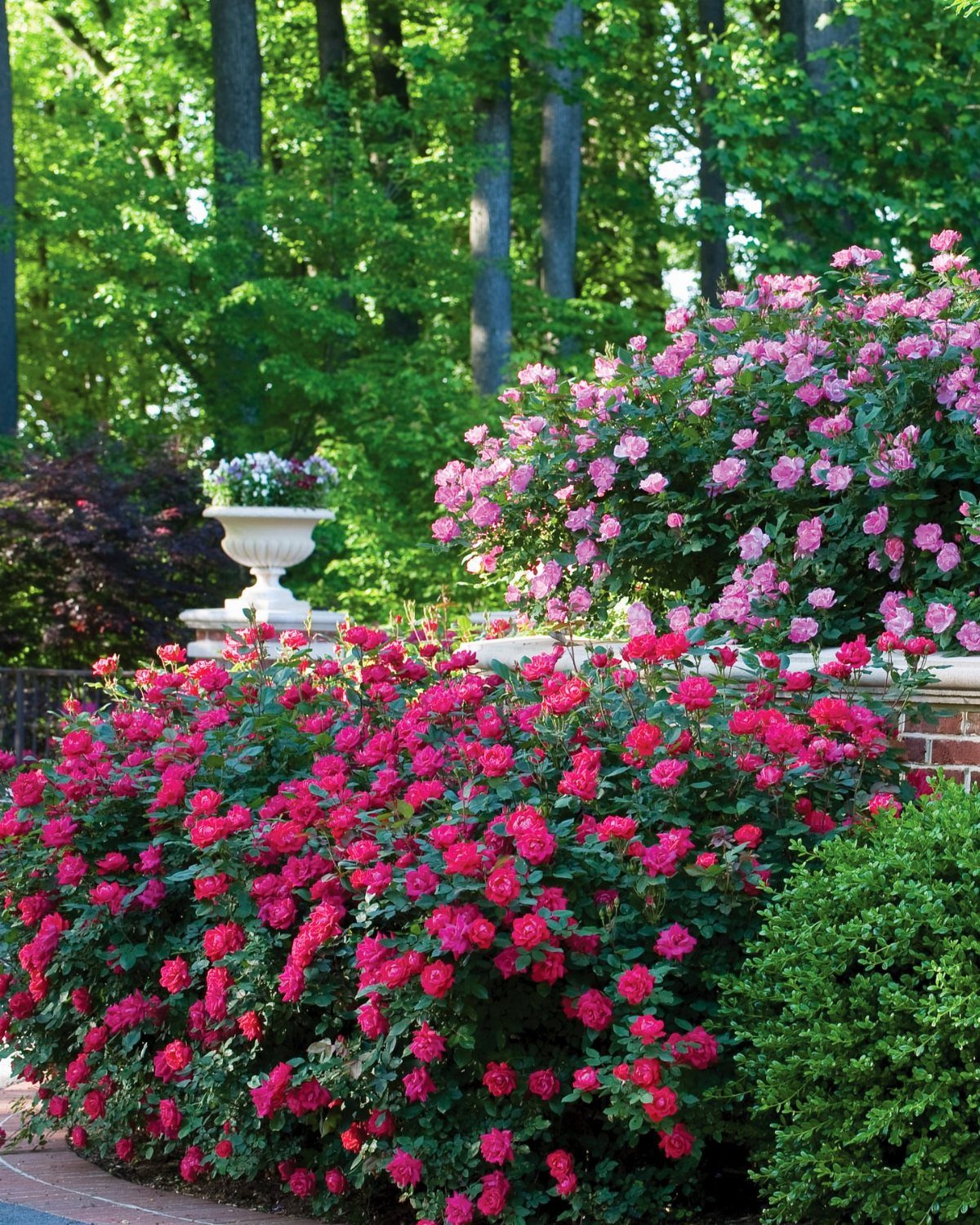
Knock Out roses bloom from spring through frost without the spraying and deadheading that older varieties demand. The magenta and pink bushes against that brick wall are likely the original variety; Radrazz, the trade name, stays the most widely sold.
Plant them where they get full sun and air moves freely. Crowding against a wall works if you leave enough room from foundation to stem center; less space than that and mildew finds the stagnant air.
I skip the fertilizer push in late summer; new growth then rarely hardens before frost. A single spring feeding with slow-release granular is enough for the bloom cycle these give.
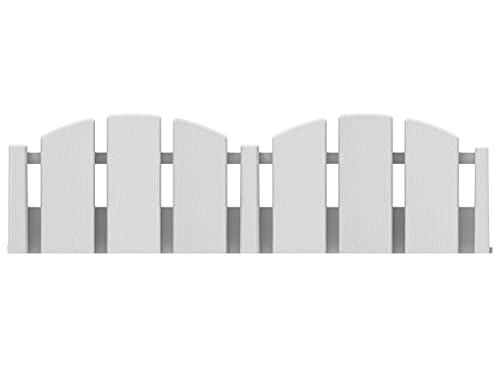
EASYFLEX DECORATIVE NO-DIG LANDSCAPE EDGING: Get a beautifully landscaped yard without all the work of a dig-in lawn edging; simple installation without trenches or shovels

Garden Fence Border Upgraded Material : Our garden fence borders are made of upgraded 100% new resin practical material, not blistering, no peeling, no corrosion, not deformed, high tenacity: No digger tool required, just simply push into soft ground. For harder ground, you need dig a trench first and keep it stable, then use a rubber mallet to secure the edging

【MIXC White Picket Garden Border】The 5-inch white picket-style border adds a clean decorative edge to flower beds, lawns, paths and garden areas. It helps create a more organized outdoor layout while giving your yard a simple, finished appearance.
5. Gravel Paths
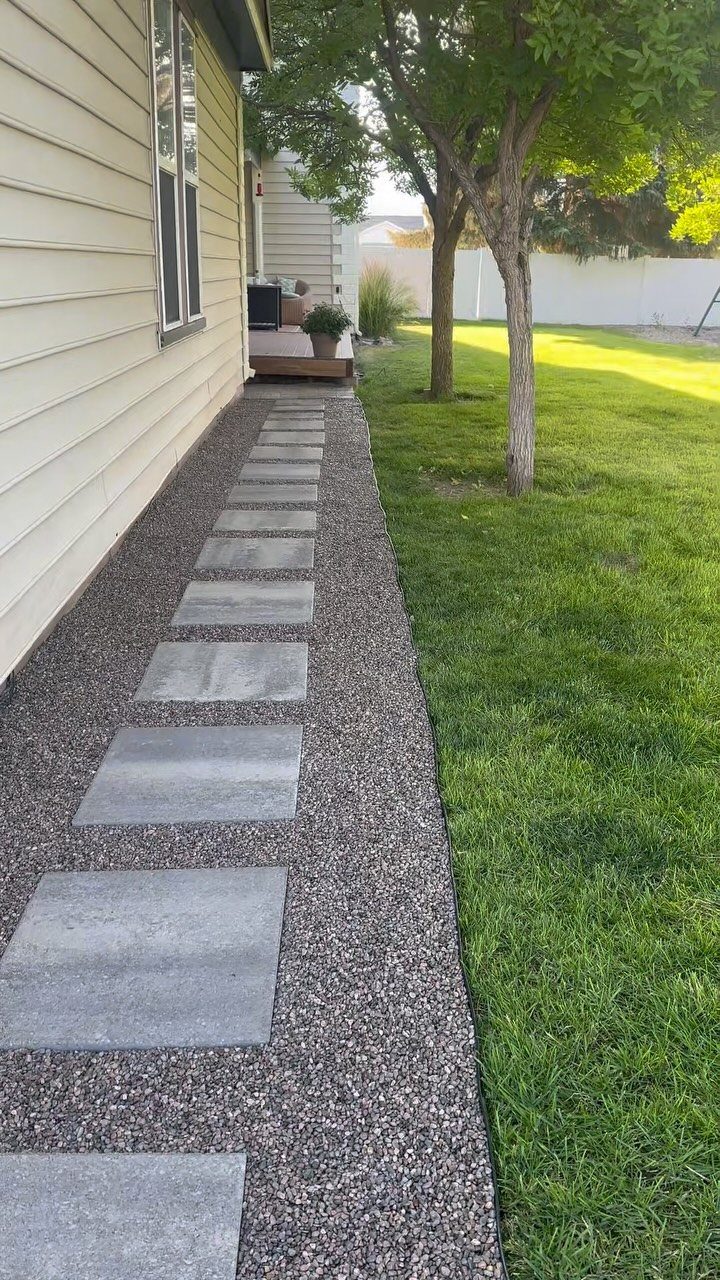
Gravel with rectangular stepping stones makes a path that drains, levels over roots, and goes in fast.
I would use crushed stone with angular edges rather than pea gravel; the pieces lock underfoot and do not scatter like marbles. The visible edging strip keeps the gravel from migrating into the lawn, and I would not skip it.
Dig out sod deep enough to remove the root layer, lay landscape fabric, then build up base gravel compacted with a hand tamper before the top layer.
The stepping stones sit slightly above, not flush; flush stones collect water and shift in freeze cycles.

Large, double pink blooms

Extending its blooming spectacle from early summer until late fall, the Double Knock Out Rose heightens the original Knock Out Rose's enchantment with doubled petals. With heightened fortitude, this cultivar requires minimal upkeep, flourishing thickly without needing pruning. Perfectly adaptable for containers or ground planting, it grows effortlessly.

Attention: California and Arizona residents cannot order this item due to state restrictions.
6. Ground Cover

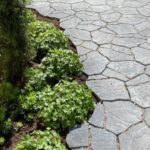
Dense green ground cover between flagstones and around a pond eliminates mowing in spots where turf struggles anyway.
The cat in this garden tells me the plants are nontoxic and soft enough for traffic. I like creeping thyme for sunny gaps and Irish moss for damp shade; both spread to fill without edging to contain them.
What the photo does not show is the first year of weeding. Ground cover wins later, but newly planted plugs leave soil exposed that weeds colonize fast.
I mulch between plants with fine bark for that season, then let the mat close over it. Once established, the maintenance drops to almost nothing.

GREAT FOR LARGE GATHERINGS: Built for backyard crowds, the wood-burning fire pit for patios seats 6 to 8 people comfortably around a generous wood fire. The outer ring measures 36 inches in diameter while the fire bowl itself is 31 inches in diameter and 11 inches deep, so logs sit low and the flames stay framed. The overall height of the wood fire pit is 24 inches with the spark screen on and 16 inches without, and at 23.8 pounds, one person can carry it across the yard by the outer ring.

MADE FOR COZY GATHERINGS: The 5" deep, 24" diameter bowl provides plenty of room for wood fires that bring 3 to 4 people together on the patio, in the yard, or at the campsite. Measuring 29" across the handles and standing 14" H, the 18.2 lb heavy-duty cast iron construction gives this metal fire pit a substantial, sturdy feel that stands apart from lighter-weight fire pits, while holding plenty of logs for big, warm fires and memorable nights with family and friends.

🔥【Portable Camping Propane Fire Pit】Our portable camping propane fire pit includes a carry kit for easy carrying. It is rainproof and rust-resistant, protecting the fire pit from various weather conditions.(⚠️ Not Heat Resistant lid: Do not place the lid on the fire pit while it is in use. Allow the fire pit to cool completely before covering it.)
7. Colorful Flower Beds
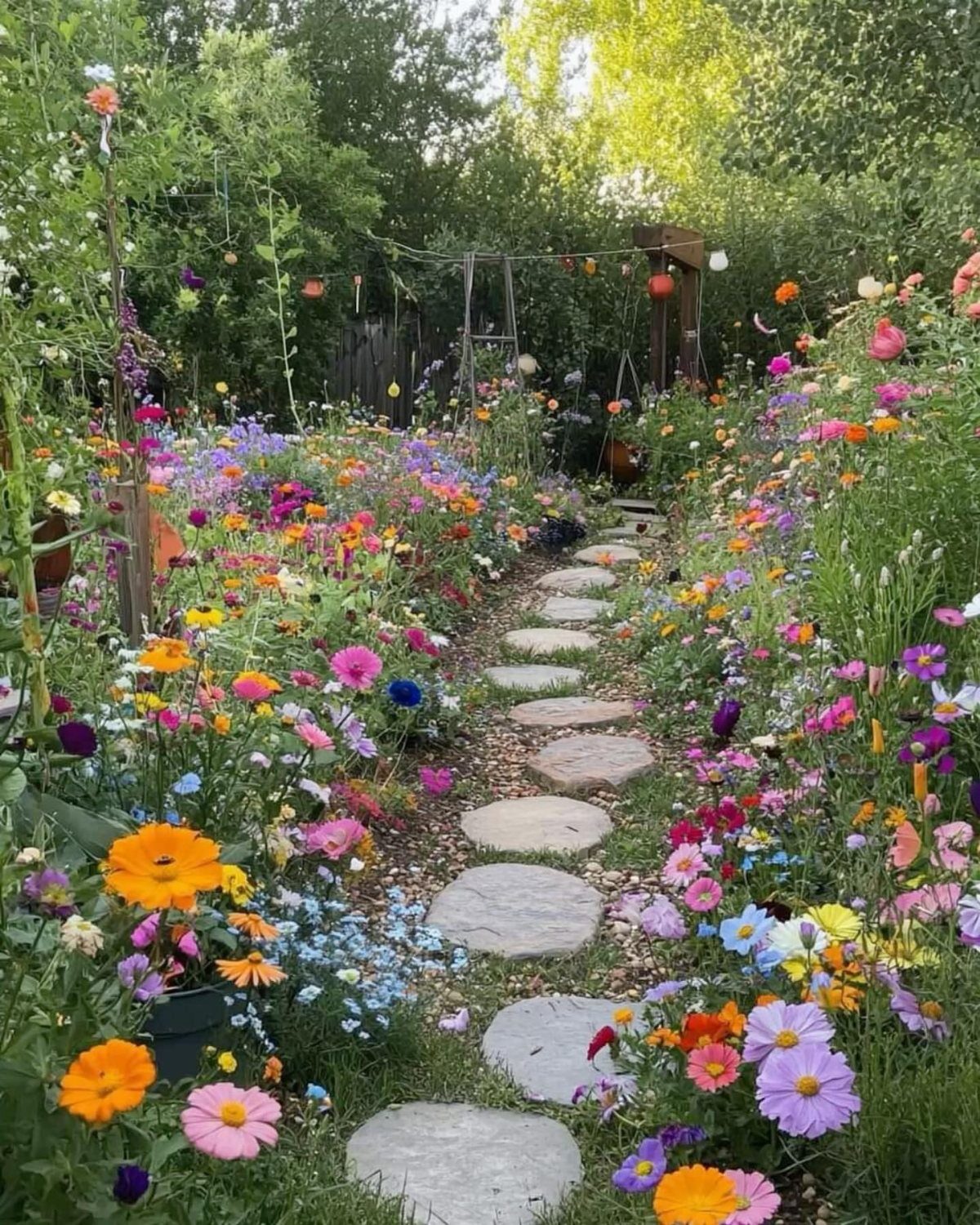
Colorful flower beds work best when the path gives you a place to stand while everything else grows in.
I would start with a narrow bed on each side of a stone path like this one; you reach both from the center without stepping into soil.
Annuals give the fastest color, but they need replanting. Perennials cost more up front and take a season to fill.
The gravel between flat stones drains well and stays level, which matters more than the stone type. Check your sun hours before buying plants; the label "full sun" means 6 hours minimum, and shade varieties in sun fry by July.
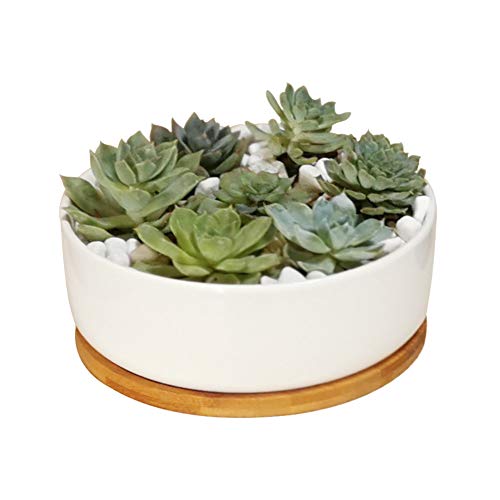
Perfect for displaying live 3 or 4 miniature plants such as succulents, herb and small cacti.

【Modern Succulent Pots】The modern ceramic succulent planter pot is made of rich ceramic by baking in high temperature, beautiful planter with smooth finishing, these succulent planter pots are durable enough for long use

Premium Materials: Crafted from high-quality clay and baked at high temperatures, our pots promote quick soil drying and optimal plant growth, drawing out excess water.
8. Decorative Mulch Around Garden Beds

Dark mulch around shrubs sharpens the edge between bed and lawn without any plant knowledge required.
I lay it a couple inches deep, never against stems; mulch piled on trunks traps moisture and rots bark. Straight lines against a driveway look fine too, but wobbly ones look accidental.
I would refresh mulch yearly in thin layers rather than letting it compact into a soggy mat. The visible bed sits next to pavement, so I would check that rain runs away from the garage foundation, not toward it.

Complete DIY Stepping Stone Mold Set – This all-in-one kit comes with 8 pieces of 11.8inch/30cm PP plastic concrete stepping stone molds (3.4cm height) and 2 pieces of flexible rock texture stamp molds. Different from pre-made rubber pavers, our mold set allows you to create custom-sized, personalized garden stepping stones from scratch, perfectly meeting your outdoor pathway paving and garden decoration needs.

🪨【Elevate Your Outdoor Oasis】Crafted from hand-picked, polished natural river rocks, these stepping stones add a touch of rustic charm and elegance to any landscape. The unique mosaic pattern creates a stunning visual contrast against green grass, making them a perfect decorative accent for your flower beds, vegetable garden, or patio.
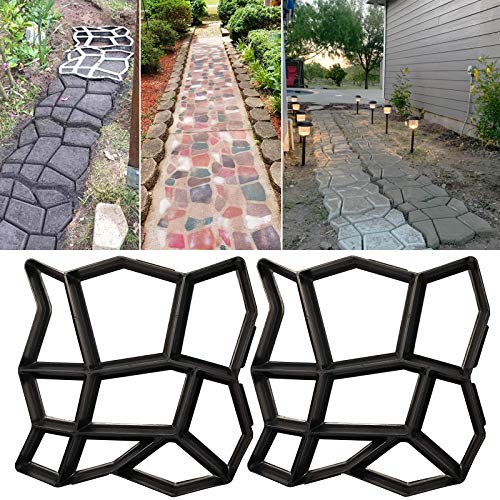
[DIY BOARD] This concrete Cement Board is design for DIY lovers, who want to decorate their garden road as they like, to give their pavement and yards some artistic sense.
9. Fire Pit

A metal fire bowl on gravel goes in over a weekend without masonry skills or a permit in most towns.
I would keep the gravel ring well back from any structure, and check local burn bans before I bought fuel.
Low stone-and-wood benches suit the scale of a bowl; a built-in pit calls for taller seating. I prefer crushed stone base under the gravel layer; it drains and does not shift like loose pea gravel.
Wood seats near flame need sealing yearly or they gray and splinter fast. This setup trades the permanence of a masonry pit for portability, which I would take if I rented or planned to rearrange the yard.

Stone-Look Decorative Landscape Edging: 2.75 inch tall rustic stone design complements any flower gardens and provide clean look for your gardens, flower beds, lawns, grass, raised garden beds, shrubbery, pathways, yard trees, ground pool, etc.

DIY GARDEN EDGING - This edging for landscaping is characterized by its exceptional flexibility. It facilitates the creation of arcs, ovals, circles, hearts, and various custom designs to complement your garden layout. This landscape edging is ideal for enhancing lawn borders, delineating flower beds, constructing planters.

EASYFLEX DECORATIVE NO-DIG LANDSCAPE EDGING: Get a beautifully landscaped yard without all the work of a dig-in lawn edging; simple installation without trenches or shovels; color may vary due to the unique manufacturing process.
10. Raised Beds

Raised beds on gravel keep planting soil out of the lawn and drainage away from the house foundation.
Wood frames sitting directly on stone work if the gravel layer is deep enough for drainage; I would use a thick compacted base.
Built-in lights are a nice touch I would skip unless I already owned the fixtures; solar path lights along the edge do almost the same job for less.
Metal arches and trellises need anchoring in the bed soil, not just leaning; wind lifts lightweight ones.
I would fill beds with a mix of topsoil and compost rather than garden soil alone; the structure holds better and roots spread faster.

The Orange Glow Knock Out Rose Bush produces brilliant orange blooms with hints of yellow and pink, adding warmth and vibrancy to any garden.
The Orange Glow Knock Out Rose Bush produces brilliant orange blooms with hints of yellow and pink, adding warmth and vibrancy to any garden.

This Plant will Ship in a fabric Grow Bag ( see pics ) - The plants are currently growing in a 1 Quart nursery pot However they will NOT ship in a plastic pot.
11. Climbing Flowering Vines
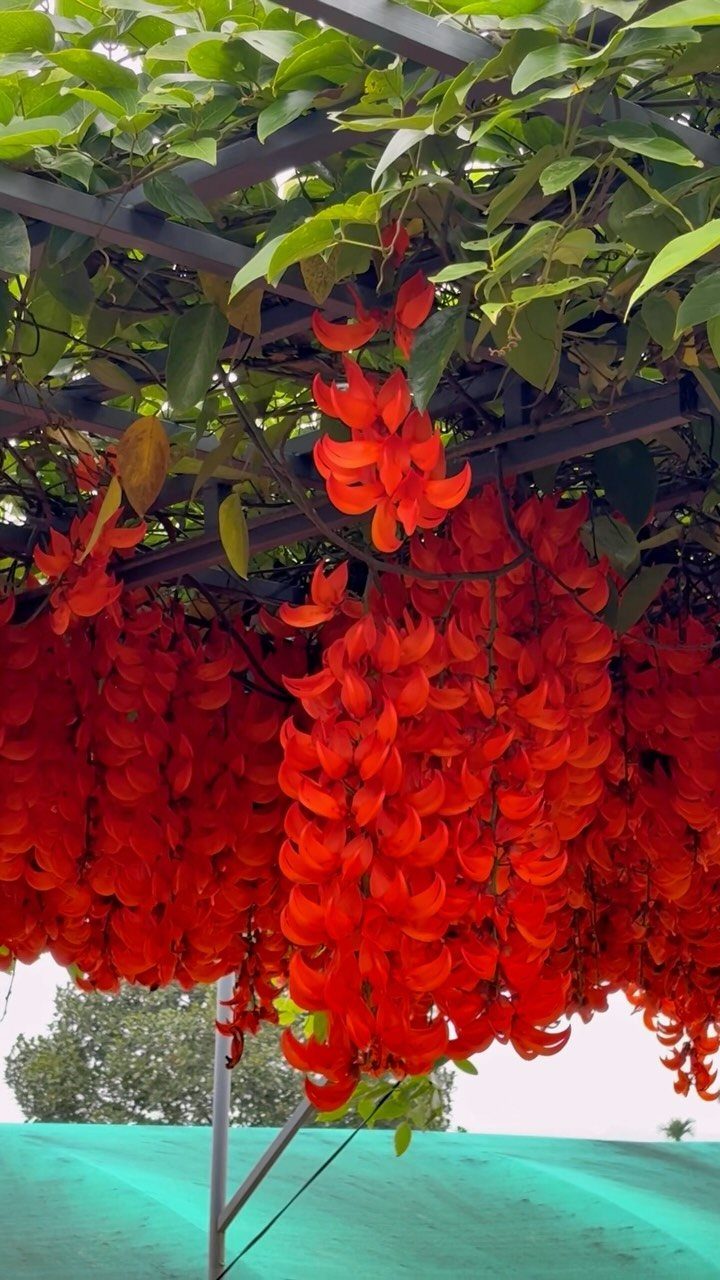
Climbing vines on a pergola roof turn a flat structure into something that flowers overhead.
Red-orange clusters are likely trumpet vine or a clematis hybrid; both want sun and something thin to wrap around. I would use galvanized wire or narrow wood lath rather than rope, which rots in 2 seasons.
A metal frame carries the weight better than wood once the vine matures; wet foliage gets heavy. I check the pergola posts are set in concrete, not just buried, because a mature vine in wind acts like a sail.
Pruning happens in late winter, before sap runs, and I would not skip it or the growth shades out its own blooms.
12. Go Ahead and Repeat Plants That Work

Repeating the same shrub across a bed costs less mental energy than designing a mixed border and usually looks calmer.
Rounded green forms read as rhythm because the spacing repeats, not because the plant itself is unusual. I would pick a native or a variety known to my local nursery; exotic specimens need more intervention than this look allows.
The spiky accents between rounds give contrast, but I would limit them to one type and keep the same count in each grouping.
Where people go wrong is mixing 3 shrubs and hoping they grow to the same size. They never do, and the asymmetry looks like neglect rather than intention.
13. Yard Seating

Curved wooden benches and stacked stone blocks give you seating that follows the yard’s shape without a carpenter’s bill.
I would set the stone blocks on the same compacted base used for the pavers nearby; uneven stones rock and tilt in a season if the ground beneath shifts.
The metal fire pit in the center wants its own gravel ring, kept clear of the wood seating by a safe margin that still lets heat dissipate.
Dark fence boards behind make the green read brighter, but I would check that stain for maintenance; some blacks fade to gray fast in full sun.
14. Ivy Walls
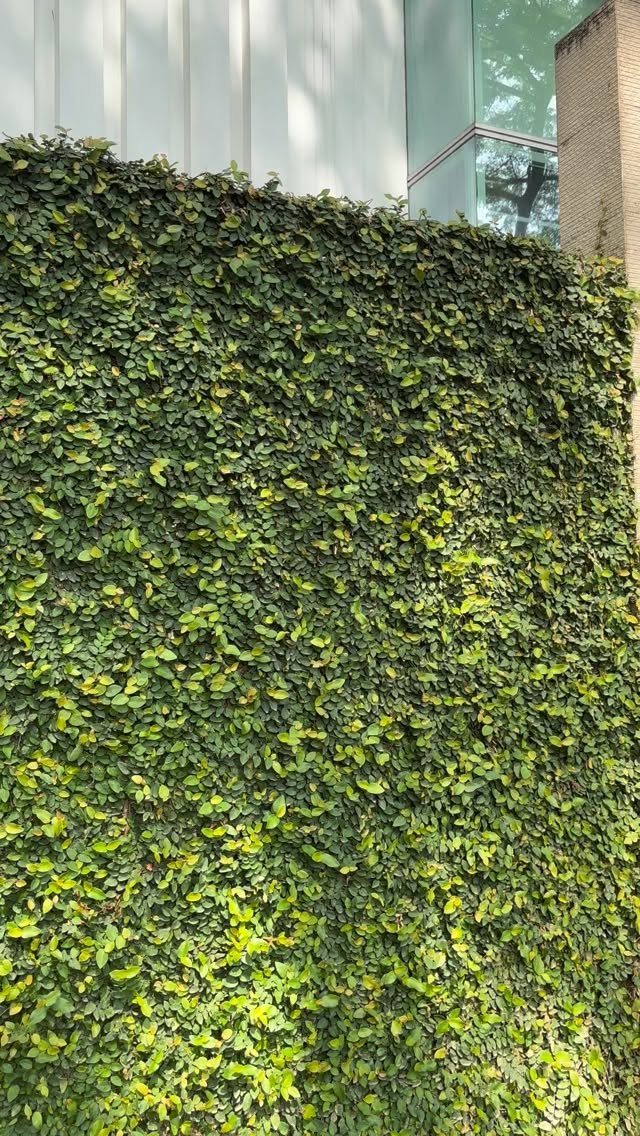
Creeping fig or ivy on a tall wall turns concrete into texture, though it needs patience and the right surface.
Stucco or rough masonry gives roots something to grip; smooth painted walls need a trellis or wire grid, or the vine slides down in rain.
I would check the wall faces south or east; north-facing ivy stays damp and invites the mildew you are trying to hide.
Growth this dense takes patience from small plugs, and pruning twice a year keeps it from invading gutters or window frames.
The glass building behind suggests a modern setting; traditional ivy suits that contrast, but I would skip it on historic brick where removal damages mortar.
15. Artificial Turf Lawn
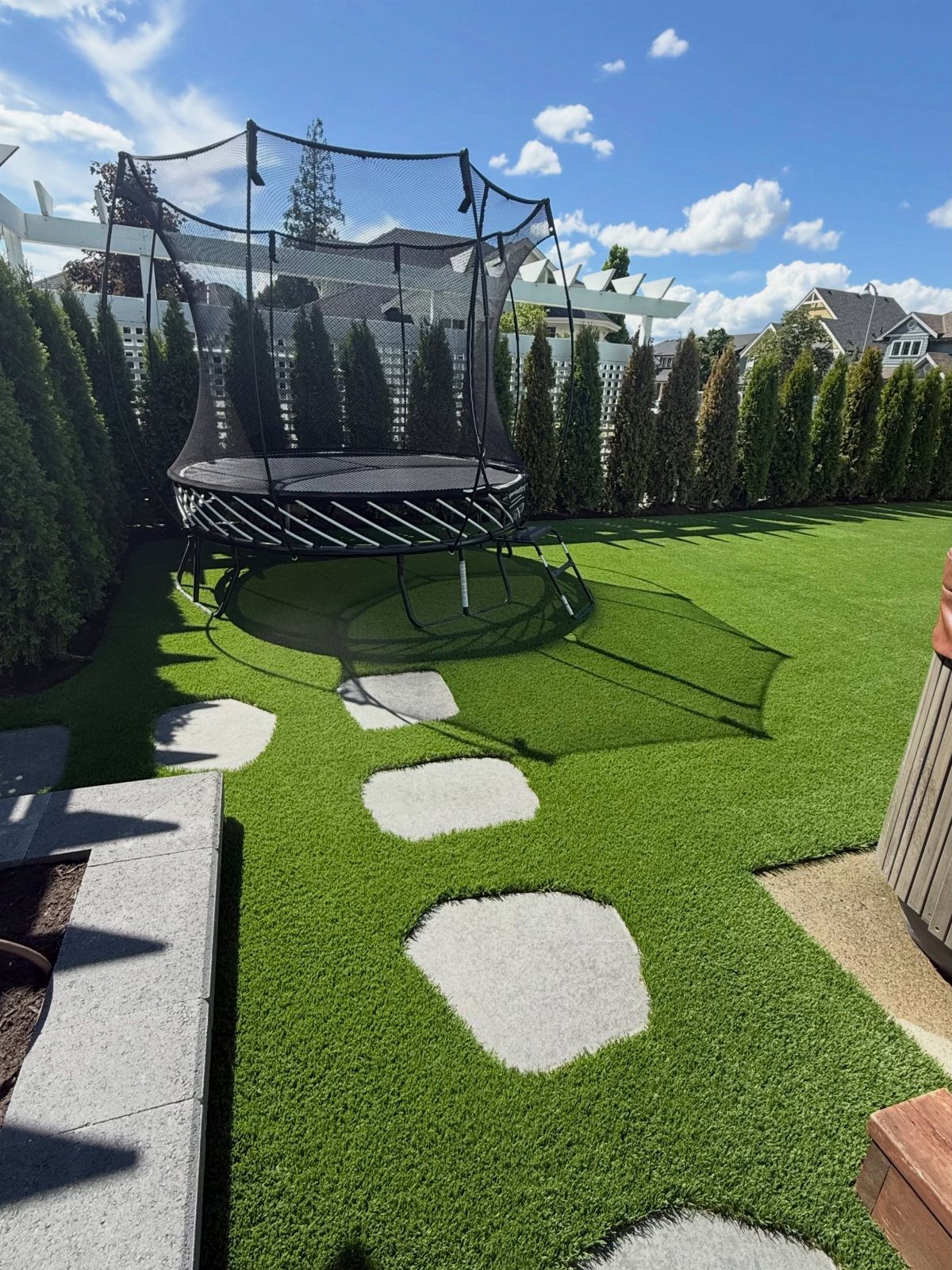
Artificial turf stays green under a trampoline where real grass dies from shade and compression.
I would lay it on a compacted aggregate base with drainage holes every few feet, or rainwater pools and smells. The stepping stones visible sit on the same base layer, so the whole area levels together.
Arborvitae at the perimeter need no special treatment against the turf; I would keep their mulch ring separate so roots do not compete with the backing fabric.
Turf heats up in direct sun; the trampoline shade in this yard helps, but I would test a sample on my own pavement in July before committing a whole yard.
16. Evergreen Trees and Shrubs
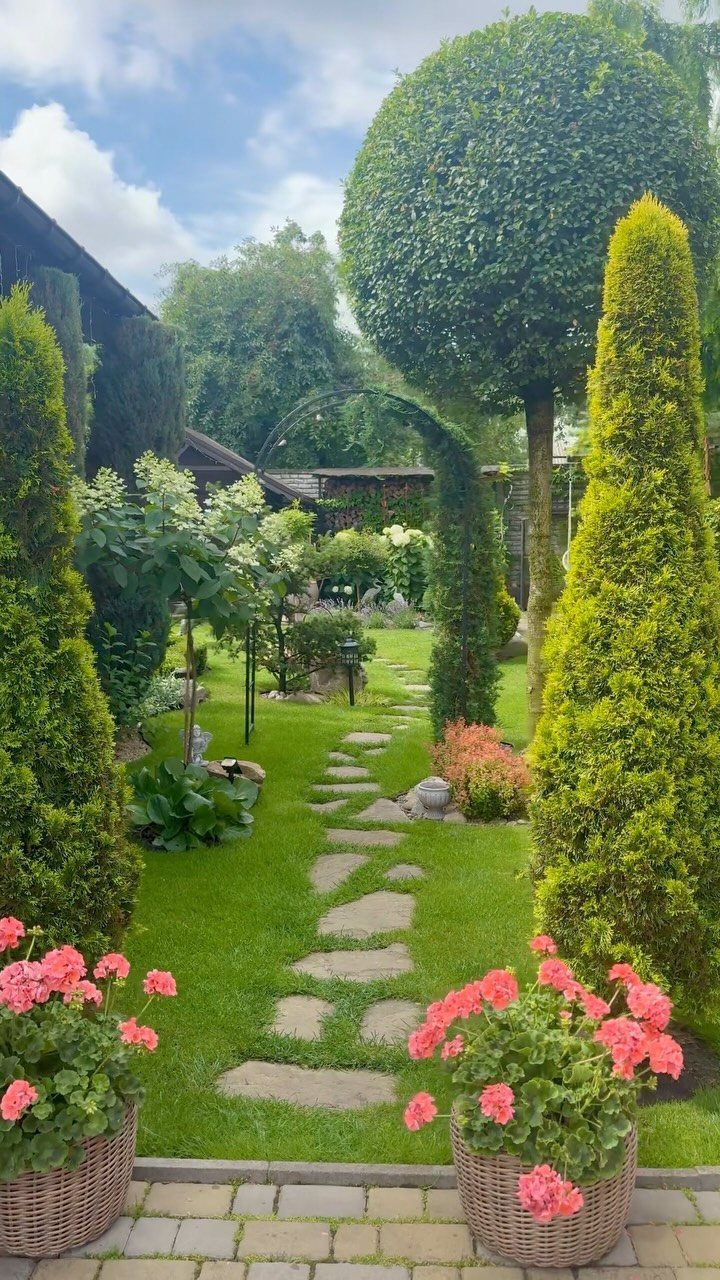
Conical evergreens and a single round topiary give winter structure when perennials disappear.
I would space the conical forms at half their mature height; these read as young plants with room to fill.
The stone path between them needs the same edging rule as gravel paths, or the lawn creeps in and the geometry loosens.
Potted annuals at the arch add color without disturbing the evergreen roots; I would swap those pots seasonally rather than planting into the ground between established shrubs.
Evergreens in sheared shapes want consistent water early on more than later; skipping this is the main reason they turn brown at the base.
17. Zen Garden
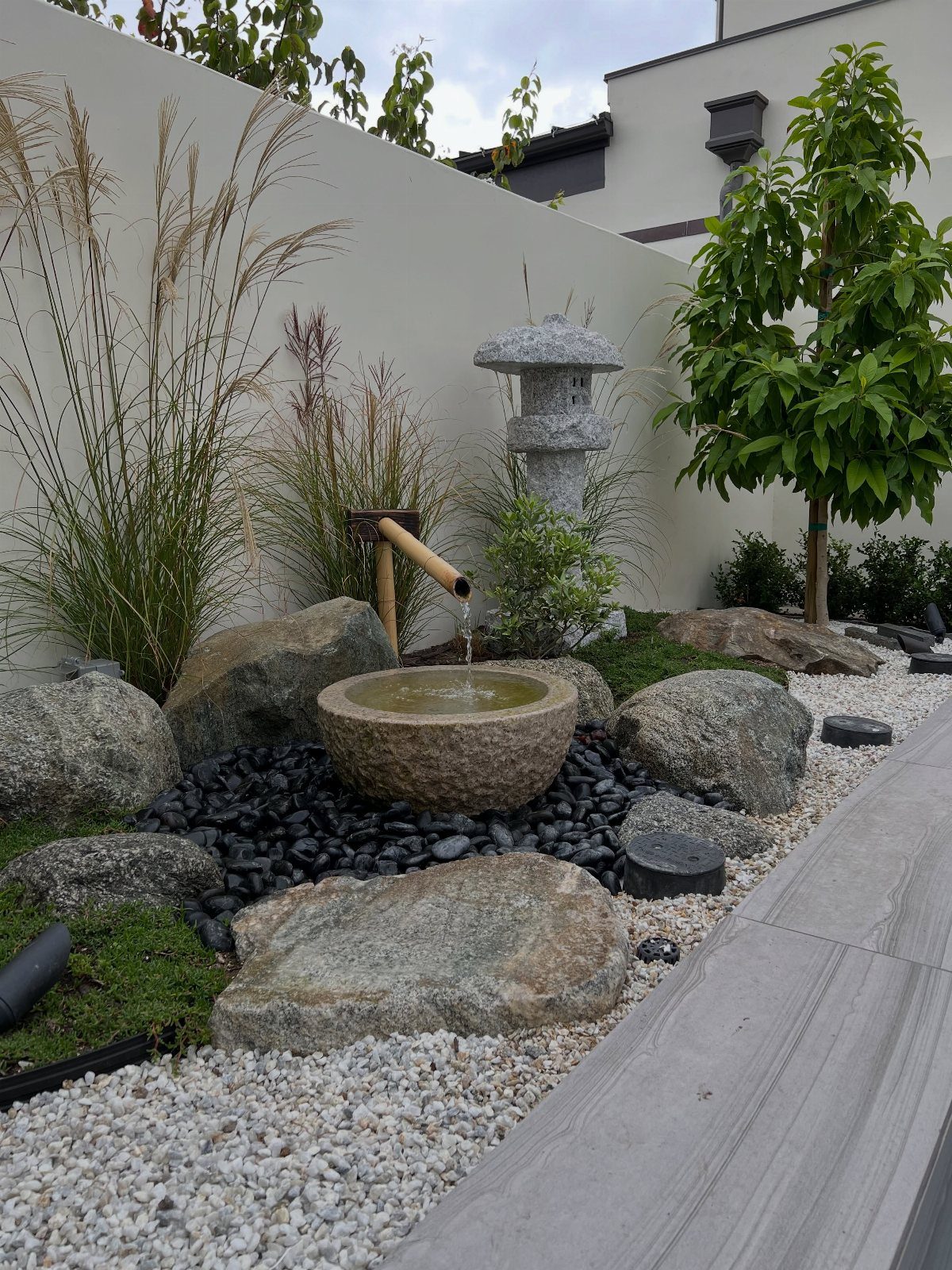
A bamboo spout filling a stone basin gives running water without the pump complexity of a pond.
The white gravel surrounding it is meant to be raked, not planted into; this is the maintenance tradeoff, half an hour of calm grooming rather than weeding.
I would set the basin on a plinth or buried reservoir so the water recirculates; a once-through spout wastes too much.
Dark pebbles at the base hide splatter and algae better than pale stone would. The wall behind reads as backdrop, not enclosure; I would keep the height low so the sky still enters the view.
This suits a corner that gets morning sun and afternoon shade, so the moss between stones stays green without turning slimy.
18. Repurposed Old Furniture Planters

A painted chair with its seat replaced by soil turns a flea-market find into a single-season planter.
I would drill drainage through the original seat or remove it entirely; rotting wood sags under wet soil weight by August.
Bright yellow reads as deliberate, not accidental, because the paint is fresh and the pansies match in tone. I would limit myself to annuals in a piece this shallow; their roots stay small enough not to split the joints.
The mulch bed beneath catches the water that drains through, so the legs do not sit in mud and wick rot upward.
One chair is a gesture; three in a row becomes a border I would use along a path edge.
19. Cottage Garden
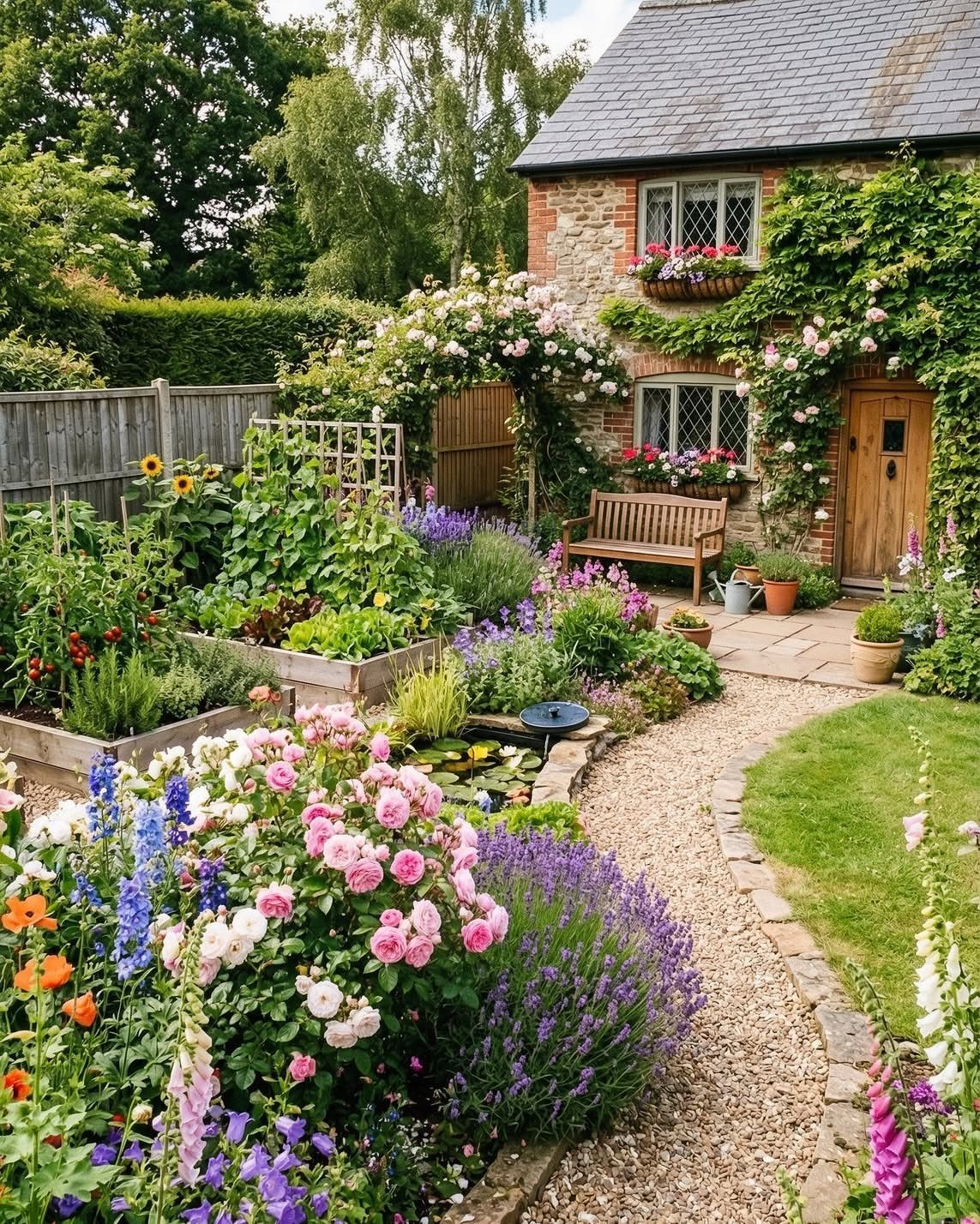
A cottage garden is the opposite of a planned border; plants overlap, self-seed, and fill gaps you did not schedule.
Stone walls or a gravel path give a cottage garden its bones; roses, lavender, and mixed perennials do the rest.
I would start with the hardscape first: paths and beds edged in stone or brick, because adding them after roots spread means cutting through established plants.
The raised vegetable beds visible at the side keep edibles organized; without that separation, zucchini swallows the flowers by August. This style needs more time than others, half an hour weekly deadheading and cutting back, or it turns to tangle.
I would try it only if I enjoyed the tending, not if I wanted a yard that stayed tidy on its own.
20. Small Stone Water Fountain

A small stone fountain gives moving water without the space or wiring a pond demands.
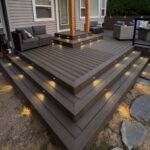
The round basin on grass, surrounded by decking and pots, sits at a scale a weekend installs. I would check the weight first; stone this size needs a level pad, not just turf, or it tilts as the soil settles.
The tiered wall waterfall behind is a separate system, but both share a rule: pumps need outdoor-rated outlets and winter draining in zones below freezing.
Potted plants around the edge let me rearrange; in-ground planting would mean roots eventually crack the basin. I would keep the lawn patch small, because mower spray stains stone and constant damp from splashing kills grass at the rim.
Sustainable Landscaping Practices
Native plants are the starting point for cutting water and maintenance, because species already adapted to your region need less of everything: fertilizer, pesticide, and irrigation.
I would search "native plants" plus my state to find lists from extension services or native plant societies rather than guessing at the garden center.
Xeriscaping does not mean gravel and cactus everywhere.
It means grouping plants by water need so you are not spraying the whole yard for one thirsty patch. In practice, that usually means more hardscape near the house, deeper mulch, and plants chosen for drought tolerance once established.
Artificial turf fits here too, though I would use it only where grass fails anyway, under shade or heavy foot traffic, because it solves a problem rather than replacing a working lawn.
The base matters as much as the turf itself: compacted aggregate with drainage holes every few feet, or you trade watering for pooling.
Budget-friendly Landscaping Tips
Fall is the cheapest season to plant, not spring.
Soil temperatures stay warm while air cools, so roots establish without the stress of summer heat, and nurseries often discount stock they do not want to overwinter. I would plan projects for September through October where my climate allows.
Mulch is the single fastest way to make a yard look tended for the least money.
A fresh layer covers thin spots, unifies beds, and suppresses weeds before they start. I would buy in bulk if I need more than a few bags; the per-yard price drops sharply and delivery saves the trunk damage.
Repurposed planters and flea-market furniture fit the same budget logic. Rotting wood under wet soil weight fails by late summer if I skip that step.
I would balance the two: perennials for structure, a few annuals for first-season color where I need it fast.
Planning and Layout Advice
Traffic flow is the first thing to map, before any plant or paver goes in.
I would walk the yard with the actual use in mind: where the grill needs clearance, where kids cut across, where I will carry groceries from garage to kitchen.
Paths that fight those lines get ignored; paths that follow them feel inevitable.
Small yards need zones more than large ones, because overlap kills function. I would decide the priority: seating, play, growing, storage.
Two of those can share space if their timing differs, but three in the same square footage means none work well. A fire pit and a dining table both want the same evening hours; one wins.
Vertical space matters when the footprint is fixed.
Walls, fences, and the sides of structures can carry vines, espaliered fruit, or mounted planters. Weight loads deserve a real check before anything heavy goes up; a mature vine in wet wind pulls hard.
Professional help pays off most at layout stage, not in plant selection.
Circulation patterns are easy to misjudge, and the cost of fixing a patio in the wrong spot runs well past what a designer charges to lay it out right from the start.
Frequently Asked Questions
What is the 3-5-7 rule in landscaping?
Plant in odd-numbered groups, usually three, five, or seven of the same plant, rather than scattering singles around a bed.
Repeating the same shrub at consistent spacing creates rhythm and reads as intentional design. I would pick one plant and use multiples rather than mixing varieties and hoping they grow to matching sizes, which they rarely do.
What are some easy and inexpensive landscaping ideas?
Fall planting saves money because the ground stays warm enough for roots to settle in before the cold arrives, so you lose fewer plants to transplant shock.
Native plants cut long-term costs because they need less water, fertilizer, and pesticide once established.
A bag of mulch, a few yards of gravel, and an old dresser drawer on legs can carry a whole yard when you repeat one tough plant instead of buying a dozen different ones.
What are the major landscaping trends for 2026?
Sustainable practices lead: native plants, xeriscaping grouped by water need, and low-maintenance designs that trade constant tending for smart plant choice.
I only specify artificial turf where grass has already died, under a tree that blocks too much light or a path that gets walked twice a day; it is a fix for a broken spot, not a lawn replacement.
Stone or pavers near the foundation, a thick layer of mulch beyond that, and plants that do not flinch at dry spells once their roots are down all cut the water bill without looking spare.