
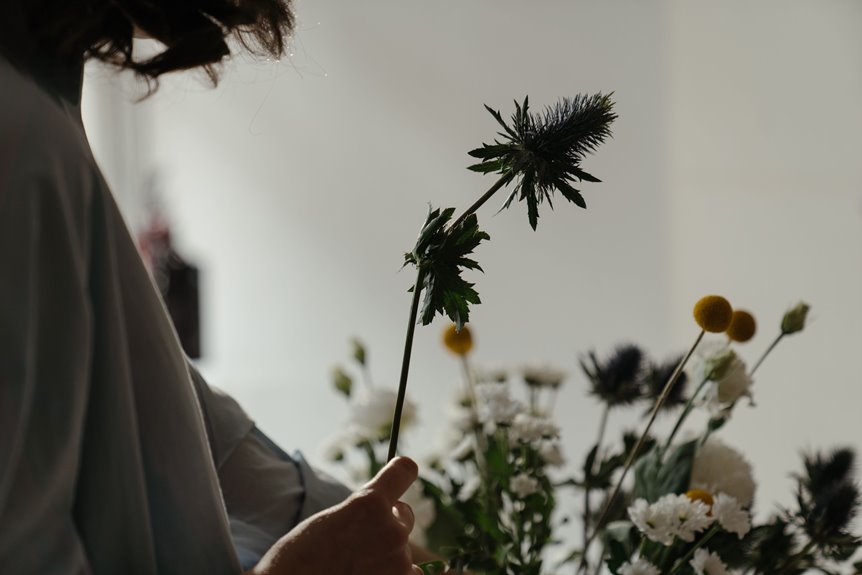
Most cut flowers last one to two weeks in a vase with proper care. Recut stems at a 45-degree angle immediately to create more surface area for better water absorption. Use Floralife or Chrysal preservative per packet directions, and change water every two days to stop bacteria growth. Keep them cool and away from sunny windows and fruit bowls, since bananas release ethylene gas that ages blooms faster. Strip leaves below the waterline so nothing blocks water absorption.
How Long Do Cut Flowers Last With Proper Care?
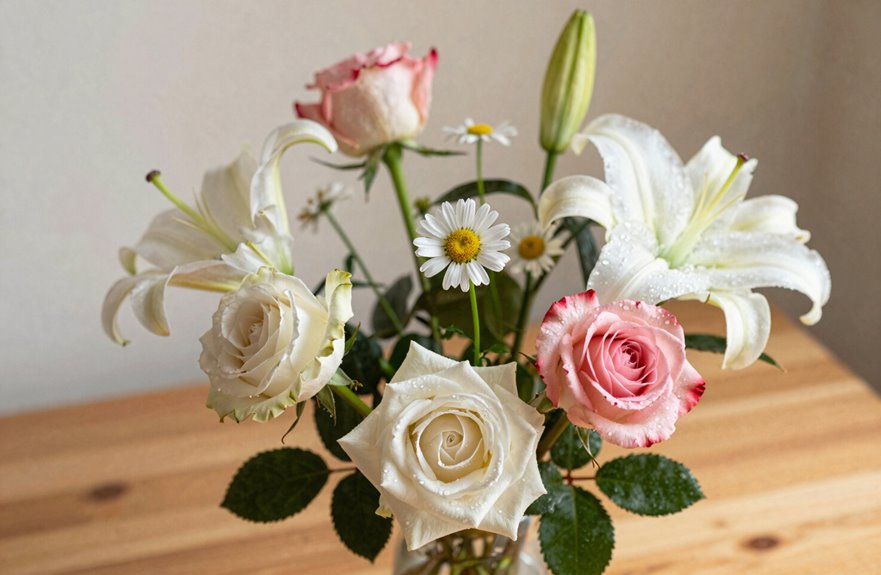
So that’s the deal: I used to think cut flowers were basically doomed from the moment I brought them home, but I was wrong. With proper care, most cut flowers last 1 to 2 weeks in a vase.
First, I recut stems at a 45-degree angle right away. This opens up more surface area for drinking. Then I mix floral preservative, like Floralife or Chrysal, following the packet directions. I use about one packet per quart of lukewarm water.
My approach is straightforward: I change the water every two days and give those stems another fresh cut each time. This prevents bacterial growth and keeps flowers fresh longer. I also keep them in a cool spot away from sunny windows and fruit bowls. This routine extends vase life significantly.
How Long Do Cut Flowers Last Without Water?
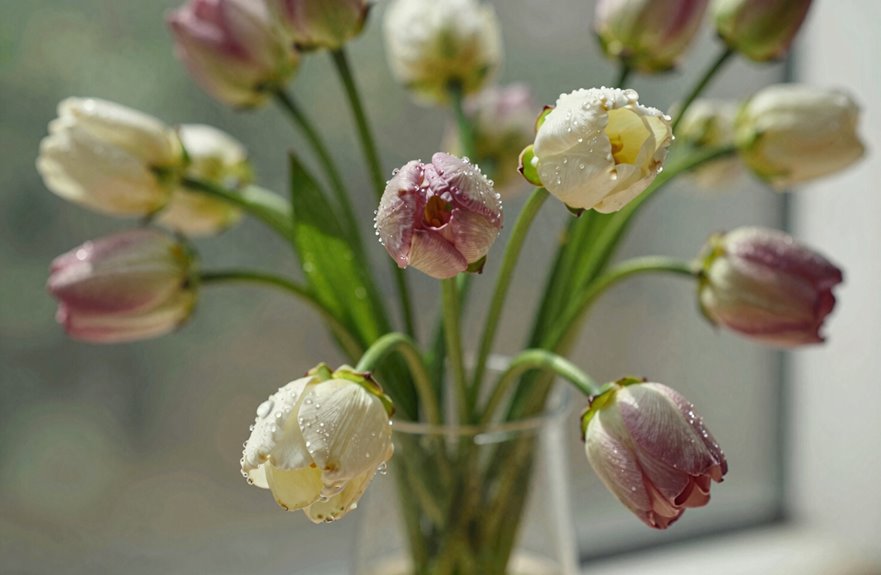
I’ve gotten pretty good at keeping flowers alive in a vase, but I’ve definitely had those moments where I’m rushing home with a bouquet and realize I forgot water. So how long do cut flowers without water actually survive? Not very long. Most start fading within hours without water. Tough flowers like roses and carnations squeeze out 4–6 hours of life, but delicate tulips last only 1–2 hours. Lilies hang on for 6–8 hours, and hardy sunflowers push to about 8 hours max. Cool temps near 35°F can stretch life to 12–24 hours, but heat above 86°F causes rapid deterioration.
| Flower Type | Without Water Life | Conditions |
|---|---|---|
| Tulips | 1–2 hours | Cool, indoor |
| Roses | 4–6 hours | Cool, indoor |
| Carnations | 4–6 hours | Cool, indoor |
| Lilies | 6–8 hours | Cool, indoor |
| Sunflowers | 4–8 hours | Cool, indoor |
Get them in water as soon as possible to maximize their lifespan.
How Long Can Cut Flowers Survive in a Hot Car?
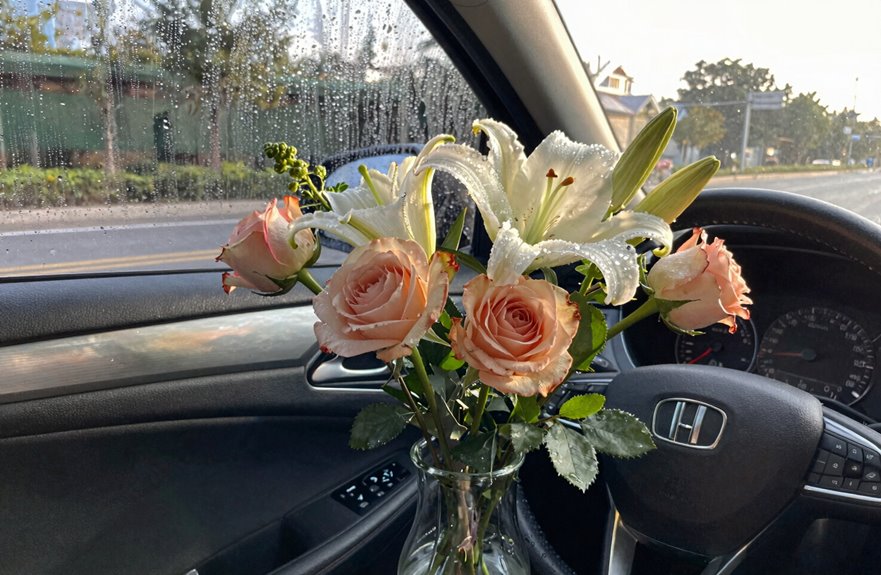
I know you’re wondering how long your beautiful bouquet can handle being stuck in a hot car. Without water, most cut flowers will start wilting within just a few hours when temperatures climb, though hardy types like roses and carnations might hang on for 12 to 24 hours if you keep things cool around 35–37°F. I’m going to walk you through exactly how heat zaps your flowers so fast and share some super simple tricks to keep them fresh until you get home.
Heat Impact Duration
How quickly can a beautiful bouquet turn into a sad, droopy mess? In a hot car, we’re talking hours, sometimes minutes.
Here’s what you’re really up against:
- Delicate tulips? They’ll wilt in 1–2 hours without water
- Hardy roses and carnations? Maybe 4–6 hours if you’re lucky
- Temperature above 86°F? Your flowers are basically cooking
- Ethylene gas builds up fast in closed cars, accelerating aging
The trunk’s no escape. It’s a moisture-sucking oven. Water uptake slows dramatically when heat hits, and your blooms basically give up. Even the tough guys like chrysanthemums struggle when that temperature spikes.
Keep it cool and shaded, and you might buy yourself a few precious hours. Heat significantly reduces flower longevity, and your car creates conditions that accelerate deterioration.
Prevention Strategies
Three simple tricks can turn a flower funeral into a rescue mission. First, grab a small cooler and fill it with one inch of water. Nestle your flowers inside with stems touching that water. This doubles their vase life compared to leaving them loose in the backseat. Second, park in shade and crack windows two inches for airflow. Temperature matters significantly, and even five minutes of direct sun can cook your blooms. Third, use frozen gel packs wrapped in paper towels around the base for trips longer than three hours. I learned this the hard way with peonies last July. Follow these steps, and you’ll actually keep flowers alive until you’re home.
The Three Factors That Control How Long Flowers Last
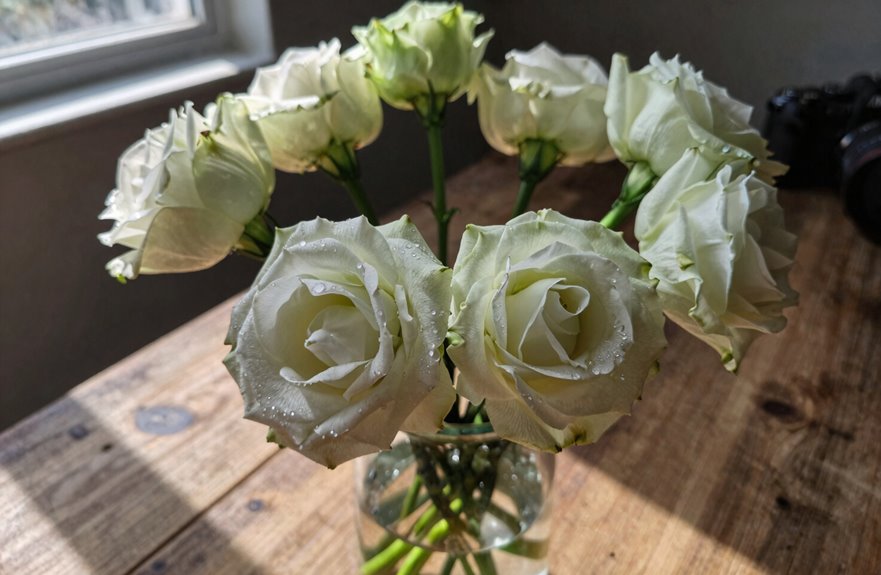
When you bring home a gorgeous bouquet, you probably wonder how long you’ll get to enjoy it. Three key factors control your flowers’ vase life, and getting them right makes a significant difference.
Here’s what keeps your blooms happy and thriving:
- Water quality matters greatly. Cloudy water blocks stems from drinking, so change water every two days.
- Flower food feeds your flowers sugar energy and fights bacteria. Use the full packet, not just a sprinkle.
- Room conditions like temperature and light control everything. Keep them cool and away from direct sun.
- Ripening fruit produces ethylene gas that ages flowers rapidly, so move your vase away from the fruit bowl.
How to Keep Cut Flowers Alive Without Water for a Day
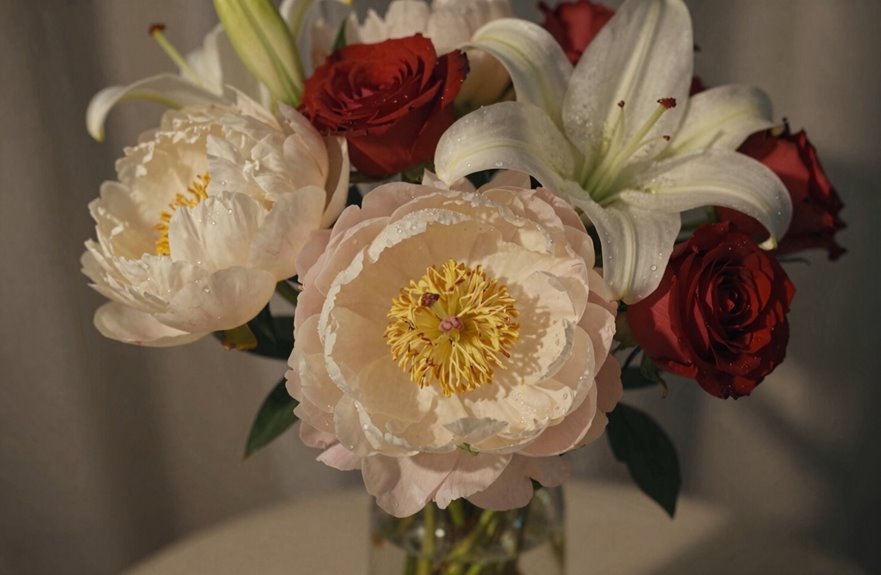
Maybe you’ve found yourself rushing to a party with a bouquet in hand and zero time to fuss with a vase. Prep your flowers right before heading out. Trim stems at a 45-degree angle and let them drink up water with floral preservative. This pre-hydration buys you precious hours. Hardy roses and carnations handle 4–6 hours without water much better than delicate tulips that flop in 1–2 hours.
Temperature is critical. Stash your bouquet in the fridge or a cool, shady spot, never a hot car trunk. Heat above 30°C/86°F damages flowers quickly. Keep them ventilated and away from fruit, since ethylene gas speeds deterioration.
Your without-water duration depends on these specific steps: proper hydration beforehand, appropriate flower variety selection, and consistent cool storage conditions.
How to Choose Long-Lasting Flowers at the Store
When hunting for flowers that’ll stick around, check three key things before purchasing. First, assess how fresh the blooms are, since flowers left under harsh grocery store lights for a week will deteriorate quickly. Then inspect the stems for any slimy spots or browning, and finally select buds that are just starting to open, like a rose with exactly one petal unfurled, so you get the full 7–10 day display at home.
Check Flower Freshness
Where do I even start when I’m staring at dozens of buckets at the flower shop? I feel overwhelmed, but I can help you navigate this.
- Look for roses with just ONE petal unfurled, or gladiolus with only 2-3 blooms open. This means more buds to enjoy.
- Grab daisies and sunflowers with greenish centers, not fully yellow ones, for longer vase life.
- Pass on any flowers with fuzzy gray mold or blooms drooping like they’re exhausted.
- Double-check that cooler display. If the water looks cloudy or dirty, the freshness won’t last.
Always check for newly arrived stock. Those fresh-cut stems are hydrated and ready to last for days longer than tired, worn-out blooms. Your flowers will stay fresher significantly longer when you start with quality specimens.
Inspect Stem Condition
How do I know I’m grabbing the good stuff? I always check the stems first, my secret weapon for spotting real freshness.
I run my fingers along those stems and I’m looking for clean, firm sticks that feel strong and alive. No slime, no weird gray fuzz, no mushy spots where bacteria’s already throwing a party. If those stems are cracked or split, I’m walking away because damaged stems block water uptake and my flowers will wilt before I even get them home.
I also peek at the leaves since they’re connected to that same stem system. Yellow or spotted foliage means trouble for hydration. I want upright stems with perky leaves that indicate freshness. This combination keeps my bouquet gorgeous for days.
Assess Opening Stage
Why grab flowers that are already halfway to goodbye. Checking the opening stage is crucial for longevity.
What to look for:
- Roses with just ONE petal unfurled, perfection
- Gladiolus with only the first two or three blooms open
- Daisies and sunflowers with greenish centers, not brown
- Carnations, chrysanthemums, and alstroemeria that feel fresh and firm
Skip anything fully bloomed or droopy. Those stems are tired already. Flowers at the right opening stage will open slowly in your home, giving you days more joy. You’ll witness the entire blooming process rather than missing it. This single step significantly extends how long your flowers last.
How to Cut Stems So Flowers Drink More Water
Ever wonder why your flowers seem to give up on you way too fast? I’ve been there, and it’s usually because I didn’t cut stems right.
First, grab sharp kitchen shears or a paring knife and wipe the blade with rubbing alcohol. You’ll want to cut stems at a 45-degree angle. This creates more surface area for water uptake, and your flowers will drink it up. Do this just before they hit the vase, never after.
Strip off any leaves below the waterline because bacteria will block those stems. It reduces water absorption significantly.
Recut stems every time you change water, every day or two. Fresh cuts mean fresh water uptake, and your blooms stay perky much longer.
Daily Habits That Extend Flower Life
Start your daily routine by checking that water first thing in the morning, before coffee, before anything. Daily care makes the difference between flowers that fade in three days and ones that remain fresh for a full week.
Check your flowers’ water before coffee, before anything—daily care is what separates three-day fades from week-long beauty.
Here’s my must-do list:
- Swap in fresh water every 1–2 days (I set a phone reminder!)
- Re-cut stems at a 45-degree angle so they drink deep
- Strip leaves below the waterline; bacteria accelerates deterioration
- Add floral preservative or 1 teaspoon sugar per quart
Keep your arrangement away from sunny windows and that bowl of bananas on the counter. Ripening fruit releases gas that ages blooms quickly. With these habits, your flowers will last 7–10 days.
How to Fix Wilting, Browning, and Early Dropping
Sometimes your blooms just don’t cooperate. When wilting hits, grab your pruners and recut stems at a 45-degree angle under running water. This opens up the vascular system so they drink again. Then change water completely, adding 1 packet of Floralife preservative per quart. Fresh water and preservative restore their ability to absorb nutrients.
Browning petals indicate heat damage. Move arrangements to a cool, shaded location away from sunny windows and heating vents. Flowers kept in these conditions last several additional days.
Early dropping usually means ethylene exposure from ripening bananas or apples. Check your fruit bowl and relocate any ripening produce immediately. Cloudy water signals bacterial growth. Dump the water, scrub the vase with soap, and refill with fresh water. These methods prevent the deterioration that causes bouquets to fail prematurely.