I dry-clean sofa cushions at home with just a vacuum, a bar mop towel, and a pea-sized dab of Dr. Bronner’s unscented soap. First, I vacuum thoroughly with an upholstery attachment to grab crumbs and pet hair. Then I spot-clean foam board cushions by dampening my cloth lightly and lifting stains with gentle pressure. Never soak the wood base or foam core.
For deep stains, I shake Woolite Advanced Pet Stain & Odor Remover Foam for ten seconds, spray a two-inch circle from six inches away, and blot with a microfiber cloth. I speed-dry with a fan two feet away and sprinkle baking soda to eliminate odors.
I always check hidden care labels under zippers first and test cleaners on a tucked-away spot. This method keeps cushions clean without professional dry cleaning services.
Vacuum Attached Cushions Before Wetting Anything
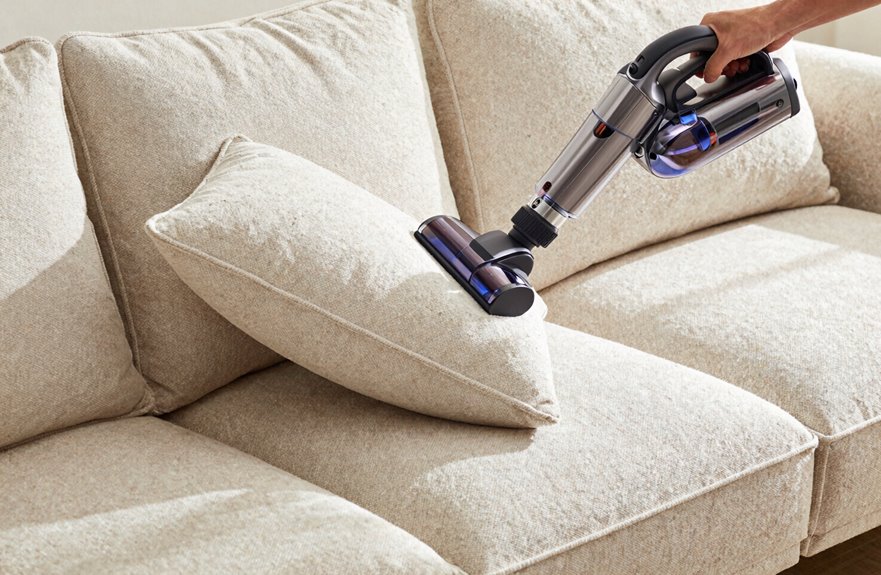
Why start with a vacuum when you’re dying to scrub that stain? Dirt plus water equals mud, and nobody wants that ground into their couch. I grab my upholstery attachment and go to town on every cushion, lifting crumbs, pet hair, and dust bunnies hiding in the crevices. For non-removable cushions, I vacuum thoroughly before even thinking about damp cleaning. This keeps moisture from pushing surface grime deeper. Got removable covers? I vacuum those separately too, so I’m not washing dirt into the fabric. After I’m done, I’m ready for the next step. Questions? Shoot me an email address and I’ll share my favorite Fabric Cleaner picks. This prep work makes everything easier.
Spot-Clean Foam Board Cushions Without Soaking the Wood Base
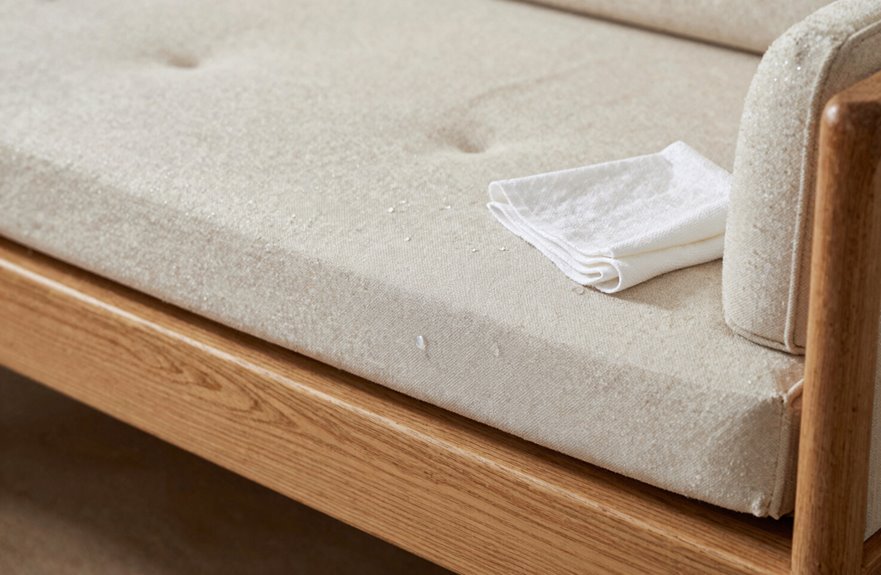
I tackle foam board cushions with the Foam Cleaner Method first, spraying Folex Carpet Spot Remover (about two pumps) directly onto a white bar mop towel, not the cushion itself, and I blot with light pressure so the wood base stays bone-dry. For the Damp Cloth Technique, I mix one teaspoon of Dawn dish soap into a cup of lukewarm water, wring the cloth until it’s barely damp, and work in small circles because soaking causes wood warping. I always finish with a dry towel pressed firmly for 30 seconds, then set up a fan nearby. This prevents moisture from seeping into the wood base and damaging the cushion structure.
Foam Cleaner Method
The foam board cushion is that tricky customer with a wood base on one side, foam core in the middle, and fabric that somehow attracts every coffee drip in a five-mile radius.
You don’t need fancy foam cleaner from the hardware store. Grab a white bar mop towel and add just a pea-sized dab of gentle soap. Dr. Bronner’s unscented works great. Dampen the cloth, not soak it, and apply light pressure to lift that stain. Then rinse and blot again to grab the soap residue.
Thorough blotting is essential; get that moisture out before it sneaks into the foam or warps your wood base. If possible, run one more damp pass to catch lingering soap. Then set that cushion by an open window or in sunshine and let it air dry completely. This prevents moisture damage and furniture deterioration while restoring the cushion’s cleanliness.
Damp Cloth Technique
Where do you turn when your foam board cushion has seen better days but you can’t exactly toss the whole thing in the wash? I reach for a white bar mop towel and gentle soap.
I dampen my cloth without soaking it and dab a tiny amount of soap on it. Then I work in gentle circles, lifting that stain right off the surface. The key is light pressure. I’m using barely-there touches so I don’t flood that foam core or wood base underneath. A warped cushion is the result of too much moisture.
I rinse my cloth often and keep blotting until the soap’s gone. One more pass with clean water, then a dry towel to absorb remaining moisture.
For speed, I set it near a window or outside, but not in direct scorching sun. I learned that lesson the hard way. This method is quick and easy, and your couch will look fresh again.
Apply Low-Moisture Foam Cleaner for Deep Stains
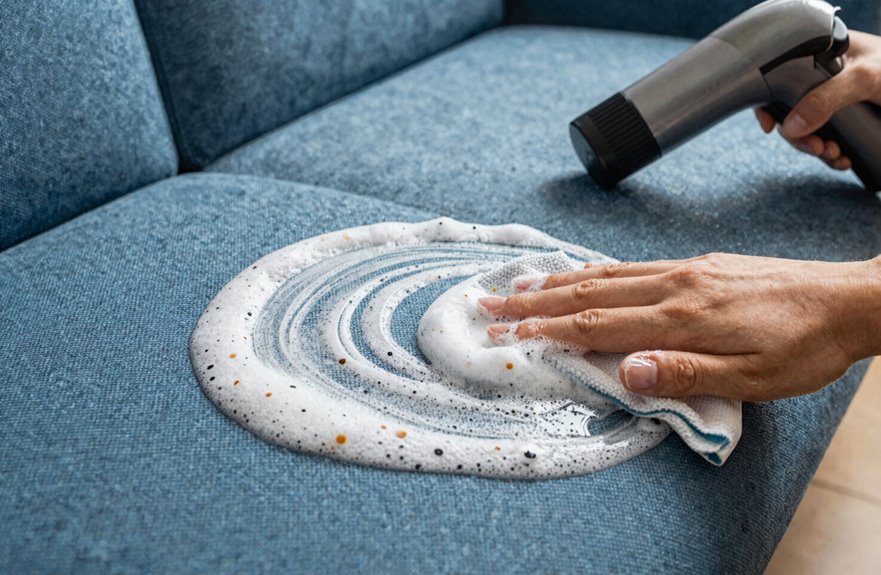
I grab a can of Woolite Advanced Pet Stain & Odor Remover Foam and shake it for about 10 seconds. Hold it 6 inches from that stubborn coffee ring and spray just enough to cover it, maybe a 2-inch circle, because you’re cleaning here, not creating a bubble bath. Then take a clean microfiber cloth and work it in slow circles, counting to 30 in your head while the foam does its magic. Watching that stain lift is satisfying.
Foam Cleaner Selection
Why settle for a stained sofa when you have better options available. Not all cleaners work equally well, and selecting the right foam cleaner significantly impacts results.
Here’s what to look for:
- Low-moisture formula – Products like Woolite Advanced Foam or Folex Carpet Spot Remover (about 2-3 pumps per stain) clean effectively without saturating the foam underneath.
- Fabric-safe labeling – Check for “upholstery approved” directly on the bottle to avoid uncertainty.
- Quick-dry ingredients – Avoid products with heavy soaps that leave residue behind. Look for formulas that dry to the touch in 15-20 minutes maximum.
The right foam cleaner lifts stains without creating musty odors that develop later.
Application Technique Tips
Once you’ve got your foam cleaner picked out, it’s time to put it to work. Start by squirting a small amount—about a tablespoon—onto a clean microfiber cloth. Gently blot those stubborn deep stains instead of soaking the fabric. Less water prevents cushion damage.
Work in small sections from top to bottom so dampness doesn’t pool anywhere. Press lightly to avoid creating a soggy foam core. After the foam sits for a minute, wipe with a damp cloth to grab residue, then blot with a dry towel. Let each spot air-dry partially before moving on, and position your cushion near a sunny window or fan. Avoid hair dryers, as heat warps foam.
Drying Process Steps
After you’ve worked that foam cleaner into those stubborn spots, you’ll want to see results quickly. Grab a dry microfiber cloth and blot, blot, blot to lift that foam and grime. No rubbing. Then dampen a fresh cloth with plain water, wring it nearly dry, and blot again to rinse away residue. Finally, press another dry cloth to soak up excess moisture.
Go-to drying routine:
- Blot aggressively with clean, dry towels until they come away barely damp
- Position a fan about 2 feet from the cushion and rotate every 30 minutes
- Check progress every hour. if it’s still wet, add more dry towels underneath
Don’t rush this step. Quick drying prevents mold growth and maintains cushion freshness.
Speed-Dry Cushions While Still Mounted on the Frame
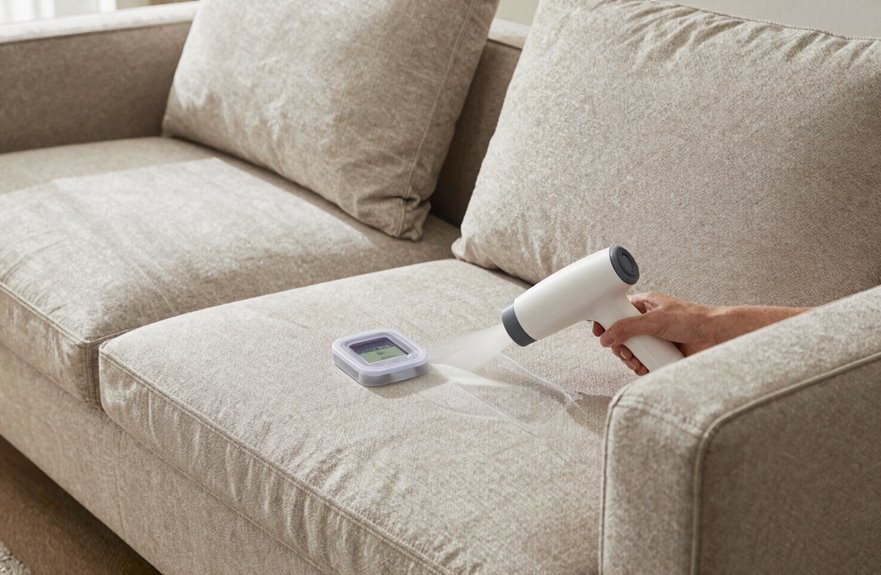
So you’ve scrubbed those stubborn spots and now you’re staring at damp cushions still stuck to your sofa frame. What’s the fastest way to get them dry without turning your living room into a swamp? First, grab your vacuum with the upholstery attachment and give those cushions a quick once-over. This lifts moisture from the fabric threads. Then position your sofa near a sunny window or a warm spot with good airflow. No sun available. No problem. Set up a fan about 3 feet away and let it run.
| Step | What I Do | Why It Works |
|---|---|---|
| 1 | Vacuum with upholstery tool | Lifts moisture from threads |
| 2 | Blot with clean damp cloth | Removes soap residue fast |
| 3 | Blot dry with terry towel | Stops foam from staying wet |
| 4 | Move to sunlit area | Heat speeds evaporation |
| 5 | Add fan 3 feet away | Airflow cuts drying time |
Never oversaturate with your Folex 34 oz. spot cleaner. Less water means less waiting. Your couch will feel fresh and dry in less time than standard air drying methods.
Neutralize Odors With Baking Soda Before They Set in
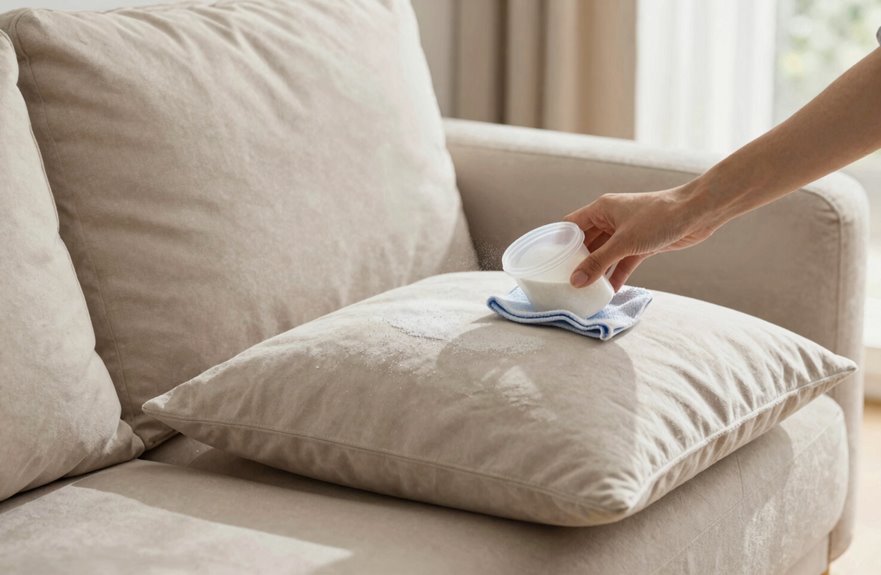
Why let funky smells ruin your clean couch when you have a covert tool sitting in your kitchen right now? ARM & HAMMER Baking Soda is an effective deodorizing solution for upholstered furniture.
Your kitchen holds a secret weapon against couch odors: ARM & HAMMER Baking Soda, the covert deodorizer for upholstered furniture.
- Sprinkle 1/4 cup evenly across the surface, wait 20–30 minutes, then vacuum thoroughly
- Keep it dry for non-porous odors; no moisture should contact that foam core.
- Reapply after cleaning, vacuum again, and sun-dry in a breezy spot to prevent mildew
Baking soda won’t remove stains, it deodorizes between deep cleans. This focused function delivers fresh-smelling cushions without chemical treatments. Your guests will notice the difference in air quality.
Locate Hidden Care Labels That Most People Miss
Before you wash anything, flip those cushions upside down and start hunting for care labels. You’ll usually find them stitched under the seating area, tucked along the zipper seam, or hiding on the underside in spots most people never check.
Look for these symbols: a washing tub means machine wash, a hand in the tub means hand wash only, and a circle means dry clean. See a crossed-out tub? No machine wash is permitted. Some cushions even have separate panels with different rules, so inspect every side and any removable covers.
If symbols are faded or missing, check your fabric care tags or manufacturer documents. When all else fails, test a tiny hidden spot with mild detergent first. This prevents damage to your furniture.
Why Your Cushion Has Foam Board (And Why It Matters for Cleaning)
Ever wondered why some cushions feel weirdly stiff instead of squishy? That’s foam board inside, and it’s actually doing important work. This rigid core changes everything about cleaning.
Here’s what you need to know:
- Moisture sneaks in and stays – foam board doesn’t breathe like regular stuffing, so water gets trapped and causes mold or funky smells if you’re not careful.
- Scrubbing too hard warps the shape – aggressive cleaning can permanently damage seams and structural integrity.
- Detach covers when possible – this keeps the foam board dry while you clean just the fabric, preventing moisture damage.
Air circulation and patience are essential for proper cushion maintenance.
Test Cleaners on Hidden Fabric Sections First
Where exactly should I test this stuff? I always flip my cushion and pick a spot near the zipper or underneath where nobody ever looks.
Here’s what I do: I dampen a clean white cloth with warm water and add just a teaspoon of my cleaner, maybe Folex or Woolite. Then I blot, never scrub, because scrubbing damages delicate fibers. I wait about ten minutes and check for color bleeding or texture changes.
After that, I rinse my cloth and blot again to remove any leftover residue. I let it air dry completely. I jot down what happened: any color change, smell, or stiffness. This test spot shows exactly how the whole cushion will respond to cleaning.
When to Call a Pro or Consider Reupholstering
Sometimes I get halfway through cleaning and think, “Why did I even start this?” Maybe the stain’s older than my kid’s soccer trophies, or the foam inside has turned into a science experiment I don’t want to investigate.
When to know it’s time to stop:
- That stain won’t budge – I’ve tried my white bar mop towel with gentle soap, damp cloth, and light pressure. Nothing works.
- My cushions are trapped – When foam boards won’t detach and I’m stuck spot-cleaning forever, it’s time to stop.
- The frame comes apart – If I can unscrew that front-bottom and actually remove these cushions for real cleaning or reupholstering, that changes everything.
Professionals have industrial equipment and expertise that make a difference. Reupholstering with fresh fabric can be more effective than endless scrubbing. Know when to call in help.