
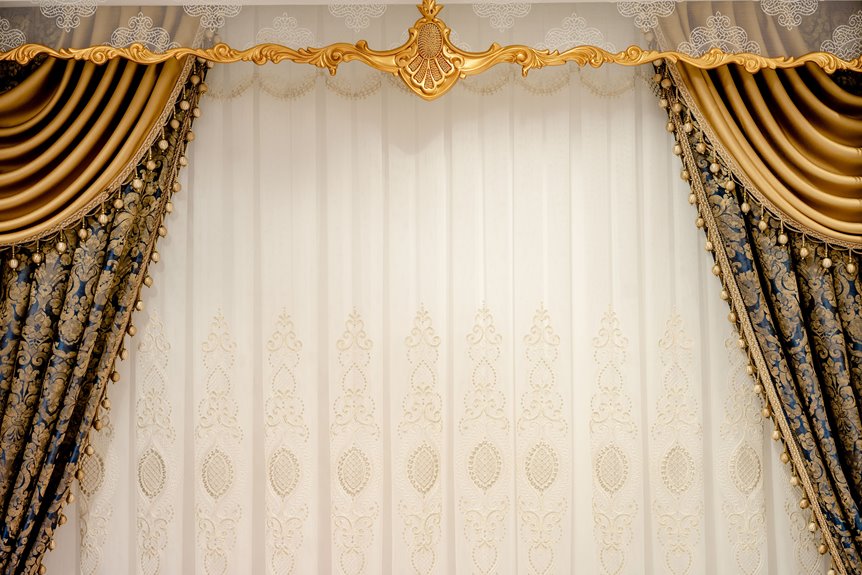
I used to think thermal and blackout curtains were basically the same thing until my winter heating bill woke me up. Thermal curtains use thick three-layer construction to trap heat and cut energy costs by up to 25%, while blackout curtains rely on lighter triple-weave fabric with black yarn cores to block morning sunlight for better sleep. Genuine thermal panels weigh 2+ pounds each compared to airier blackout styles, and only combo designs like Deconovo’s lined panels deliver both benefits. Check labels for “enhanced insulation” versus “100% blackout” claims, measure your window width and length first, and ensure floor-length coverage with minimal air gaps. Understanding these five differences prevents purchasing the wrong product and saves money on future replacements.
Do You Need Blackout or Thermal Curtains?
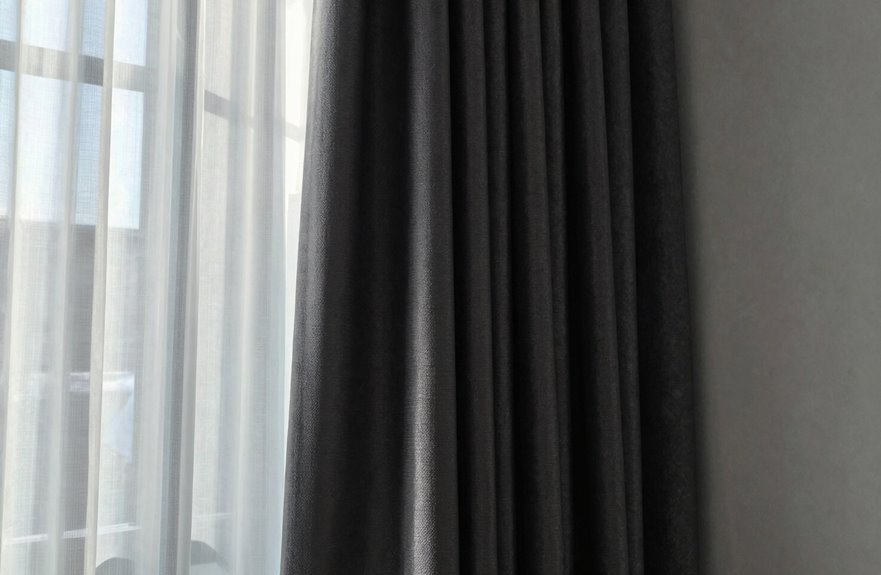
I often stand in front of my windows wondering which curtains will actually solve my problems, and maybe you’ve done the same. Let’s figure this out together.
When choosing between thermal vs blackout curtains, start with one question: what’s my biggest need? If you’re freezing in winter and your heating bill is high, thermal curtains are the solution. They’re thick and cozy with special linings that trap heat inside. If sunlight is disrupting your sleep at 5 AM, blackout curtains are effective; they’re lighter but still block every ray with that triple-weave construction.
You don’t have to pick just one. Blackout-thermal combination curtains exist and offer both benefits. After measuring windows of 42 inches wide and 63 inches long, the Eclipse Fresno set provides both warmth and complete darkness.
How Blackout and Thermal Curtains Are Built Differently
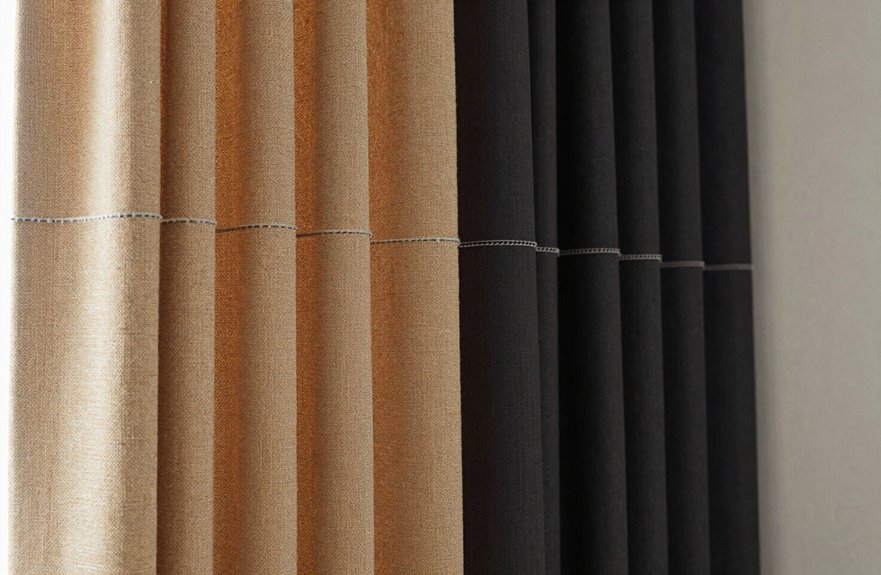
Ever wonder why blackout curtains block that annoying streetlight but your bedroom still feels like an icebox in January? The difference lies in their construction.
Blackout curtains use triple-weave fabric with special black yarns sandwiched in the middle lining, providing complete darkness. However, they are optimized for light control rather than insulation.
Thermal curtains operate on a different principle. They feature thicker three-layer constructions that reflect heat and prevent drafts from entering through windows.
- Blackout fabric prioritizes darkness over insulation.
- Thermal layers focus on temperature regulation and energy efficiency.
- Triple-weave versus three-layer construction produces substantially different results.
- Some blackout options add lining for extra darkness, though this does not improve warmth retention.
- Combined blackout-thermal options exist for those seeking both light blocking and thermal benefits.
Can One Curtain Do Both? (Blackout-Thermal Combos Explained)
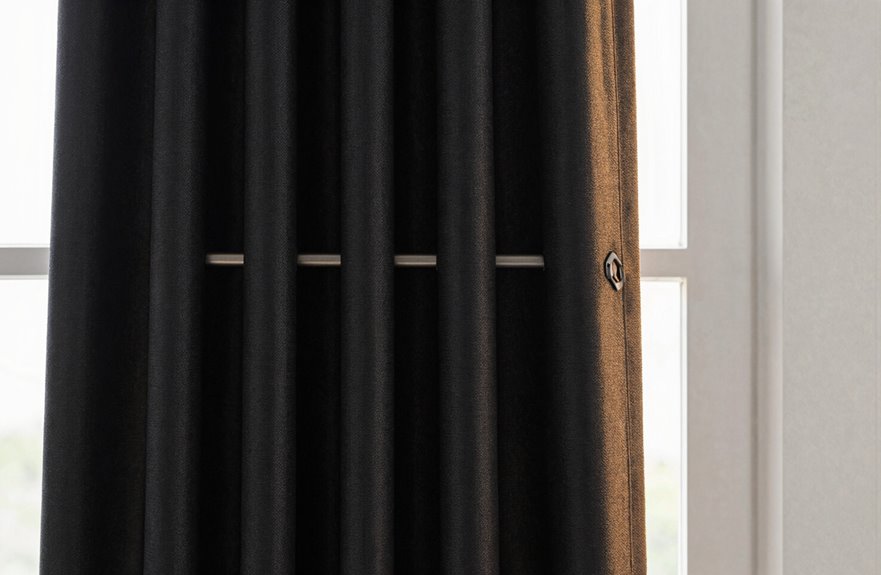
Finding the perfect curtain requires comparing options, but blackout-thermal combo curtains solve two problems with one purchase.
These hybrids use a clever three-layer design. A blackout lining blocks every ray of sunlight, while a thicker thermal layer or reflective backing keeps your room warm in January and cool in July. Triple-weave builds with dense inner linings provide stronger light blocking and better insulation than basic blackout alone.
Not every blackout curtain insulates. Check labels for explicit “100% blackout” and “enhanced insulation” claims. Look for multi-layer construction and higher R-values. Your bedroom becomes a dark, temperature-controlled space, and your energy consumption decreases.
What You’ll Actually Save: Energy Bills vs. Sleep Quality
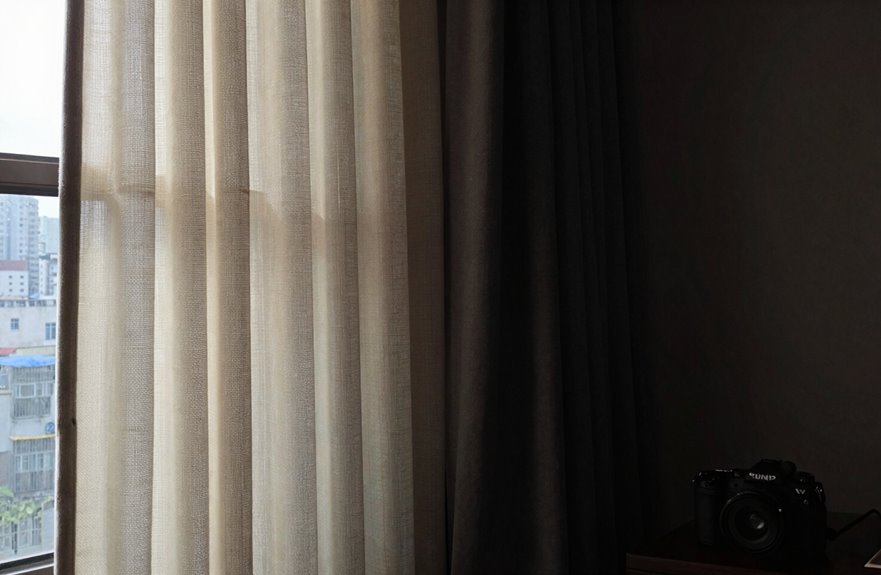
Now that we’ve covered combo curtains, let’s talk about what you’re really getting out of this, because you’re wondering if your wallet or your sleep wins bigger here. Both can win.
Thermal curtains with that triple-layer construction, like the Deconovo 52″ x 84″ panels, trap air and reduce heating bills by up to 25% in winter months. Blackout curtains block light entirely, enabling 8+ hours of uninterrupted sleep in complete darkness.
To select the right curtains for your needs:
- Measure your window first; get 63″, 84″, or 96″ lengths that touch the floor
- Buy blackout-thermal combo linings for dual functionality, such as the NICETOWN 2-pack
- Check for foam backing, which provides insulation
- Layer thick thermal liners behind basic blackout curtains if budget is a concern
- Feel the weight; 2+ pounds per panel indicates genuine thermal protection
Choose what fits your priorities. The decision depends on whether energy savings or sleep quality matters more to your household.
Buying Checklist: Weight, Length, and What “Lining” Really Means
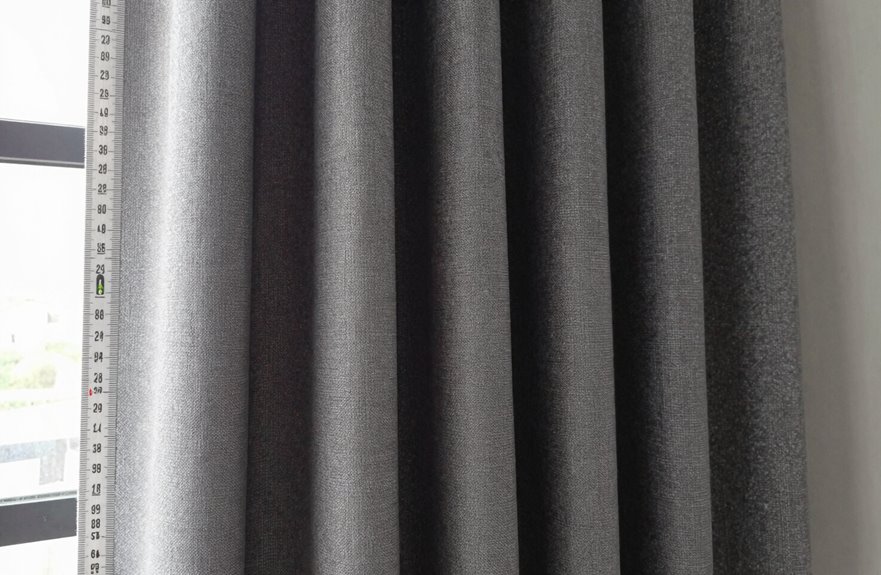
How do you walk into a store or scroll through Amazon without feeling overwhelmed by fifty curtain options? I’ve learned what actually matters.
First, check the weight. Heavier fabrics drape better and insulate more. Second, measure your length from rod to floor, as gaps let in light and drafts. Third, understand “lining.” It can be sewn-in or interlined, and that air gap matters.
| Lining Type | What It Actually Does |
|---|---|
| Blackout | Blocks 99% of light—great for bedrooms! |
| Thermal | Reduces heat transfer—saves on bills! |
| Light-filtering | Soft glow without the glare |
| Sewn-in | Attached directly, simpler but less insulation |
| Interlined | Two layers with air gap—BEST for both worlds! |
Always confirm if your “blackout” is actually rated blackout, and buy wide enough to overlap. Proper measurement and material selection prevent light leaks and energy loss.