I’ve helped friends furnish everything from cramped studio apartments to sprawling master suites.
A dresser spreads 40 to 60 inches wide and sits low at 30 to 36 inches tall, giving you tons of surface space for your morning routine.
A chest shoots 48 to 60 inches upward in a narrow 30 to 40 inch footprint, perfect for squeezing four extra square feet out of tiny bedrooms.
Dressers give you 6 to 9 mixed-depth drawers at waist height, making it easy to grab socks.
Chests stack 4 to 6 deeper drawers that reach toward the ceiling.
A wide IKEA MALM anchors a long wall like a statement piece, while a slim chest tucks into awkward alcoves without hogging floor space.
Your choice depends on whether you want horizontal convenience or vertical space-saving efficiency.
Shape and Dimensions: Wide and Low vs. Tall and Narrow
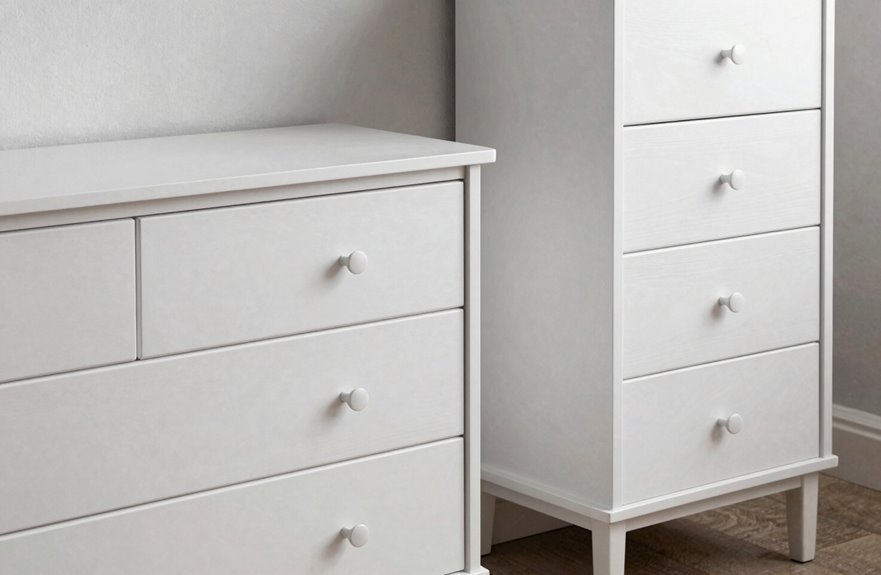
How do you tell a dresser from a chest of drawers at a glance? Check the dimensions and shape first, as this is the fastest way to distinguish them.
Check the dimensions and shape first—this is the fastest way to distinguish a dresser from a chest of drawers at a glance.
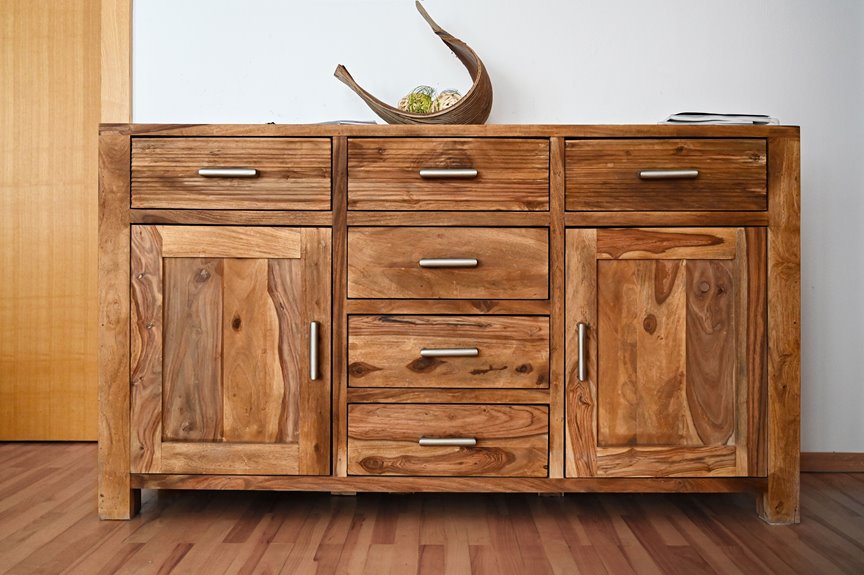
A dresser sits wide and low, hugging the ground with a footprint that spreads 40-60 inches across and stands just 30-36 inches tall. This proportioning anchors a room visually. A chest of drawers shoots upward instead, reaching 48-60 inches high but only 30-40 inches wide. The difference becomes immediately apparent.
The storage layout follows the shape. Dressers stretch horizontally, giving you that broad surface on top, perfect for a mirror or your morning coffee. Chests rise vertically, so they function well in tight spots where floor space matters more than width.
Height changes everything about room perception. A tall chest draws your eye upward while a wide dresser settles quietly along the wall.

【Stackable Closet Drawers】This 2-drawer white wooden closet organizer provides compact yet ample storage for clothes, and daily essentials. The stackable modular design lets you build vertical storage in closets, wardrobes, or dorms to maximize every inch of space.

Stackable Storage Drawers: These storage containers are stackable, vertical storage will save a lot of space,just use the rubber pads which coming with the box
Drawer Layout: Side-by-Side or Stacked
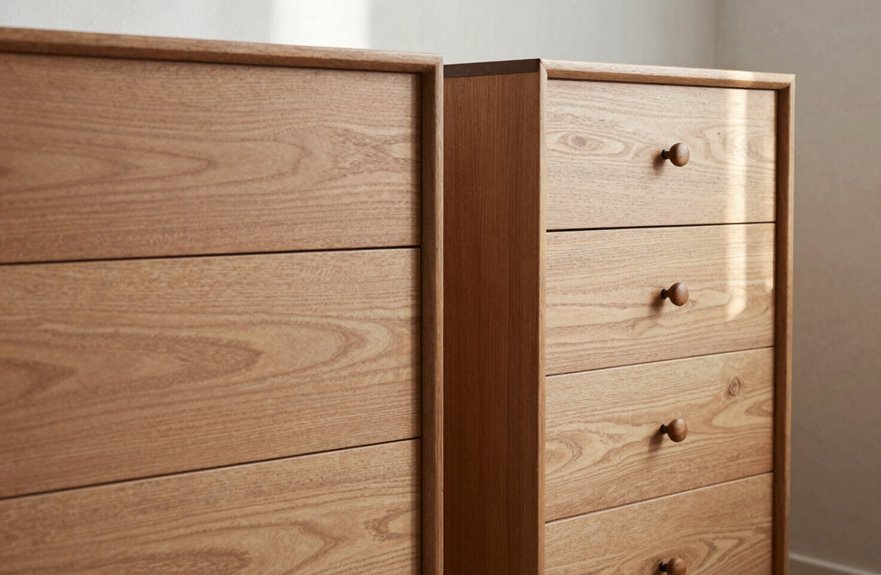
I want to walk you through how these pieces actually organize your stuff, because it’s quite different once you open them up. A dresser spreads everything out horizontally, with two to four long drawers running side-by-side up top and shorter rows underneath, so you can grab socks and sweaters without bending much. But a chest stacks everything in one vertical column, usually 30 to 40 inches tall and just 16 to 20 inches wide, which means you’re reaching up for each drawer instead of across. That vertical setup saves floor space, but it takes more steps to access everything when you’re rushing to get dressed.

【✨Upgraded Stable Fabric Dresser Tall】This tall dresser designed with 15mm thickened metal steel frame with cross support rods and wood top for durability, ensuring the safety of you, your family and pets, and enjoying a convenient life! Our higher bedroom dresser with drawers would reduce the frequency of squatting—especially for taller individuals.

Ample Storage Space: This 5-drawer dresser provides generous storage for clothing, accessories, and household essentials, keeping everything neatly organized. The sturdy wood top offers reliable support for lamps, books, décor, and other daily items

Modern White Dresser: The tall narrow dresser offers a sleek and modern design with clean lines and smooth surfaces while complementing any room in your home.
Horizontal vs Vertical Arrangement
A few ideas:
Why does the way drawers line up matter so much? It changes everything about how a piece fits your life.
A Dresser spreads out with a horizontal arrangement. Drawers sit side-by-side like friends at a lunch table. This storage configuration gives you a broad top surface for your lamp, jewelry tray, or that plant you’re trying not to kill.
But a Chest of drawers reaches for the sky with a vertical arrangement, stacking drawers in one tall column. It’s perfect when you’re tight on floor space because that smaller footprint slips right into narrow spots.
Each setup shapes your room differently. Wide and welcoming, or tall and space-smart, you get to choose what feels like home.
Drawer Count Variations
So what’s the deal with drawer counts, anyway?
When comparing dresser vs chest options, drawer layouts significantly change what you can store. Dressers give you 4 to 9 multiple drawers spread across two or three columns, while chests keep it simple with 4 to 6 stacked drawers in one sleek tower. Dressers mix short and long drawers side-by-side, so you get variety for socks and sweaters. Chests, by contrast, prioritize vertical storage with stacked drawers that go tall instead of wide, which saves serious floor space. The storage space functions differently too. Dressers lay things flat and broad, but chests stack deeper drawers high. Same room, totally different vibe. Pick what fits your life.
Accessibility Considerations
How do you actually reach your stuff when you’re half-asleep and rushing to get dressed?
I’ve been there, digging through drawers while coffee brews. Let me break down what actually works for your body.
Dresser accessibility wins for daily use. That wide, waist-high surface, usually 30 to 36 inches, means you can grab socks, jeans, and a t-shirt without bending or stretching. More drawer frontage sits right where your hands naturally fall. The furniture meets you at an optimal height.
Chest of drawers accessibility presents different challenges. That vertical storage saves floor space, but reach height becomes a real puzzle. At 48 to 60 inches tall, you’re constantly adjusting; bending deep for lower drawers or stretching toward top drawers stacked in that single column.
Both fit 18 to 22 inches deep, so retrieval feels similar at mid-level. Choose based on your morning rhythm and physical needs.
Top Surface: Dressing Area or Minimal Space
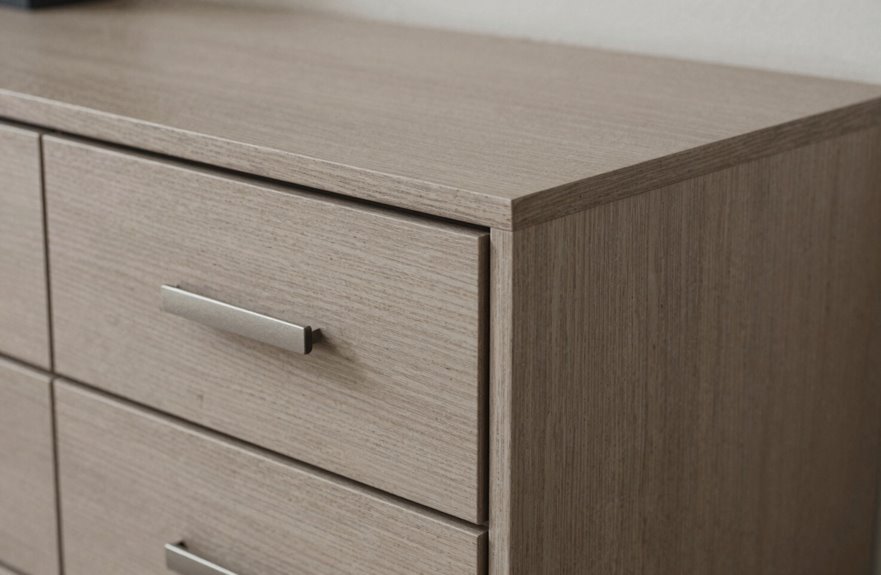
When you’re picking out bedroom furniture, where you put your stuff matters just as much as where you store it.
A dresser’s horizontal profile provides significant surface space for daily life. Its wide top surface functions as your dressing area, mirror spot, and jewelry station all in one. The vanity potential is substantial. A 63-inch wide IKEA MALM dresser can accommodate a lamp, photo frames, and a makeup organizer without difficulty.
In comparison, a chest’s narrower storage surface limits what you can actually use the top for. While you gain height, that compact top barely fits a small plant. The dresser wins because that usable surface space becomes part of your routine, not just another dusty ledge.

Used to replace damaged or missing drawer track hardware

【Heavy Duty 100 lb Capacity】 BAIDICE full extension drawer slides are built with 1.0mm cold-rolled steel and dual industrial-grade ball bearings, supporting up to 100 lbs—40 lbs more than standard slides. The precision ball bearing mechanism ensures smooth gliding even under heavy loads, while the built-in rubber crash pad keeps operation as quiet as 35 decibels.

Ease of Use: Waist-High or Full-Reach Drawers
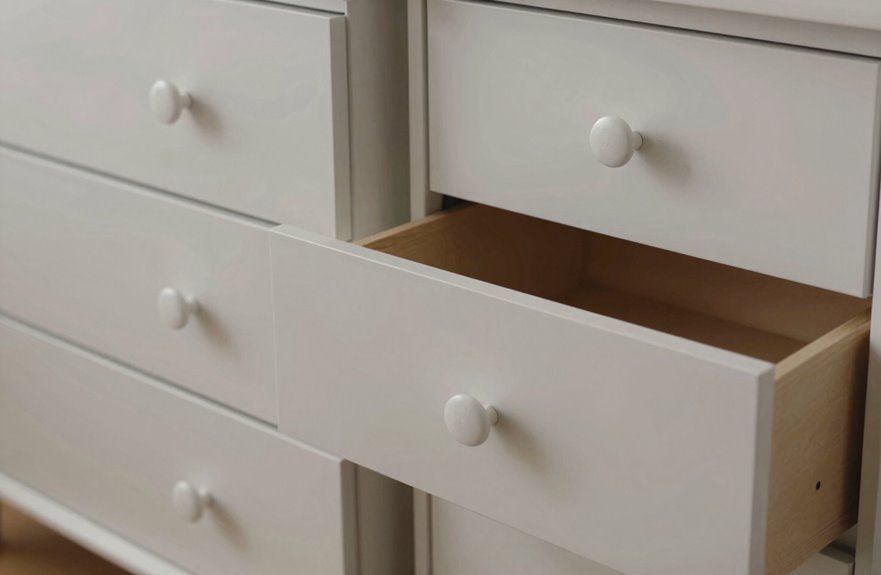
Why does height matter so much when you’re grabbing socks at 7 AM? Drawer accessibility can make or break your morning routine, and that’s where this storage furniture choice gets personal.
A dresser sits waist-high at about 30–36 inches, so every drawer opens right where your hands naturally fall. You get that full-reach feeling with no stretching, no tiptoeing, just grab and go. The wide columns keep everything within easy reach while you’re standing there half-awake.
A chest of drawers, by contrast, uses a vertical stack that pushes your stuff upward. At 5’4″, those top drawers require reaching. You gain height, but ease of use suffers when you’re fumbling for pajamas before coffee.
For consistent waist-high convenience, the dresser is the better choice.

【✨Upgraded Stable Fabric Dresser Tall】This tall dresser designed with 15mm thickened metal steel frame with cross support rods and wood top for durability, ensuring the safety of you, your family and pets, and enjoying a convenient life! Our higher bedroom dresser with drawers would reduce the frequency of squatting—especially for taller individuals.

Set of 9: This adorable jewelry drawer organizer is the perfect solution for all your small jewelry storage needs! It includes 3 mini 6 grid trays, 3 mini 4 grid trays, 2 ring trays, and 1 empty tray, offering plenty of space for your small jewelry items like rings, studs, and earrings

Large Capacity: This storage cabinet has 5 drawers and a flat top. You can sort and place many things inside to make your room tidier. The storage space is large enough to meet your needs.
Floor Space: Which Dresser Style Fits Small Bedrooms
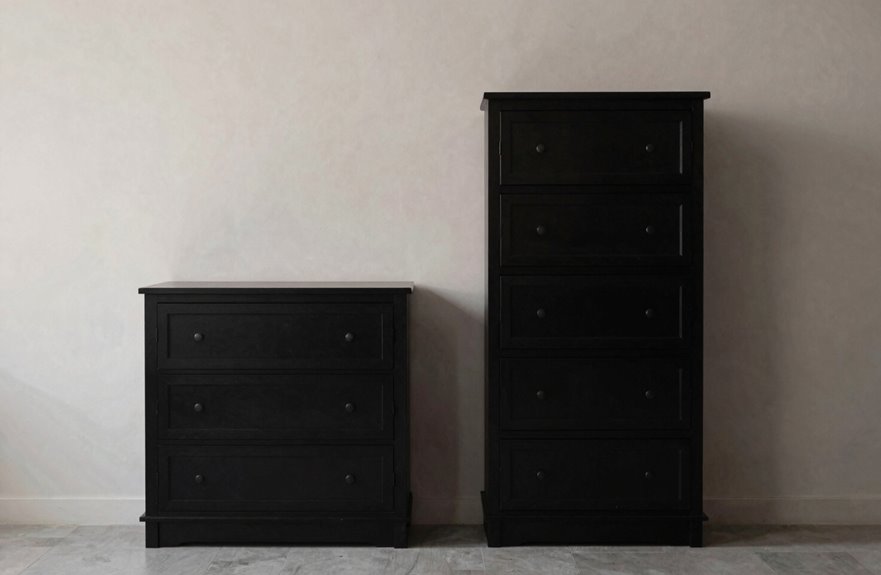
Where exactly are you supposed to put all your stuff when your bedroom’s barely bigger than a walk-in closet? In tight quarters, floor space becomes critical.
When your bedroom’s barely bigger than a walk-in closet, floor space becomes everything.
A chest of drawers is the optimal choice for small bedrooms. It’s tall and narrow, so you’re using vertical storage instead of consuming precious walking area. A dresser spreads out with that wide, low horizontal footprint. Suddenly you’re bumping into corners just to get to your bed.
In rooms under 12×12 feet, a chest saves about 4 square feet. That’s significant. Plus, that open space underneath allows you to actually move around without doing the sideways shuffle.
When horizontal wall space is tight, smart storage solutions mean going up. Your mobility will improve with vertical storage choices.

【Spacious 5-Drawer Dresser with Storage】 This wide fabric dresser features 2 large drawers for jeans, pants, or sweaters, and 3 smaller drawers for socks, underwear, T-shirts, or accessories. Perfect as a bedroom dresser, closet organizer, or storage chest for entryways, and dorms.

【78.7 Inch Long Dresser with 15 Drawers】Extra Long, Enlarged Storage. Your closet overflows, until this large dresser for closet. Between seasonal clothes, extra blankets, there is zero space left? This extra-wide long dresser gives you 15 storage fabric drawers. Finally, your yoga pants, spare cables, and winter hats have a real home

【9 Fabric Drawer Storage Dresser】63 x 13.8 inch wide desktop combines with 9 deep fabric drawers (20 x 13.8 inch), which means this chest of drawers for bedroom will bring ample storage. No more searching for lost clothes or digging through piles of clutter, each drawer offers ample space for your media collection, gaming accessories, clothes, beddings, and more
Storage Capacity: Drawer Count and Volume Compared
Dressers usually give you 6 to 9 drawers spread across a wide surface. Consider the IKEA MALM 6-drawer dresser at 63 inches wide. In contrast, a chest like the Prepac Astrid Tall 5-drawer squeezes 4 to 6 deeper drawers into a vertical tower around 30 inches wide. That width difference means you’ll get more total cubic feet with a dresser for bulky sweaters and jeans. However, a chest’s deeper individual drawers, often 15 inches front-to-back versus a dresser’s 12 inches, accommodate tall items like blankets more effectively. You should measure each drawer by multiplying width x depth x height to determine which setup actually fits your belongings. Total drawer count is less important than whether your clothes will fit inside the available space.

【Stackable Closet Drawers】This 2-drawer white wooden closet organizer provides compact yet ample storage for clothes, and daily essentials. The stackable modular design lets you build vertical storage in closets, wardrobes, or dorms to maximize every inch of space.

MULTIFUNCTION DRESSER: Match perfectly with other WLIVE storage towers; This chest of drawers is great for bedroom, closet, living room, hallway, dorm and office.

This solid-colored shift mini dress is crafted from velvet. It features a subtle scoop neck, deeply cut armholes, and a dramatic low-open back, creating an overall allure of understated sophistication
Drawer Count Comparison
How exactly do dressers and chests stack up when we’re counting drawers. A dresser gives us 6 to 9 drawers spread across two or three wide rows, offering more compartments for storage. Meanwhile, a chest of drawers stacks 4 to 6 deeper drawers in one tall column.
Here’s the breakdown:
| Feature | Dresser | Chest of Drawers |
|---|---|---|
| Drawer Count | 6-9 drawers | 4-6 drawers |
| Layout | Wide, horizontal rows | Tall, vertical storage |
| Drawer Style | Mixed long and short | Uniform, deeper drawers |
| Surface Space | Bigger horizontal surface | Smaller footprint |
Dressers maximize drawer count and provide a top surface for decorative items or a lamp. Chests excel at fitting storage capacity into tight bedroom spaces. Both pieces of bedroom furniture serve different purposes depending on your room’s layout and needs.
Volume Per Drawer
Why does drawer count only tell half the story? Because volume per drawer changes everything about how we actually live with our furniture.
My first chest of drawers had four deep drawers in vertical stacking. Great for sweaters, but my socks got lost in the cavernous depths. Meanwhile, my dresser spreads 6-9 drawers across two columns with mixed drawer depths. Suddenly I’ve got a spot for everything.
What actually matters for storage capacity:
- Dressers give you shallow and deep drawers for different items
- Chest of drawers packs uniform volume into fewer, roomier compartments
- Your folding style determines which drawer depths work for you
A chest maximizes vertical space per footprint, but I find dressers win on total flexibility. It’s not just about fitting stuff; it’s about finding it again.
Total Storage Space
So what’s the real score when we actually measure what these pieces can hold? The dresser vs chest debate gets interesting here.
Dressers spread out with that wide horizontal footprint, with 6 to 9 drawers across 2 or 3 columns. That’s serious storage capacity for your folded clothing. Chests go up instead, stacking 4 to 6 deeper drawers in one slim tower. Vertical storage is their superpower.
Here’s my quick breakdown:
| Feature | Dresser | Chest of Drawers |
|---|---|---|
| Drawer Count | 6–9 drawers | 4–6 drawers |
| Drawer Depth | Wider, shallower | Narrower, deeper |
| Space Use | Horizontal footprint | Vertical storage |
| Best For | Maximum overall storage space | Tight corners and small rooms |
For pure volume, dressers usually win. Chests fit where dressers can’t.
What to Store: Clothing, Linens, and Better Fits
Where exactly should I stash my favorite hoodie or those extra sheets? Let me break down what actually fits where in your bedroom furniture.
A dresser gives you that wonderful horizontal spread with 2–3 wide columns for serious clothing storage for your daily rotation. Think folded t-shirts, pants, socks, and underwear, all organized and easy to grab. Plus that top surface works perfectly for a mirror or your TV.
Vertical versus wide drawers really matters:
- Dressers = linens storage winner for sheets and towels
- Chest of drawers = bulky sweaters and blankets with 4–6 deep drawers that stack high
- Small spaces = chest saves your floor space
A chest of drawers keeps things compact. A dresser provides better everyday access. Choose based on your specific needs.

【Excellent Storage Capacity】Bedroom dresser with 5 drawers provides plenty of storage space, which can classify your messy items as your need; The wooden table top with good load-bearing performance provides a hard surface to place lamps, books, decor, and more.

【Sufficient 7-Drawers Storage Space】Tall vertical dresser‘s 7 white drawers provide enough storage space to store your essentials and sundries. The thick wooden top is hard-wearing and waterproof, and can hold lamps, alarm clocks, vases or other decorative items. Drawers are suitable for organizing clothes, socks, underwear, scarves, blankets, etc.

Ample Storage Space: This 5-drawer dresser offers roomy storage for clothes, accessories, and everyday essentials, keeping your space neat and organized. The sturdy wood top easily supports lamps, books, plants, and décor items
Bedroom Placement: Where Each Piece Fits Best
Now that I’ve got my stuff sorted, I need to figure out where these pieces actually go in my room.
A wide dresser spreads out along your longest wall, about 60 inches across, and gives you space for a mirror or even a small TV on top. This works well when you have adequate room.
A tall chest saves space in cramped layouts. This storage furniture stands narrow and proud, think 30 inches wide but 50+ inches up, so you get tons of vertical storage without eating your floor. I squeezed mine into a weird corner by my closet and gained instant organization.
For tight spots like alcoves or hallways, use a chest of drawers. In a spacious master bedroom, the dresser serves as your anchor piece. Match your storage furniture to your space, and your room will be properly organized.

[Choose The Size Wisely] To ensure you select the correct size for your dresser drawer slides, measure the depth of your drawer and make sure there is an extra 0.5 inches of space on both sides for mounting. These slides are suitable for drawer depths ranging from (depth range)

Material: Made of 95% polyester and 5% spandex, this women's 3/4 sleeve dress offers a soft, comfortable, and slightly stretchy feel with a smooth drape for easy everyday wear.

Smooth & Quiet Operation: High-quality ball bearings ensure smooth, jitter-free opening and closing with minimal noise
Style Impact: Dresser as Statement or Chest as Storage
I get excited when we’re talking about making a room feel like you, and picking between a dresser or chest totally changes the vibe. A wide dresser, like the IKEA MALM at 63 inches across, gives you a horizontal stage for your lamp, that weird ceramic cat you love, and maybe a small TV, so it becomes an instant focal point that anchors your whole wall. When working with a tight corner or narrow alcove, a tall chest like the South Shore Libra at 31.5 inches wide works better instead; it stacks your stuff vertically without hogging floor space, and that slim silhouette fades into the background while still holding tons of clothes. You’ve got to think about your room’s scale too. If your ceiling’s low, a chest might feel cramped and towering, but in a spacious master with high ceilings, that same piece balances everything out perfectly.

Large Capacity Pantry Organizers - This 3-piece set features 27 compartments, offering generous storage for tea bags, coffee pods, sauces, cosmetics, lipsticks, nail polish, jewelry, and craft supplies. Keep the countertops neat and organized


【Every Gap Is a Chance】: Before you complain about not having enough space, have you checked the narrow gaps between the fridge and wall, or beside the washer? With this vertical dresser, you can easily turn them into storage.This beautiful dresser offers ample storage space with its spacious fabric drawers, the fabric drawers are easy to open and close, making it convenient to store and access all of your belongings.
Visual Focal Points
Dressers are built to grab attention. Their width and low height create a bold, horizontal silhouette that anchors a room with significant visual focal point presence. The generous top surface serves as a display area for lamps, family photos, or televisions.
A chest of drawers offers a totally different aesthetic. It’s tall and narrow with a vertical stack that draws the eye upward. The height actually makes ceilings feel higher, which benefits smaller or cozier spaces.
Each piece creates distinct design advantages:
- Dresser width dominates longer walls as a statement centerpiece
- Chest height fits narrow spots and corners without crowding
- Each silhouette tells a completely different design story
Room Scale Balance
Those visual differences aren’t just for looks. They completely change how a room feels when you walk in. When picking between a dresser and chest of drawers, room scale should be your first consideration.
A dresser spreads out wide, giving you that horizontal footprint that anchors a long wall effectively. It makes a statement and provides tons of surface space for your lamp, photos, or even a TV.
A chest of drawers, by contrast, is your vertical balance solution. It shoots upward, drawing your eye up and making small rooms feel taller and more open. The storage is stacked rather than spread.
A 60-inch dresser can dominate a master bedroom, while a slim 30-inch chest fits beautifully into tight guest rooms. Your design impact depends entirely on which silhouette fits your space.
Design Versatility Options
A dresser gives you that wide, low profile with a large top surface for your mirror, jewelry box, or that cute lamp you found. It’s a bold statement piece that anchors your room aesthetics instantly.
A chest of drawers, by contrast, is your space-saving solution. Its vertical silhouette stretches upward, making ceilings feel taller and tight corners work harder.
How to choose:
- Go dresser when you want drama and display space
- Pick chest of drawers for compact, clean-lined storage solutions
- Mix both if you refuse to choose
Either way, you’re crafting a functional space that reflects your aesthetic preferences.
Using Both: Layout Tips for Dresser and Chest
If you’ve got the space, using both a dresser and a chest of drawers is an effective bedroom storage solution. This combo transforms your layout and maximizes storage capacity.
Here’s the plan: anchor your dresser against the longest wall. It’s wide and low, making it perfect for a lamp or jewelry tray. Tuck that tall chest of drawers into a narrow corner or alcove to use vertical space without consuming floor space. You’ll get varied drawer sizes for everything from sweaters to scarves.
Maintain proper clearance by leaving 30 inches so drawers glide open and you can move around. Match finishes for visual harmony. This creates a cohesive storage solution that feels intentional and reflects your personal style.

【🏠Ample Storage Drawer Tower】Measures 11.81"D x 34.29"W x 41.77"H, our fabric dresser is equipped with 12 detachable fabric drawers and spacious woodtop, which facilitate the orderly storage of clothes, blankets and daily items, while the desktop provides display space for artworks and small ornaments, and more life style!

【Spacious 8 - Drawer Storage Solution】Maximize your space with 8 extra - wide, removable drawers—perfect for neatly organizing clothes, bedding, accessories, and more. The sturdy wooden top doubles as a stylish TV stand, console table, or display area, making it versatile for any room. Use it inside or outside the closet to declutter with ease!

【78.7 Inch Long Dresser with 15 Drawers】Extra Long, Enlarged Storage. Your closet overflows, until this large dresser for closet. Between seasonal clothes, extra blankets, there is zero space left? This extra-wide long dresser gives you 15 storage fabric drawers. Finally, your yoga pants, spare cables, and winter hats have a real home