These ideas run from a pack of matching hangers to a full modular system that eats a weekend and your budget if you let it.
What picks one over another is whether you own the wall you are screwing into or need to walk away clean when the lease ends.
A basic closet kit covers most reach-in spaces without starting from scratch, but only if you are allowed to patch screw holes later.
1. Build a Closet Organizer
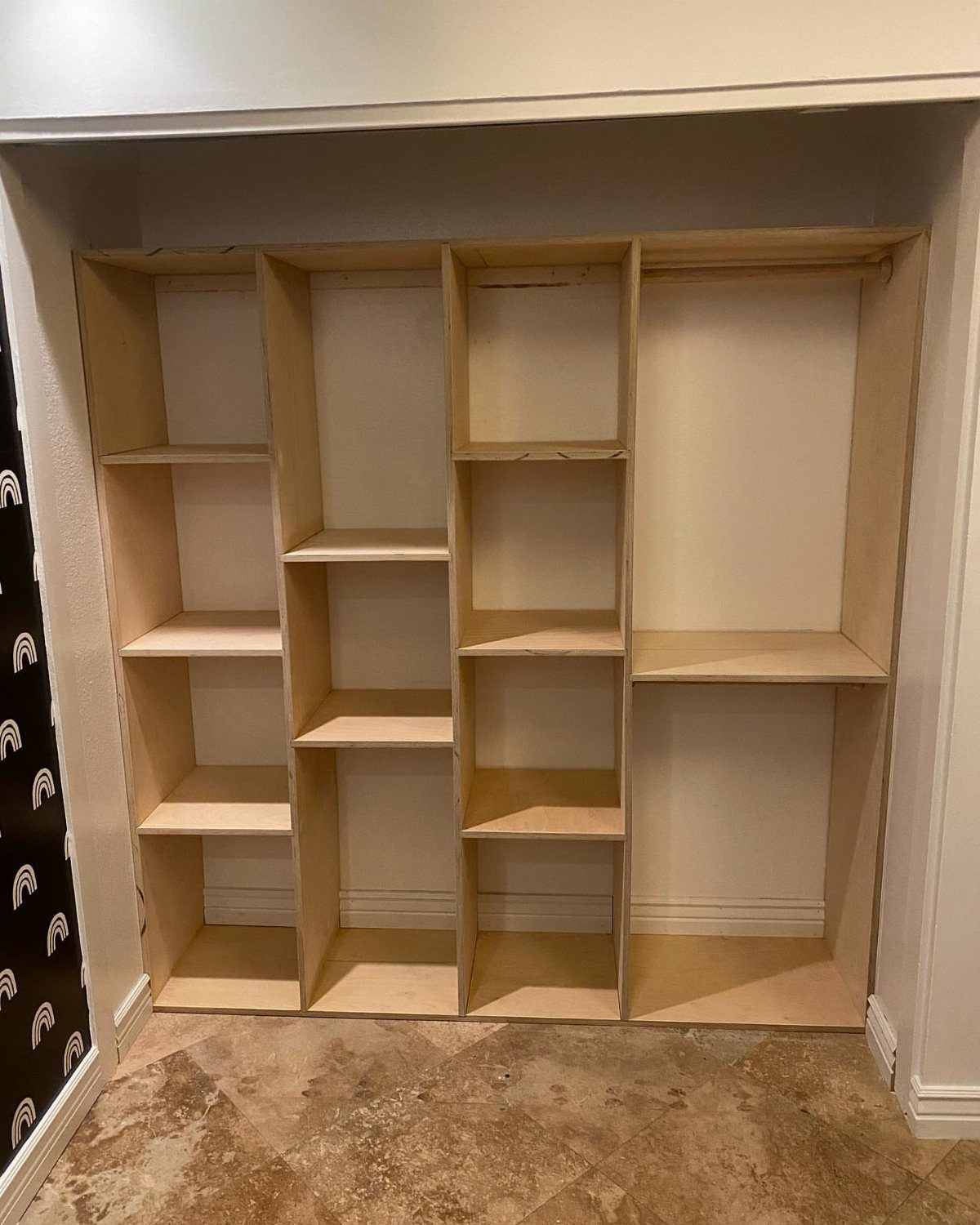
A built-in organizer turns an empty alcove into actual storage instead of wasted depth.
Before you start, measure the back wall and the sides separately; alcoves are rarely square, and your cubby widths need to fit what is there, not what should be there.
I would check whether the floor can take the weight of shoes or folded items without sagging, since tiled flooring tells you nothing about the subfloor beneath.
Pine or poplar boards are cheap material for a simple cubby system, and you only need a circular saw, drill, and level to build it.
The hanging rod section needs a closet rod and flanges from any hardware store, mounted into studs or with toggle bolts if the alcove walls are hollow.

DOES THIS FIT MY CLOSET?: Fits any walk in or reach in closet that is 2-4 ft wide.

【Spacious Yet Space-Saving】Size at 12.2” D x 25.6” W x 70.9” H. The wood shoe rack can hold up to 30 pairs of shoes while taking up little floor space. Suitable for small/narrow spaces, no matter entryway or closet.

【8FT Sturdy Closet Organizer System with Generous Storage Space】 With 5 hanging areas,this wardrobe can accommodate up to 400 pieces of clothing, from T-shirts and jackets to long dresses and suits. The top wooden shelf maximizes organization and can store your large items such as quilts or suitcases. The bottom space can also accommodate shoes. Say goodbye to traditional stacked shelves and hang up all your clothes
2. Install Adjustable Shelves
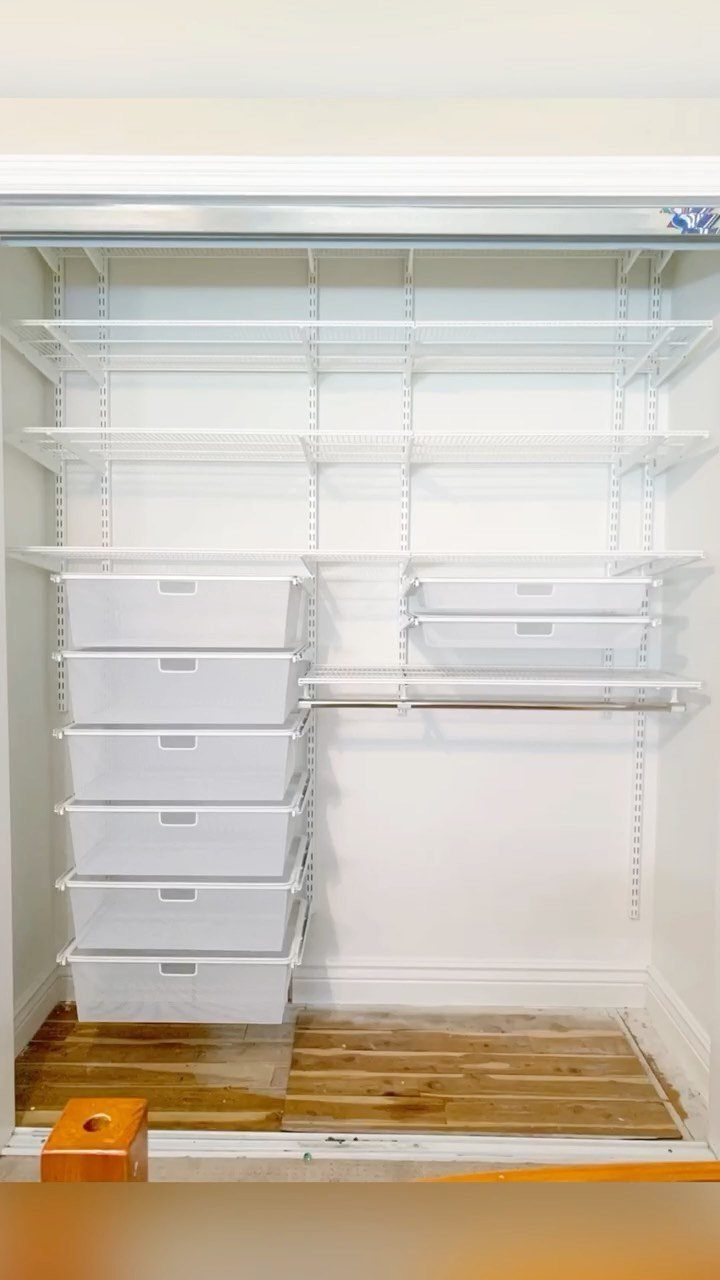
Wire systems with slotted standards let you move shelves up or down as your storage changes, which matters when you are working with one closet for multiple seasons.
The vertical tracks screw into studs at standard spacing, or into wall anchors if you hit drywall between them.
I have seen people mount standards too far apart and watch the shelf tilt under weight; for clothing loads I keep them closer together than you might think.
Pull-out baskets need deeper shelves than flat ones, so plan the lower half of the wall for basket depth and the upper half for shallow folded items.
Unfinished wood flooring means you do not have to protect finished hardwood during install, but it also means the closet is probably in a basement or older home where wall plumb can be off.

CLOSET ORGANIZER SYSTEM: All in one wire closet shelves kit that creates up to 96 in. of hanging space and 144 in. of shelf space; Kit includes hang track, standards, shelf brackets, closet rods, closet rod support and SuperSlide shelves

5 shelf wire rack offers handy storage space and easy access to tools and supplies

Adjustable Height for Custom Closet Organization: This 2-pack purse organizer for closet features 3 height-adjustable holes per rack, letting you customize vertical spacing freely. Suitable for totes, clutches, shoulder bags, chain bags, and designer handbags of different heights. Maximize your wardrobe storage and protect bags from crushing or deformation for closet handbag storage
3. Use Baskets for Organization

Woven bins with front-facing labels turn open shelving into something you can actually maintain, because the label tells you what belongs there before the clutter starts.
Labels help most when they are specific enough to guide but not so narrow that they fight you: "T-SHIRTS" works better than "Cotton T-Shirts, Medium."
I would skip the chalkboard labels that are everywhere on Pinterest; they smudge and you will stop rewriting them.
Fabric bins are easy to find at any big-box store, and you can cut costs by buying flat-pack cardboard-frame versions and lining them yourself.
Woven bins keep their shape on their own, but I still like a shelf with a lip so they don’t slide when I pull one out.
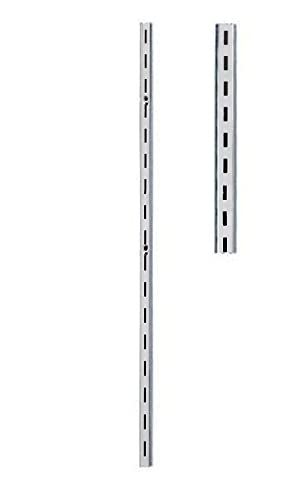
3 ft Chrome Slotted Standard: This 3 ft single slotted standard has a chrome finish and is a space saving way to merchandise clothing and accessories in a linear, organized way.

SHELFTRACK SYSTEM: ClosetMaid's ShelfTrack standard & bracket system allows wire shelves to be adjusted to any height, making storage more versatile in both large and small spaces

1.Universal Compatibility & 1.25" Slot Pitch: Designed for maximum versatility, these adjustable shelf brackets perfectly fit dual-slot wall standards with a standard 1.25-inch (32mm) slot pitch. Please verify your rail spacing before purchasing to ensure a seamless fit. These adjustable shelving brackets are the professional choice for creating a stable and organized wall-mounted system.
4. Hang Double Rods

2 rods stacked in the same depth doubles your hanging capacity without touching the width of the closet, which is the first thing people run out of in apartments.
The upper rod sits at standard height and the lower one lands far enough below it to leave clearance for shirts above and pants or skirts below.
I would not put double rods in a shallow closet; the clothes will hang against each other and wrinkle.
Light clothing on white hangers is smart in a double rod space: dark hangers make everything harder to distinguish. Clear bins on the top shelf use the height that is too high for daily access but perfect for out-of-season storage.

【Upgrade Adjustable Width & Height】The width range is from 17 to 29 inches, and the height range is from 14.6 to 37.1 inches. The user-friendly design has six adjustable heights, which can maximize the unused space beneath hanging clothes. Dimensions: 37.1"H x 29"W (Fully Expand)

【Space Saving Closet Organizer – Maximize Vertical Storage】 Transform wasted wardrobe space with this adjustable closet hanging rod. Its innovative vertical design eliminates clothes crushing and messy piles, instantly doubling your closet capacity. Perfect closet hanger extender rod for small apartments, dorms, and compact wardrobes—turn dead space into organized storage.
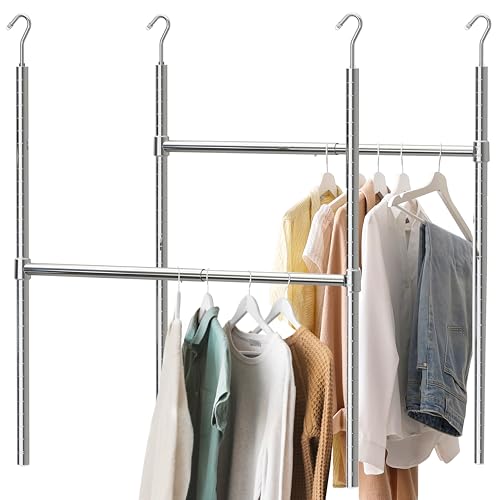
Instantly Double Your Storage: Transform unused vertical space into a second tier to maximize capacity in small closets, dorms, and apartments
5. Shelves Above Hanging Rods

The shelf above the rod is dead space in most closets, usually filled with whatever got thrown up there. Building it out as a real shelf, deep enough for folded jeans, sweaters, or bins, gives them a proper home.
A dark grey system makes the shelf look built-in, but the same idea works with painted MDF against white walls if you are renting and need something you can remove later.
I would check the shelf height before committing: too low and you cannot lift hangers off the rod cleanly, too high and you need a step stool every morning.
The shelf sits high enough above the rod to stay at a comfortable reach while you are standing.

Perfect Fit for Cube Organizers: These cube storage bins (10.5 x 10.5 x 11") fit most standard cube organizer shelves, making them ideal storage bins for cube organizers while maximizing your storage space and keeping everything neatly organized.

PREMIUM QUALITY MATERIAL: The basket labels are made of sturdy PVC material, durable and.

【VERSATILE & DECORATIVE】These collapsible storage baskets for shelves are a comprehensive storage and organization solution, perfect for organizing your clothes, toys, books, household items. Neutral-toned design blends seamlessly with any home decor, keeping your home truly organized with a fresh clean vibe.
6. Use Clear Storage Bins
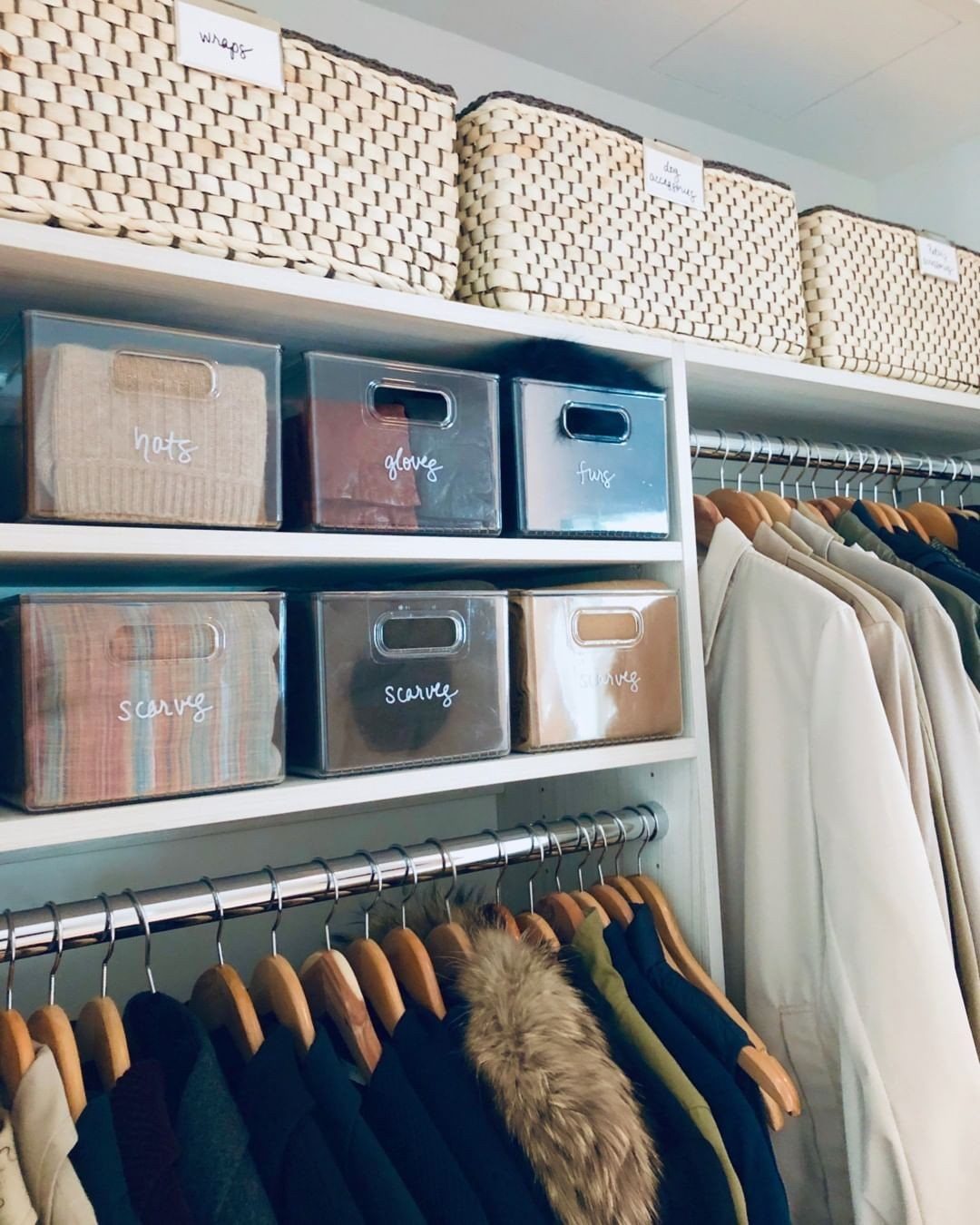
Clear bins with handwritten labels let you see what you have without the lid coming off, which saves time and keeps the stack intact.
Seasonal accessories, hats and gloves and scarves, are the kind of items that scatter into drawers and disappear.
I would use a label maker or neat handwriting; a label like "furs" is specific enough to guide, vague enough that you will not rebel against it later.
These bins are cheap at Target or Walmart in shoebox size, not much more for sweater boxes.
The woven baskets above them are doing different work, hiding things that do not need to be seen, and the combination of clear and opaque in one closet is what makes the system last: you know which level of visibility each item needs.

【Spacious Yet Space-Saving】Size at 12.2” D x 25.6” W x 70.9” H. The wood shoe rack can hold up to 30 pairs of shoes while taking up little floor space. Suitable for small/narrow spaces, no matter entryway or closet.

【Spacious Yet Space-Saving】Size at 12.2” D x 25.6” W x 70.9” H. The wood shoe rack can hold up to 30 pairs of shoes while taking up little floor space. Suitable for small/narrow spaces, no matter entryway or closet.

【Spacious Yet Space-Saving】Size at 12.2” D x 25.6” W x 70.9” H. The wood shoe rack can hold up to 30 pairs of shoes while taking up little floor space. Suitable for small/narrow spaces, no matter entryway or closet.
7. Install Closet Lighting
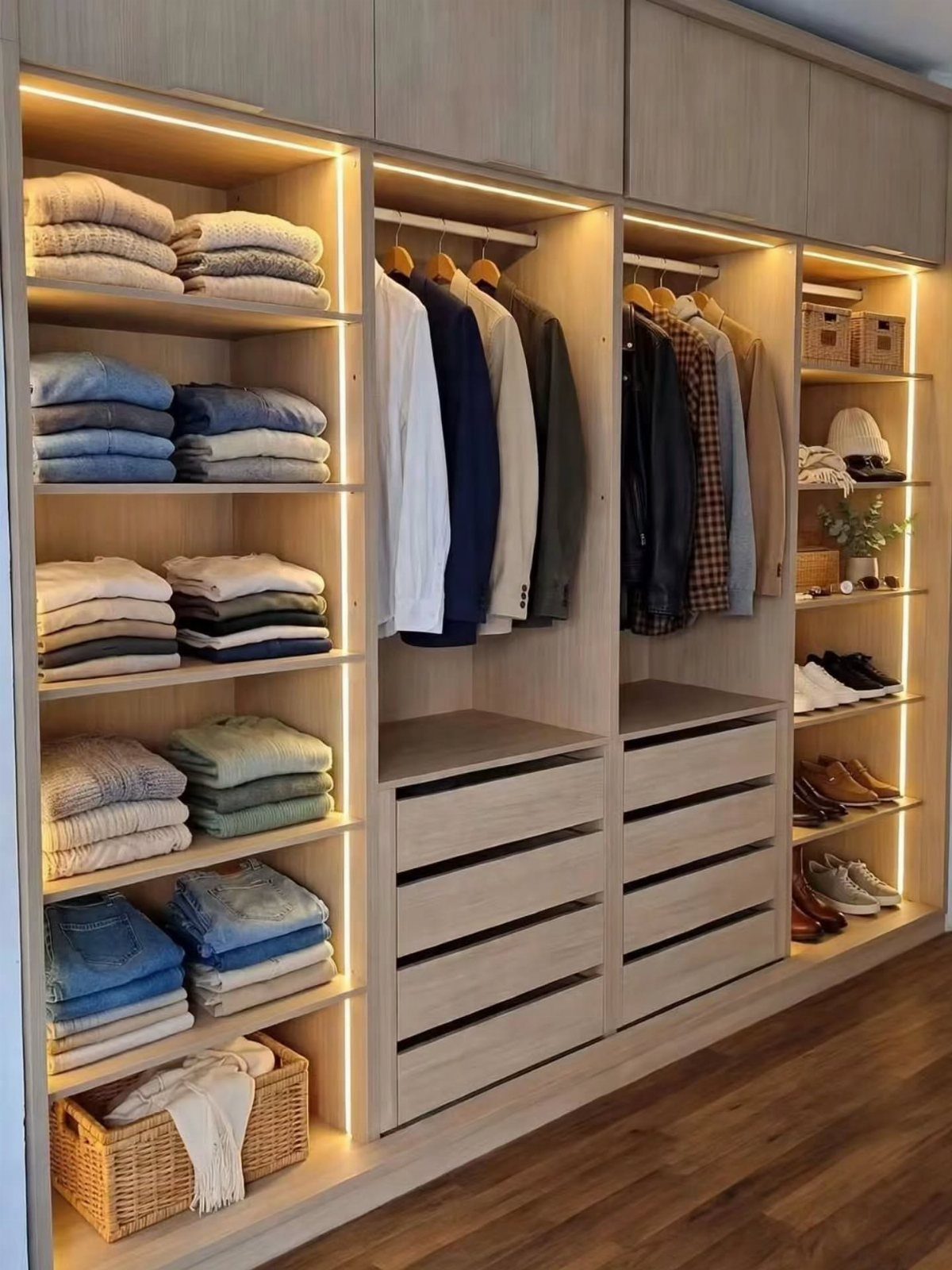
LED strip lighting built into the frame of a closet system turns every shelf and rod into something you can actually see before dawn or after dark.
Warm-toned strips along vertical and horizontal members cast light where overhead fixtures leave shadows. I would check whether your power source can handle the draw before buying a long run; battery-powered strips are easier to install but need recharging.
Hardwired options look cleaner and last longer, though they take more work up front. Strips mounted flush against light wood help the light bounce rather than absorb it.

Enhanced Load-Bearing Capacity: The shelves are more densely arranged, which increases the load-bearing capacity, and the smaller gaps are more suitable for the storage of items
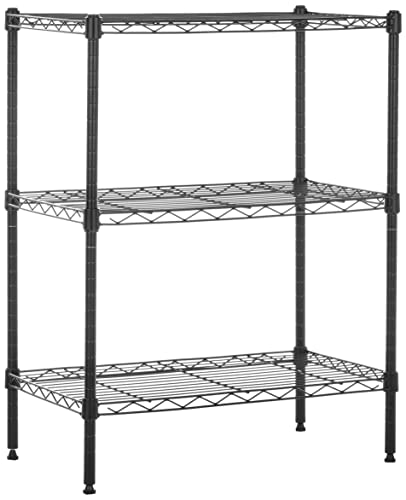
3 shelf wire rack offers handy storage space and easy access to tools and supplies

5 shelf wire rack offers handy storage space and easy access to tools and supplies
8. Install Sliding Doors
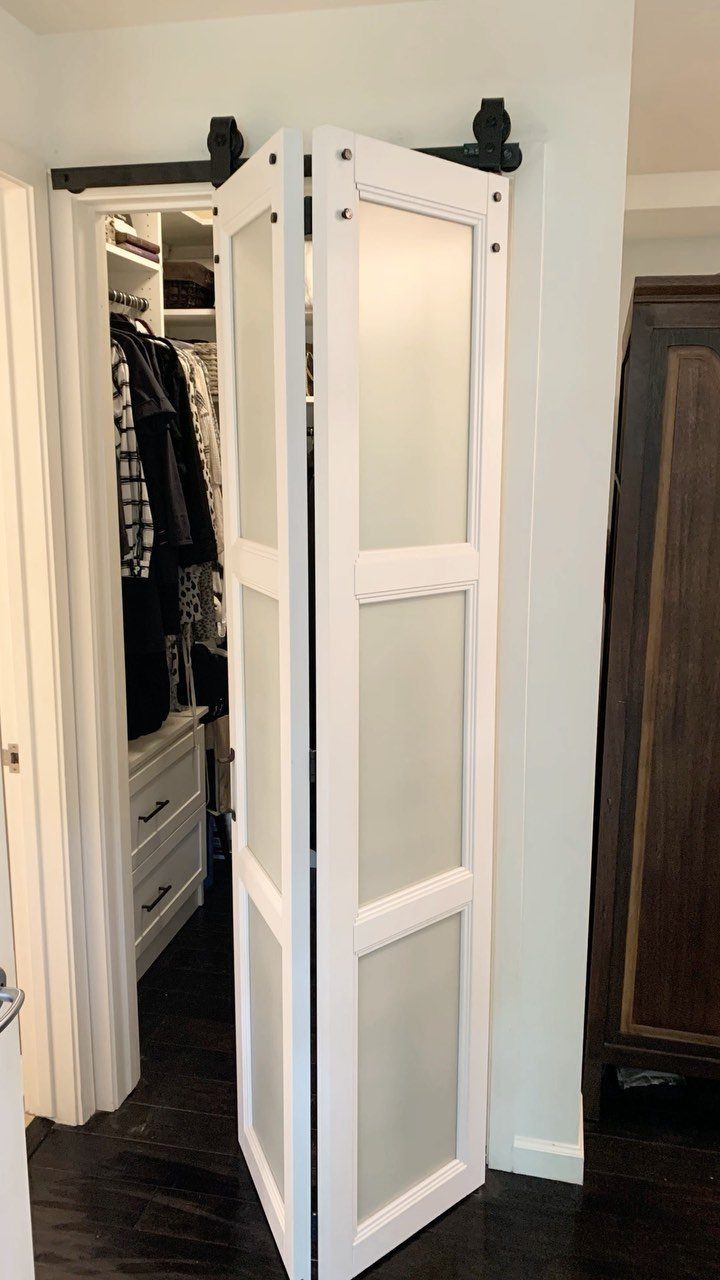
A sliding barn door on an exposed upper track buys back the floor space that a swinging door steals in a narrow bedroom or hallway.
I would measure the wall space beside the opening first; the door needs somewhere to slide, and baseboards or outlets can interfere.
Frosted glass hides clutter without going fully opaque, which matters if the closet interior is dark. The hardware is the expensive part; the door itself can be a simple panel if the track is solid.

Specifications: Size: 17 x 900 x 6mm / 0.67 x 35.43 x 0.24 inches (W x L x H); Slotted Hole Size: 8 x 3mm / 0.31 x 0.12 inches (L x W); Hole Spacing:11mm / 0.43 inches; Material: Aluminum alloy; Color: Black; Package Content: 8Pcs x Shelf Brackets; 32Pcs x Screws;

Heavy Duty High-Quality Steel - KOVOSCH heavy duty shelf bracket are made from high quality steel with a fine painted surface, strong and long-lasting use.

More than ten times stronger than conventional pegboard and 32in Tall x 16in
9. Label Storage Containers
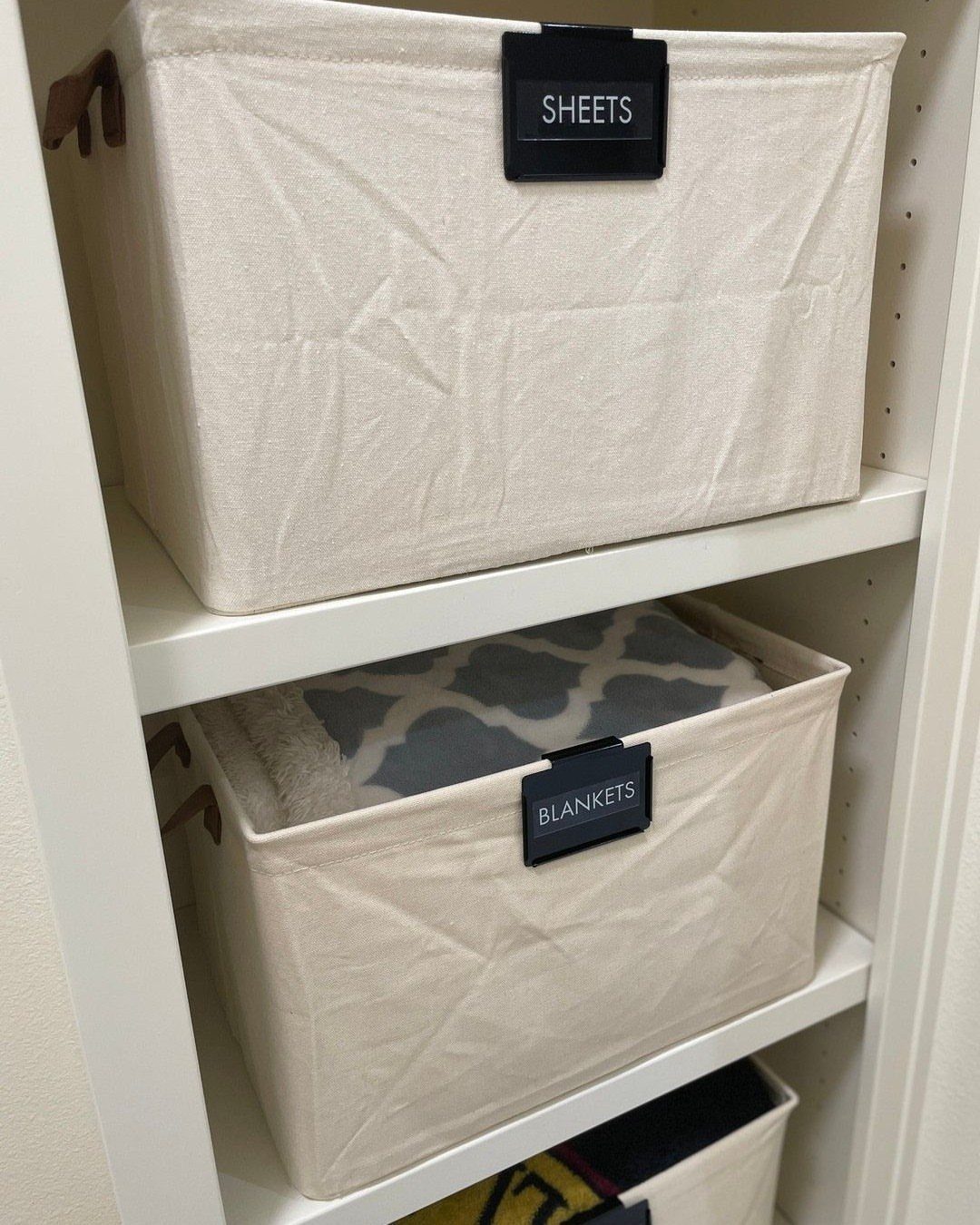
Clip-on labels on fabric bins turn "I know I put it somewhere" into a thirty-second retrieval.
Labels marked "SHEETS" and "BLANKETS" are specific enough to guide without boxing you in later. I would skip adhesive labels on fabric; they peel and look worse every month.
Clip-on or tie-on tags let you swap categories when your storage needs shift. White bins against white shelves keep the visual noise down, which matters in a closet you open every morning.
Handwritten labels are fine if your writing is legible; a label maker is worth it only if you have ten or more bins to mark.

【Space Saving】- Hang the clothes hanging bar directly over your closet rod, adjusting the height and width to maximize your hanging space in the wardrobe.

Instantly Double Your Storage: Transform unused vertical space into a second tier to maximize capacity in small closets, dorms, and apartments

【Upgrade Adjustable Width Height Closet Extender Hanging Rod 】This closet rod features an adjustable width from 16 to 27.9 inches and a height range from 16.7 to 28.7 inches. With six different height settings, it maximizes the unused space beneath hanging clothes. Fully expanded, it measures 28.7 inches in height and 27.9 inches in width, making it perfect for optimizing your closet storage.
10. Closet Layout
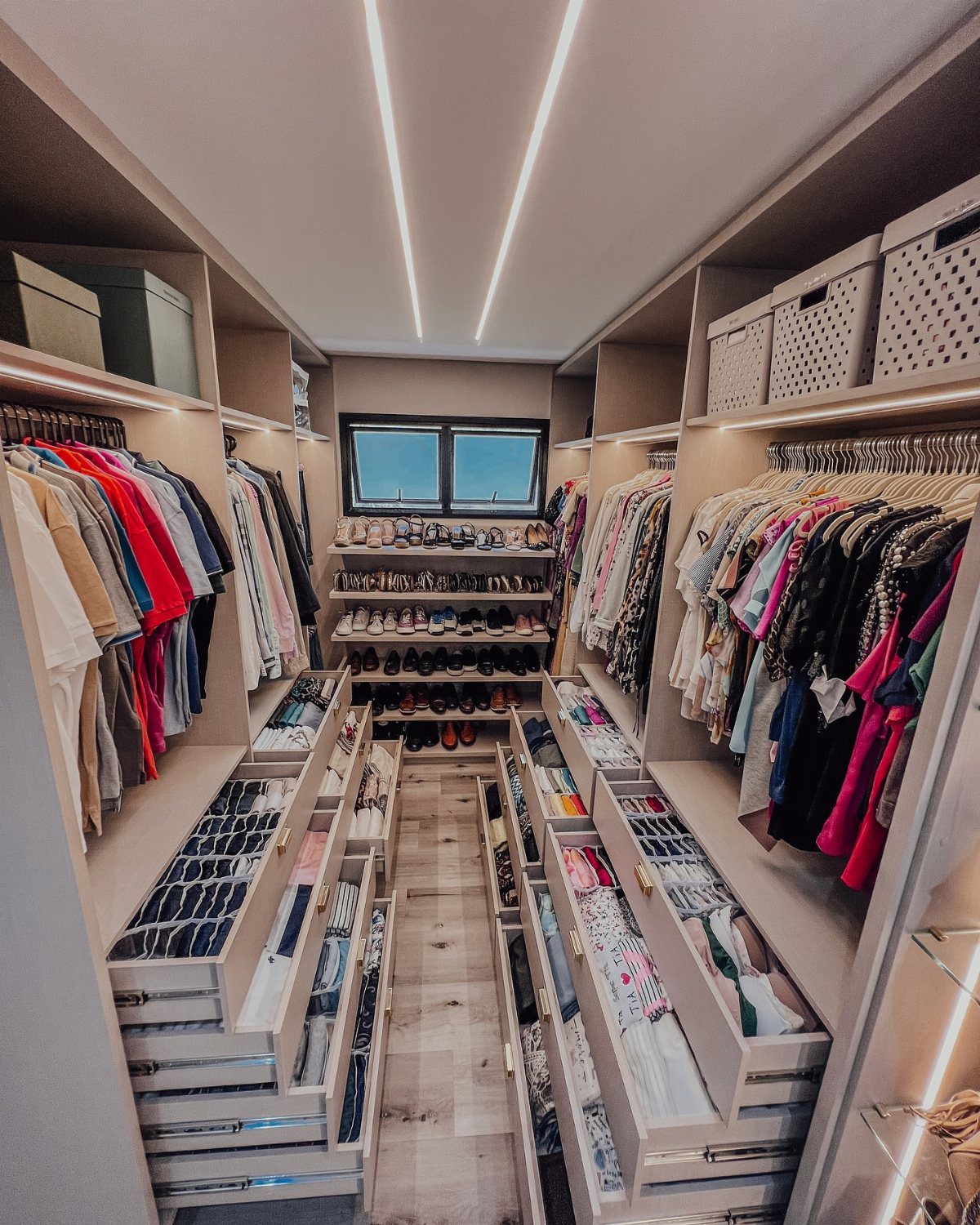
A narrow walk-in with hanging rods on both walls, drawers in the center, and shoe shelves beneath a window uses every surface without crowding the path through. Keep the window clear for light and put daily items at standing height.
I would walk the space with a tape measure before deciding which wall gets hanging rods and which gets shelves; ceiling height and window placement force the choice more than preference does.
Open drawers only work when you are disciplined about folding; otherwise, shallow baskets in those same cubbies hide the mess. Shoes on a low shelf stay accessible and keep dirt off clothes above.

EXTRA LONG FOR FORM-FITTING GOWNS - A dress cover perfectly suited for slim and elegant styles like mermaid, A-line, or sheath gowns. This 72-inch extra long dress garment bag provides plenty of space for your dress to fit clothing of all sizes with a built-in hanger for easy hanging at home or traveling.

Multi-Purpose Storage: These versatile fabric storage bins are perfect for organizing closet shelves, toys, laundry, bathroom items, and more. A stylish and practical solution for decluttering every room in the home.

PACKAGE DETAILS: 6 plastic baskets with woven patterns and lids, size: 10.7 L x 7.1 W x 4.8 H inches, the baskets are designed with small holes to help ventilation, better organize and store items
11. Hanging Fabric Organizers

3 fabric organizers on a single rod add shelf-like compartments without building anything permanent, which suits renters or anyone testing a layout before committing. Divided pockets hold folded garments vertically, so you can pull one without disturbing the stack.
I would check the rod capacity before loading all three; a wooden dowel or tension rod sags under weight, and a metal closet rod is better.
12. Pull-out Trouser Racks
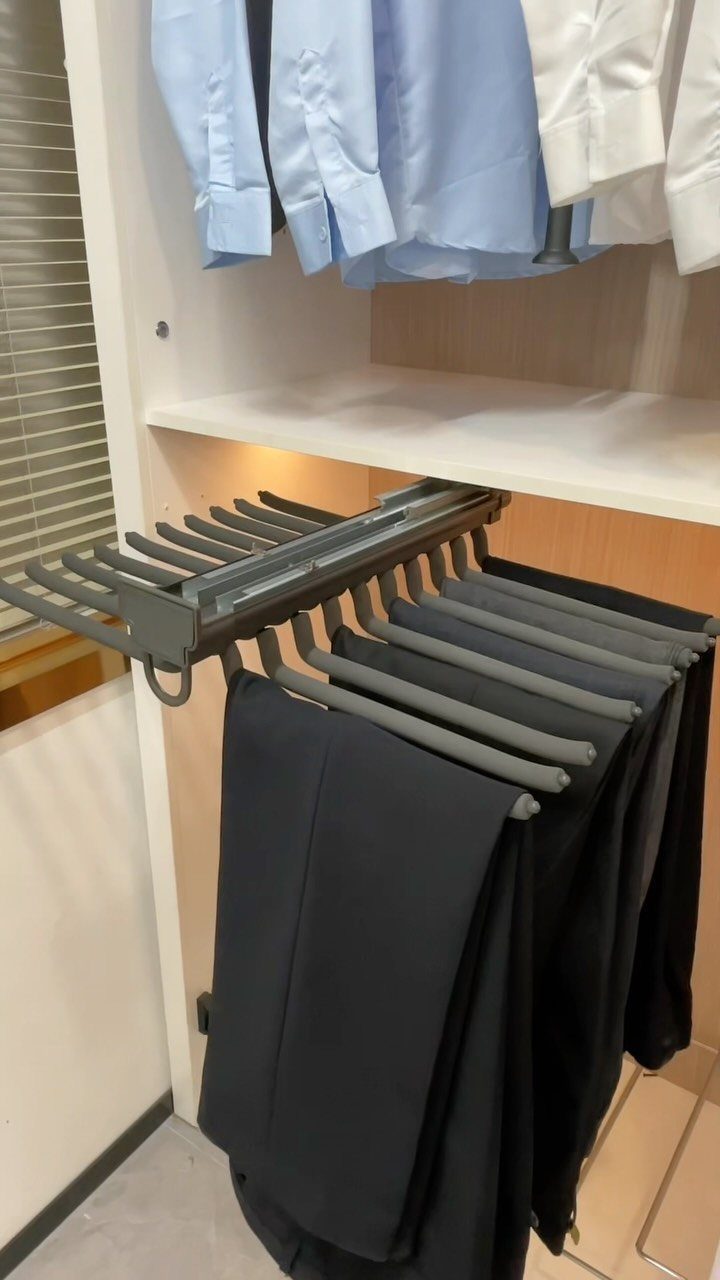
A sliding metal rack mounted beneath a shelf keeps dress pants flat and uncreased, hanging by their cuffs in the space that would otherwise hold a single stack of folded denim.
These suit anyone with several pairs of trousers they actually wear to work; otherwise, a simple rod is cheaper and takes less depth.
13. Drawer Dividers for Accessories
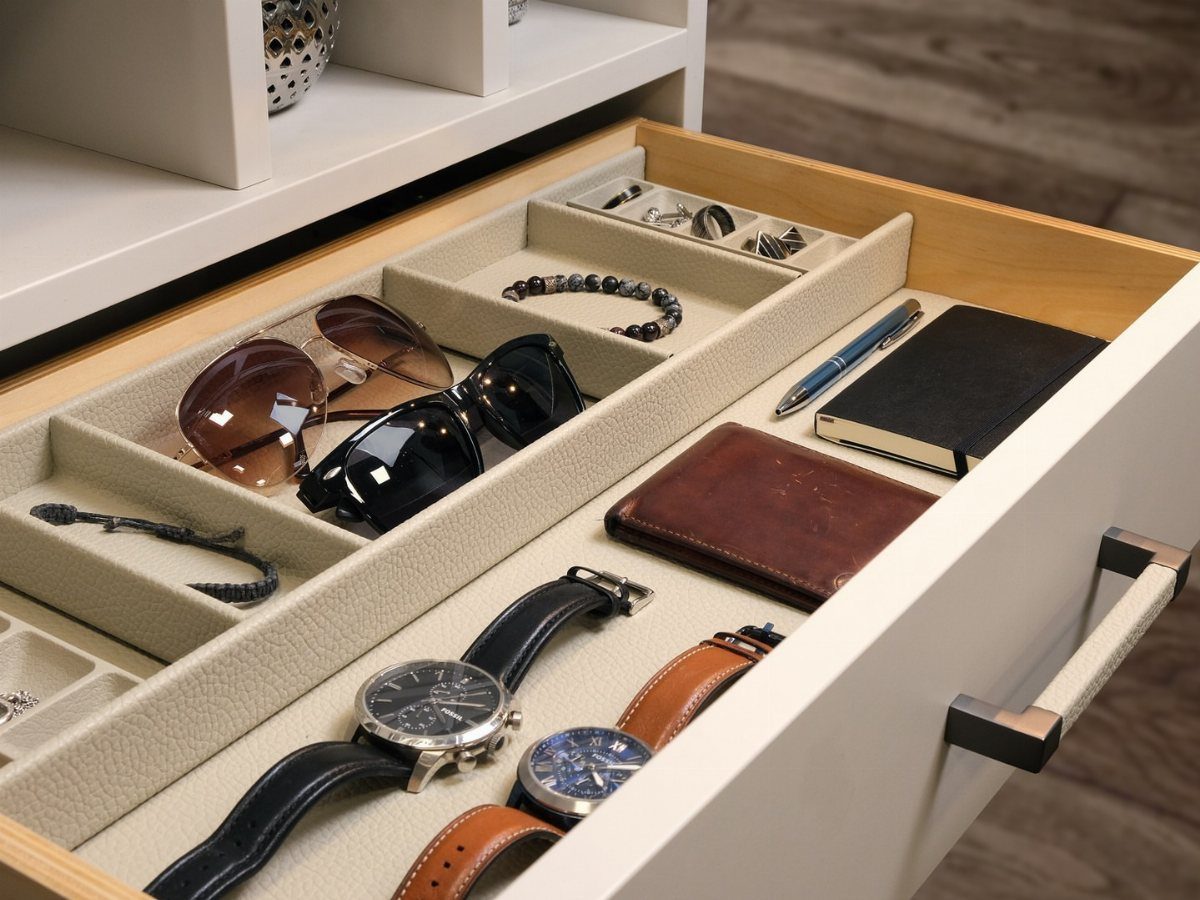
Textured trays inside a shallow drawer keep sunglasses, watches, and small leather goods from sliding into a pile the moment you open it.
I would check the drawer depth before buying organizers; a tray that sits too high catches the drawer front and jams.
A beige liner with some texture grips metal and plastic so items stay where you put them. Measure your drawer inside width and buy trays that leave a finger’s gap on each side for easy lifting.
14. Rotating Handbag Organizer

A rotating tower makes sense when you own enough handbags that finding one means unstacking a shelf every time.
The circular footprint fits corners better than flat shelving, though it needs vertical clearance; I would measure floor to rod before ordering.
A white finish keeps the unit from reading as furniture, which matters in a closet that opens into your bedroom.
Weight balance is the detail that decides whether this works: heavy bags on bottom, light ones on top, or the spin gets wobbly fast.
15. File Fold Clothes in Drawers
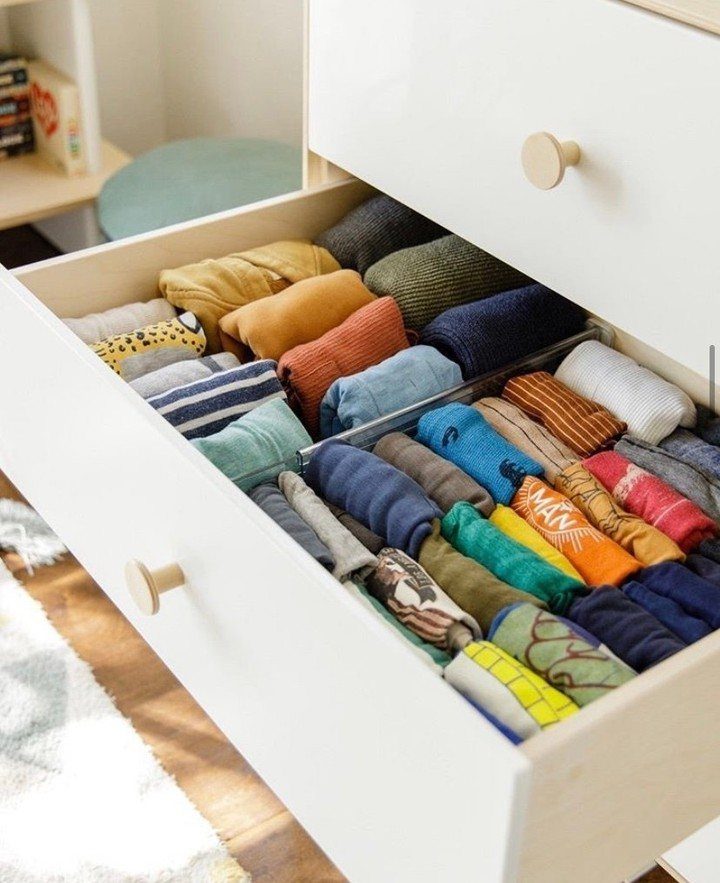
File-folding turns a drawer into a filing cabinet of shirts, each one visible and reachable without lifting the stack above it. Clear dividers do the real work, keeping the rows from collapsing into each other after laundry day.
I would start with one drawer of tees or tanks to test whether you will maintain the fold; it adds a minute per garment and some people abandon it within a week. It only works if you stick with it.
16. Color-coordinated Matching Hangers
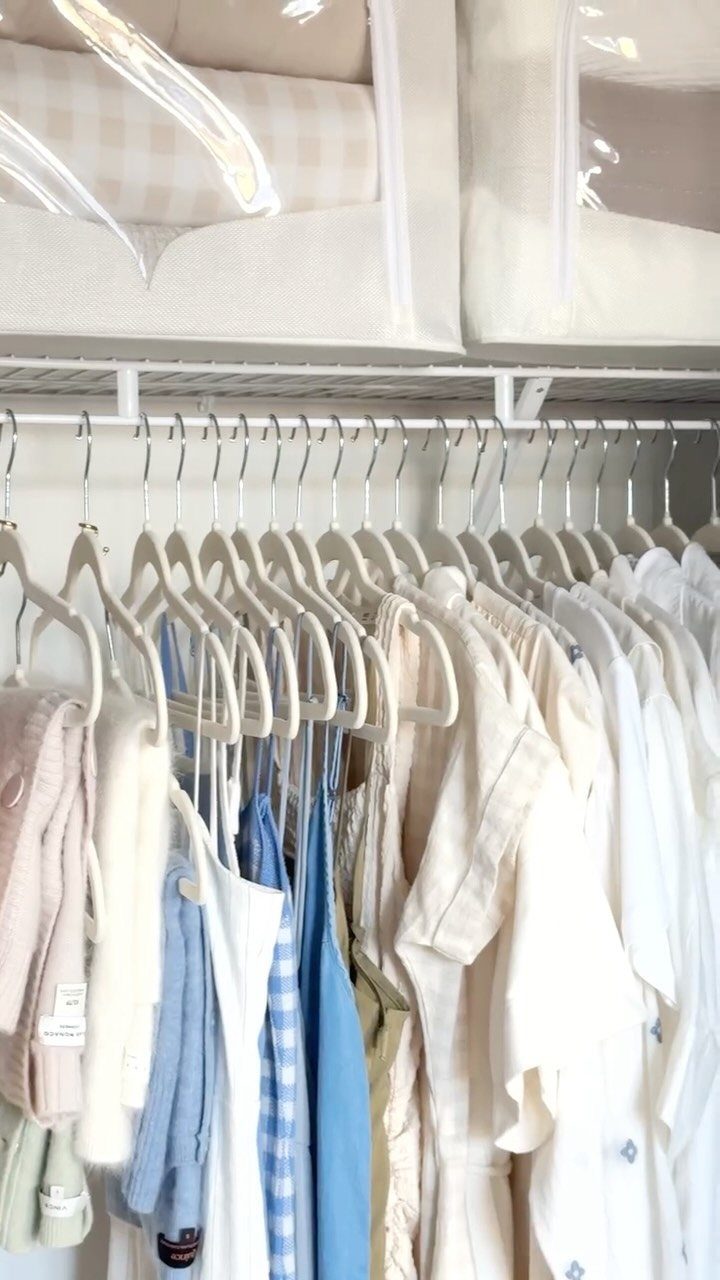
Matching hangers do more than look tidy; they keep shoulder heights even so garments hang at the same line, which reads as calm every time you open the closet.
White velvet grips silk and thin straps without the bulk of plastic. I would replace hangers in one go rather than mixing old and new; the visual gain comes from uniformity, and a partial swap looks accidental.
The fabric bins above them are doing different work, hiding bulk storage, and the combination of hidden and displayed is what makes the whole wall hold together.
Purge Your Closet Regularly
A seasonal review keeps the closet from becoming a storage unit for clothes you no longer wear.
I time mine to the twice-yearly switch between summer and winter pieces, which means I handle every item at least once and notice what stayed unworn.
The one-year rule is solid: if you did not wear it, it goes to donation.
I would keep a bag in the closet during this process so the decision sticks; items left in a maybe pile tend to migrate back onto hangers.
This habit matters more than any organizer, because even the best system collapses under volume it was not built to hold.
Maximize Closet Space
The back of a door is vertical space most people ignore.
Hooks there hold belts, robes, and scarves without cutting into shelf or rod length. Door clearance matters most with over-the-door hooks; one that scrapes the jamb every morning will not last as a habit.
Tiered shoe shelves or hanging organizers on the back side buy storage that does not compete with hanging clothes for the same real estate.
The upper wall above any rod or shelf is the other overlooked zone; it is usually deep enough for bins of seasonal items you rarely touch.
I keep a small step stool inside the closet so that height actually gets used.
Customize Your Closet
Modular systems split the difference between custom built-ins and one-size-fits-all wire shelving.
Companies like Modular Closets and ClosetMaid sell starter kits with towers, rods, and open shelves that you cut to width on site; the Compact Closet Kit comes in 6 widths, which covers most reach-in closets without starting from scratch.
I would expect to trim the top shelves and rods during install, since wall widths are never exactly the kit dimension. SuiteSymphony mixes corner units, drawers, and shoe shelves in finishes that read more finished than bare white wire.
The cost lands well below prebuilt custom work, though it takes a Saturday of fitting and leveling. For renters, these systems anchor to walls with screws you can patch later; the investment travels better than built-in cubbies you leave behind.
Frequently Asked Questions
How to start organizing your closet?
The one-year rule still works: anything unworn in twelve months goes to donation before you buy a single bin or hanger.
Group what remains by category, not by color, and place daily items at standing height where you can reach them without effort.
A donation bag parked inside the closet keeps the decision final; anything set aside for later usually ends up back on the rod.
Is it cheaper to build or buy a closet system?
A basic cubby system built from pine or poplar and a circular saw costs roughly half what pre-made runs, and the boards are easy to find at any home center.
Ownership changes the math: exact dimensions matter more when you are not patching screw holes for a landlord.
How to maximize space in a small closet?
Stack 2 rods in the same depth to double hanging capacity without touching width, and add a real shelf above the upper rod for folded jeans or bins.
Door hooks handle belts and robes without eating shelf space, and the wall above the rod is dead real estate until you stack seasonal bins there.
That upper zone only works if you can reach it; a slim step stool tucked inside turns dead height into usable storage.