Studio apartment organization ideas run from rolling carts you can walk out with to loft beds that need a drill and a lease friendly to holes in the wall, so the right choice starts with knowing what your landlord will let you leave behind.
A tension-pole shelf wedged floor-to-ceiling behind a sofa works only if you check ceiling height first; these systems have narrow ranges and even a small mismatch means a return.
1. Under-Bed Storage
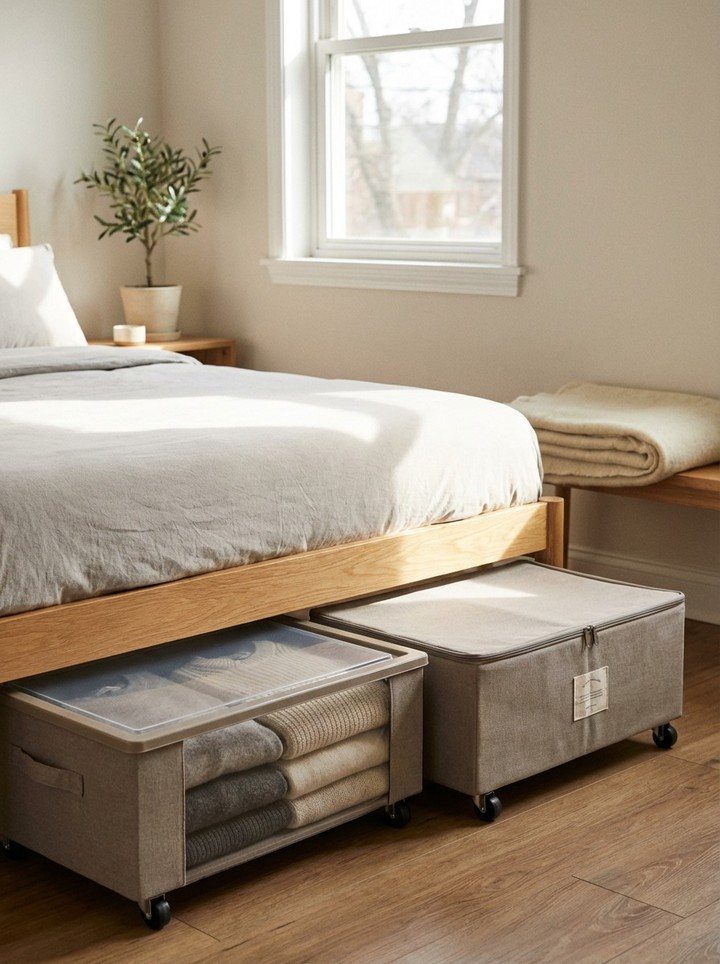
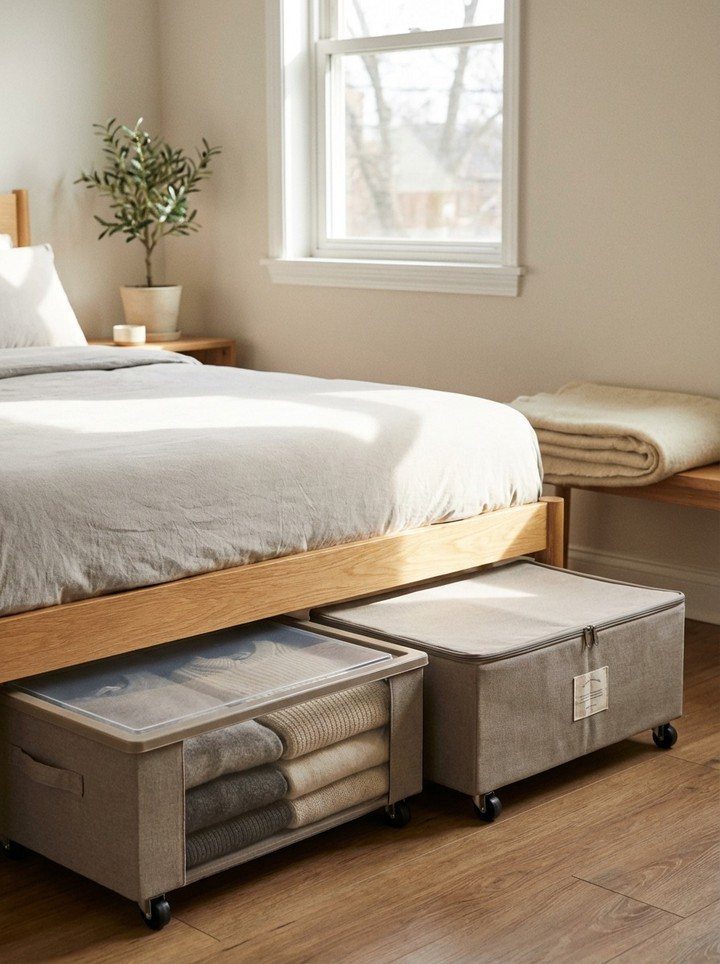
Rolling bins under a bed frame turn dead space into seasonal storage without lifting the mattress. I look for bins with rigid sides, not soft collapsibles, because they keep shape when pulled across hardwood.
Check your frame height first; many standard beds leave barely any room underneath, and a bin with wheels needs more clearance than you think.
A light wood frame with decent clearance is the setup I would hunt for if I were buying new.

Hold Up to 66lbs: Yecaye under bed storage with wheels is made of high quality 300D PU fabric and sturdy metal frame, can hold up to 66 lbs, stronger than other fragile metal mesh, spacious capacity perfect for storing clothes, toys, books, shoes and other heavy items also won't compromise stability and durability

Versatile Dividers: Yecaye under bed storage containers comes with 2 adjustable dividers that let you organize items of varying sizes effortlessly. Whether it’s winter boots or seasonal clothes, configure the compartments to fit your exact needs. Our underbed storage ensures every inch of space is utilized efficiently, transforming chaos into an artful organization

Leather Handles&Rotating wheels: our underbed storage is equipped with leather handles, which are comfortable to hold; it comes with 4 x 360°rotating wheels, two of which have locking function; when placed under the bed, the wheels make it very convenient to push and pull
2. Standing Shelves

A tension-pole shelf wedged floor-to-ceiling behind a sofa carves out separate zones without a wall. Load heavier items low and keep the top light for stability, no matter how good the poles look holding plants and small decor.
A standing shelf works as a room divider only if you place it perpendicular to sightlines, not parallel. Check your ceiling height before ordering; these systems have narrow ranges and even a small mismatch means a return.

NO DRILL & RENTER FRIENDLY:Our drill - free tension rod ensures zero damage to your walls or ceilings. Perfect as a renter friendly solution for any apartment, studio apartment, or college dorm. Easily set up or dismantled effortlessly a temporary wall without worrying about losing your deposit or making permanent changes during reapid relocations.

❀ Adjustable storage shelf rack,use for wardrobe / closet dividers, for kitchen,bedroom,bathroom, utility rooms, garages,etc. It can be installed in any place suitable for this size

NO DRILL & RENTER FRIENDLY:Our drill - free tension rod ensures zero damage to your walls or ceilings. Perfect as a renter friendly solution for any apartment, studio apartment, or college dorm. Easily set up or dismantled effortlessly a temporary wall without worrying about losing your deposit or making permanent changes during reapid relocations.
3. Kitchen Organization
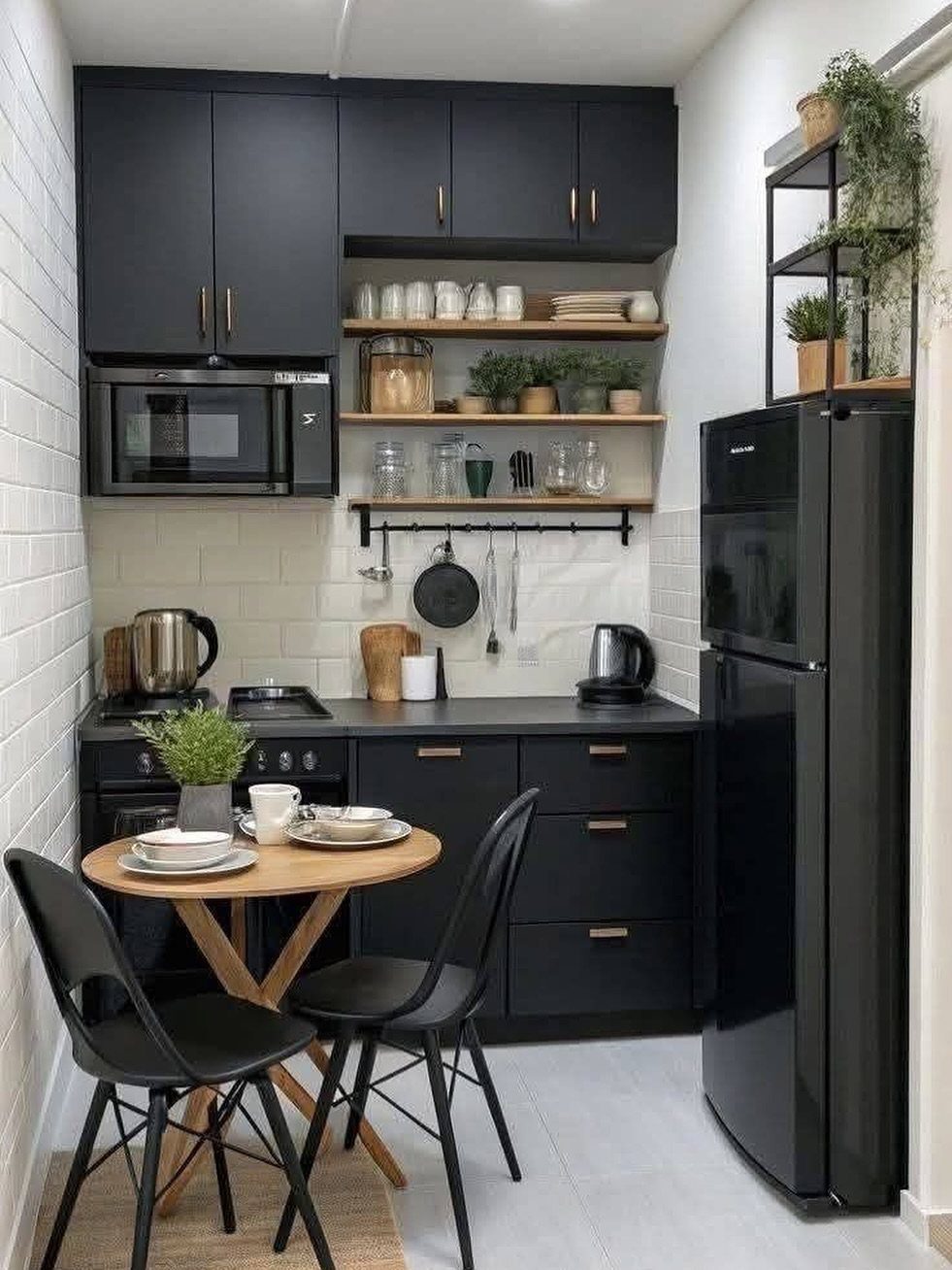
Matte black cabinets and open wood shelves keep a compact kitchen from feeling closed in. I would copy the hanging rail for utensils; it frees the single counter you have without drilling into tile.
I would max out at a small round table with 2 chairs; anything larger blocks workflow. If your studio kitchen is galley-style, skip the dining set entirely and use a fold-down ledge instead.

Versatile Storage Solution: The Wardrobe Closet is equipped with four compartments for folding clothes, handbags and storage boxes. The two-tier shoe rack holds fourteen pairs of shoes. The hanging rod area is designed specifically for hanging wrinkle-prone garments such as blouses, jackets, and long dresses. wardrobe is made of high-quality steel, and the top of the wardrobe can accommodate suitcases and large storage boxes. We also provide three additional hooks for hanging bags and belts.

MULTIFUNCTION CLOTHES RACK: Neprock armoire wardrobe closet with 1 hanging rod perfect for hanging tops, coats, baby clothes, long dresses, sweaters, or other heavy clothes. 4 storage shelves are perfect for folded stuff, handbags, hats, and storage boxes.The wardrobe closet can hold suitcases and large storage bins at the top and comes with extra bottom space for shoe storage. The additional hooks can be used to hang the bags and hats.

Versatile Storage Solution: The Wardrobe Closet is equipped with four compartments for folding clothes, handbags and storage boxes. The two-tier shoe rack holds fourteen pairs of shoes. The hanging rod area is designed specifically for hanging wrinkle-prone garments such as blouses, jackets, and long dresses. wardrobe is made of high-quality steel, and the top of the wardrobe can accommodate suitcases and large storage boxes. We also provide three additional hooks for hanging bags and belts.
4. Closet Organizers

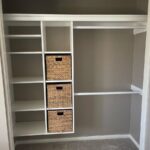
An open metal wardrobe next to the bed replaces a closet you probably do not have. I would add storage bins on the lower shelf for items that look messy hanging, like gym clothes or folded jeans.
The wire frame keeps things visible, which is a plus if you forget what you own and a minus if you want to hide clutter.
Measure your wall height; these units run tall and a low ceiling makes the top shelf unreachable.
Every door is used for organization in some capacity. The clothes closet has a mirror on one side, hooks and an IKEA Trone mounted on the other for scarves.

Utensil Rack: including 1 stainless steel cutlery rack, 14hooks.

Wall-Mounted Space Saver: Frees up countertop and drawer space. Hang spatulas, ladles, and oven mitts within easy reach on this 17-inch rail.

【Decorative】 The kitchen utensil hanger comes in beautiful quality and color, simple and stylish, adding an elegant look to your space.
5. Defined Living, Sleeping, and Work Areas

A rug under the sofa and coffee table marks living space separate from the bed and desk in the same room.
I would place the desk near the wardrobe, as the photo does, so work feels anchored to a wall rather than floating.
The light wood flooring runs throughout, which keeps the studio from feeling chopped up; if you add a second rug under the bed, choose a low pile so the transition stays flat.
Natural light on 2 sides makes zones feel intentional instead of cramped, which is why a balcony door helps.

🥇【Twin Over Twin Loft Bed for 2 Kids】This twin size loft bed can be configured as two separate spaces. It not only meets resting needs, but also provides more personal space for work or relaxation, creating an efficient and convenient area for children to work, study or play. Perfect for multi-child family or sleepover guests. This double loft bed makes full use of vertical space and can accommodate 2 kids.

【Maximize Space with Bunk Bed】 This loft Queen Over Queen bunk bed creates two spacious sleeping zones for ideal for teens, adults, or shared rooms, so you can free up floor space for study, play, or storage—perfect for small bedrooms or dorms.

【Solid & Safe for a Good Night's Sleep】Built from strong 100% metal with a sleek black finish, this kids loft bed provides a secure and supportive sleeping space. Full-length guardrails offer added peace of mind, supporting up to 400 lbs.
6. Loft Bed Over Living Space

A loft bed stacked over the kitchen turns one room into two levels, with the breakfast bar as your ground-floor anchor.
I would check the ceiling height first; you need enough room to stand under the loft and still sit up in bed. I would keep shelves and plant ledges minimal to avoid watering over a stove.
The stools at the bar face the kitchen, which is the right orientation; turning them toward a living area would block the narrow path that makes this layout legal.

[Quality Metal Container] Never settle for flimsy plastic&linen under bed storage bins which rip all too easily. This under the bed storage container is completely made of metal, compared with other under bed storage bins, smaller mesh size of the shelf is used for a larger load-bearing capacity. Plus, the whole frame was welded into a whole that never falls apart.

【Say Goodbye to Cluttered Space】– Tired of cluttered closets and wasted space? Our under bed storage containers measure 30" L x 16.2" W x 7.5" H, effortlessly turn unused under-bed areas into smart storage zones—perfect for apartments, dorms and living spaces where every square foot counts.

【Height-adjustable Design】Under bed shoe storage dimensions:30.71 x 16.93 x 6.69 inches (with wheels), (applicable under-bed height > 6.7in), large capacity exceeds your expectation to store more daily items. It can be placed under beds, sofas, tables, and closets to maximize unused space. In addition, this under bed storage drawers can be folded up when not in use, perfect for small families and college dorms that need extra storage space
7. Over-the-Bed Wall Shelves
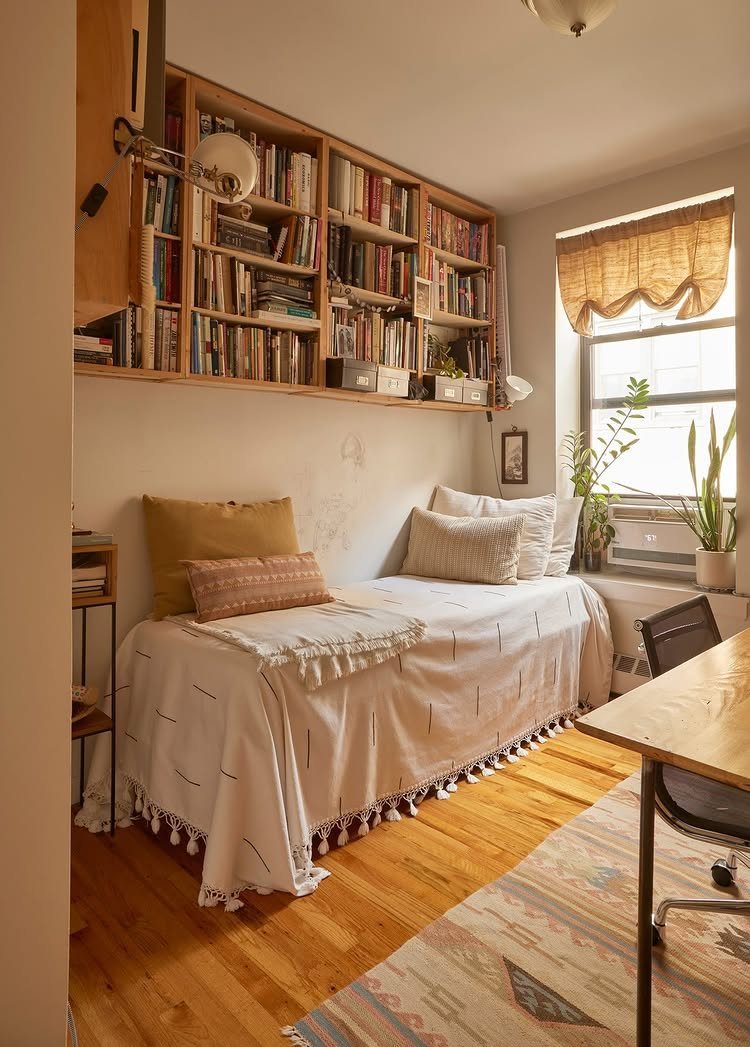
High shelves above a daybed turn the wall you face while lying down into storage you do not trip over.
I would mount them well above the mattress so sitting up does not mean hitting your head, and I would keep the depth shallow so the unit does not crowd the room sideways.
Tucking a desk to one side rather than centered leaves the bed as the clear focus; I would copy that.
A window beside the bed gives natural light for reading, which matters more than the shelves themselves if you actually use this corner.

【Size Upgrade & Adjustable】Our Telescopic curtain rod' height can extend from 4-10.5 ft while its width adjusts from 29-73inches, more stretchable and suitable for a larger space than other room divider partitions on the market. Easily adjust the size by he number of extension rods and spring buckles

【2 Depths Available & Adjustable Length 】-- These closet shelves dividers are 2 Depth Options are available: 7.87 inches and 11.8 inches. And it can be adjusted in length, allowing you to quickly obtain a suitable layered partition for your wardrobe. The adjustable length of this wardrobe partition is from 17 inches to 31 inches.

【Size Upgrade & Adjustable】Our Telescopic curtain rod' height can extend from 4-10.5 ft while its width adjusts from 29-73inches, more stretchable and suitable for a larger space than other room divider partitions on the market. Easily adjust the size by he number of extension rods and spring buckles
8. Rolling Utility Cart Storage

A metal rolling cart loaded spine-out with books moves your library where you need it, then parks against a wall.
I would check the shelf depth against your tallest paperback; utility carts run narrow and oversize art books will overhang or tip. Wheels matter on carpet; hard casters sink in and a loaded cart becomes immovable.

Sturdy and Stylish: Purse hanger is made of nice metal material, 3mm in thickness, not easy to bend or break; surface polished finish with non-slip rubber coated at lower portion, protects items from sliding off and scratching; sleek and clean look blends seamlessly into any home decor
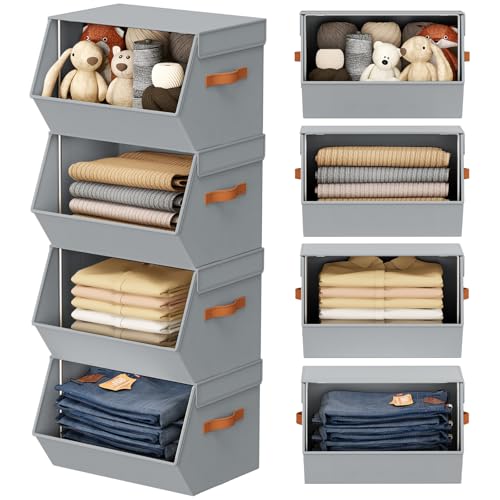
[Stackable & Modular Storage System] Maximize vertical space with multiple closet storage bins that stack securely. Perfect for closets, laundry rooms, wardrobes, storage spaces, and bedrooms — mix and match freely to meet your household needs and flexibly expand storage capacity
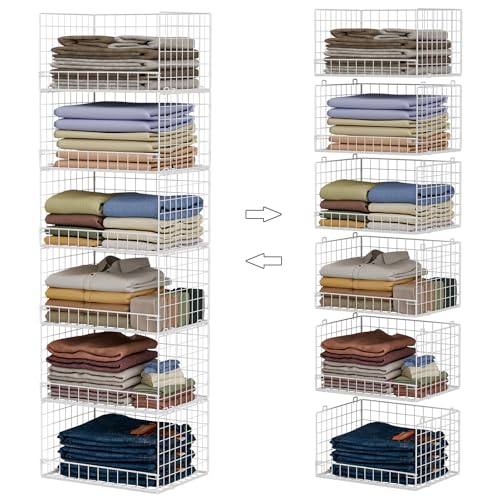
Upgraded Wide Mouth Design】15.7"x11.8"x8.7"(L x D x H) in single size,these clothing organizers are suitable for most size of clothing especially big clothes, pants and jeans.Due to the appropriate depth, the basket will not protrude when placed in the wardrobe. Note: Ensure the product size fits your Closet.
9. Dedicated Coffee Bar Station

A sideboard coffee station with a floating shelf above keeps mugs off the single counter you probably need for food prep.
I would mount the shelf high enough to clear the grinder and machine below, with room to lift a pour-over kettle without tapping porcelain.
A white sideboard disappears against the wall, which is the right move in a studio; I would not choose a wood tone that competes with the floor.
Open storage above a machine means steam rises and settles, so plan on regular dusting. Wipe weekly or expect a film.

【Decorative】 The kitchen utensil hanger comes in beautiful quality and color, simple and stylish, adding an elegant look to your space.

Maximize kitchen space – Install on walls or under cabinets to free countertop clutter

Kitchen Island Must-Have Rack: This hangers for kitchen can hang your kitchen utensils on it. It not only saves space for you to make more delicious food, but also keeps your kitchen clean and hygienic
Lighting and Color Choices
Light colors do more than brighten a room; they change how walls recede.
I would paint studio walls in white or a soft pastel that reflects whatever natural light you get, rather than absorbing it. Sheer curtains are the move here, not blackout panels; they soften glare without blocking the window.
Mirrors placed opposite a light source bounce that light deeper into the room, which matters when your living, sleeping, and work zones all share the same 4 walls.
I would hang one large mirror rather than scattering small decorative ones; the effect is cleaner and less cluttered.
Dark corners kill the sense of space in a studio. A floor lamp behind a standing shelf or string lights along a high shelf line keeps the eye moving.
Under-shelf lighting in the kitchen area is worth the small effort; it turns a cramped prep zone into something you can actually see at 6 p.m. in December.

[Space-Saving Full Over Twin Bunk Bed] Designed with a full-size upper bunk and twin-size lower bunk, this metal bunk bed maximizes vertical space while providing comfortable sleeping areas for kids, teens, guests, or siblings. Perfect for apartments, dorms, and compact bedrooms.

✅ All-in-One Integrated Storage System for Space Saving This Mixcous twin-over-twin bunk bed features a fully integrated storage structure with 6 large-capacity fabric drawers and 2 open storage compartments. The dustproof fabric drawers neatly organize clothes, bedding and personal belongings, while the open shelves provide instant access to daily essentials, toys and books. It eliminates the need for extra storage furniture and keeps your bedroom tidy and clutter-free.

🥇【Full Loft Bed with Desk】This loft bed with a built-in desk and a small closet,the space under the bed is a great place for you to study,work or play.Space-saving design perfect for kid’s room,dorm or guest room, or any other limited floor space.
Maintaining Organization
A tray by the door for keys and mail beats a junk drawer because it limits the pile.
I would add a second tray for the remote and anything else that migrates to the coffee table; when the tray fills, you know it is time to move things back to where they belong.
The "one in, one out" rule sounds strict, but in a studio it is survival. New book on the cart means one leaves.
New mug on the coffee bar means the chipped one goes. The alternative is every surface slowly disappearing under stuff you forgot you owned.
8 minutes of tidying before bed is enough to reset a studio. Set a timer, put away what the day scattered, and stop when it rings.
I would do this at night rather than morning; waking to yesterday’s clutter changes how the whole day feels. The habit matters more than perfect results.
Importance of Decluttering
Decluttering comes before any organizing system. I would pull everything out of the under-bed bins, the cart, the wardrobe, and sort into 3 piles: keep, move out, decide later.
The "decide later" pile is the trap; I would limit it to one box and set a date.
A clean slate shows you what storage you actually need versus what you bought hoping it would solve the problem.
That metal wardrobe might be overkill if you own 10 hangers’ worth of clothes. The rolling cart is useless if your books fit on 2 shelves already.
I would not organize while decluttering.
The jobs fight each other; you end up keeping things because you found a cute spot for them. Remove first, measure the empty space second, then buy the bin or shelf that fits what remains.
Frequently Asked Questions
How can I maximize space in a studio apartment?
Multi-functional furniture, vertical storage, and regular decluttering are the 3 moves that actually matter.
A storage ottoman or lift-top coffee table earns its floor space by doing 2 jobs, while rolling bins under the bed and tension-pole shelves behind the sofa reclaim areas that usually go empty.
Ceiling heights are the first thing I check before buying any vertical system; a mismatch of even an inch means a return and wasted time.
What are some tips for organizing a small kitchen?
A hanging rail for utensils frees your single counter without drilling tile, and a fold-down ledge replaces any dining set that would block workflow.
Risers inside cabinets split one shelf into two levels, which means you see the back row without pulling everything forward.
I would skip the dining set entirely in a galley-style studio kitchen; the space is more valuable for prep than for a table you use twice a day.