
A patio awning attached to your house can run from a weekend fabric install to a full build with footings and permits, and the deciding factor is what you actually need the space to do.
If you want flexibility to open to sun or close to rain in seconds, the retractable route is yours; if you want an outdoor room you can use in any weather, you are looking at solid structure, wiring, and a permit check.
The detail that separates the two is the ledger board flashing: skip it on a timber frame build and rot finds your rim joist in two or three seasons.
1. Shade Mobility Needs

A retractable awning is the only option here that lets you chase shade or open to sun in seconds.
For a concrete patio like this one, check your house framing first; vinyl siding over hollow spots won’t hold the torque of a motorized unit.
I would pick a manual crank for a smaller awning and save the motor budget for the larger spans where reaching the hand crank gets old fast.

High-quality Fabric-Made of 280g/m³ polyester fabric, which is anti-UV ( 50 UV+ solar protection), windproof 30mph, rain protection and fade resistant. But we also recommended to put it away in stormy weather to extend its service life.

Cool Outdoor Shade: Create a comfortable shaded space with this 8.2 x 6.6 ft manual retractable awning. It reduces direct sunlight and heat buildup, making it ideal for patios, balconies, terraces, windows, as well as cafés, restaurants, and storefronts
2. Striped Fabric Retractable Awning
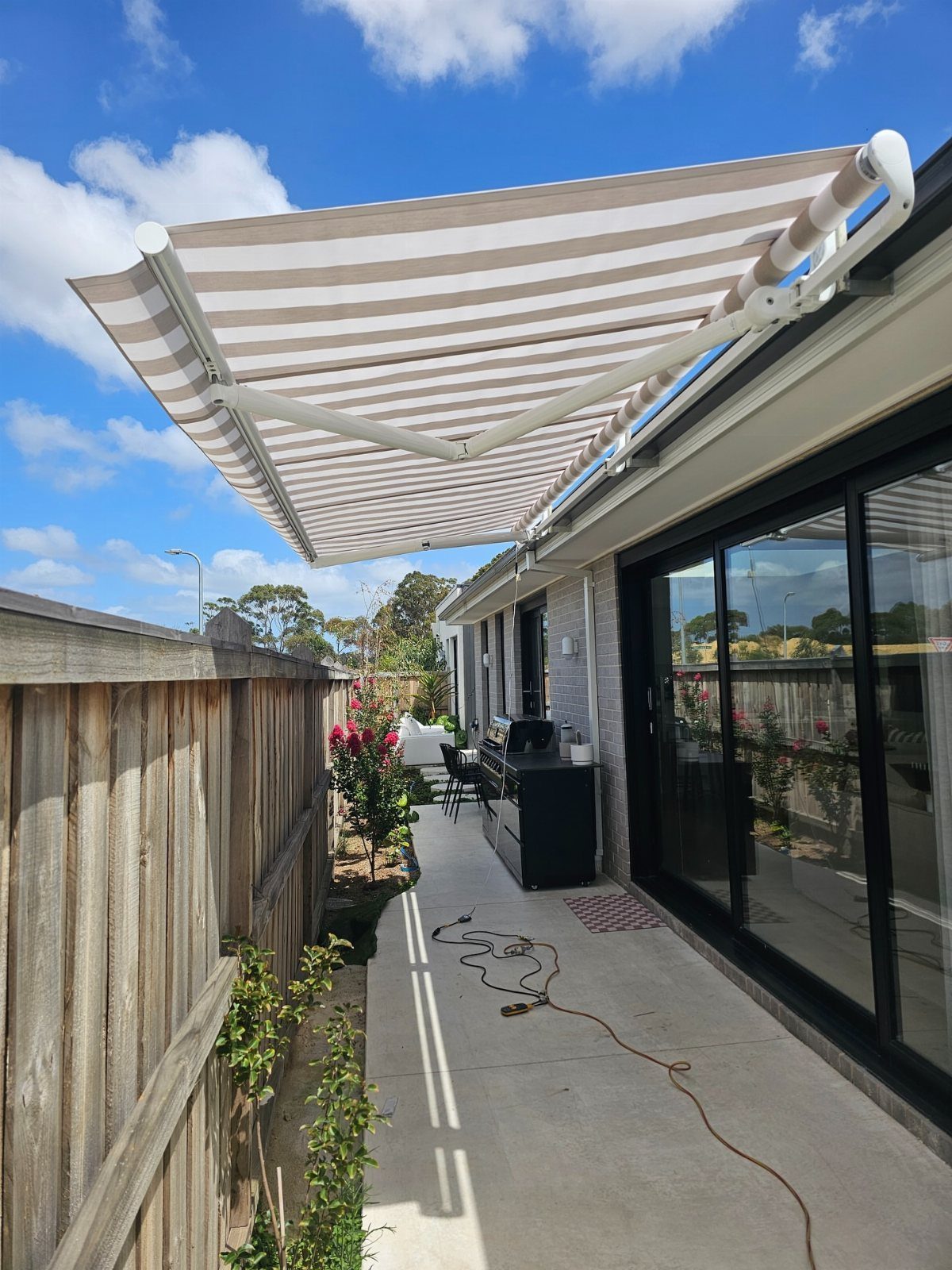
Beige-and-white stripes read classic for a reason, but that cord on the ground is a detail I’d fix before anything else.
An awning this close to a grill needs a GFCI outlet properly mounted to the wall, not an extension cord waiting to trip someone or short in damp weather.
The narrow patio here is actually helping; stripes work best when you see them from one primary angle, not wrapped around a broad space where the pattern turns busy.

Dual Motorized & Manual Modes: This electric retractable awning features an 18 ft power cord and supports remote control within 16.4-32.8 ft. A built-in motor ensures smooth extension with limit stops, and a 4.92 ft hand crank allows use during outages

【Electric Motorized & Remote Control】: Retractable awning with upgraded electric motor. Opens and closes smoothly by remote control, eliminating manual struggle. Also includes a manual hand crank for backup operation in case of power outage, ensuring you are never stuck.

Dual Motorized & Manual Modes: This electric retractable awning features an 18 ft power cord and supports remote control within 16.4-32.8 ft. A built-in motor ensures smooth extension with limit stops, and a 4.92 ft hand crank allows use during outages
3. Solid Neutral Retractable Awning

Solid cream against brick does what stripes cannot: it lets the architecture read first and the shade second. I like this pairing for red brick especially, where a pattern would fight the masonry texture.
A pale awning in a tree-lined yard needs cleaning twice a season to keep looking intentional rather than neglected. Factor that time or the service cost into your first-year budget.
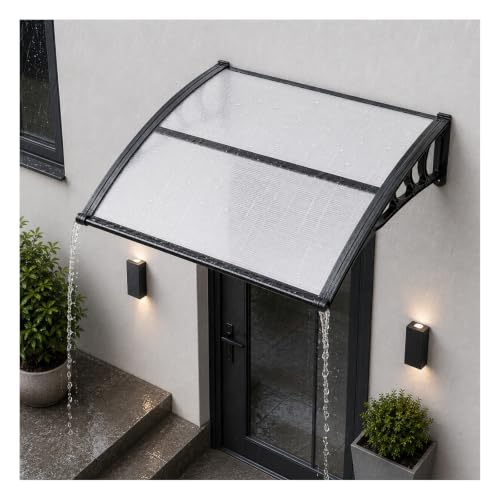
Efficient Drainage Design: Designed with an upgraded directional drainage sink, this polycarbonate door awning quickly guides rainwater away from your entrance. From light drizzles to heavy downpours, it keeps your doorway clean, dry, and slip-free

Easy to Install: Our awnings for windows come with clear instructions and pictures that make assembly and installation a breeze. Save time and effort with hassle-free installation process. We recommend having two people for the installation process

Efficient Drainage Design: Designed with an upgraded directional drainage sink, this polycarbonate door awning quickly guides rainwater away from your entrance. From light drizzles to heavy downpours, it keeps your doorway clean, dry, and slip-free
4. Clear Glass or Polycarbonate Awning

Glass or polycarbonate overhead is what you choose when you want rain protection, not just shade.
Color stays bright under clear cover; fabric would mute them even on sunny days. The black frame here is doing heavy visual work, and I’d match it to existing window trim rather than introduce a third metal tone.
Polycarbonate weighs less and ships in longer sheets, but glass wins if your building code allows it and your structure can take the load.

Dusk to Dawn Functionality: Automatic photocell sensor turns the light on at dusk and off at dawn, providing convenient hands-free operation and energy savings
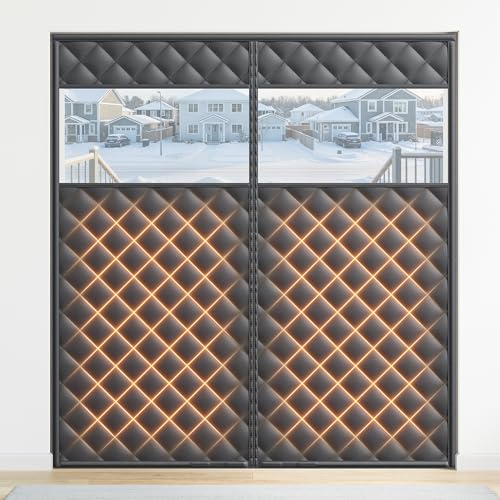
🌬️ Block Out Cold Drafts: Crafted from windproof Oxford fabric and 180G thick cotton padding, this insulated sliding door curtain effectively keeps cold air, rain, and wind out. Perfect for winter—stay warm indoors while cutting down on heating bills.
🌬️ Block Out Cold Drafts: Crafted from windproof Oxford fabric and 180G thick cotton padding, this insulated sliding door curtain effectively keeps cold air, rain, and wind out. Perfect for winter—stay warm indoors while cutting down on heating bills.
5. Solid Ceiling Patio Cover with Lighting

A solid ceiling with fans and recessed cans turns a patio into something closer to an outdoor room, which is what most of my clients actually want when they say "awning."
The beadboard detail here is paint-grade PVC or composite in almost every case now; real wood overhead rots faster than you’d think, even with fans moving air.
I would budget this as a small construction project, not an awning purchase. Expect permitting in most municipalities, and absolutely verify your setbacks before the posts go in.

8-PACK OF COLORED LENSES: Eight vibrant Yellow lenses, ideal for Christmas, Halloween, and party decor all year round.

8-PACK OF COLORED LENSES: Eight vibrant Red lenses, ideal for Christmas, Halloween, and party decor all year round.

Core Functionality: This translucent lampshade buckle plate serves as a recessed light cover designed specifically for ceiling lights, providing soft and uniform light distribution that enhances lighting quality in classrooms and various indoor settings
6. Retractable Awning with Drop-Down Screen

The drop-down screen on this red unit is solving a problem most awnings ignore: late-afternoon sun hitting from the side, or neighbors looking in.
Integrated LED means one wiring run handles both functions, which I prefer to bolting on strip lights later.
The black valance against red brick is a strong look; I’d soften it with grey or tan siding like this, but think twice against pale siding where the contrast goes harsh.
Side screens need tension to avoid flapping, so check that the mechanism includes a bottom rail or weighted hem.

Cool Outdoor Shade: Create a comfortable shaded space with this 11.5 x 9.8 ft manual retractable awning. It reduces direct sunlight and heat buildup, making it ideal for patios, balconies, terraces, windows, as well as cafés, restaurants, and storefronts

UPF 80+ Fabric: This manual retractable awning uses 180 g/m² polyester with PU coating. It provides level 4 colorfastness to resist fading, while UPF 80+ shields against sunlight and reduces heat. The water-resistant canopy blocks light rain for comfort
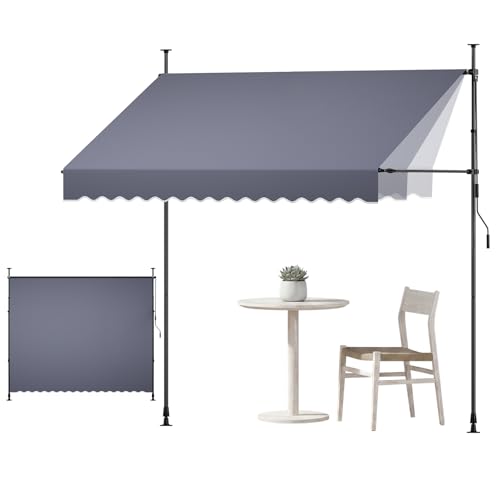
UPF 80+ Fabric: This manual retractable awning uses 180 g/m² polyester with PU coating. It provides level 4 colorfastness to resist fading, while UPF 80+ shields against sunlight and reduces heat. The water-resistant canopy blocks light rain for comfort
7. Wooden Frame Attached Patio Awning

A timber frame awning with open rafters is what you build when you want the structure itself to read as architecture, not just shade.
The sloped roof here sheds water toward the yard, which means your house wall needs proper flashing at the ledger board; skip that step and rot finds the rim joist in two or three seasons.
I would use pressure-treated pine for the posts and beams, stained to match existing trim, and keep the rafters exposed rather than closing the ceiling.
That openness costs you some rain protection but gains breeze and a lighter feel against white siding.
Check your local span tables; a 2×6 rafter spaced at standard intervals covers a modest span, and going wider means upsizing lumber or adding a beam.
This option trades away the quick install and flexibility of fabric. Budget for concrete footings below frost line, not surface blocks, and expect a permit in most jurisdictions.

Electric RV Awning Size: We offer an ideal retractable awning for your RV. This 16 x 8 ft model (fabric 15'2") has a frame height of 5.5ft. With 7 available sizes, it’s easy to find a suitable fit for your RV.
Electric RV Awning Size: We offer an ideal retractable awning for your RV. This 10 x 8 ft model (fabric 9'2") has a frame height of 5.5ft. With 7 available sizes, it’s easy to find a suitable fit for your RV.

Wireless Electric Awning: Experience effortless control with this innovative electric awning, designed for outdoor spaces. Ote it easily via remote or mobile app, allowing you to open, close, and adjust to your preferred width. Enjoy the convenience of automated shade without manual effort, perfect for enhancing your patio or deck experience.
Expert Advice for Installation
A permanent awning is only as good as what it is bolted to.
I would have a contractor or structural engineer confirm that your wall framing can handle the load before you order anything, especially with vinyl siding where the visible surface hides hollow gaps.
Hot-dipped galvanized steel hardware is the standard worth asking for; anything less corrodes faster than you’d expect in climates with real seasons.
The install itself matters for your house, not just the awning. Water infiltration at the attachment point is the failure mode I see most often, and it is expensive to fix once rot reaches the rim joist.
A crew that guarantees weatherproof sealing and knows how to work without damaging your siding is worth the higher quote. I would skip any installer who treats this as a simple bolt-on job.
Most municipalities require permits for permanent structures, and setback rules can kill a project after materials are already on-site. Check both before you sign a contract.

(durable and safe) Door and window awnings are made of transparent polycarbonate sheet, safe heat resistance, can withstand extreme temperature, strong impact resistance, shatterproof, easy to clean, widely used in construction industry

Easy to Install: Our awnings for windows come with clear instructions and pictures that make assembly and installation a breeze. Save time and effort with hassle-free installation process. We recommend having two people for the installation process

Sturdy & Durable: Made from high-quality PC material, this door awning exterior resists corrosion, sunlight, and wind, ensuring long-lasting performance year-round.
Frequently Asked Questions
How to attach an awning to a house?
Awnings need high-strength, corrosion-resistant hardware bolted into solid framing, not just siding.
How much does a retractable awning for a patio cost?
I would budget a motorized unit for larger spans where reaching a hand crank gets old fast, and save with a manual crank on smaller awnings.
For a solid ceiling patio cover with lighting and fans, I would budget that as a small construction project rather than an awning purchase, since permitting and structural work push it well past fabric awning pricing.
Does a patio cover need to be attached to the house?
No.
A standalone awning, called a freestanding or self-supporting awning, does not touch your house at all. A freestanding unit lets you shade a spot away from the building without worrying about wall loads, flashing, or rim joist rot.