
An index card cleaning system is a paper-based method that assigns each household chore to its own card, filed by frequency and pulled daily to create a rotation you work through by hand.
It only functions if you refile each card immediately after finishing the task; stack them on the counter to sort later and the whole arrangement collapses into a guilt pile.
A standard 3×5 card fits a basic recipe box with plastic dividers, and the color code, white for daily through green for monthly, lets you scan the deck in seconds without reading every line.
List Every Cleaning Task

The first step in building an index card cleaning system is to walk through every room and write down what actually needs doing, not what you wish you did.
Kitchen counters, bathroom grout, the dust that collects behind the bedroom dresser, the patio furniture that sits outside eight months a year.
Maintenance tasks belong on this list too: changing HVAC filters, flushing the water heater, cleaning the dryer vent. One job per card comes later; for now, you are just collecting the raw material.
Some people include frequency estimates and time allotments at this stage, or notes about which family member can handle each task.
That detail helps, but it is optional. You want every task on the list, not just the ones you remember offhand.
If you only write down the chores you already remember, the system will keep reminding you of the same ten tasks while the real work piles up unnoticed.
A useful rule from the original method: skip anything you do by habit. If you unload the dishwasher every morning without thinking, it does not need a card.
The index card cleaning system works best as a safety net for the jobs that slip through the cracks, not a redundant reminder of what you already handle.

3x5 index card dividers guide 3" x 5" index cards, also consider for notecards, flashcards, recipes and more 3x5 cards tab

Reliable Material: Made of sturdy polypropylene material for index card guides, which is light weight, not easy deform and break. A right material can make the card dividers more durable

Protect your treasured recipes: these clear recipe page protectors are waterproof and can help preserve your recipes, keep your recipe cards away from water spills, oil marks and many kinds of kitchen stains.
Sort by How Often
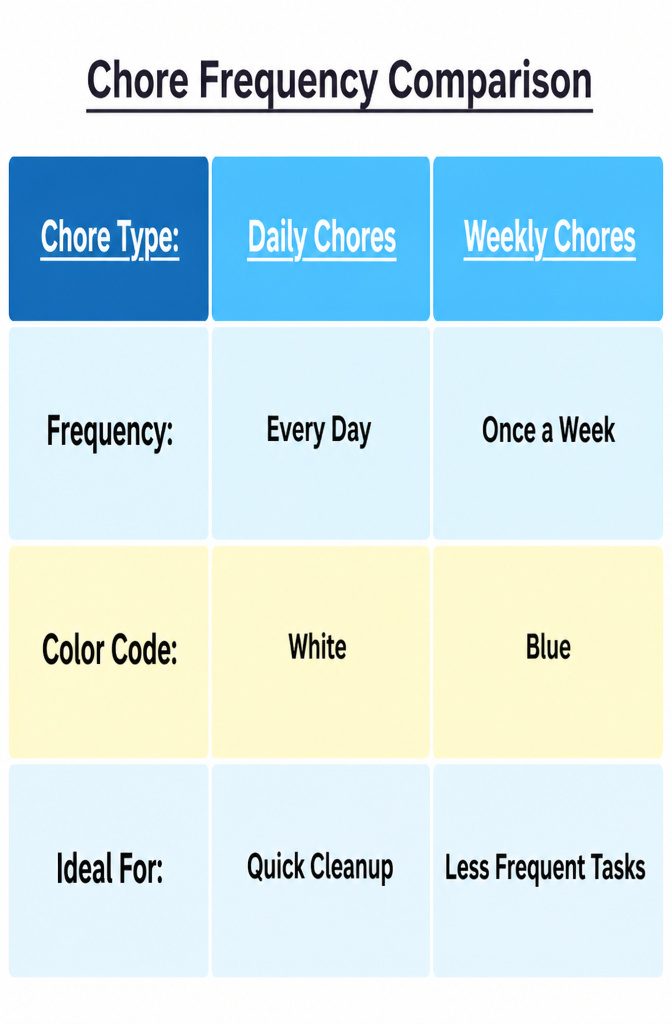
A task belongs in daily when the mess shows up before noon: dishes in the sink, crumbs on the counter, the bathroom mirror after a rushed morning.
Weekly chores are the ones where dirt builds slow enough to ignore but hits a wall by Saturday: vacuuming traffic paths, wiping the stove backsplash, changing sheets.
Monthly cards handle what you notice only when you look up: ceiling fan blades, baseboards behind the couch, the birdbath that went murky sometime in March.
The 2–3 times weekly tier is useful for the in-between stuff. Pet areas, the kitchen floor under the table, anything that gets grimy faster than weekly but does not need daily attention.
If you are deciding between tiers, lean toward the one you will actually do. A weekly card for something that needs twice-weekly cleaning becomes a guilt pile; a daily card for a weekly task burns you out.
The color code helps here: white for daily, yellow for those midweek repeats, blue for weekly, green for monthly. Seeing the balance of colors in your box tells you at a glance whether your system is realistic or aspirational.
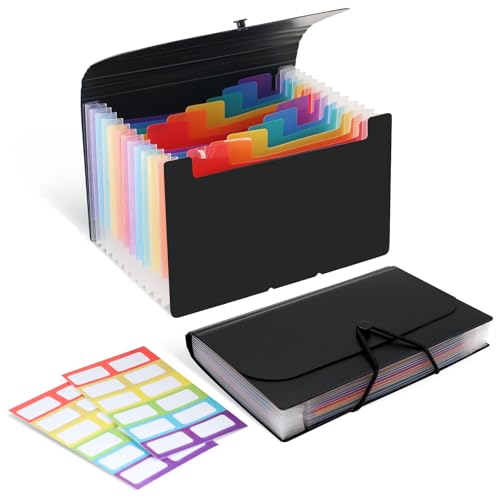
Expandable & Large Capacity: This index card holder box features 13 expandable pockets that can accommodate a large number of 3''x5'' or 4''x6'' index cards, as well as store flash cards, note cards, recipe cards, and more—helping you easily manage various cards

Poly construction resists wear, tear, and moisture

Crystal Clear Lid for Instant Visibility: See your recipes, notes, or cards at a glance without opening the box. The sturdy transparent lid saves you time and effort, making organization effortless.
Write One Task Per Card
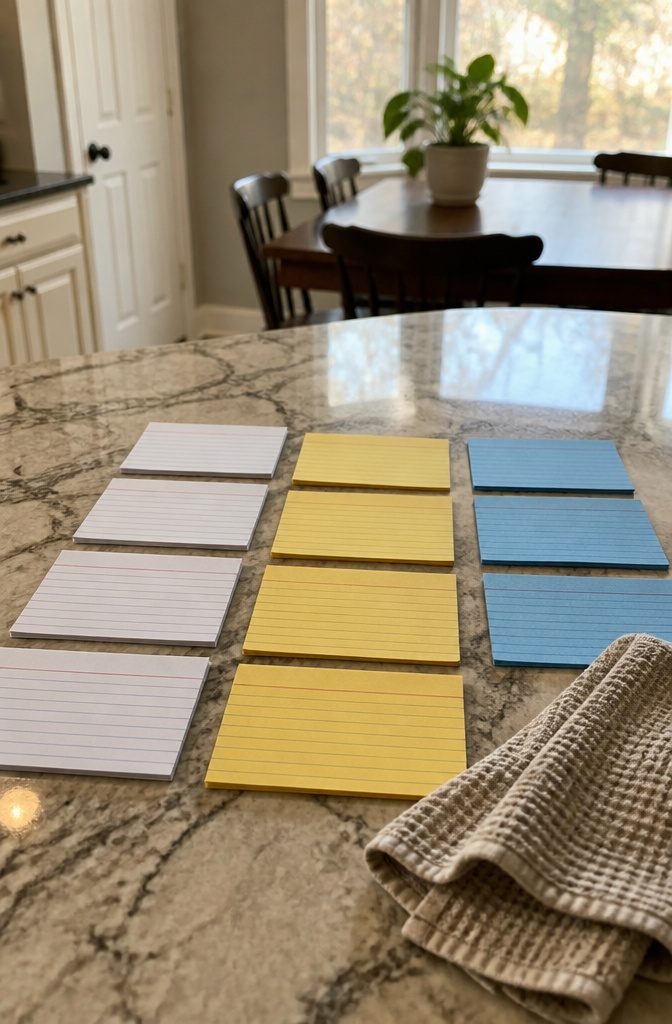
One task per card sounds obvious until you try it. "Clean the kitchen" covers ten minutes of light tidying or an hour of scrubbing, and that ambiguity is what kills momentum.
A card needs a single task, a time estimate, and the frequency right on its face. I would write "Wipe kitchen counters" with fifteen minutes and a daily note, or "Scrub baseboards" with twenty minutes and a monthly mark.
Special instructions matter too: "Mop if necessary, extra tokens if so" keeps the standard clear without bloating the card.
Color-coding by frequency keeps the deck scannable without reading every line.
White cards for daily jobs, yellow for two or three times a week, blue for weekly. Some households add green for monthly and purple for yearly, which I would do only after the core rhythm is locked in.
The point of the color is speed: grab a blue, do a weekly, move on. A card that tries to cover multiple frequencies, or a color system with eight shades, just recreates the clutter the system is supposed to solve.

Bulk Value Pack & Organization Efficiency: Get 6 packs of 50 sheets each (300 total) colored ruled index cards. Thick paper resists bleeding and curling, ideal for highlighters, pens, and markers

【Package included】You will get 300PCS colored index cards with 6 rings, including 6 different colors, 50 pieces of each color. Adequate quantity and diverse colors to meet your daily study and work needs.

【Index Cards 3x5 Neon Flash Cards】Bright colors (red, orange, yellow, green, blue, purple, ) enhance visual organization for students, teachers, and busy professionals. 3x5 index cards ideal for color-coded studying systems or priority task lists. Note cards suitable for flashcards or complex, higher level notes
File With Dividers
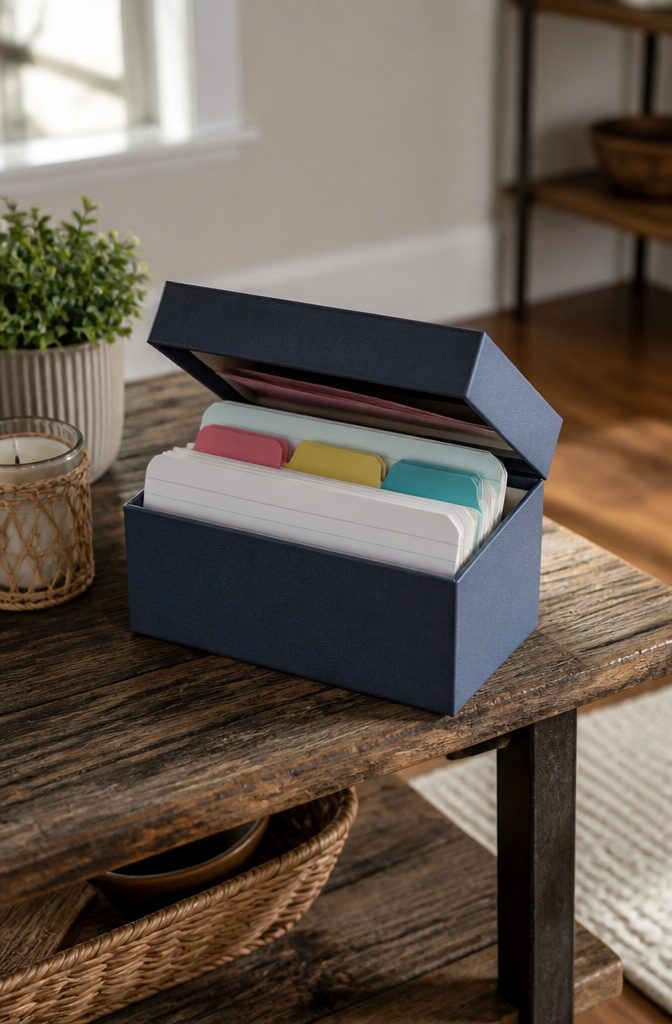
A recipe box or small index card file works fine for this, and the dividers are what make the system move.
I mark mine by frequency: daily, weekly, monthly. Some people prefer alphabetical, but frequency is what gets the morning pull down to ten seconds.
Open the box, grab today’s cards, work through them. The physical act of moving a finished card to the back of its section creates a rotation you don’t have to think about.
A 3×5 card fits standard dividers without overhang, and the box keeps dust off the ones waiting their turn.
Plastic tabs hold up better than paper if you’re opening this twice a day. The whole setup costs less than a single storage bin and lives in a drawer or on a shelf without becoming visual clutter.

【HOLDS 350 CARDS】With an impressive storage capacity of 300 to 350 standard business cards, this holder is perfect for high-traffic businesses, frequent networkers, and anyone who attends social events or trade shows.

Durable and Stylish Design: Our 3 x 5 inches card file holder features a heavy duty metal base that provides exceptional durability, ensuring your cards remain protected and organized for years to come; The hinged clear crystal plastic lid adds an elegant touch, in additional to allowing for easy visibility and quick access to the stored cards; Also have anti-slip pads on the base, ensuring it stays securely in place on your desk or any other surface; Product Dimensions: 5 5/8" X 8 1/4" X 4"

Durable and Stylish Design: Our 3 x 5 inches card file holder features a heavy duty metal base that provides exceptional durability, ensuring your cards remain protected and organized for years to come; The hinged clear crystal plastic lid adds an elegant touch, in additional to allowing for easy visibility and quick access to the stored cards; Also have anti-slip pads on the base, ensuring it stays securely in place on your desk or any other surface; Product Dimensions: 5 5/8" X 8 1/4" X 4"
Pull and Complete Daily
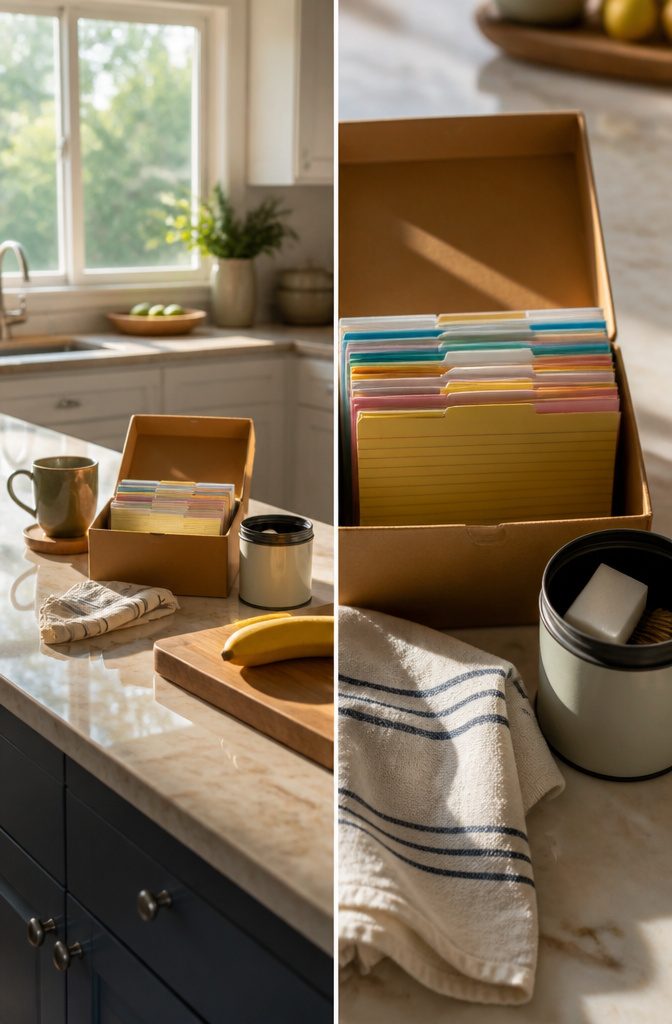
The morning pull takes under two minutes once the system is set up.
I grab the cards behind today’s divider, work through them in whatever order makes sense for the house that day, and re-file each card immediately after finishing the task. Daily cards slip right back behind the same divider for tomorrow.
Weekly cards go behind the next weekly slot, usually six or seven dividers forward, depending on how you’ve marked them. Monthly cards travel the farthest, landing behind the divider for the same date next month.
This re-filing step is where most people stall out. They stack finished cards on the counter and plan to sort later, which defeats the point.
The rhythm only works if the card moves before you move on. I keep the box open on the counter while I clean, and the motion of filing becomes part of finishing the task itself.
Missing a day is not a crisis. The cards you skipped sit where they are, and you pull them along with the next day’s set.
The system absorbs inconsistency better than a rigid calendar because nothing is dated, only sequenced. What breaks it is pulling cards and not putting them back; the box becomes a mess, and you stop trusting it.


Adjust What Does Not Work
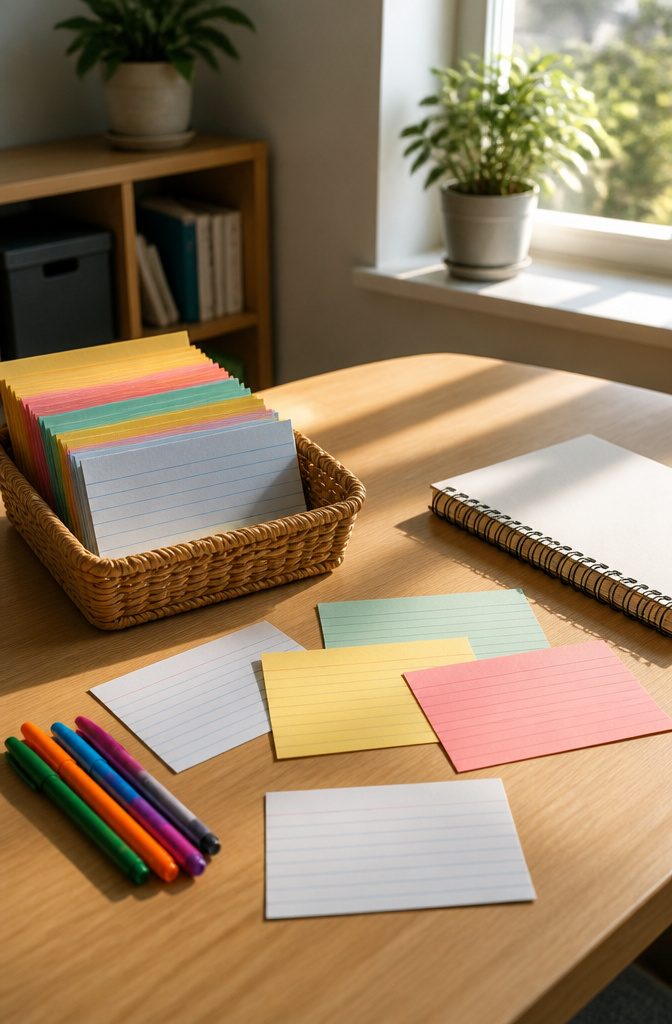
A card that keeps getting pulled and shoved back for three days straight is a task sitting in the wrong frequency. Move it.
The index card cleaning system only stays honest when you treat it like a working draft, not a contract. A weekly bathroom wipe-down might turn out to take six minutes, so combine it with the mirror card.
A monthly oven clean might feel like too much in one shot, so split it into a Friday night degrease and a Saturday morning finish.
The color coding helps here: a yellow card that never gets done on its day probably belongs in blue, or needs its time estimate revised so you stop avoiding it.
What I would skip entirely is the temptation to add cards for habits you already own. If the dishwasher gets emptied every morning without thought, a card for it is just clutter that trains you to ignore the whole box.
The same goes for chasing perfection on the first try. One source mentions tracking skip dates right on the card, which sounds small but matters more than it seems.
Two skips in a row is data, not failure; it means the frequency, the task size, or the assigned day is off.
Adjust the card, not your expectations. The system works when it bends around real routines, not when you bend to keep the system intact.

3x5 index card divider guides help organizing your notecards, flashcards, recipes and more

3x5 index card binder holder with dividers and cards refill pack, it's a perfect set for studying notes

Reliable Material: Made of sturdy polypropylene material for index card guides, which is light weight, not easy deform and break. A right material can make the card dividers more durable
Printable Cleaning Cards
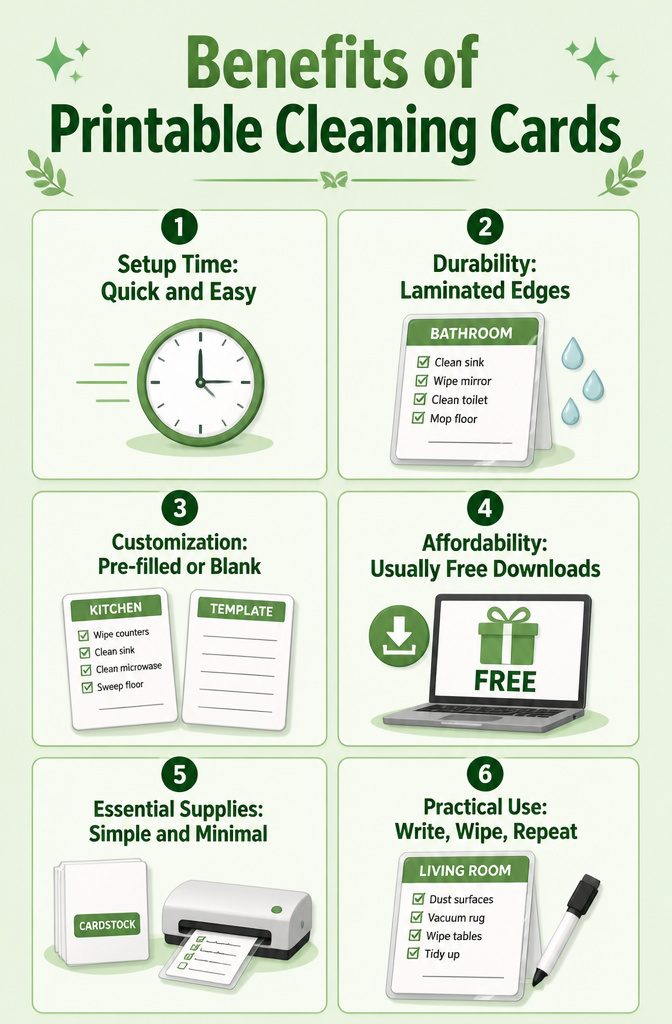
Printable cleaning cards save the setup work that handwriting every task demands.
Most downloadable sets come with pre-filled room checklists, blank lines for notes, and a template page for spaces the designer didn’t include, like a second half bath or bonus room.
Cardstock and a home laminator are the two supplies that make these last, since laminated edges survive splashes and let you check items off with a dry-erase marker instead of rewriting cards.
If I need the system running by Sunday, I print the cards instead of handwriting them.
The time you spend formatting cards by hand is time not spent actually cleaning, and most free downloads cover the standard rooms well enough that customization is minor.
Printed cards are less flexible: your kitchen card might still say "clean microwave" after yours broke, and white-out on laminate looks worse than a crossed-out line on an index card.
For renters or anyone in a first home who just needs structure fast, printing wins.
If your rooms are unusual or your chore list changes seasonally, the blank template page helps, but at that point you are halfway to writing your own anyway.

Blank tabs on card guides for making your own categories and headings

Storage Capacity: you will receive 2 business card index card holders, each with 16 transparent pockets, suitable size to hold cards, note cards or photos, hanging index card holder measures approximately 72 x 29.5 cm/28.4 x 11.6 inches, each pocket measures approximately 7.6 x 12.7 cm/3 x 5 inches

Versatile Functionality: Our 3x5 index card pocket chart is a must-have organizational tool designed to enhance learning, track workflow, and simplify your daily tasks. Featuring 36 transparent pockets (3" x 5"), this hanging card organizer is perfect for storing index cards, flashcards, small documents, notes, and other essentials. Whether you're a student, teacher, or professional, this wall-mounted organizer is your go-to solution for staying organized.
Easy, Intermediate, and Extensive Chores
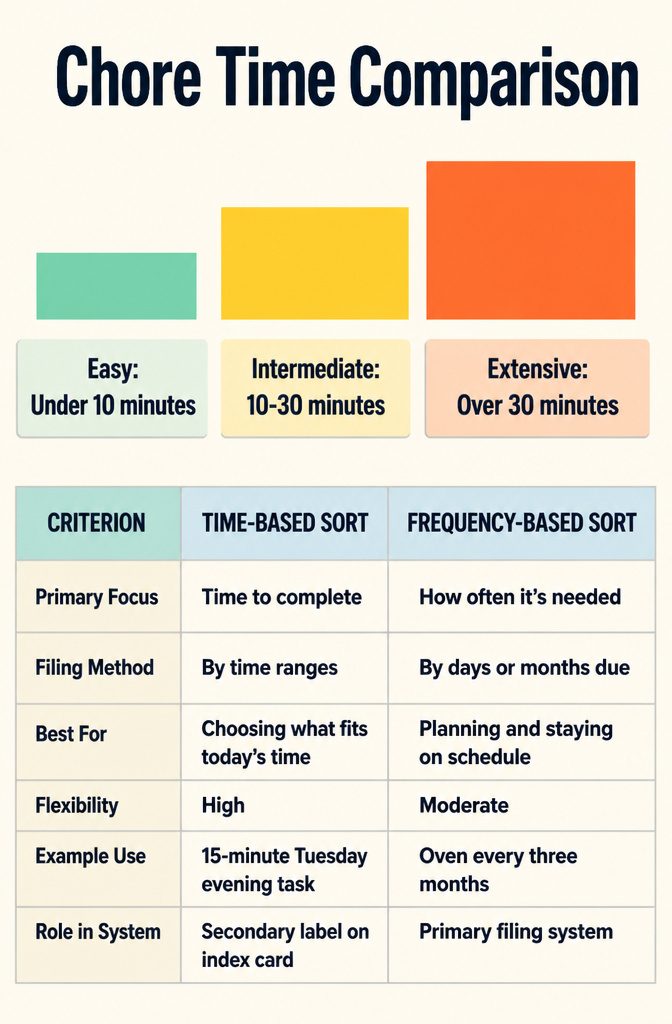
Sorting by time commitment instead of calendar frequency keeps the index card cleaning system from collapsing on busy weeks.
An easy chore takes under 10 minutes: wiping the kitchen garbage can front, sanitizing remotes and phones, or running a cloth over light switches.
These are the ones that actually get done when Saturday gets stolen by errands. Intermediate tasks land in the 10–30 minute range, like cleaning the microwave or wiping down baseboards, and they need a clearer window.
Extensive chores run past 30 minutes or demand setup and takedown: washing windows inside and out, cleaning the oven, or pulling the fridge forward to mop behind it.
The real advantage is flexibility. A Tuesday evening with 15 minutes free pulls from the easy stack; a free Saturday morning can absorb something extensive.
I would not file by time alone, though. Pair the time sort with a frequency sort, or the oven that needs cleaning every three months sits in the same pile as the blinds that need annual attention.
The original S.H.E. system used days and months as dividers, and that still matters.
Time-to-complete is a secondary label, written in the corner of the card, not the primary filing system. Use it to decide what fits today’s slot, then refile by due date after the work is done.

Unique, vivid colors get cards noticed and are easy to find

Commit it to memory with bright, color-coded cards

Color coded for quick filing and retrieval
Assign Tasks to Family Members

The index card cleaning system only works long-term when the people in the house actually pull their cards. I split tasks by who can realistically finish them, not by what sounds fair on paper.
Daily easy cards go to kids: emptying trash, feeding pets, wiping the kitchen table after meals. The cards in the intermediate and extensive sections stay with adults, since those jobs need judgment about time, tools, or safety.
Color-coding helps here. One family I read about used white cards for daily tasks, yellow for two or three times a week, blue for weekly.
That visual cue lets a child grab their own stack without reading every card. I would add age notes in the corner so a seven-year-old does not accidentally pull "clean oven" while an eleven-year-old can handle it.
Some households run a token reward system tied to the cards. A kitchen cleanup might earn four tokens, more if mopping is needed.
I am not personally drawn to turning every chore into a transaction, but for kids who need concrete motivation, the number is right there on the card alongside the time estimate.
The system stays flexible: tokens can convert to screen time, a small purchase, or nothing at all if your family prefers pride of completion.
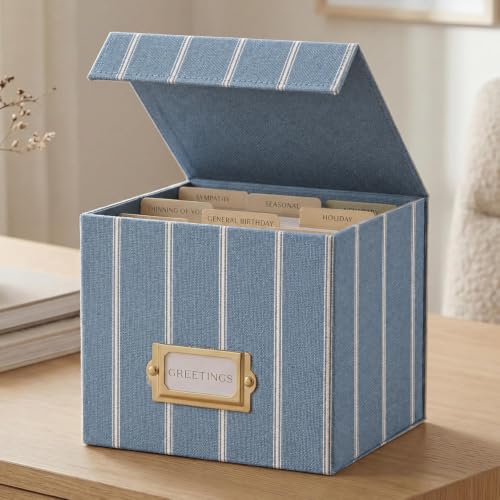
Master Your Card Collection Effortlessly: Easily store and organize all your greeting cards in one place! ZICOTOs’ greeting card organizer helps you manage holiday, anniversary, and congrats cards effortlessly, keeping them pristine and ready for any occasion

Colorful Task Card Boxes Set: you will receivec; These task card storage boxes feature colored stickers and are ideal for use as task card holders or index card organizers for teachers; You can write the corresponding task card categories on the stickers

[Fireproof and Water-Resistant]: This Card Organizer Box is made of double layered non-itchy silicone coated fiberglass which stands up the temperature up to 2000℉, protecting cards stored in the card organizer from burning, and has excellent waterproofing properties to prevent damage from rain or water, helping to ensure that your precious memories are stored safely and securely.
Why the System Lasts
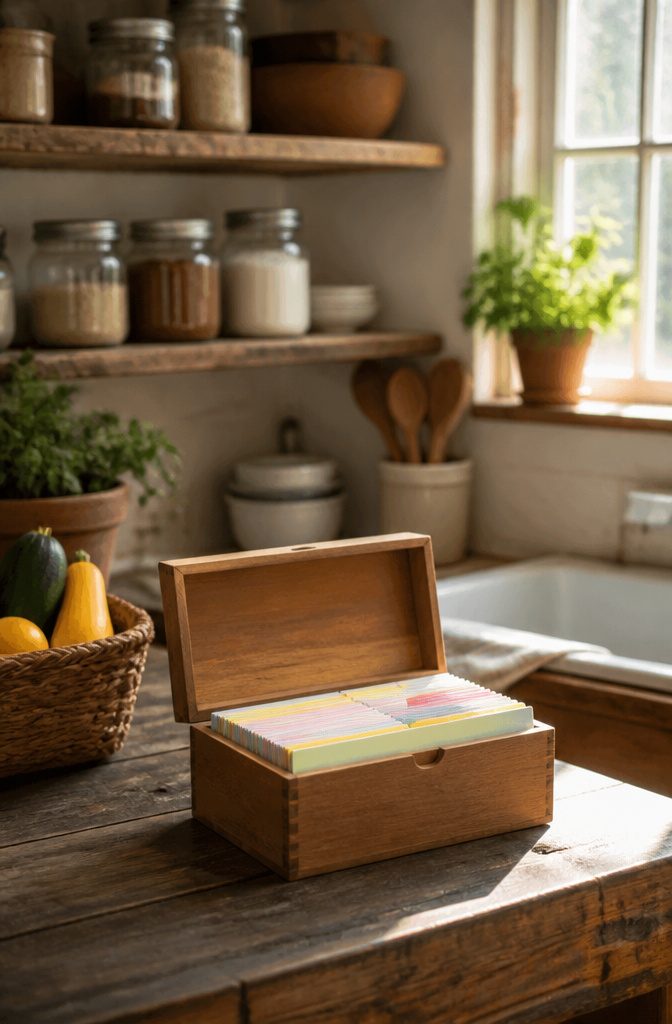
The index card cleaning system sticks because it lives in the real world, not on a screen. A phone app buries your tasks behind notifications and lock screens; a card on the counter stares back at you until it moves.
That physical presence matters on days when motivation runs low and the easiest choice is to ignore a digital reminder.
Paper also bends without breaking. A new baby, a job change, a move across state lines, none of these require exporting data or paying for a premium tier.
You rewrite a card, add a divider, or start a fresh box. The system grows or shrinks with your household, and the only cost is a pack of cards and ten minutes of thought.
I have watched renters rebuild their routines in a single afternoon after a landlord changed the layout on them.
Software demands updates, compatibility checks, and eventually a subscription hike. Cards ask for a pen and a flat surface.

Scene Adaptability: sunroof supports work for vehicle drain openings plus household pipe cleaning tasks such as fish tank tubing.


Frequently Asked Questions
How do I organize my cleaning tasks?
Organize tasks by frequency: daily for mess that appears before noon, weekly for grime that builds through Saturday, monthly for overlooked spots like ceiling fans or baseboards, and a 2–3 times weekly tier for in-between jobs.
Color-code cards by frequency (white, yellow, blue, green) so you can see at a glance whether your workload is realistic. File them behind dividers in a recipe box or card file, then pull each day’s cards every morning.
What should I include on my cleaning cards?
Each card needs a single task, a time estimate, and the frequency marked on its face. Add special instructions if a task has variable steps, like "Mop if necessary, extra tokens if so."
Color-coding by frequency keeps the deck scannable without reading every line. Skip anything you do by habit; the system works best as a safety net for jobs that slip through the cracks.
How can I involve my family in cleaning?
Assign tasks by who can realistically finish them, not by what sounds fair. Daily easy cards go to kids; intermediate and extensive chores stay with adults.
Add age notes in the corner so a child does not accidentally pull a task requiring judgment or safety tools. Some households use a token reward system, with the value printed right on the card alongside the time estimate.