Creating a beautiful garden can be both a challenge and a joy, especially when it comes to incorporating climbing plants and heavy vines. These majestic plants can transform any outdoor space, adding lush greenery and vibrant colors. That’s why I put together this list of 14 garden pergola ideas that support heavy vines and climbing plants. Whether you are looking to enhance your urban garden or create a cozy backyard retreat, these ideas will inspire you to build a stunning vertical garden structure.
If you’re a gardening enthusiast, a homeowner, or someone who simply loves the beauty of nature, this post is for you. With a focus on practical design and aesthetics, you’ll find ideas that cater to various tastes and spaces. Each pergola concept showcases ways to incorporate climbing plants effectively while ensuring they have the support they need to thrive.
Get ready to explore a range of creative garden pergola ideas that are beautiful and functional. From rustic wooden designs to modern metal structures, you’ll gain insights on how to create a stunning outdoor space that not only looks great but also enhances your gardening experience. Let’s dive into these inspiring designs and discover how to elevate your garden with pergolas that beautifully support your climbing plants.
Key Takeaways
– Discover 14 unique garden pergola ideas that effectively support heavy vines and climbing plants, perfect for any backyard or urban space.
– Each pergola design varies in style, from rustic wooden structures to sleek metal frameworks, allowing you to choose one that fits your personal aesthetic.
– Learn about specific climbing plants that thrive on different types of pergolas, ensuring you select the right support for your favorite vines.
– Explore practical tips on installation and maintenance, helping you create a garden structure that looks great and lasts for years.
– Get inspired by beautiful visuals and concepts that will help you make the most of your vertical gardening efforts in any outdoor space.
1. Rustic Wooden Pergola with Wisteria
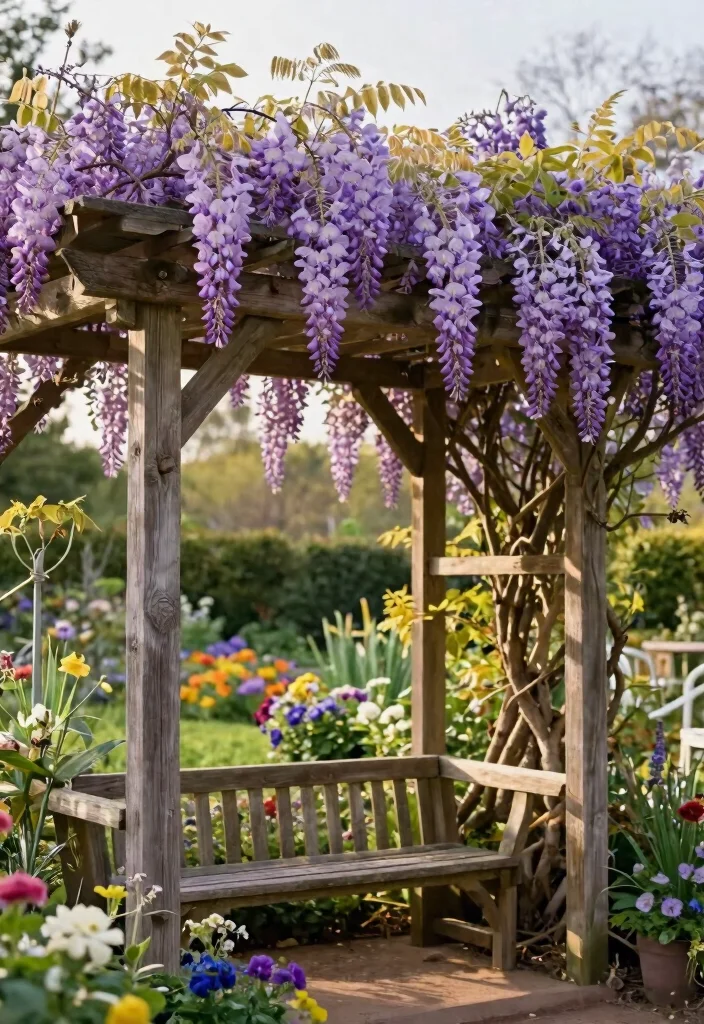
A rustic wooden pergola adorned with cascading wisteria is a stunning focal point for any garden. The thick, sturdy beams provide ample support for these heavy vines, which bloom in stunning shades of purple.
Tips for Design: Choose untreated or lightly stained wood to enhance the natural look. Wisteria not only adds beauty but also offers shade when in full bloom. Ensure that your pergola is built to withstand the weight of these dramatic flowers by using reinforced posts and crossbeams.
Plant wisteria at the base of the pergola and train it to climb up and over the structure. This can create a breathtaking tunnel effect in your garden. Additionally, consider adding outdoor string lights along the beams for a magical touch at night.
Pros: Visually stunning, fragrant flowers, and provides excellent shade.
Cons: Wisteria can be invasive if not properly managed, so routine maintenance is crucial.

【Thickened Square Tube Design】 Constructed with thickened metal square tubes, this heavy duty garden arch provides exceptional load-bearing capacity. It resists bending under pressure and easily supports mature climbing plants, making it a reliable arch for wisteria and dense vines.

Solid Material -This Arbor is made by solid wood. It's sturdy and solid for long time and durable usage.Moisture Resistant,Maintain beauty and performance.
Key Trade-offs & Our Top Pick
Option 1: Rustic Wooden Pergola
– Pros:
– Provides a natural aesthetic that blends well with gardens.
– Durable when treated properly, making it suitable for heavy vines like Wisteria.
– Offers a classic look that enhances backyard charm.
– Cons:
– Requires regular maintenance to prevent rot and insect damage.
– Can be costly depending on the type of wood used.
– Heavier installations may require professional help for setup.
– Best for: Those looking for a traditional garden look that supports lush, heavy vines.
Option 2: Modern Metal Pergola
– Pros:
– Extremely durable and resistant to harsh weather conditions.
– Low maintenance compared to wood, saving you time and effort.
– Sleek design fits well in contemporary outdoor spaces.
– Cons:
– Can get hot under direct sunlight, making it uncomfortable during summer.
– Limited options for customization compared to wooden structures.
– Heavy vines may require additional support to prevent bending.
– Best for: Homeowners who prefer a minimalist design and want a long-lasting structure.
Option 3: Stone Pergola
– Pros:
– Offers a sturdy foundation ideal for supporting heavy grapevines.
– Provides a rustic and timeless feel to any garden.
– Naturally blends into outdoor settings with stone landscaping.
– Cons:
– Very heavy and often requires a professional installation.
– Higher cost due to materials and labor.
– Limited flexibility in design and style adjustments.
– Best for: Those seeking a permanent and strong structure that creates a natural ambiance.
Option 4: Lattice Pergola
– Pros:
– Great for climbing plants like Clematis, providing ample support.
– Allows sunlight to filter through while giving some shade.
– Affordable and DIY-friendly for those looking to save money.
– Cons:
– May not be as durable as other materials, needing replacement over time.
– Lattice can sometimes restrict the growth of thicker vines.
– Requires regular checking to ensure the structure remains intact.
– Best for: Gardeners wanting an easy way to create vertical space without a hefty investment.
Expert Recommendation:
Best Overall: Rustic Wooden Pergola
The rustic wooden pergola stands out as the best choice for most people. It combines a timeless look with strong support for heavy vines, making it perfect for those aiming to cultivate lush greenery. This option balances value and aesthetics while providing a sturdy structure that enhances any garden.
Why We Picked This:
We chose the rustic wooden pergola because it appeals to a wide range of tastes and styles. However, if you’re someone who dislikes maintenance, you might prefer the modern metal option for ease and durability. On the other hand, if you’re focused on a budget, the lattice pergola could be your go-to for a quick and affordable solution. Each option has its merits, so choose one that aligns with your needs and garden vision!

Upgrage 3-Way Right Corner Brackets: Our Grehitk pergola brackets are extended 3-Way right angle corner bracket. It has enhanced the stability of the pergola, even in inclement weather. The 4x4 pergola brackets post features weather-proof performance and a stable frame, so you do not have to worry about the attack and damage to storms and wind.

Durable Material :4x4 brackets for wood posts are anti-rust,anti-corrosion, and water resistant. It can ensure you years of use.

Superior Quality Materials: This 4x4 pergola brackets feature a 90° right angle gusset plate design and weather-proof performance and a stable frame,so you do not have to worry about the attack and damage to storms and wind.
2. Modern Metal Pergola with Climbing Roses
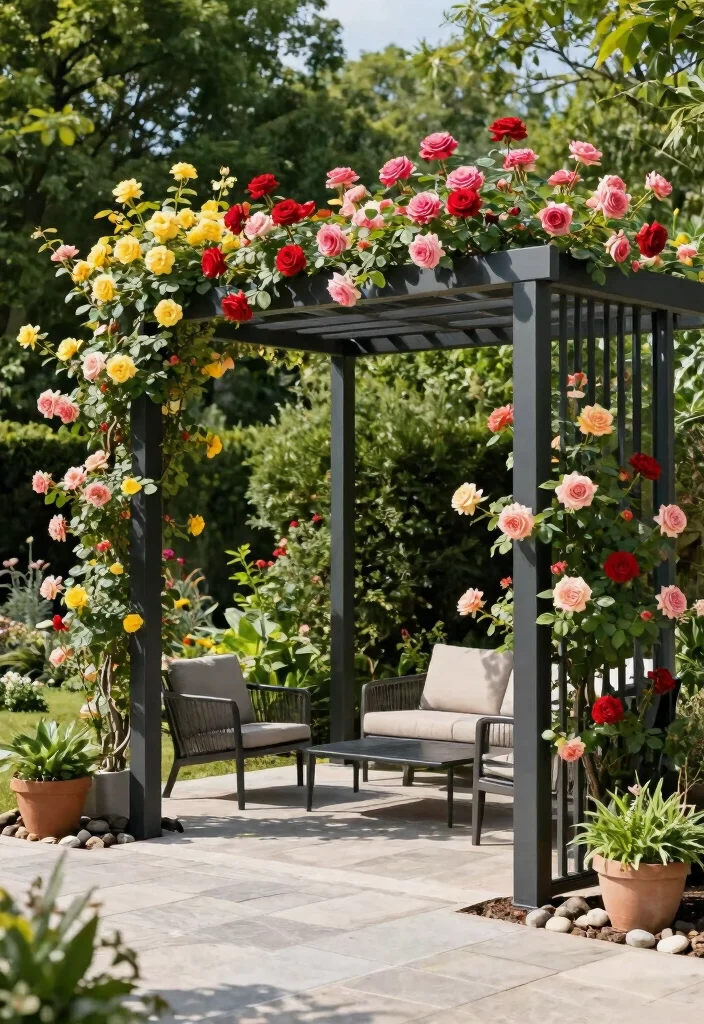
For a sleek and contemporary look, a metal pergola combined with climbing roses is a perfect choice. The smooth lines of the metal structure contrast beautifully with the soft, delicate blooms of the roses.
Design Tips: Opt for a powder-coated metal to resist rust and prolong the life of your pergola. Train climbing roses to weave through the metal latticework for an eye-catching display. When designing, consider using various rose varieties to create a mixed palette of colors and fragrances.
Adding a stone or gravel base around the pergola not only enhances the modern aesthetic but also provides excellent drainage for the plants. Pair your metal pergola with comfortable outdoor furniture to create an inviting space for relaxation and entertainment.
Pros: Low maintenance, durable, and offers a chic appeal.
Cons: Metal can heat up in direct sunlight, so consider adding shade features.
Fun fact: Powder-coated metal pergolas resist rust for 15+ years, making garden pergola ideas a durable urban statement. Pair with climbing roses of various varieties that weave through the lattice, and your Modern Metal Pergola becomes a living, seasonal color display.

ELEGANT GARDEN ARCH TRELLIS – Transform your backyard into a beautiful garden retreat with this classic black metal garden arch. Create an inviting entrance along pathways, over garden beds, or among your favorite flowers and climbing plants.

Elegant Arch: Whether standing alone or covered with climbing vines and flowers, these outdoor metal arch add a striking focal point to your yard. Adding grace and prominence to any outdoor venue with the Arbor features squared lattice side panels

➤ Fast-Growing Vines: Germinate quickly and grow into dense climbers ➤ Versatile Landscaping: Ideal for fences, walls, trellises, and pergolas ➤ Hardy & Adaptable: Thrives in various soil types and climates ➤ Full Sun to Partial Shade: Performs well in most garden locations ➤ Low Maintenance: Minimal care required once established
3. Stone Pergola with Grapevines
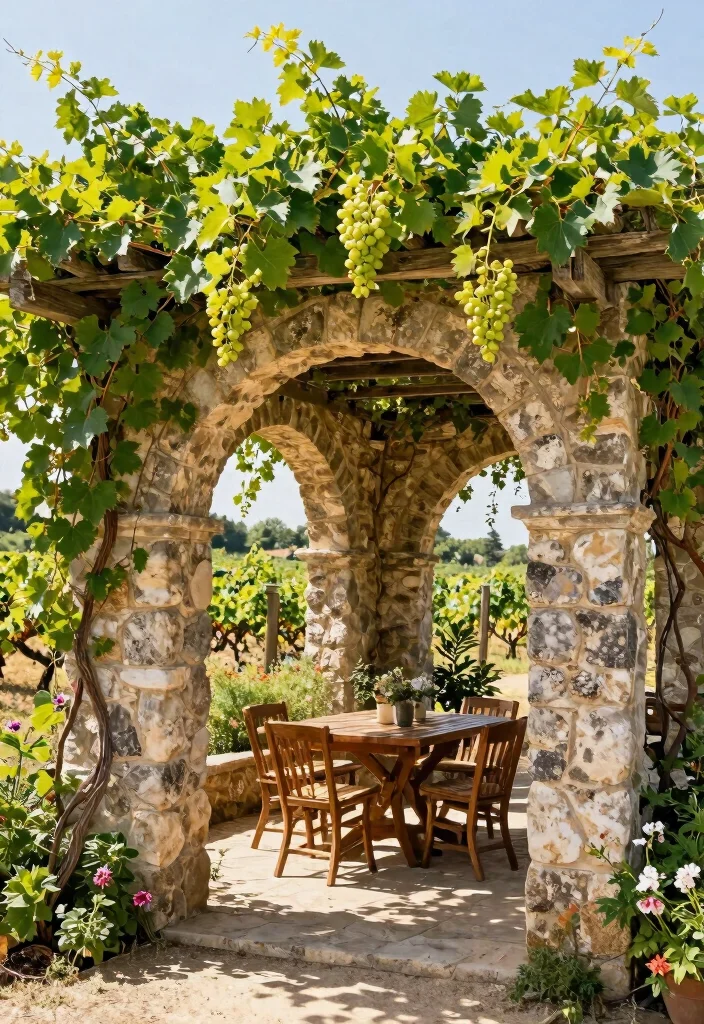
Imagine enjoying home-grown grapes from a stunning stone pergola. This robust structure is perfect for supporting heavy grapevines that can provide not only shade but also delicious fruits.
Design Insights: Stone is incredibly durable and blends seamlessly into a natural setting. Use a combination of heavy stone posts and archways to create a rustic Italian-themed atmosphere in your backyard. The vines should be planted around the base and trained to climb over the structure, providing a bountiful harvest and inviting shade.
Consider incorporating a small dining area underneath the pergola, so you can relish in the beauty of your grapevines while enjoying meals outdoors. Additionally, adding a drip irrigation system can help sustain your grapes without much hassle.
Pros: Incredible durability, produces fruit, and adds rustic charm.
Cons: Higher initial costs due to stone materials.

Satisfactory Service: If you have any questions or concerns, our dedicated team is here to assist you

Satisfactory Service: If you have any questions or concerns, our dedicated team is here to assist you

4. Lattice Pergola with Climbing Clematis
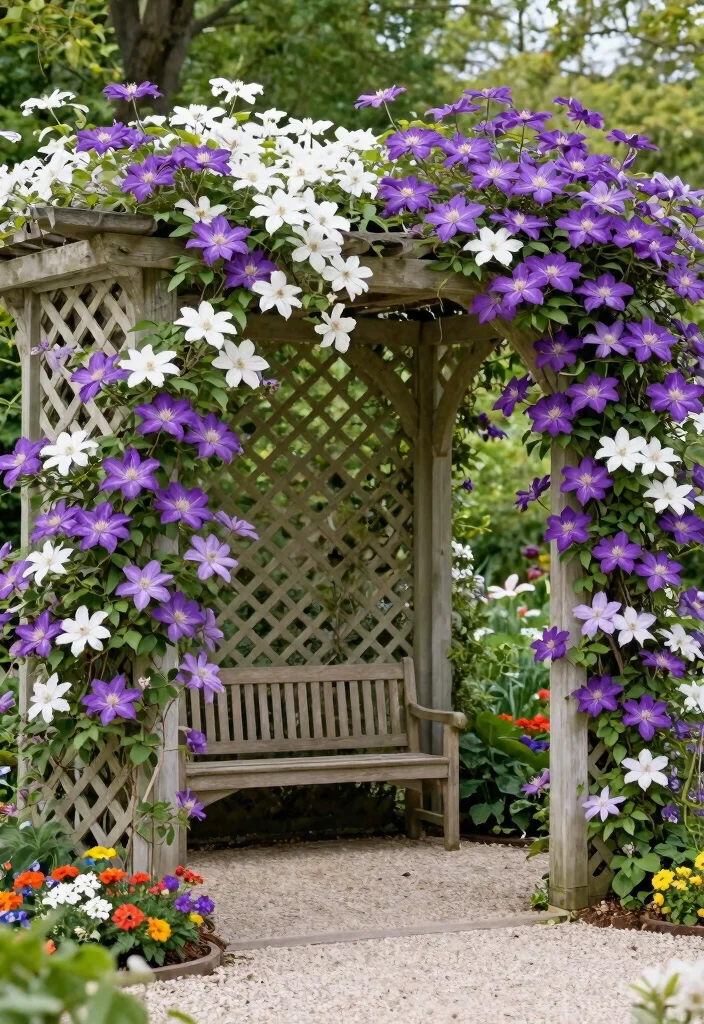
Clematis is one of the most versatile climbing plants available, and a lattice pergola provides the perfect support. These stunning flowers bloom in diferentes hues, bringing a vibrant display to any outdoor setting.
Design Features: A lattice design allows for better airflow and sunlight penetration, which is beneficial for the climbing plants. The vertical structure makes it easy for clematis to attach themselves and flourish. Consider layering various clematis species for prolonged blooming seasons, ensuring your garden blooms from spring to fall.
Add a bench or seating area at the base of the pergola to enjoy the beautiful display as you relax. To enhance the look, string lights can be added to create a magical effect during evening gatherings.
Pros: Offers a variety of colors, easy to manage, and enhances visual appeal.
Cons: Requires regular trimming to keep the health of the plant.

50-Piece Anchors Only Refill Pack For Trellis, Wall Climb Plants, Vine and Lighting Strip,

Sturdy Metal Construction for Reliable Support: Built with heavy-duty powder-coated metal pipes, this garden arbor offers excellent strength and durability for long-term outdoor use. The reinforced frame resists deformation, while the 10" pointed legs insert firmly into the ground to provide enhanced stability for climbing plants and decorations.

Extra Large Size for Plants Growth:This garden arch trellis measures 86" Hx63" Lx47" W, offering ample space for climbing plants like grapes, cucumbers, peas and flowers. It serves as a stunning garden entryway while maximizing harvest yield.
5. Shade Structure with Heavy Vines
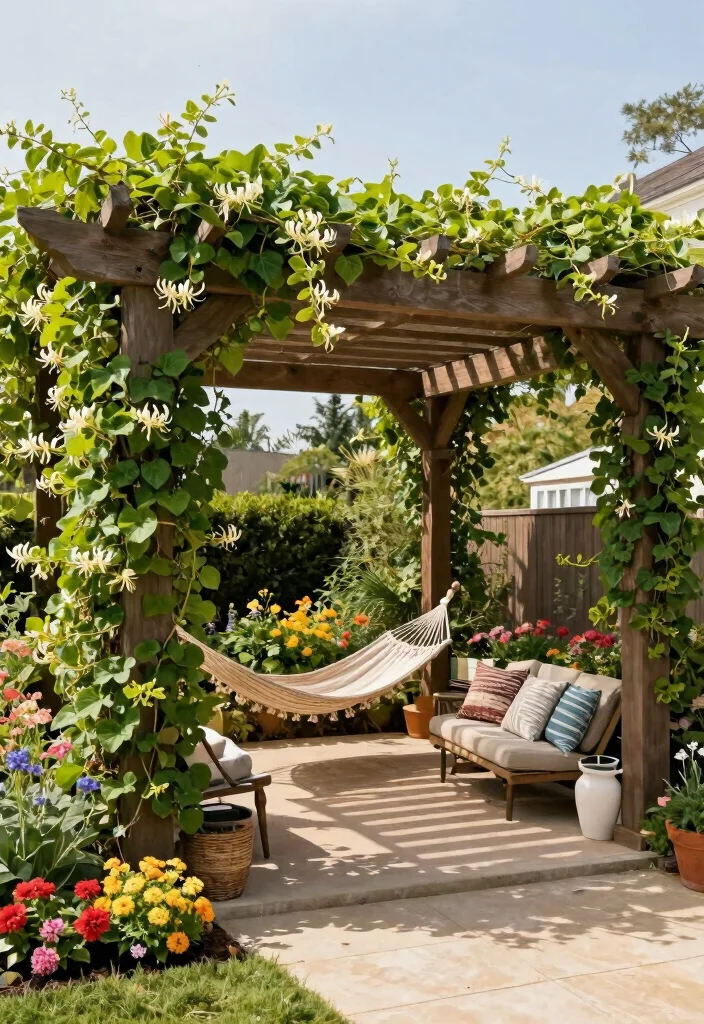
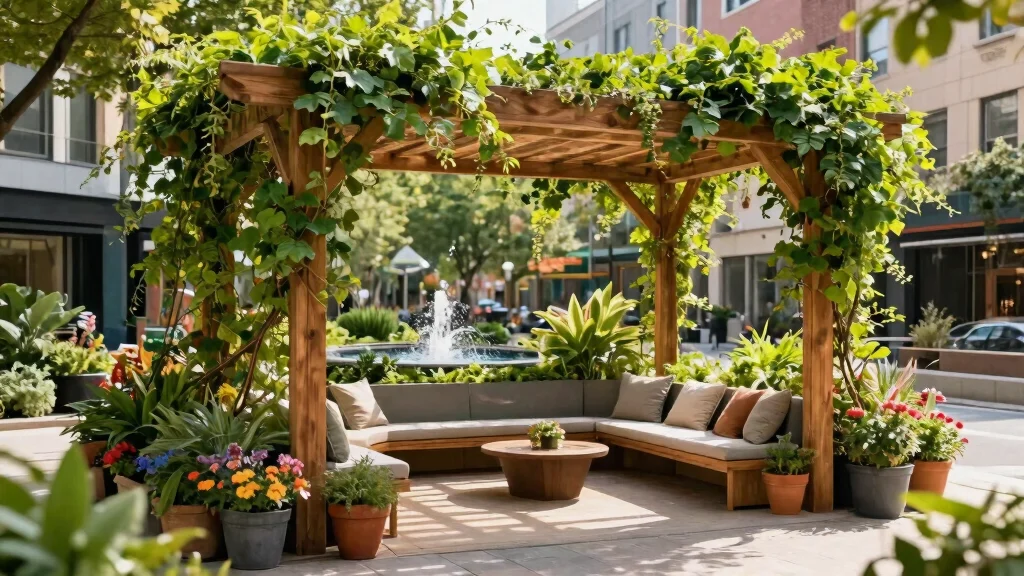
Creating a comfortable shaded area can be vital for enjoying your backyard, especially during the hot months. A pergola designed specifically for heavy vines, like honeysuckle or ivy, can provide that much-needed cover while enhancing the beauty of your garden.
Design Considerations: Build a sturdy frame using treated wood or durable metal to ensure it can handle the weight of the vines. The space between the beams can be left open or can have slats installed for additional shade. Choose heavy vines that can easily cover the structure and offer fragrance, like honeysuckle, or keep it classic with ivy.
Adding outdoor furniture underneath, such as a hammock or lounge chairs, invites relaxation and enjoyment of the shaded area. Incorporate outdoor rugs and pillows to enhance comfort and design.
Pros: Creates an inviting space, offers cool shade, and adds aesthetic value.
Cons: Requires careful planning to ensure proper support for heavy vines.

【DURABLE MATERLAL & STABLE STRUCTURE】This garden arch is made from FSC-Certified wood with fully sanded, which has a smooth surface to prevent any unwanted injury caused by wood splinters. Natural solid wood material is weatherproof, durable and strong enough to hold various plants, while providing both you and your plants a safe environment

Elegant Arch: Whether standing alone or covered with climbing vines and flowers, these outdoor metal arch add a striking focal point to your yard. Adding grace and prominence to any outdoor venue with the Arbor features squared lattice side panels

【Sturdy Metal Support for Climbing Plants】 Constructed with thick, powder-coated metal tubes and reinforced connectors. This U-shaped garden trellis provides stable upward support for cucumbers, tomatoes, peas, beans, and melons. The rigid frame helps maintain plant structure for better airflow and cleaner growth
6. Curved Pergola for Elegance
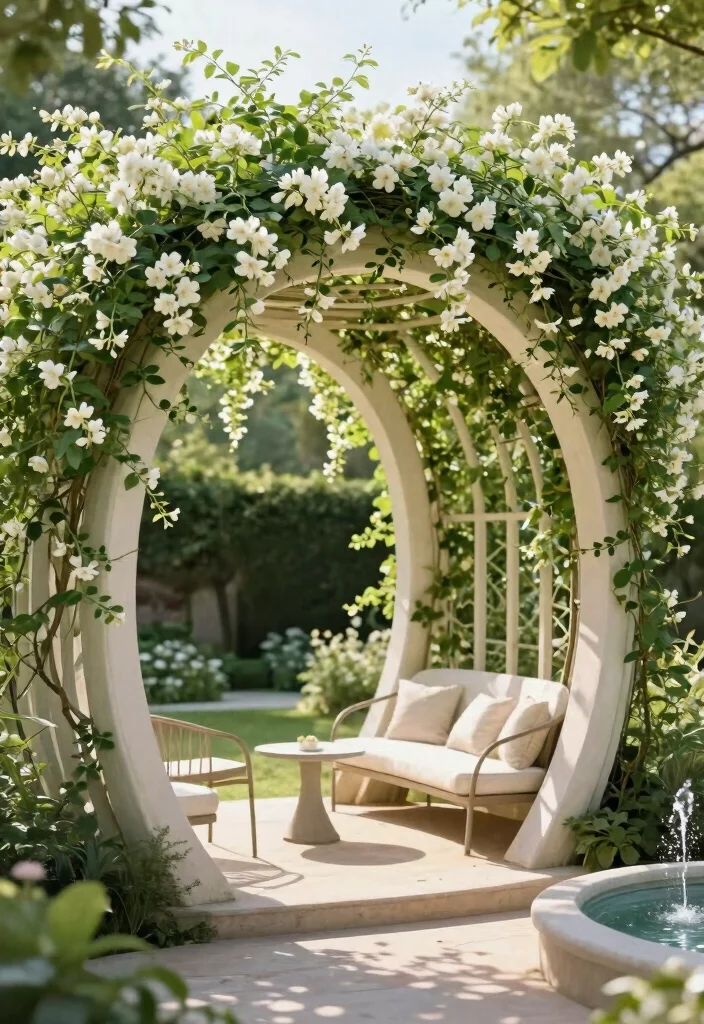
A curved pergola adds a touch of elegance to any garden, standing out with its unique design. This structure can beautifully support climbing plants like jasmine or star jasmine, which have dense foliage and delightful fragrances.
Design Tips: The curved beams can create an open and airy feel while providing ample support for the vines to flourish. Choose a wood or composite material that can be easily shaped and is resistant to weather elements. The addition of climbing jasmine adds a fragrant element that creates a sensory experience in your garden.
Consider incorporating a small water feature nearby to enhance the tranquility and charm of this elegant setting. Use seating that complements the smooth lines of the pergola for a cohesive look.
Pros: Unique design, fragrant blooms, and visually captivating.
Cons: Can be more expensive to construct than traditional designs.
A curved pergola turns garden pergola ideas into reality—comfort comes first. Plant jasmine along the curve for scent and shade, and let the beams guide vines upward for a lush, elegant canopy.
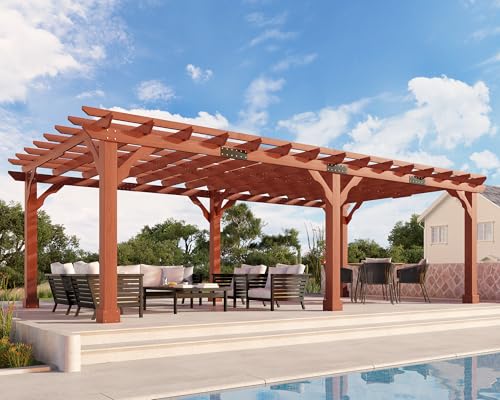
Premium Solid Cedar Wood Frame: Crafted from high-quality cedar wood with rich grain patterns, this pergola features a natural finish and is treated with a weatherproof stain for long-lasting durability, ensuring protection through all seasons

1. Wider Opening for 4x4 Wood Posts: Designed with a 3.74 x 3.74 in (95 x 95 mm) inner opening, this 4x4 pergola bracket kit fits standard nominal 4x4 lumber. The extra clearance makes wood posts easier to insert and accommodates some slightly oversized lumber, providing greater flexibility for DIY pergola projects.

【For 30°Slanted Roof Pergola】The slanted Pergola Bracket set is suitable for 4x4 wooden post, and a 30 degree Gazebo bracket can better block sunlight and rainwater, providing a more comfortable leisure environment for outdoor spaces, allowing you to enjoy outdoor life in hot summer or rainy weather.
7. Vertical Garden Pergola with Modular Planters
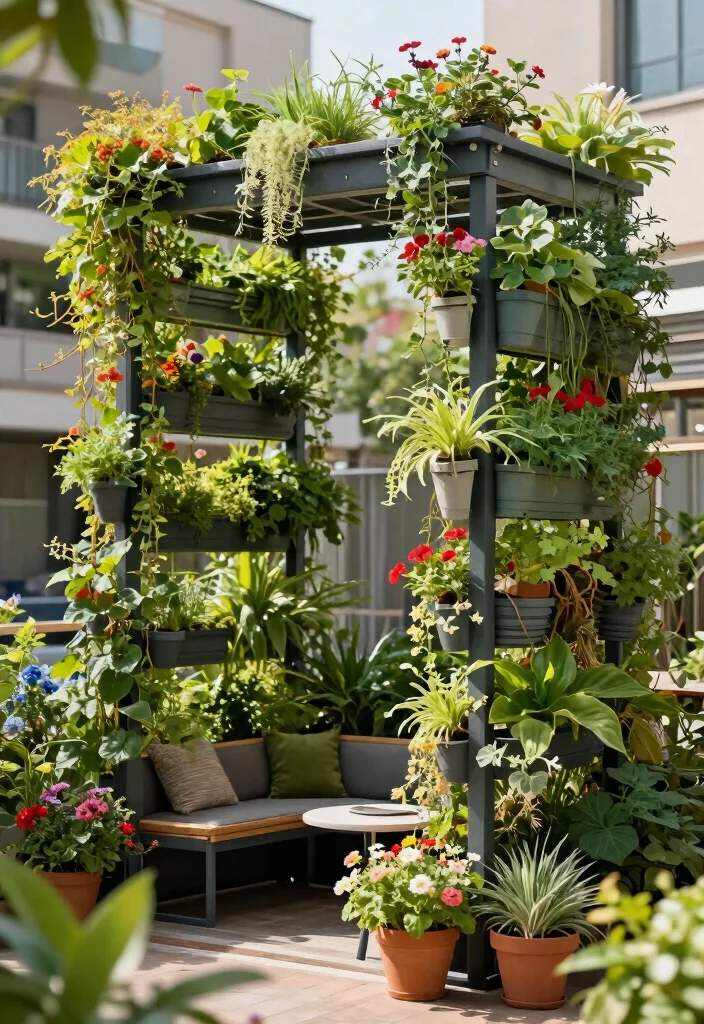
In urban settings where space is limited, a vertical garden pergola with modular planters is a game changer. This design not only supports heavy climbing plants but also maximizes your growing space.
Design Elements: Incorporate vertical planters along the sides of the pergola to allow for a range of plants, including herbs and flowers that can spill over. Use a combination of sturdy wood and metal to build a framework that supports the weight of both the structure and the plants.
Using modular design means you can customize the layout to suit your needs and preferences. Plant heavy vines at the base while using lighter plants at the higher levels. This allows for a beautiful cascading effect as they grow.
Adding drip irrigation systems to the planters can simplify maintenance, ensuring your plants receive proper watering. Create a comfortable seating area beneath to enjoy your vertically lush garden.
Pros: Efficient use of space, customizable, and visually appealing.
Cons: Requires careful planning to ensure weight distribution and stability.
Fun fact: These garden pergola ideas show a vertical garden pergola with modular planters adding up to 40% more usable space in tight urban settings. It supports heavy climbers and herbs, turning balconies into thriving green walls.

WONDERFUL SHOWCASE. The birdcage shape and four tall side panels make the structure a nice choice for climbing vines like ivy, clematis, wisteria, grape vines, flowers and more — allows them to grow naturally up towards the top.


Elegant Arch: Whether standing alone or covered with climbing vines and flowers, these outdoor metal arch add a striking focal point to your yard. Adding grace and prominence to any outdoor venue with the Arbor features squared lattice side panels
8. Beach-Style Pergola with Tropical Vines
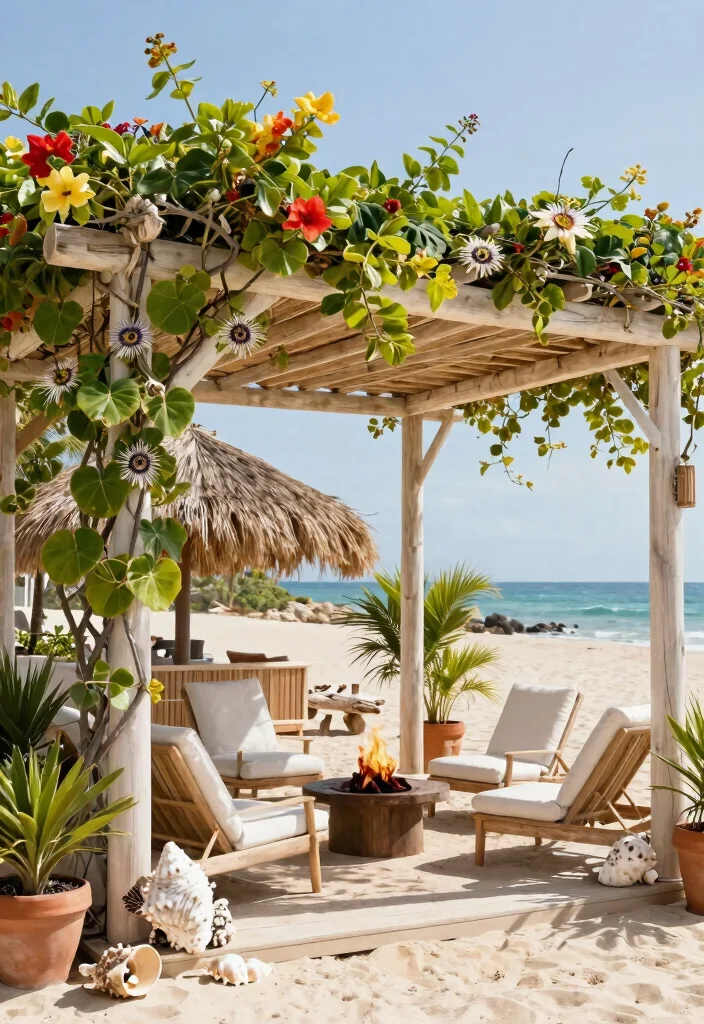
For those who love a beachy vibe, a pergola adorned with tropical vines is a perfect choice. This design creates a relaxed atmosphere, reminiscent of coastal getaways, while providing excellent support for heavy vines like passionflower.
Design Aspects: Choose light-colored wood to mimic beachside aesthetics, and consider a thatched roof for added charm. Tropical vines thrive in sunny, warm conditions, so ensure your pergola is placed in a location that receives plenty of sun.
Passionflower not only adds stunning blooms but can also produce unique fruits. Incorporate lounge chairs and a fire pit underneath for a perfect relaxation spot. Surround the pergola with beach-inspired decor, such as driftwood accents or seashells, to bring the theme together.
Pros: Relaxing atmosphere, beautiful blooms, and can produce fruit.
Cons: Tropical plants may need special care depending on your local climate.

Assemble Freely:You can easily assemble a wide arch(7'6"W x 6'5'H) or a high arch(4'6"W x 7'10"H) as you need. Easy to Assemble:Pre-cut and pre-drilled holes;Instructions...
9. Zen Pergola with Climbing Bamboo
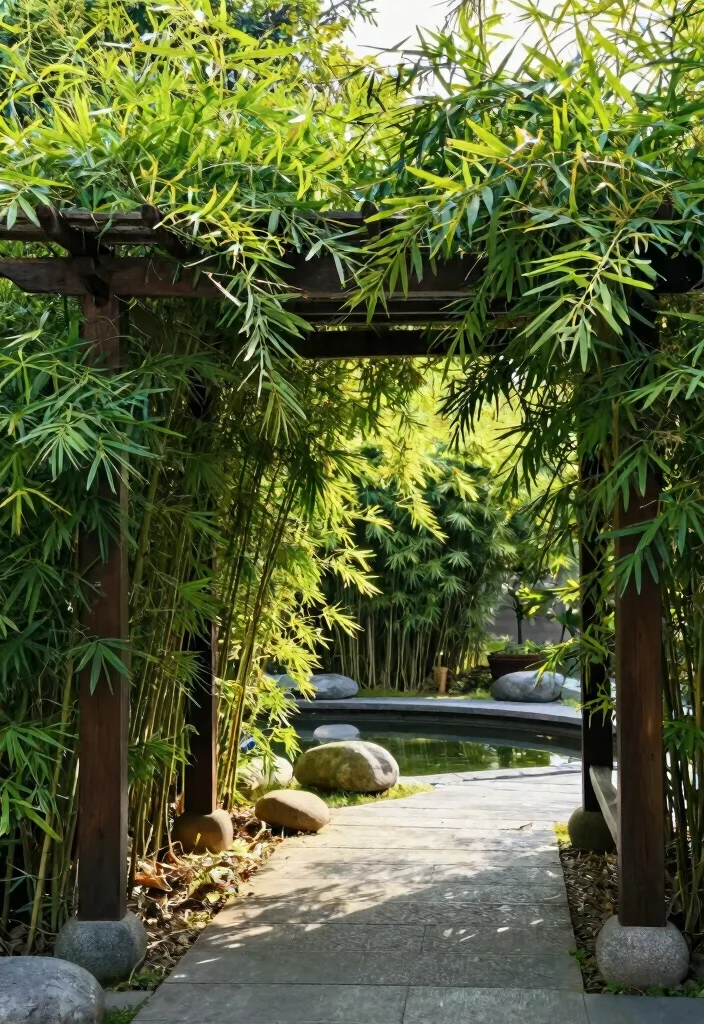
Create a serene Zen garden atmosphere with a pergola covered in climbing bamboo. Not only is bamboo a beautiful choice, but it’s also incredibly resilient, making it perfect for heavy structures.
Design Features: Use dark wood or stone to create a calming effect that complements the natural feel of bamboo. Ensure the pergola is built with strong cross beams to support the weight of the bamboo as it grows.
Bamboo offers a unique texture and can create a peaceful sound as the wind rustles through the leaves. Incorporating water features, such as a small fountain, will enhance the tranquil atmosphere and provide a perfect backdrop for relaxation. Adding simple stone paths and minimalist decor can complete this Zen-inspired design.
Pros: Calming and peaceful atmosphere, distinctive texture.
Cons: Management is needed to prevent bamboo spread.
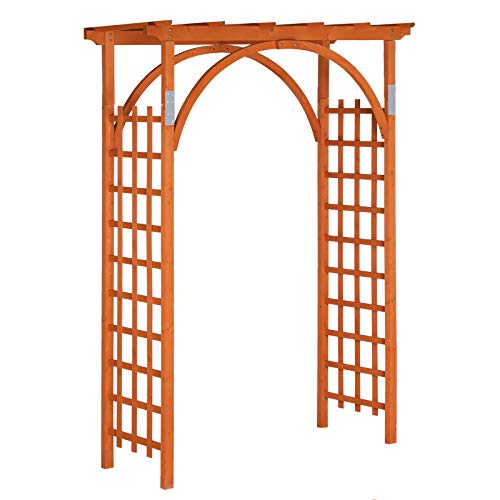
Solid Material -This Arbor is made by solid wood. It's sturdy and solid for long time and durable usage.Moisture Resistant,Maintain beauty and performance.

[Sturdy and Reliable Construction] Made of natural fir wood and reinforced with solid metal connectors, this garden arch is stable and warp-resistant. The protective coating shields the wood surface from moisture and weathering, making it ideal for outdoor use.

Promotes Vertical Growth for Climbing Plants: Designed to mimic natural climbing habits, this 90.55" tall trellis offers ample vertical space for roses, ivy, grapes, cucumbers, and other vines, encouraging healthy upward growth and maximizing garden space.
10. DIY Pallet Pergola with Vining Flowers
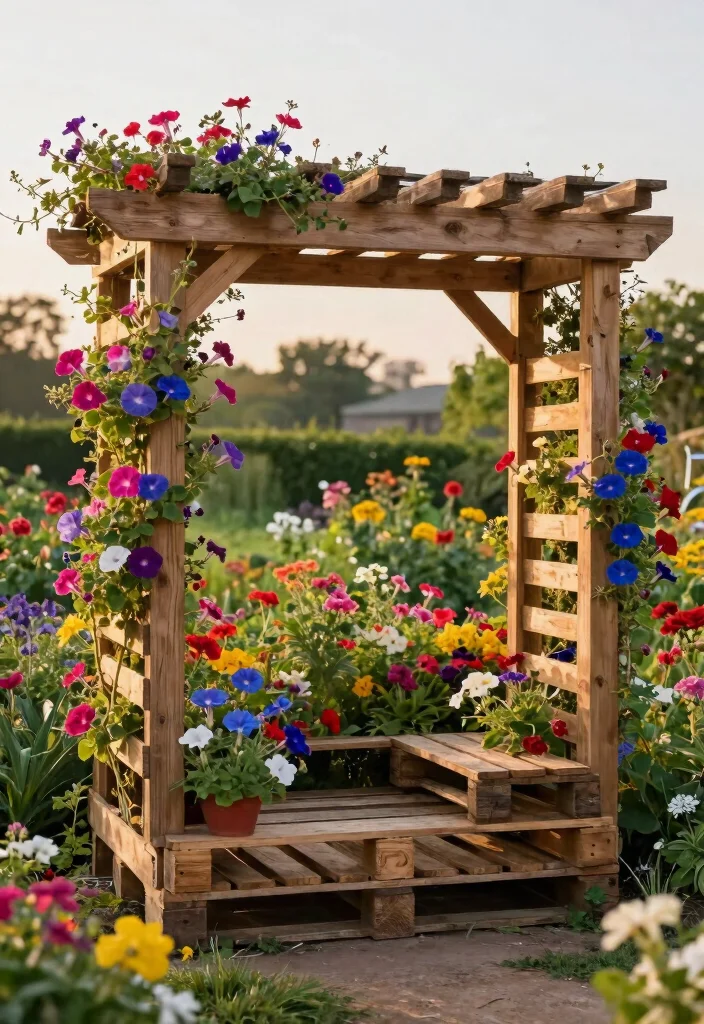
A DIY pallet pergola is a budget-friendly way to create a charming garden structure while supporting vining flowers like morning glory or sweet peas. This project can be a fun weekend endeavor, allowing you to customize the design to fit your space.
Design Tips: Use sturdy wooden pallets to construct the base of your pergola, ensuring the structure is stable. The gaps between the pallets allow for easy attachment of climbing flowers, which can weave through and create an enchanting display.
Paint the pallets in bright, cheerful colors or leave them natural for a rustic vibe. Consider combining various vining flowers to add color and fragrance. Adding fairy lights can bring a whimsical touch, making it a lovely evening space.
Pros: Cost-effective, customizable, and fun to create.
Cons: Requires basic carpentry skills and maintenance to keep the wood in good condition.
11. Mediterranean-Style Pergola with Bougainvillea
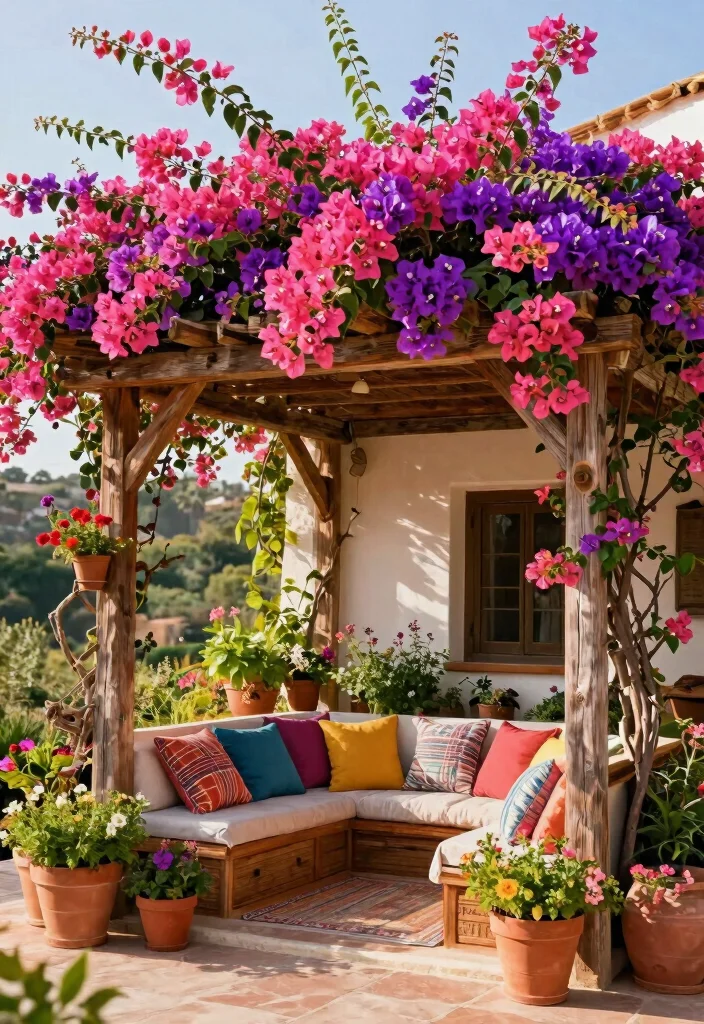
Capture the essence of the Mediterranean with a pergola draped in vibrant bougainvillea. This hardy plant thrives in warmer climates and adds bursts of color that brighten any outdoor space.
Design Elements: Opt for weather-resistant materials like teak or cedar for the pergola, enhancing its durability in sunny conditions. Bougainvillea can be trained to climb over the structure, creating a beautiful tapestry of color.
Incorporate terracotta pots with herbs and flowers for an authentic Mediterranean feel. Create a cozy seating area underneath, perhaps with colorful cushions and patterned throws, to enjoy the beauty of the blooms. Adding a small table for alfresco dining can enhance the experience.
Pros: Drought-resistant, vibrant colors, and delicious scents from herbs.
Cons: Bougainvillea can be thorny, so take care when pruning.
12. Contemporary Pergola with Vertical Screens
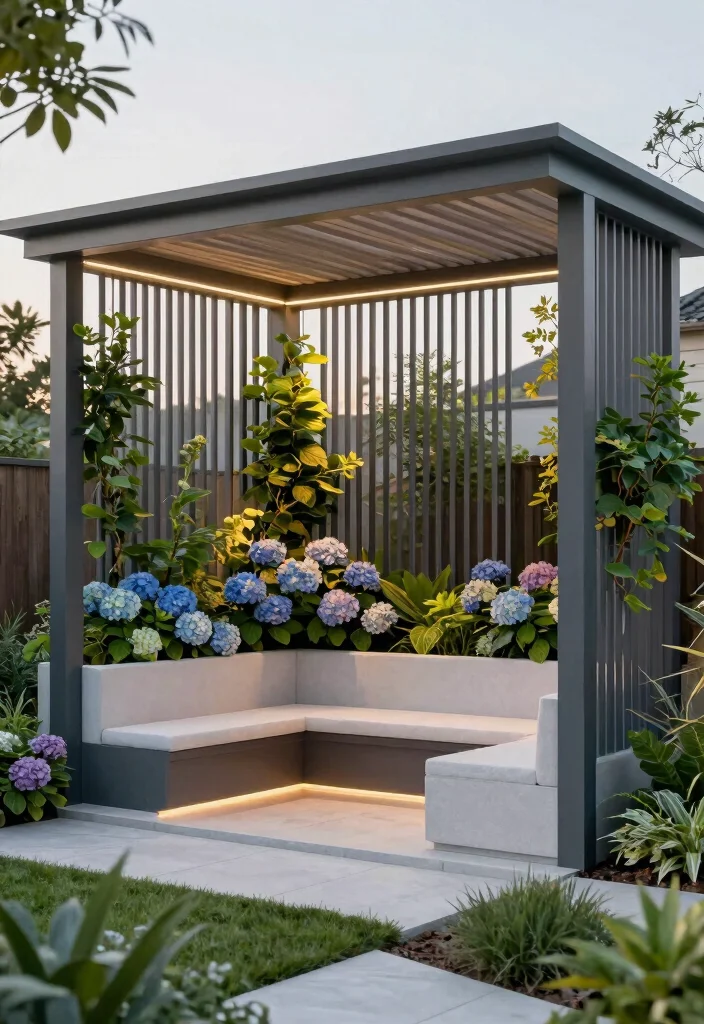
For modern urban gardens, a contemporary pergola with vertical screens offers a stylish option for supporting climbing plants. This design integrates seamlessly into sleek environments while providing functionality.
Design Features: Incorporate vertical screens on either side of the pergola to create privacy and an artistic flair. These screens can support vines like climbing hydrangeas or ivy, softening the edges and providing a green backdrop.
Use materials like metal panels or wood slats for a modern feel, and consider adding built-in lighting for evening ambiance. Below, a minimalist seating area with clean lines complements the contemporary vibe. Mixing textures and colors will create a visually appealing and inviting outdoor area.
Pros: Stylish and modern, enhances privacy, and adds greenery.
Cons: May require more maintenance depending on materials used.
13. Traditional Arbor Pergola with Climbing Peonies
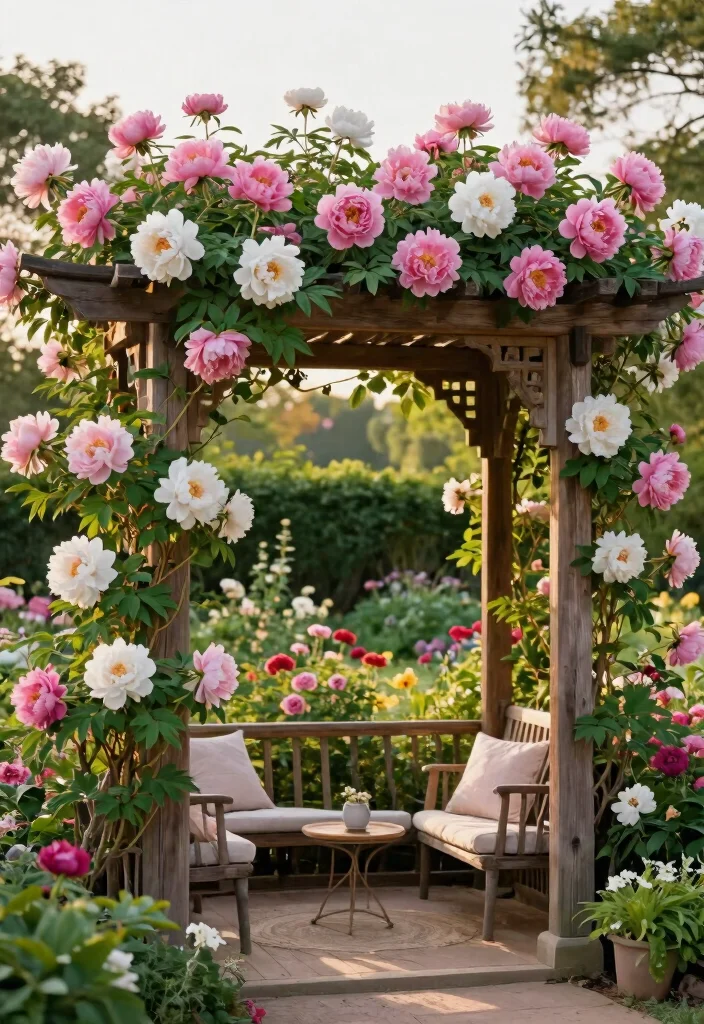
A traditional arbor pergola featuring climbing peonies offers an elegant and fragrant addition to any garden. Peonies are known for their magnificent blooms and delightful scent, adding a classic touch to the structure.
Design Suggestions: Construct the arbor using quality wood to enhance durability and aesthetic appeal. Train the peonies to climb and cascade over the structure for maximum effect. Consider mixing different peony varieties for a longer bloom season and varied colors.
Incorporate seating around the arbor for a cozy nook, perfect for enjoying the lush scenery. Adding decorative elements, such as a garden trellis or whimsical signs, can enhance the charming atmosphere.
Pros: Classic beauty, delightful fragrance, and provides a lovely canopy.
Cons: Peonies may require some support during heavy blooms to prevent drooping.
14. Eco-Friendly Pergola with Native Vines
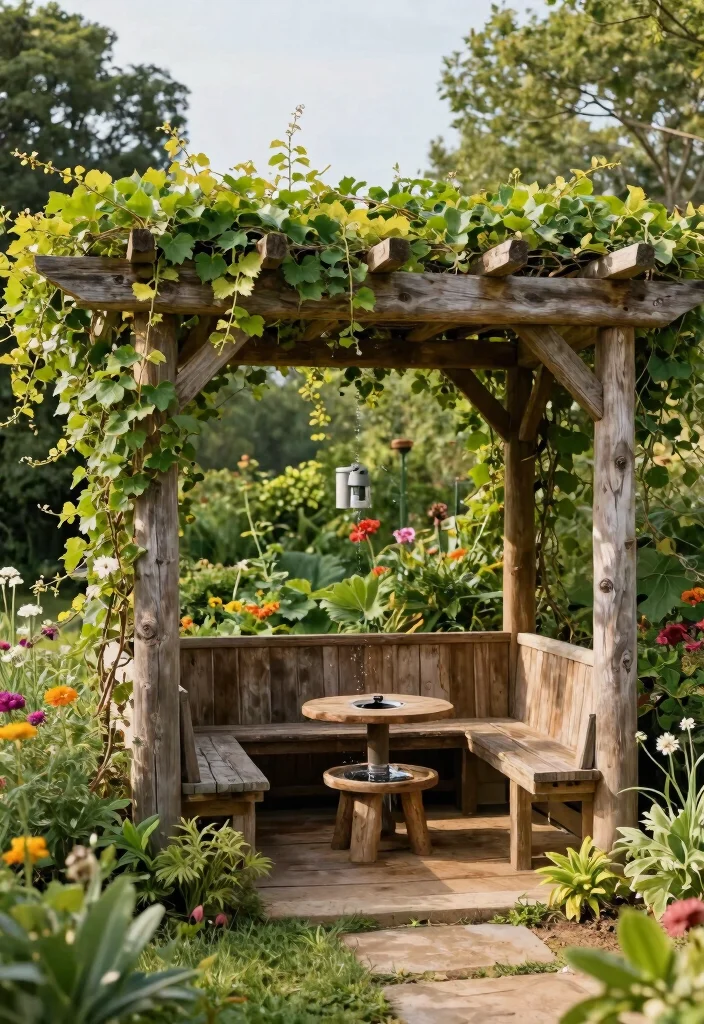
For those passionate about sustainability, an eco-friendly pergola adorned with native vines is the perfect choice. Native plants not only thrive in local conditions but also attract beneficial wildlife, promoting biodiversity in your garden. This design supports your gardening goals while harmonizing with the environment. Use reclaimed wood or sustainably sourced materials to construct your pergola, ensuring it blends seamlessly into the landscape. Select native climbing plants such as honeysuckle or trumpet vine, which provide food for birds and pollinators. Consider adding a rainwater collection system for natural irrigation, enhancing your garden’s sustainability. Key design considerations:
– Use reclaimed materials for an eco-friendly approach
– Choose native plants for local wildlife support
– Incorporate rainwater systems for sustainable irrigation This setup promotes biodiversity while offering a beautiful and functional outdoor space. You’ll take pride in creating a garden that benefits both you and the environment.
Conclusion
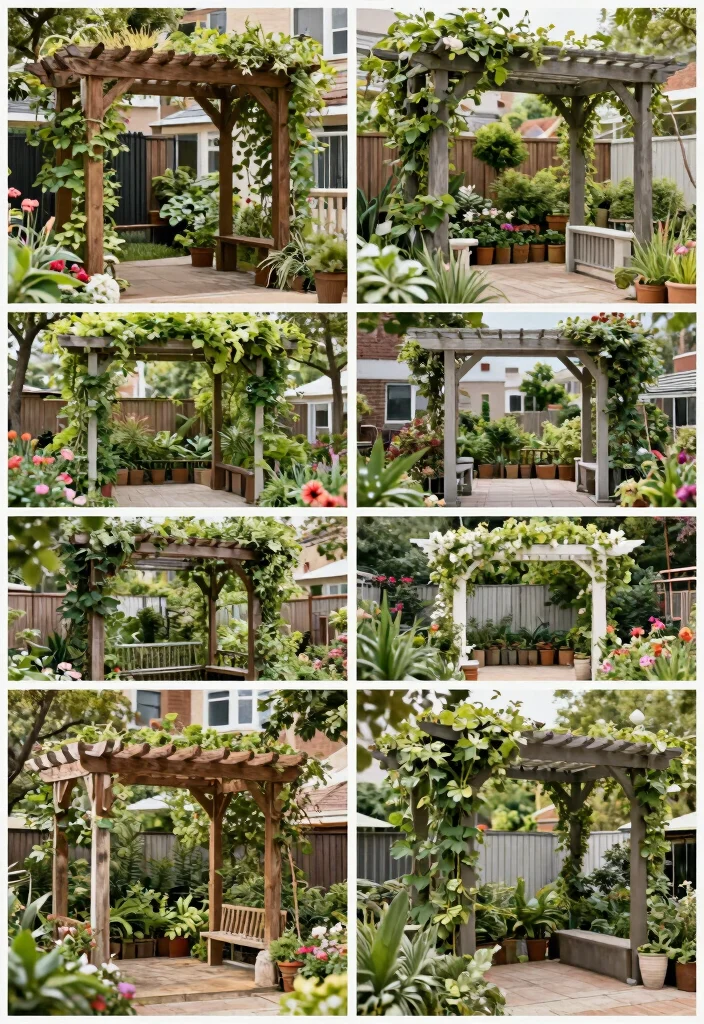
Transforming your urban space with beautiful pergolas can elevate your gardening game while providing vertical support for heavy vines and climbing plants. With these 14 garden pergola ideas, you can create visually stunning structures that offer both beauty and functionality. Whether you prefer rustic wood, contemporary metal, or eco-friendly designs, there is a style for every taste.
Start incorporating these ideas into your backyard landscaping and enjoy the lush greenery that comes from supporting climbing plants. Embrace the beauty of vertical gardening and create your own little oasis in the city!
Note: We aim to provide accurate product links, but some may occasionally expire or become unavailable. If this happens, please search directly on Amazon for the product or a suitable alternative.
This post contains Amazon affiliate links, meaning we may earn a small commission if you purchase through our links, at no extra cost to you.
Frequently Asked Questions
What garden pergola ideas work best to support heavy vines and climbing plants?
To support heavy vines on a pergola, start with a plan that blends a sturdy structure with a built‑in climbing frame. A solid post footing and a built‑in lattice or trellis provide the essential climbing plant support your vines need. Choose durable materials and design for weight distribution to handle mature vines like wisteria or grape. Here’s a practical setup:
Step 1: Size and weight—estimate future vine load and choose posts that can carry it. Step 2: Material—galvanized steel for durability or pressure‑treated wood for cost efficiency. Step 3: Load distribution—add cross bracing and a grid or lattice panel to spread weight. Step 4: Attachment—secure trellis panels with corrosion‑resistant hardware and add optional stainless steel wires for extra support. Step 5: Planting plan—select climbers suited to your climate and install after the pergola frame is up. Step 6: Maintenance—prune regularly to keep weight manageable and improve airflow.
How can I choose outdoor pergola designs that provide strong climbing plant support in a small urban backyard?
Urban spaces demand efficiency: pick outdoor pergola designs that maximize vertical growth, shade, and wind resistance without taking up every square inch. Look for tall, open‑sided options with a built‑in lattice or panel system that acts as a solid climbing plant support. Consider attaching to a wall for extra stability and adding built‑in planters for vines to wrap around edges. Practical steps: measure your space and sun path, ensure an 8–9 ft clearance for vines to thicken, choose durable materials, and plan for future growth with modular panels you can add later. Maintain a simple maintenance plan to keep it thriving.
What are the best heavy vine trellis options for garden pergola ideas that need to bear weight and resist wind?
For heavy vines, you want a trellis system that distributes load and resists wind. Options include full‑height lattice panels attached to sturdy posts, steel cable grids, arched or double‑layer trellises, or freestanding panels connected to the pergola. Helpful tips: use closer‑spaced slats (4–6 inches apart) for stability, reinforce posts with diagonal bracing, and run stainless steel wires along the top to take extra tension. This gives you dependable heavy vine trellis support within your garden pergola ideas.
What backyard landscaping tips help integrate a pergola with climbing plants for a lush, vertical garden?
Think of the pergola as the skeleton for your vertical garden. Start with a layout that aligns sun exposure, wind protection, and walkways. Choose climbers that suit your climate and target height, and install a simple irrigation plan. Practical steps: frame the pergola with weather‑resistant materials, add planters and a recessed garden bed to grow roots nearby, and use trellis panels or cables to guide growth. End with a maintenance calendar and safety checks for heavy vines, so your space becomes a thriving living feature in your backyard landscaping tips.
How can I maintain climbing plants on a pergola to ensure long‑term health and safety of the structure?
Maintenance is the secret to a thriving garden pergola. Prune regularly to keep vines from overloading the structure, inspect post connections, and watch for rot or corrosion. Clean and reseal wooden elements and replace any damaged hardware. Trim for air flow and light, and periodically test anchors and fasteners to ensure ongoing climbing plant support and structural safety. With routine care, your outdoor pergola designs will stay strong and beautiful for years to come.
Related Topics
garden pergola ideas
climbing plant support
outdoor pergola designs
heavy vine trellis
backyard landscaping tips
vertical gardening
urban gardening
DIY garden structures
easy gardening projects
seasonal gardening
small space solutions
sustainable landscaping