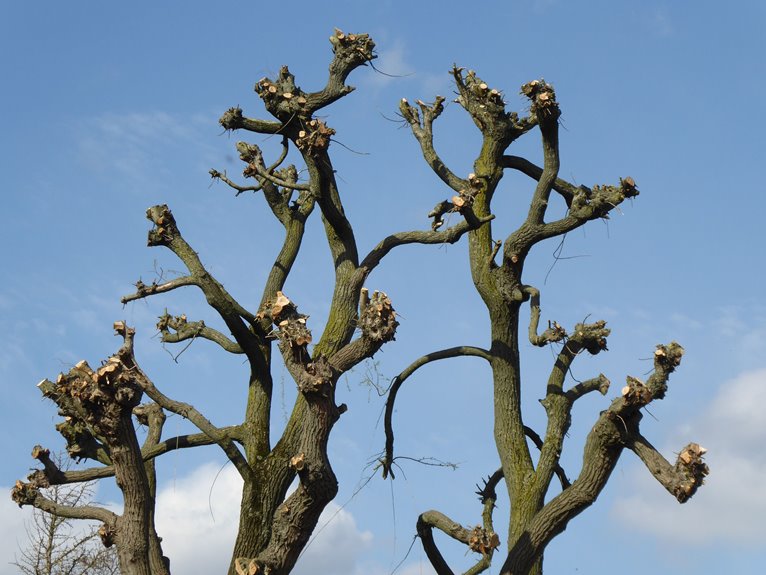
I get why you’re searching for this, but tree topping doesn’t actually give you seven real benefits. It gives you one instant fix and six headaches down the road. Sure, you’ll get 10-15 feet of clearance right now and quick shade relief, but that cheap win evaporates fast.
Within weeks, weak water sprouts shoot up everywhere, and five years later you’re stuck with a top-heavy mess that’s begging to crack in the next storm. Your “savings” disappear into endless maintenance cycles, while proper methods like structural pruning and crown thinning using tools like my Corona BP 3180D saw keep trees healthy for decades.
Arborists banned this practice for documented reasons, and structural pruning or crown thinning delivers measurable long-term results.
Why Tree Topping Is Banned by Most Arborist Associations
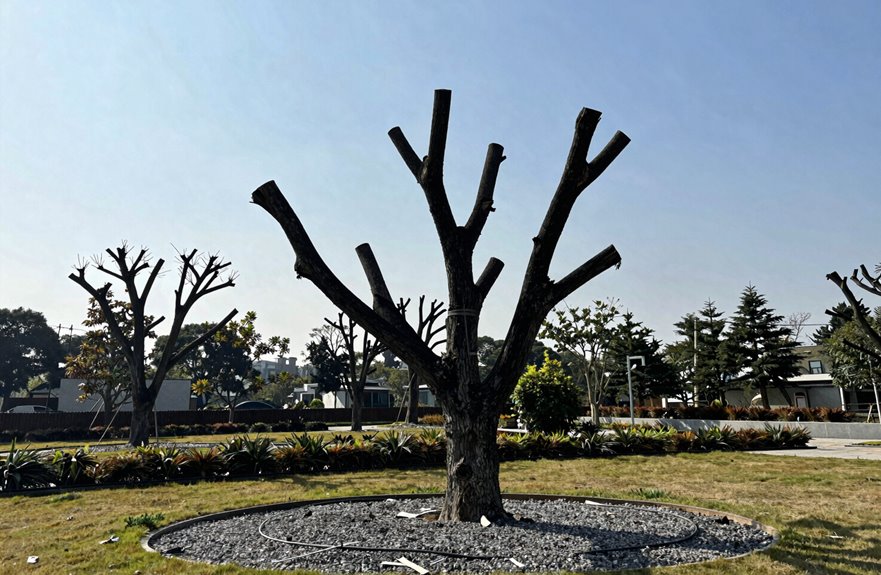
Why do tree experts oppose topping? Tree topping creates significant structural damage that arborists have witnessed firsthand.
When you remove large sections of a tree’s crown, you create wounds that heal slowly. The weak, bushy shoots that regrow afterward have poor branch attachment and structural integrity.
Local arborists have documented cases where topped trees developed rotting centers and experienced branch failure years after the initial cutting. Professional associations including the ISA and ASCA have banned topping in their guidelines because the practice destroys the tree’s internal structural integrity. These organizations recognize that topping causes lasting harm to tree health and safety.

VERSATILE CUTTING TOOL – Professional pruning saw for tree trimming, branch cutting, and wood cutting. This folding hand saw works as a reliable tree saw, limb saw, garden saw, and curved pruning saw, making it an ideal tree trimming saw for camping, bushcraft, woodworking, and outdoor garden work.
EFFICIENT & CLEAN CUT - Features a 12 inch arc edge Japanese teeth blade designed for fast, smooth cutting performance with increased cutting power for tree trimming, branch cutting, and pruning compared to standard pruning blades.

VERSATILE PRUNING AND CUTTING SET: 2-tool combo helps tackle both live green growth and deadwood, making it easy to prune branches, trim plants, and cut through tougher material
What Tree Topping Actually Does to Your Tree’s Structure
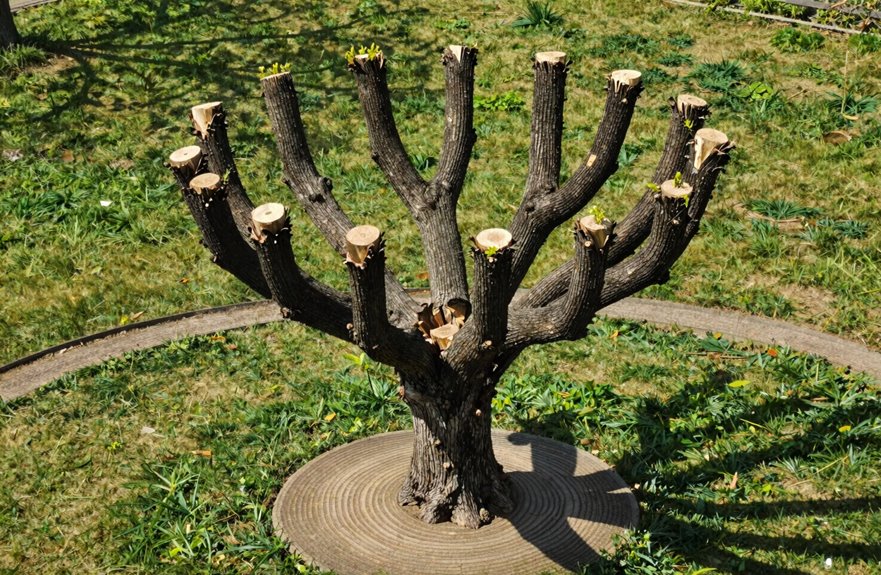
When you top a tree, you’re chopping off its head and leaving behind sad stubs that destroy the tree’s natural balance, like a wobbly table with one leg shorter than the others. The real trouble follows: the tree responds by shooting out weak, fast-growing water sprouts that barely hold on, setting you up for breakage and structural failure down the road.

Precision Thinning for Healthier Plants – Designed to selectively remove excess growth, these thinning shears help improve airflow and light penetration, promoting healthier plant structure and controlled growth.

[Cutting capacity]WORX mini chainsaw effortlessly handle thick limbs up to 5''

Structural Integrity Loss
How does a tree stay standing when it’s been chopped down to size? When I top a tree, I’m basically asking it to balance a bowling ball on a stick. This approach creates serious problems.
Here’s what really happens:
| What Topping Does | What Your Tree Needs |
|---|---|
| Removes branch collars | Strong natural anchors |
| Creates weakly attached growth | Stable, gradual development |
| Causes structural instability | Balanced, wind-resistant form |
The weakly attached growth sprouts fast but snaps easily. Without proper branch collars, your tree can’t seal wounds or support itself. The trunk gets top-heavy, limbs crack in storms, and you enter a cycle of repeated topping. This structural instability compounds year after year.
Weak Regrowth Patterns
I thought losing structural integrity was bad enough, but then I watched what happened when my topped maple tried to grow back. The topping had removed almost its entire crown, roughly 75% gone, and the poor thing panicked. It pushed out water sprouts everywhere. These shoots shot up fast but had zero strength. No proper branch collars meant weak attachments, and I could see the structural decline starting right before my eyes.
The regrowth came in super dense and tangled, branches fighting each other for light. They grew tall and brittle, unable to handle wind or snow. Each topping cycle makes things worse. You get weaker, faster-growing limbs that break easier. It’s a trap you don’t want to fall into.
Is Tree Topping Cheaper Than Proper Pruning?
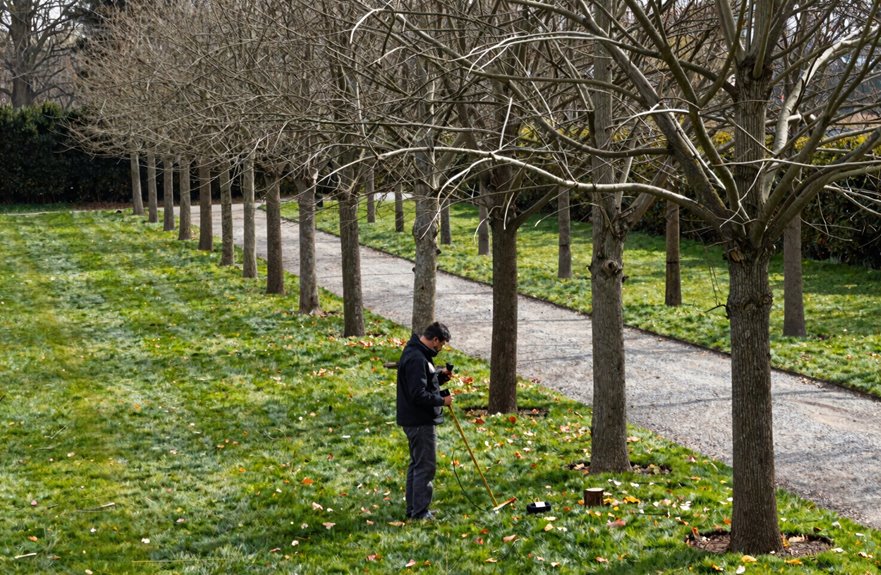
Why do so many of us grab the cheapest option first and worry about the mess later. I’ve done it too. Topping looks like a steal at first, with a lower cost upfront compared to proper pruning. That initial “savings” evaporates quickly.
When you top a tree, you’re signing up for endless maintenance. Those weak, wild shoots explode back within months, and suddenly you’re paying again and again. I’ve watched neighbors spend triple over five years what proper pruning would have cost as a single investment.
Sure, topping buys you quick space and light, maybe six months of relief. But between storm damage risks and eventual removal, your wallet takes a beating. This approach creates ongoing expenses rather than solving the problem. Invest in proper pruning now, and you’ll avoid repeated costs while protecting your trees from structural damage and disease.

Sharp Mn Steel Blade for Fast & Clean Cuts: This pole saw uses a sharp three-sided edge with a double-sided barb design to grip branches securely and cut smoothly from multiple angles. The Mn steel blade is durable, rust-resistant, and lightweight, delivering fast, clean cuts. This is a manual pole saw with detachable pole sections for adjustable reach, not pruner, not a telescoping pole; it is neither electric nor battery-powered.
Sharp Mn Steel Blade for Fast & Clean Cuts: This pole saw uses a sharp three-sided edge with a double-sided barb design to grip branches securely and cut smoothly from multiple angles. The Mn steel blade is durable, rust-resistant, and lightweight, delivering fast, clean cuts. This is a manual pole saw with detachable pole sections for adjustable reach; not pruner not telescoping pole, it is neither electric nor battery-powered.

2-In-1 for Versatile Tree Cutting: This 2-in-1 pole pruner with saw combines sharp pruning shears for smaller branches and a durable saw blade for thicker limbs, making it a practical tree pruning tool for various cutting needs. Designed as a manual pole saw and pruner combination, it allows you to trim twigs and branches efficiently while reaching higher tree limbs from the ground, reducing tool changes and improving overall pruning efficiency.
Can Tree Topping Really Solve Your Shade or Clearance Problem?
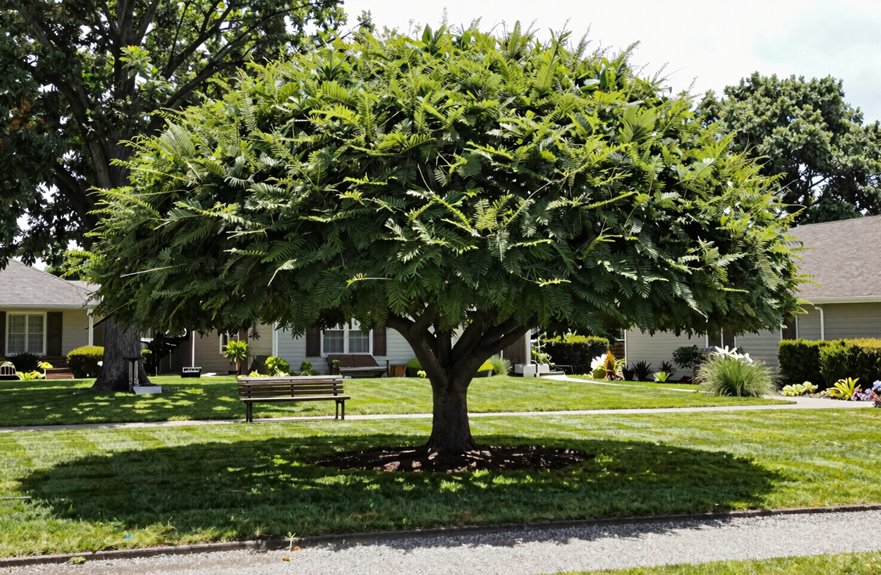
So you’ve heard topping saves money, but now you’re wondering if it’ll actually fix that shady backyard or branches scraping your roof. You want results now, not later.
Topping does give you instant clearance and reduces shade fast. You’re looking at 10-15 feet of height gone in a day. However, the drawbacks emerge quickly:
- That branch stops tapping your window at 2 AM.
- Your patio gets sunny again, perfect for morning coffee.
- Weird, bushy growth shoots up everywhere within weeks.
- You’re paying again because those weak new branches snap in the next storm.
This cycle repeats for many homeowners. Proper pruning addresses shade control and clearance safely, while topping creates recurring problems. The better approach is one that solves the problem once.

Gardening life guardian: The large watering can is made of durable plastic, not easy to damage; the 2 gallon watering can allows watering multiple plants without repeatedly refills; it is a good helper for outdoor watering

ARTWORK AND QUANTITY: Green Sprout in Tree Trunk Rings. Includes one glossy vinyl sticker; the selected size measures the longest side of the design.
ARTWORK AND QUANTITY: Green Sprout in Tree Trunk Rings. Includes one glossy vinyl sticker; the selected size measures the longest side of the design.
What Happens to Trees 5 Years After Topping?
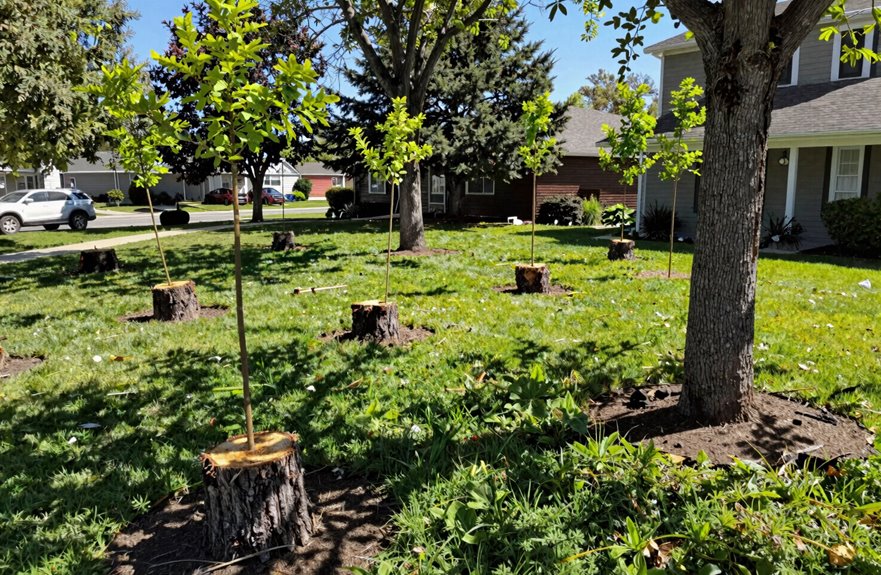
Fast forward five years, and that topped tree you thought was “fixed.” It’s probably a mess. Topped trees sprout rapid, weakly attached regrowth below the cuts, creating a dense, tangled understory that’s basically a wind-catch waiting to snap.
Between years 3 and 5, that regrowth keeps shooting up lower in the crown, so your canopy stays top-heavy and shady underneath. Meanwhile, those big old cuts are rotting, inviting disease right into the heartwood.
The real issue is structural instability. By year five, you’re facing higher maintenance, repeated pruning cycles, and branches that could fail anytime. Most topped trees don’t even make it much longer. Removal, not recovery, becomes the likely outcome. This “quick fix” becomes an expensive headache.

High-Strength Alloy Structural Steel: Constructed with high-strength alloy structural steel, these tree climbing spikes support up to 350 lbs for secure climbing. ASTM-F887 certified, they are corrosion-resistant, high-strength, and maintain their shape over time. Ideal for outdoor adventures and tree maintenance, they provide stable support for safer and more efficient climbing.

LIGHTWEIGHT ALUMINUM CONSTRUCTION - Made in the USA, our Forester Aluminum Arborist Tree Climbing Spikes boast a sturdy aluminum construction, ensuring durability and reliability for any tree climber or arborist
What to Do Instead: Proper Pruning Methods Explained
I want to show you three better ways to prune your tree without destroying it. First, I’ll explain Structural Pruning Techniques where you pick a strong central leader and remove competing branches. Think of it like choosing a captain for your tree and cutting away the troublemakers who hog resources. Then we’ll tackle Reduction Cut Methods that trim branches back to side branches at least one-third the diameter, and I’ll walk you through Crown Thinning Basics using my Felco #2 pruners to remove no more than 25% of live foliage so sunlight filters through without damaging the canopy. These methods keep your oak or maple standing strong through storms instead of turning it into a hazard.

High Cutting Power for 6–7 Inch Branches with SK-5 Steel Blade——SK-5 steel blade with aggressive 7 TPI staggered teeth delivers strong cutting performance for green wood, branches, and general yard work, allowing efficient cutting of branches up to 6–7 inch diameter, making it highly effective for camping, survival, bushcraft, and landscaping tasks where fast and controlled wood cutting is required.

EFFICIENT & CLEAN CUT - Features a 9 inch arc edge Japanese teeth blade designed for fast, smooth cutting performance with increased cutting power for tree trimming, branch cutting, and pruning compared to standard pruning blades
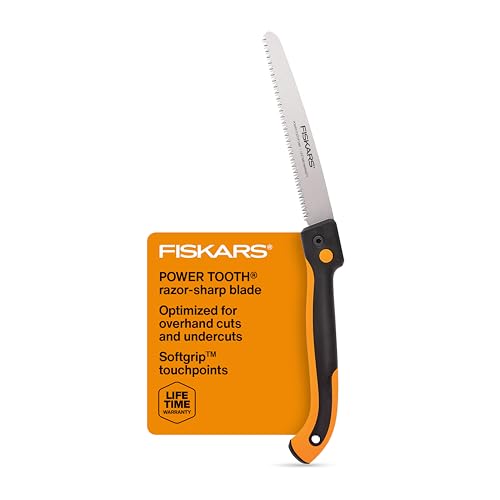
IDEAL FOLDING SAW: Fiskars small hand saw for wood cutting with a triple-ground, power tooth blade for faster, more powerful cuts; Ideal for cutting thicker branches and bushcraft
Structural Pruning Techniques
Three things changed everything for me when I stopped topping trees and started pruning the right way.
- I’m part of a community that cares about their trees.
- My trees live longer and look amazing.
- I save money because I’m not fixing storm damage every year.
- My yard has become the neighborhood hangout spot.
Structural pruning works like this. I use my Corona BP 3180D bypass pruner, which handles branches up to 1 inch thick. I identify branches with weak, V-shaped connections and cut them back to the collar. I never remove more than 25% of the canopy. This training during the tree’s early growth builds a strong framework that withstands wind storms. My trees show improved health with balanced, vigorous growth each spring.
Reduction Cut Methods
So you’ve got the pruning basics down, and now you’re ready to level up. Reduction cuts are the preferred method instead of topping.
Make reduction cuts by trimming a branch back to a healthy lateral bud or side branch. This lowers height without chopping off the whole crown. It’s like giving your tree a smart haircut, not a buzz cut.
These pruning techniques keep your terminal leaders and branch collars intact, which means less decay and stronger new growth. Time this work for late winter or early spring when trees are dormant; your tree heals significantly faster during these periods.
Unlike topping, reduction cuts let sunlight filter through while keeping structure solid. No weak, crazy regrowth occurs with this method. Certified arborists prefer this gradual approach for long-term tree health and safety.
Crown Thinning Basics
Crown thinning is selective pruning that removes scattered branches throughout the crown to reduce density while preserving your tree’s natural shape. You’ll improve light penetration and air circulation without removing major leaders.
This technique transforms your tree in several ways:
- You’ll see sunlight dancing through branches again
- Your tree breathes easier with fresh airflow everywhere
- Disease stress decreases in those crowded lower limbs
- You adopt practices that support long-term tree health
Focus on mature trees needing relief. Make clean cuts at branch junctions and never leave stubs. This balanced approach supports long-term tree health. Use a Corona BP 3180D pruning saw (13-inch curved blade) and thin thoughtfully, removing about 10-15% maximum of the canopy.
When Tree Removal Is the Only Safe Option
Sometimes you need to recognize when a tree cannot be saved. While we all prefer to keep our trees, the reality is that a diseased or dying tree in your yard creates safety risks and requires removal as the best option for hazard prevention. A severe storm once damaged my property, reinforcing this lesson.
Tree removal eliminates the risk of collapse and prevents disease from spreading to healthy plants. Although removal costs more initially than additional pruning, the long-term financial benefits are significant. You avoid ongoing concerns about storm damage and gain usable space for new landscaping projects. Stump grinding should follow removal, as remaining stumps create genuine tripping hazards that pose safety risks to your household. Proper tree removal and site restoration protect both your landscape and your family.

[Cutting capacity]WORX mini chainsaw effortlessly handles thick limbs up to 6''

【2-in-1 Pruning Shears & Handheld Chainsaw】BUYJOY cordless garden tool kit combines an electric pruner with a 6-inch cordless mini chainsaw for versatile trimming and cutting needs. Use the battery pruning shears for fresh growth, fruit trees, shrubs and vines, then switch to the mini chain saw for thicker branches, dry wood and small logs around the yard.
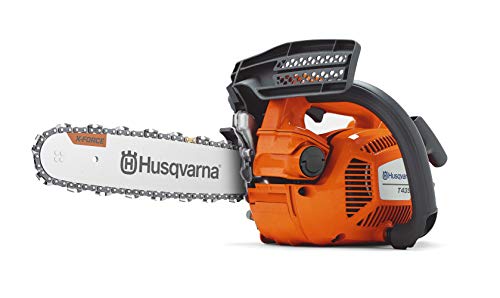
Exceptional power-to-weight ratio delivering 2.01 HP of professional power at only 7.5 lbs - low-weight design is easy to handle whether pruning, limbing, or cutting