
These ideas run from a pack of drawer organizers to a sideboard that can hit four figures, and the one that belongs in your room depends on whether you are hiding clutter from clients or just trying to find your own red pen before noon.
A pegboard in Masonite will sag under real weight; hardboard or metal is what I would choose for a loaded board.
1. Drawer Organizers
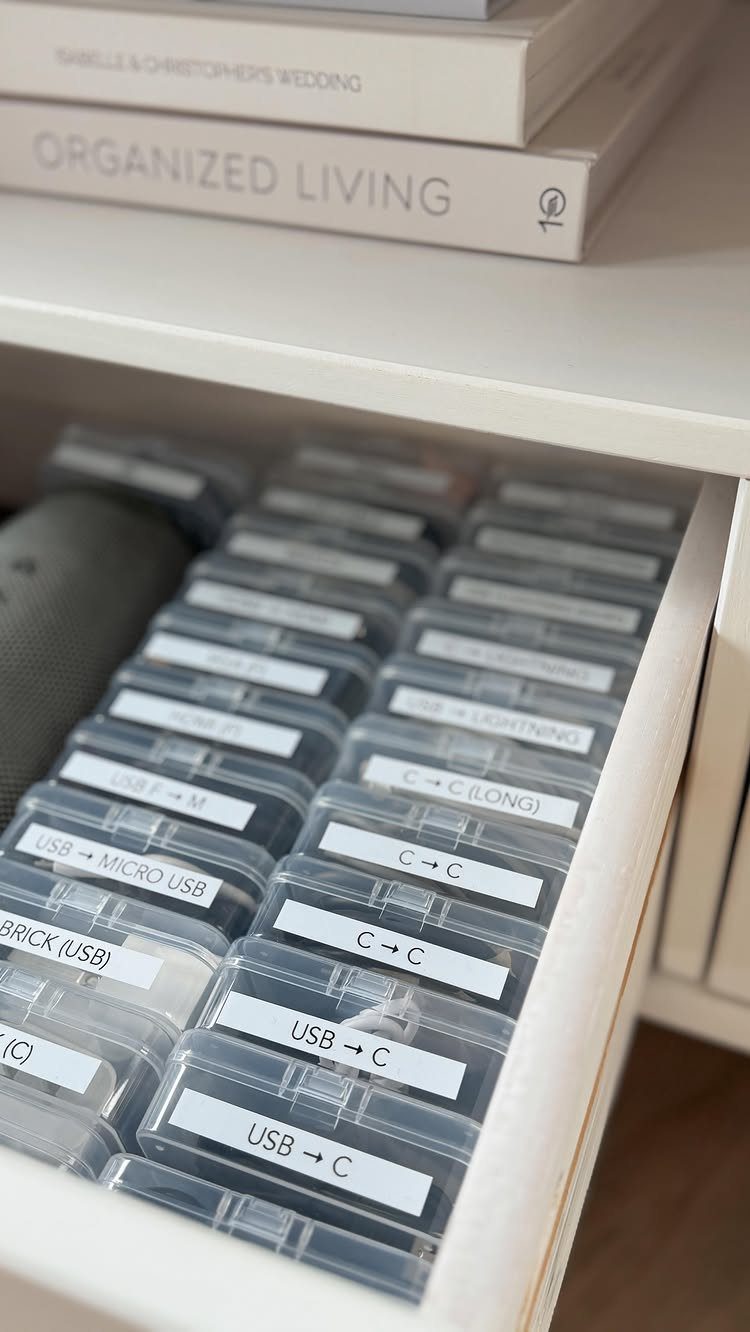
Small clear cases with lids, each labeled by cord type, turn one junk drawer into a filing system. I like the small rectangular size for USB cables; anything too compact and the coils fight the lid.
Check your drawer depth first.
These cases need enough vertical clearance to close flat, and shallow drawers will leave you wedging them in at an angle. Simple white tape labels beat printed stickers because you can relabel when your devices change.

[Multi-Purpose Organizers] Small storage drawers help you to organize everywhere in your home. They can be used as organizers and storage for makeup, bathroom countertop, kitchen or laundry under sink, medicine cabinet, pantry, vanity. You can flexibly use our storage organizer for house organization and storage according to your needs.

Stackable Storage Bins: The top of the drawer has groove design ensures stacking. Use these stackable drawers to save space, which is also keep organized

📑【for 3×5 inch Cards】The outer size of clear adhesive pockets is 3.7 x 5.3 in, specifically designed to accommodate 3x5 in cards. You will recieve 44 pack clear adhesive pockets for labels, waterproof, dustproof, and fingerprint-resistant
2. Wall-mounted Shelves
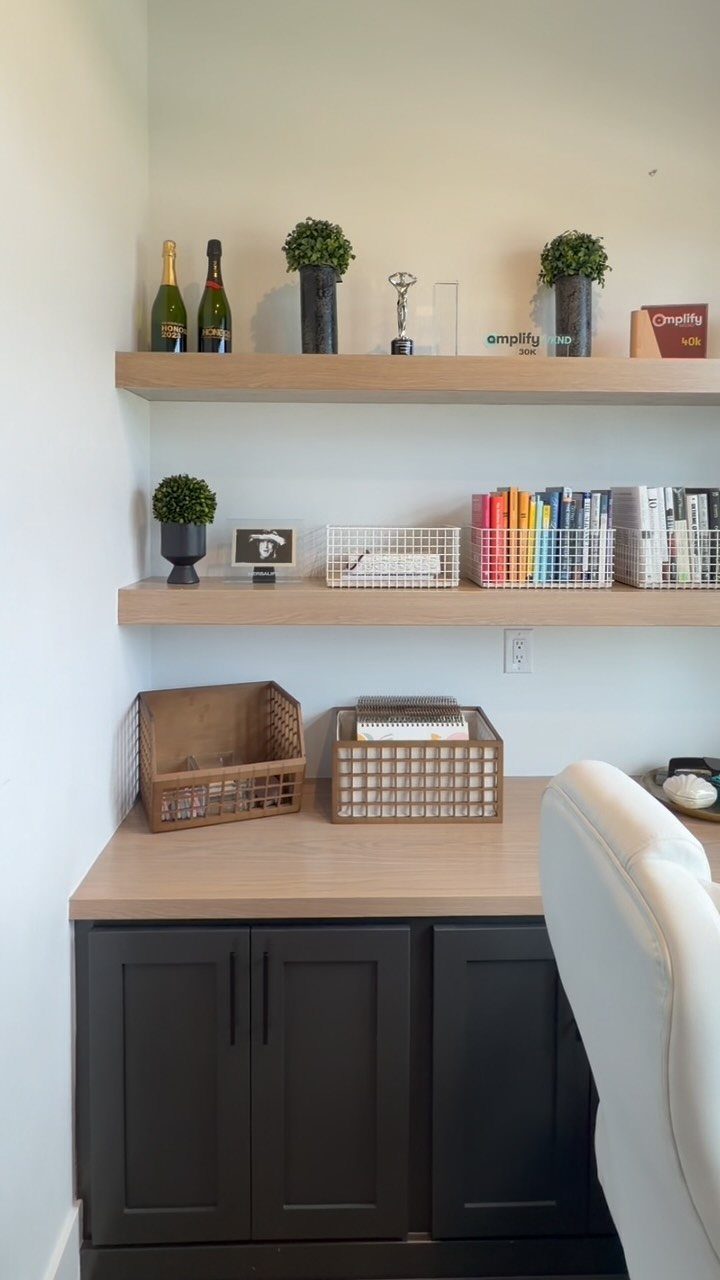
Floating shelves above a desk reclaim wall that otherwise does nothing. Wood shelves spaced to leave headroom for a monitor work best; I would measure well above the desktop as my minimum.
Wire baskets on shelves corral books and keep them from tipping, which matters more than it looks.
Without a front lip, hardcovers slide every time you close a drawer below. Light wood tone against black cabinets works because the contrast is sharp enough to read as intentional, not mismatched.

Ultimate Space-Saving Wall-Mounted Floating Desk: This innovative fold-down design transforms any empty wall into a instant workspace or shelf, perfect for small apartments, dorms, and home offices where every inch counts

Well-designed Floating Shelves: Our white floating shelves for wall are made of MDF Laminate. These wall shelves can organize daily sundries to tidy your space, display your art pieces on the wall to decorate your home, and make it full of aesthetic flare.

Fits All PS 5 Models: This play station 5 wall mount is perfectly compatible with all versions of the PS 5 console, including the PS 5, PS 5 Slim, PS 5 Pro, and both Disc and Digital editions. By simply adjusting the connection points at the top and middle sections of the ps 5 pro wall mount, you can achieve a secure fit for any model, eliminating the worry of version mismatch.
3. Use a Pegboard

A pegboard wall turns tools and supplies into a display you can reconfigure without drilling new holes. Standard Masonite pegboard I find too soft for heavy items; for a loaded board, I would step up to hardboard or metal.
What fails is treating the board as one surface and overlapping pieces. Leave enough space between objects so you can lift them off without disturbing neighbors.

Heavy Duty Industrial Strength: Spampur metal pegboard panels are made of premium cold-rolled steel with a powder-coated finish — strong, scratch-resistant, and easy to clean. Each panel supports up to 70 lbs, so your tools stay firmly in place without shaking or falling. A true heavy duty pegboard that outperforms plastic or wooden alternatives.

METAL NAILBOARD: Our peg board panels are made of high quality steel with a powder coated finish that is strong, scratch resistant and easy to clean. Each small pegboard has a weight capacity of up to 50 lbs. This is a favorite product for tool organizers, DIY enthusiasts, store owners and office workers.

This pegboard set includes 4-pack 12” x 12” peg board panels, 32 heavy-duty hooks, and 32 hook locks. Hooks stay firmly in place, solving common issues with loose accessories on traditional peg board systems
4. Labels on Bins and Drawers

Labeled bins remove the guesswork from restocking and cut the time someone spends hunting for red pens or tape.
Clear plastic with printed labels on 2 lines works best: item name above, and I would add a reorder number or vendor below for whoever places orders.
If your closet has beige or gray shelving, consider that contrast when you choose bin color. Clear wins when labels face outward; opaque works only if every bin gets a label on every visible side.

✅Functional Storage for Any Space: You can use these pantry bins for various things throughout your home to organize and make your life easier. They are fit to pantry organization,ideal for cabinet, kitchen, fridge, bathroom,under sink, closet,laundry room and RV.The clear organizing bins to store drinks, snacks, cans, meat,body face wash, cleaning supplies and daily necessities.

SMART ORGANIZATION WITH COLOR-CODED QR CODES: Organize storage with an easy-to-use QR code system featuring color-coded stickers, app-based tracking, and over 1 million QR codes scanned to date. Quickly catalog, locate, and retrieve stored items with QR code labels designed to make storage management simple and hassle-free.
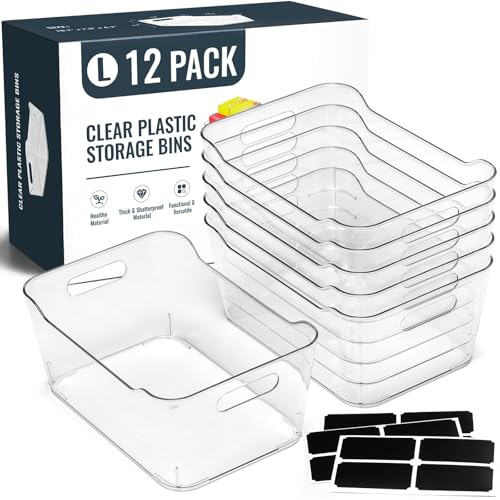
12 PACK CLEAR ORGANIZER BINS - Item includes 12 pcs plastic bins (10.3" L x 7.3" W x 4.7" H) & 12 pcs black labels. These clear organizer bins are made of thick clear plastic with smooth edges which are food grade and easy to clean.
5. Decorative Storage Boxes

Lidded boxes with leather pulls upgrade a closet from utility room to something you do not mind leaving open. A coordinated set reads as one system because the sizes vary but the finish does not.
I would use these for items you access monthly, not daily. The lid is a barrier to quick grabbing, and the clean look is lost if the pull is smudged from constant handling.
The pink document boxes mixed in show how to add color without breaking the system; one accent hue, not three.

MIDCENTURY MODERN - Make design magic happen with this storage bin set. Fluted detailing and leather-like textured lids capture the vogue of the 1950s, elevating these card boxes into artistic pieces. Finished in a chocolate brown, this set is sure to warm up your home decor as a stunning addition. Size (inch): L-12.6L×7.9W×4.7H, S- 7.1L×5.9W×3.9H (Including lids)

Stylish and Elegant Design ! This eye-catching decorative box boasts and elegant blend of ivory and gold, a unique brushed gold metal handle for effortless opening and closing. It is Beautiful and Modern home decor wherever you put it on the coffee table, side table, console table, night stand, shelf, book case, barthroom

Set of 2 - Smart Sizing: One set, two sizes! (Large 14.2" x 8.7" x 3.8"; Small 11" x 6.3" x 3"). Stack them together, use them separately, or mix them into your bookshelf decor for a flawless, space-saving fit that instantly upgrades your organization game.
6. Closet Shelving and Organizers
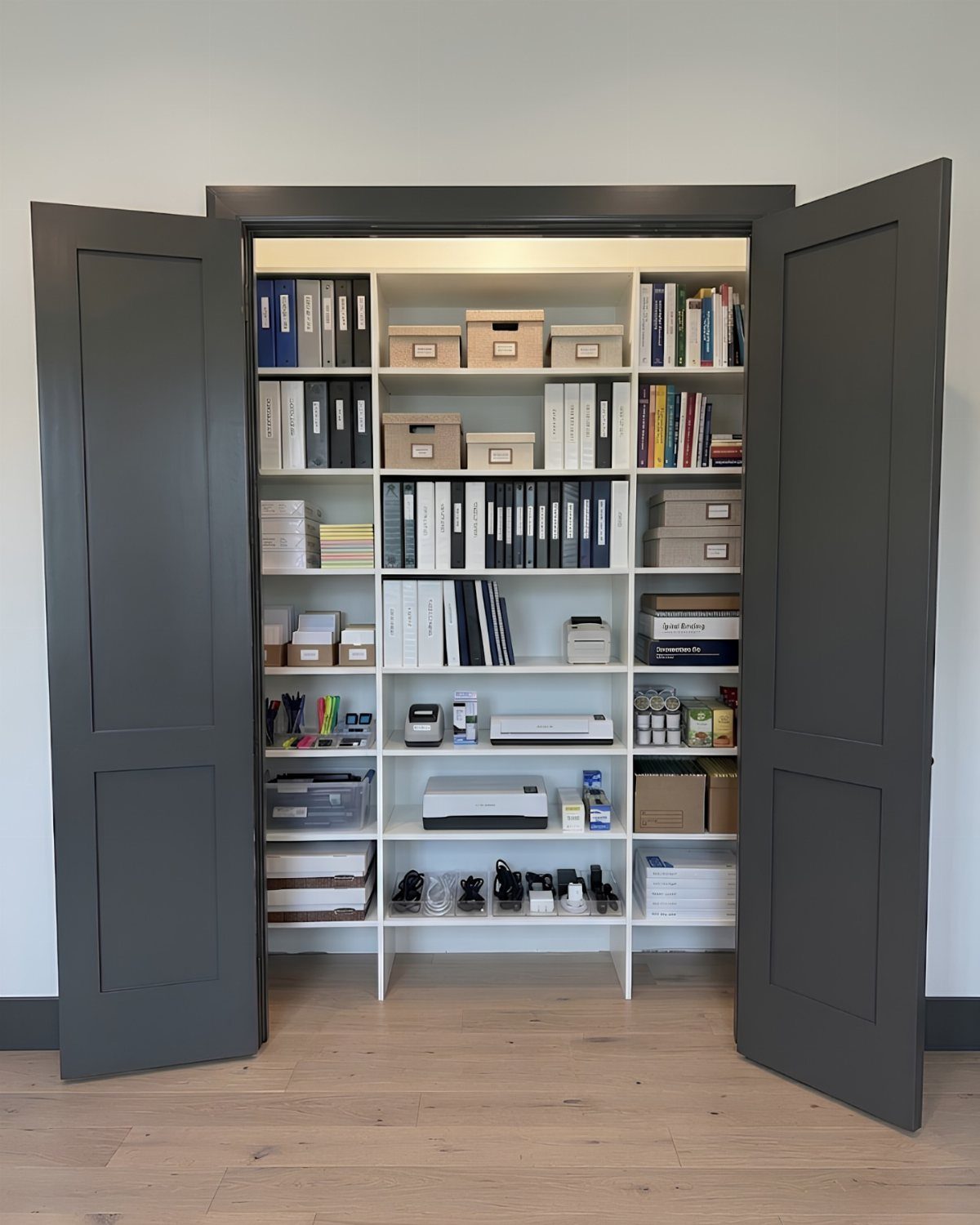
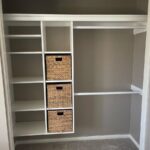
Full-height shelving inside a closet multiplies your storage without taking floor space from the room. White units that reach to the header make sense to me; the gap above a typical shelf is dead space that collects dust.
Double doors that swing into the room block access when open and tempt you to leave them ajar. Dark gray doors against white interior is a choice I would copy; the frame recedes and the contents read as the point.
If storage space is limited, get creative! A hanging closet organizer, whether hung on a door or a rolling rack, provides instant storage for extra office supplies without occupying as much space as a bookcase or heavy desk.

Large Storage Drawers--Come with 2 drawer storage organizers, each organizer measures 12"D x 15"W x 5.7"H, and the using size is 10.6"D x 12.8"W x 5"H. Each box has a generous capacity, ideal for bulk storage of daily essentials, such as storing hair care tools, paper towels, hair dryer, toothpaste etc bathroom supplies.
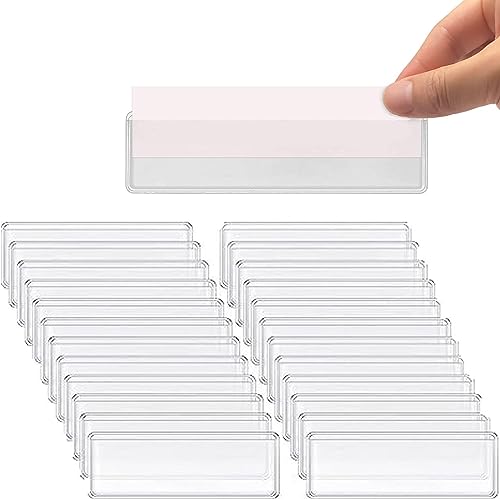
Complete Kit: 60 transparent labels and 60 matching cardstock papers included in this comprehensive organization package

★PRODUCT INCLUDES - 2 pack 36 compartment clear plastic storage boxes and 72 pcs small sticker labels. They are packaged in a secure box for safe delivery. The products are made of sturdy food-grade plastic and will not break easily.
7. Color-coded Files
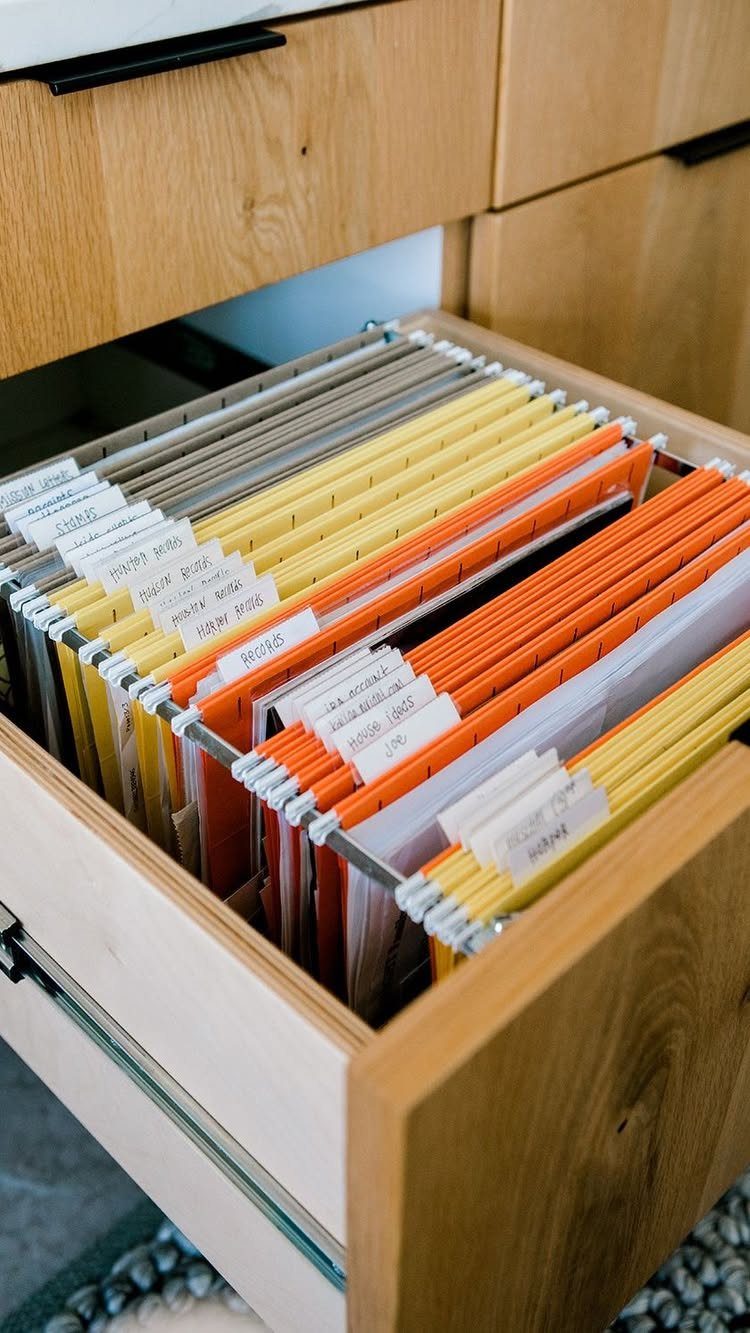
Color-coding turns a file drawer into a system you read at a glance. I would assign one color per category: gray for household, yellow for projects, orange for creative, or whatever split matches your papers.
Handwritten tabs keep it flexible; printed ones look sharper but lock you in.
The real decision is how many colors before the system collapses into noise. Three, maybe four, and the rest stay neutral.

Compatibility for All PS5 Models: This ps5 mount wall is compatible with PS5, PS5 Slim, and PS5 Pro disc & digital version. It securely holds your console in place while saving valuable floor/desk space.The ps5 shelf also includes a headset holder, keeping your PS5, controllers, and headset all in one place for a super organized look. It’s perfect for gifting to family, friends, and partners. Sony PSP Cables

Maximize Your Space: 6.7"D x 15.7"W x 1.5"H. 6.7" depth, ideal for books, baskets, toilet paper, or towels. Includes 2 shelves for optimal use of space

Ultimate Space-Saving Wall-Mounted Floating Desk: This innovative fold-down design transforms any empty wall into a instant workspace or shelf, perfect for small apartments, dorms, and home offices where every inch counts
8. Cubby Storage Credenza

A cubby credenza keeps supplies visible but contained, which matters when a storage room doubles as a workspace.
Labeled bins inside each cubby turn open storage into fast retrieval.
I would size the bins to leave no gap; half-empty cubbies collect clutter that breaks the system. The wood top adds a surface for active projects, though I would not set coffee there.

More than 10 times stronger than conventional pegboard

METAL PEGBOARD: Our peg board panels are made of high quality steel with a powder coated finish that is strong, scratch resistant and easy to clean. This is a favorite product for tool organizers, DIY enthusiasts, store owners and office workers.

METAL NAILBOARD: Our peg board panels are made of high quality steel with a powder coated finish that is strong, scratch resistant and easy to clean. Each small pegboard has a weight capacity of up to 50 lbs. This is a favorite product for tool organizers, DIY enthusiasts, store owners and office workers
9. Dedicated Tech Charging Drawer

A charging drawer hides the cable mess that otherwise colonizes every flat surface. Felt lining keeps devices from sliding and scratches from accumulating; I would check that the pile height still lets the drawer close.
The power strip is the part that needs planning.
You need a cutout for the cord, and the strip itself should sit where weight won’t stress the plug. This suits someone with a few daily devices, not a whole household’s worth.

【High Quality Materials】This plastic storage bins with lids are crafted from durable and lightweight plastic and come with a natural bamboo lid. Perfectly sized for storage at 10 x 7.2 x 4.1 inches, the set of 6 containers offers ample storage options to keep different items neatly organized, making decluttering a simple and enjoyable task.

Quality: Our Large Labels For Storage Bins are made from synthetic paper and high-quality adhesive, offering durability and water/Oil/Tear Resistants with No Residue. Use our storage labels without worrying about losing them in your storage bins, containers, or buckets.

AI AUTO-LABELING: Photograph the contents of a box, bin or container and SnapFind automatically names, categorizes, tags and estimates the value of items, reducing repetitive typing
10. Wicker Basket File Storage
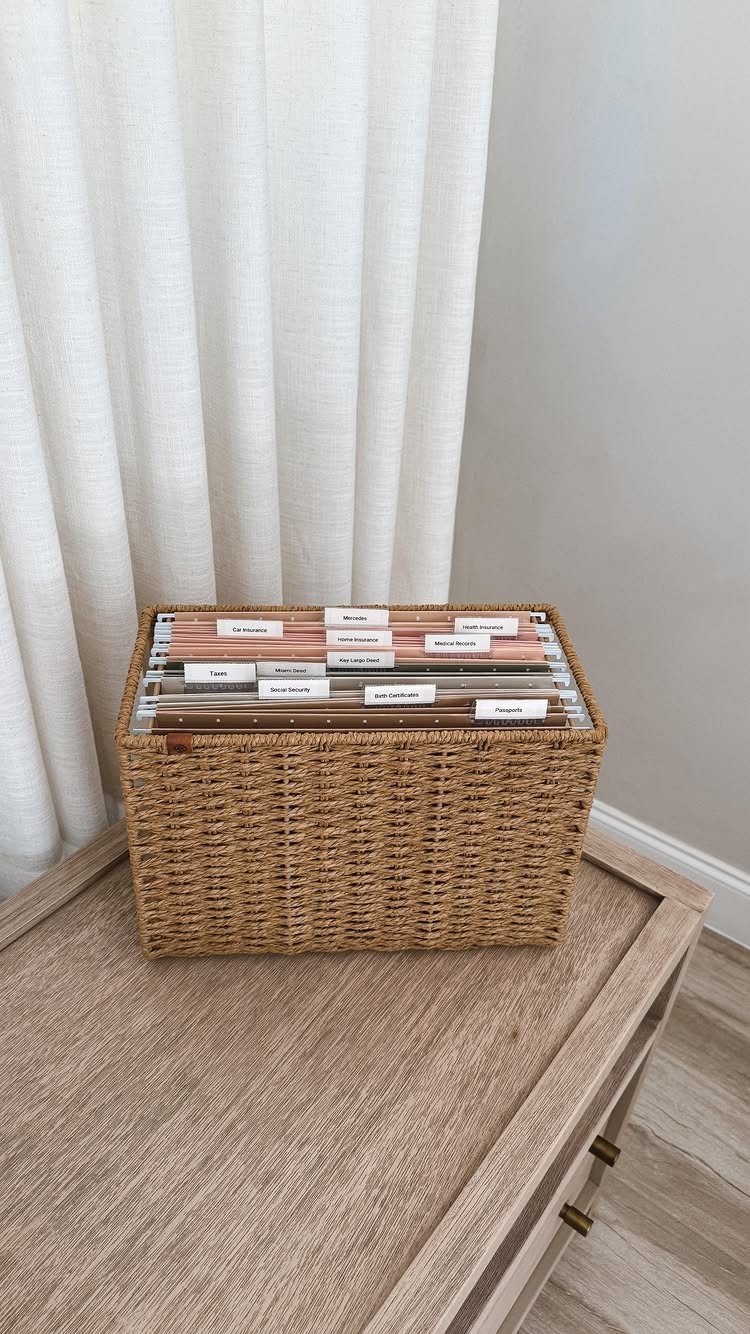
A wicker basket with hanging files brings order to papers without looking like office furniture. I would keep this for active files you touch weekly; archive boxes are cheaper for long-term storage.
The basket needs enough height for the folders to hang freely.
Check that the rod or built-in support sits level, or papers slide and labels misalign. Light wood nearby keeps the pairing casual instead of trying too hard to match.

🌹Product Info -Dimensions(LxWxH): 7" x 5.7" x 4.8"/18 x 14.5 x 12.2cm. It is perfectly sized to sit on your dresser without without taking up too much space. Packing included: 1 x Wooden Treasure Box (Accessories are not included.Please pay attention to the size before purchasing)

【Premium & Durable】HYVAKUPPA Storage Bins with Zipper, made from high quality cotton linen fabric with durable PP plastic boards(750GSM thickness), sturdy, washable and breathable for your long terms storage needs.
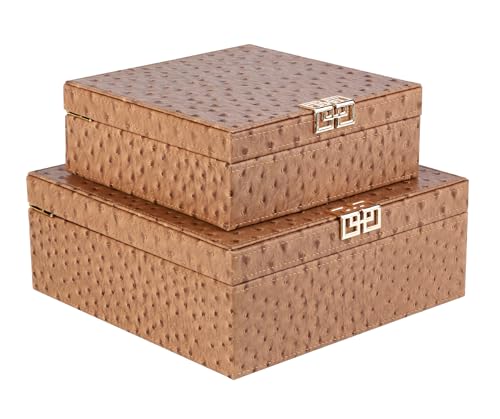
Premium Quality Materials: The outer layer is covered with PU faux leather - like material pasted on density board, providing durability and an elegant look. The inner lining is soft velvet, which can protect your precious items from scratches. For example, it can safely hold jewelry without any damage.
11. Enclosed Sideboard Cabinet

A sideboard with doors hides binders and backup supplies behind something that reads as furniture. I would load the interior shelves with white binders; the uniform spine color keeps the chaos inside from leaking out even when the doors open.
The top surface is where this earns its place.
A lamp, books, flowers: it behaves like a console in a hallway or behind a sofa, not a closet that announces itself. Check shelf depth against your tallest binder first.
12. Vertical Desktop Sorter Tray

A vertical sorter keeps notebooks upright and readable, which beats stacking them flat and forgetting what you own. I would limit each slot to one size; mixed heights tilt and the neat look collapses.
The white finish against a white pegboard wall reads clean, though I would add one living element nearby to keep it from feeling sterile. This suits spiral notebooks and softcovers; hardcovers need deeper slots or they pitch forward.
Importance of Organization
A cluttered office costs more than the time you spend hunting for a file. Studies tie visual clutter directly to elevated cortisol, which means the mess is literally stressing you out before you touch a single paper.
The real damage, though, is to focus: every item in peripheral vision competes for attention, and the brain burns glucose sorting irrelevant signals. An organized room removes that tax.
The second cost is credibility. A client or colleague who sees your workspace reads it as evidence of your reliability.
That judgment happens in seconds, and it is hard to undo. The state of the room shapes the quality of the work and the trust people place in it.
Regular Maintenance
Even the best system drifts. I would schedule purges when the calendar turns and again midyear, before fall planning begins.
The rule is simple, if anything has sat untouched since the last purge, it leaves or it gets promoted to active status with a reason written on it.
Paper is the obvious culprit, but digital clutter counts too. Old cables, obsolete chargers, and backup drives for machines you no longer own fill drawers faster than you notice.
I keep a bin labeled "pending decision" for items I am not ready to discard; when that bin hits capacity, the oldest items go. The bin is the deadline, not my memory.
Customization Options
Fixed storage ages poorly because needs shift.
A drawer that held invoices last year may need to become a shipping station this year. I would build in open capacity from day one; a fully loaded system has no room to adapt.
Wheeled units solve this directly. A printer cart that rolls to where you need it, or a supply cabinet that moves to a project table for an afternoon, keeps the room from hardening around one workflow.
Casters add cost, but less than replacing a built-in that no longer fits.
For shelving, I would choose adjustable standards over fixed brackets.
Tighter hole spacing lets you fine-tune shelf height; wider spacing leaves you fighting half-empty gaps. Shipping containers modified for office use run to this same logic; the shell stays, the interior reconfigures.
Frequently Asked Questions
What are some ideas for organizing my storage room?
Run shelving all the way to the ceiling, or at least to the header.
That foot or two above a standard shelf is where clutter goes to die, and a step stool costs less than the floor space you gain back.
Wall-mounted shelves and pegboards keep supplies visible and reachable without taking floor space. A drawer full of loose cords and adapters is money wasted on duplicates you can’t find.
Small clear cases, each labeled by device type, turn that mess into something you actually use. Mobile carts with casters let you roll supplies to where a project is happening, which matters when the room doubles as a workspace.
What are some good storage ideas for an office desk?
A vertical desktop sorter tray keeps notebooks upright and readable, which beats stacking them flat and forgetting what you own. Monitor stands with drawers inside keep pens and smaller loose items accessible, and an upright paper tray keeps paperwork tidy.
Keep the desktop surface clear for active work; a clean desk removes the visual tax that elevates cortisol and breaks focus.