Flagstone patio design runs from a weekend’s worth of stepping stones set in grass to a fully mortared outdoor kitchen and pool surround, with installed costs between $15 and $30 per square foot depending on stone choice and base prep.
What decides which idea fits your project is whether you need a flat surface for dining chairs, a path that tolerates some unevenness, or a fire pit area somewhere in between.
1. Flagstone Fire Pit Area
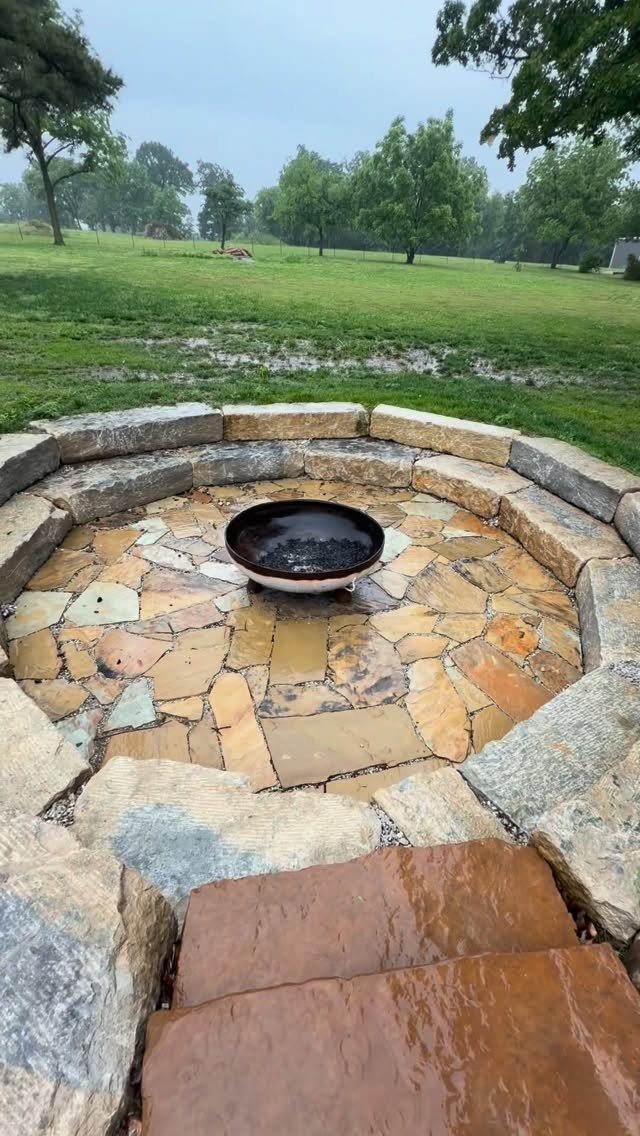
A fire pit patio works best when the stone itself does the heavy lifting.
I like a circular layout because it pulls people in naturally and keeps everyone facing the same focal point. The retaining wall you see doubles as seating, which saves buying separate chairs or benches.
Before you break ground, check your local fire code.
Most municipalities require a fixed fire pit to sit well clear of structures and overhanging branches, so check local codes before you dig. Gas lines need permits; wood-burning is simpler to approve but harder to keep clean.
A metal bowl keeps sparks contained and lifts out for ash removal, which I prefer over built-in masonry that traps moisture and cracks after a few freeze-thaw cycles.

DIY or Replacement Kit: The fire pit bowl has a 35" outer diameter. This classic fire pit bowl can be used for a variety of replacement or customization purposes. Use it to replace a worn out fire bowl on a stand or build a custom fire pit around the bowl.

FIRE PIT INSERT - Enjoy a roaring outdoor bonfire with friends and family anytime with this 30-inch round fire pit bowl. Simply place this versatile and durable replacement fire pit pan in a stand (not included), and it’s ready to use.

LARGE SIZE FOR FIRE PIT GATHERINGS: The fire pit bowl has a 23.25" outer diameter. The bowl measures 4” D x 5” H overall. Weighing 2.6 lbs, the bowl has an interior diameter of 21”. The screen measures 24” W x 24” D x 7.5” H overall including the handle and weighs 3.2 lbs.
2. Multi-Level Flagstone Patio
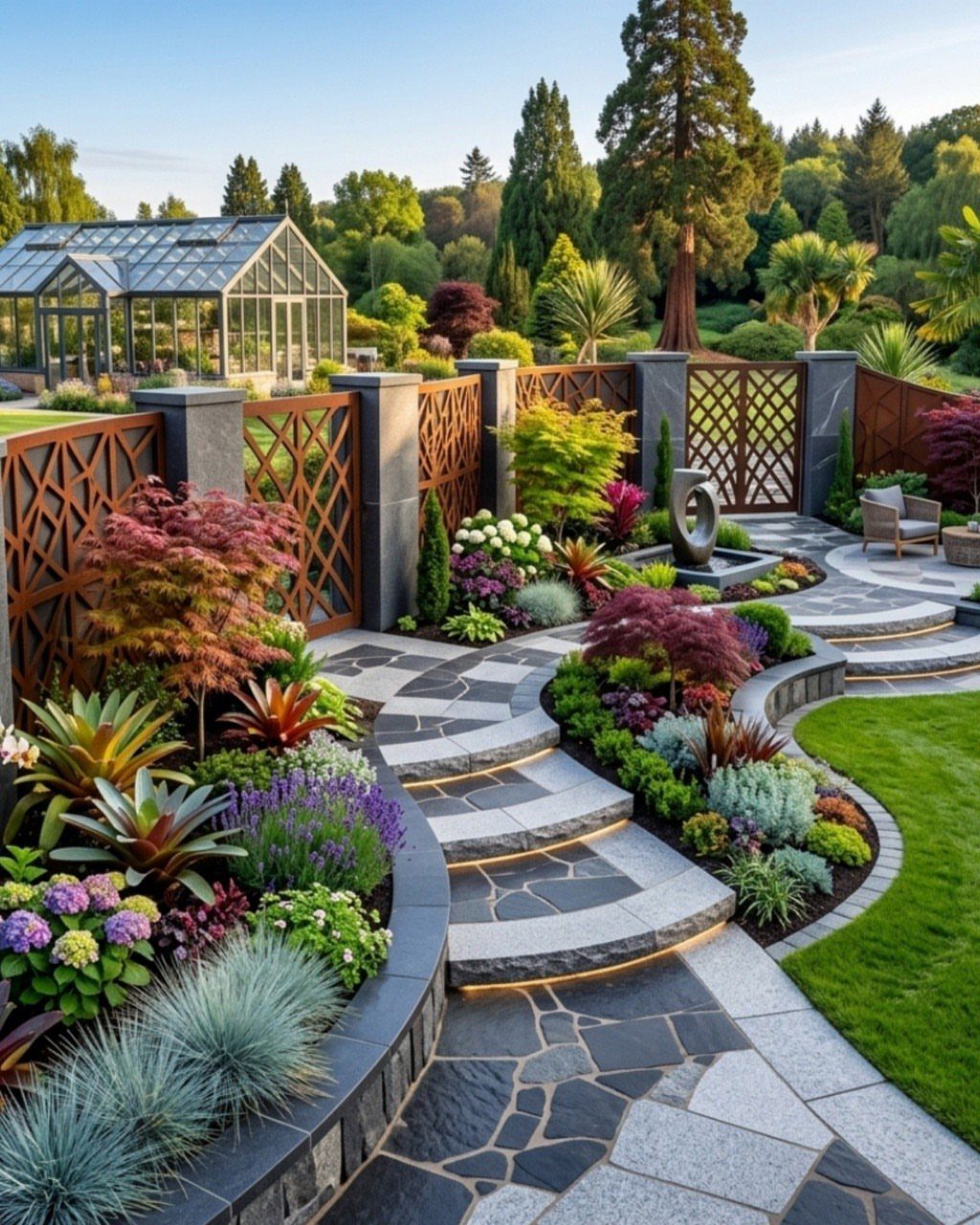
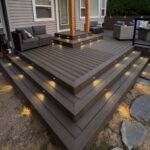
Curved flagstone steps with built-in lighting turn elevation changes into a design feature rather than a problem to hide. Light strips tucked under each tread make the levels readable at night without posting anything that looks like airport runway lighting.
I would not attempt this on a slope that drains poorly. Water pooling behind a retaining wall will push through mortar joints within two or three seasons.
The integrated lighting needs low-voltage cable buried below the frost line, which in most northern zones means digging deeper than you might expect. Plan that conduit before you set the first stone; retrofitting means tearing out steps you just finished.
“When done correctly, a flagstone patio will last longer and hold up better than most traditional patios.”

Widely applicable: Powered by 12V AC/DC, this low-voltage landscape light is ideal for illuminating barbecue fire pits, landscape steps, retaining walls, decks, rock pillars, outdoor kitchens, flower beds, and masonry walls. This hardscape pathway light is adjustable, allowing it to be rotated to suit a variety of settings
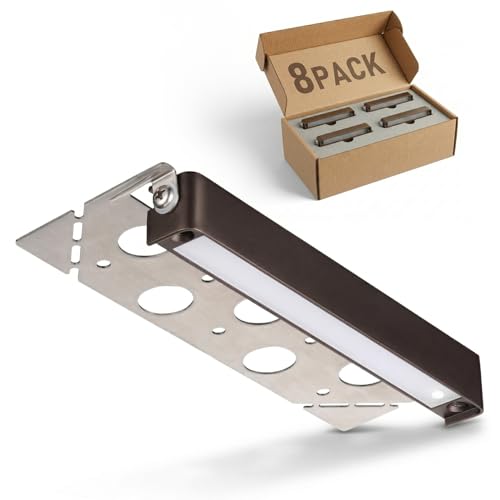
Widely Used: Powered by 12-24V AC/DC, this LED low voltage landscape light can be used to light barbecue fire pits, landscape steps, retaining walls, decks, rock brick column, outdoor kitchen, flowerbeds, and masonry walls. This hardscape paver light can be rotated to fits more applications

【30 Degree Tilt on LED Board】The 1 Inch Recessed Step Light is a clean, modern lighting solution for stair and deck lighting applications, with no unwanted glare. A 30° tilt to the internal LED board creates a natural downward beam that eliminates the need for a visor and allows for a sleek, flat design.
3. Flagstone Pathways
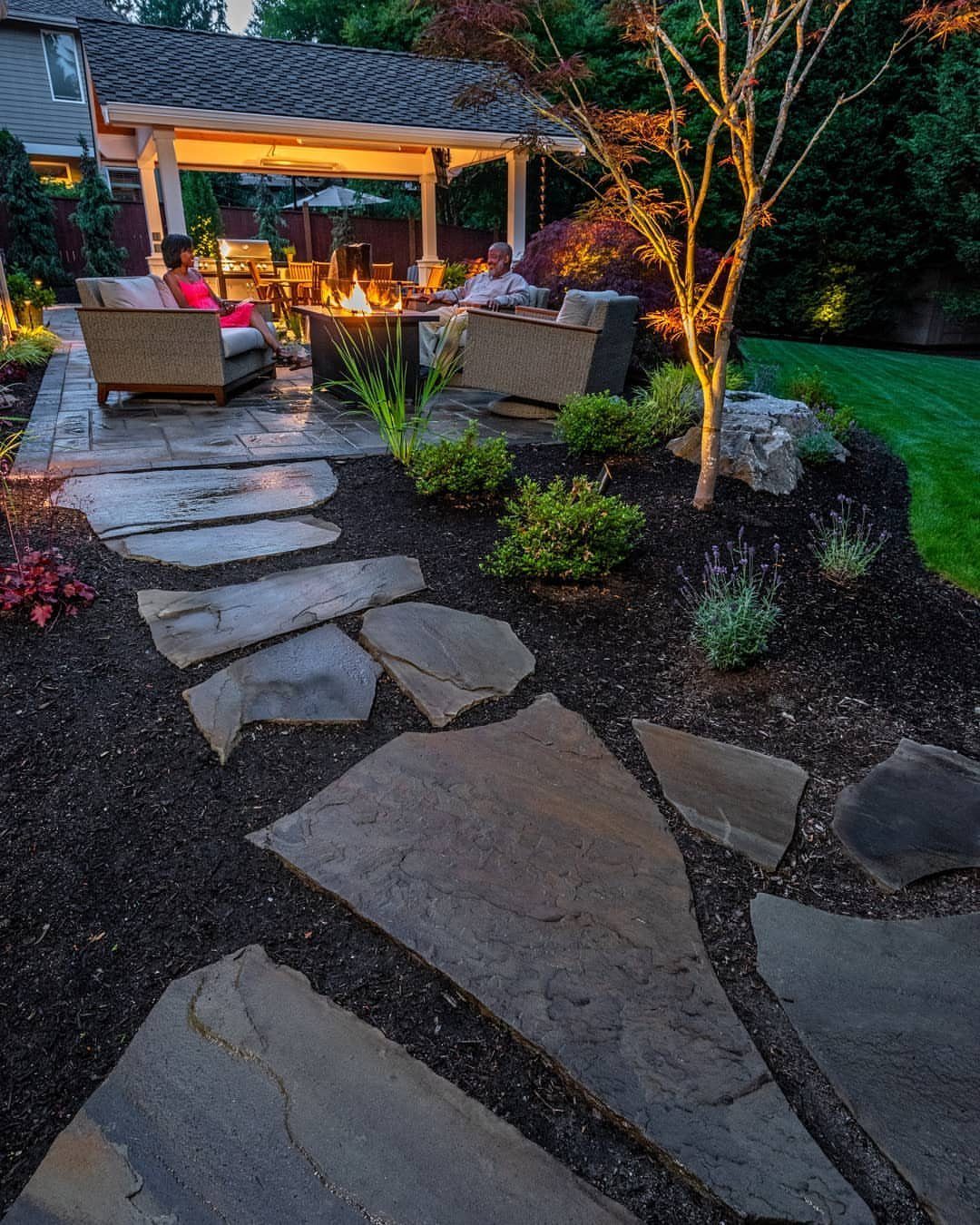
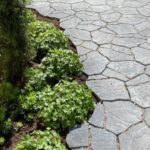
Irregular flagstone set in mulch reads informal and costs less than full mortar work. Dark mulch makes the stone color pop and suppresses weeds between pieces, though you will refresh it every spring.
What I watch for is spacing. Stones placed too far apart turn a path into an obstacle course; too close and you lose the deliberate rhythm that makes this style appealing.
A mix of path and patio fixtures matters more here than in hard-mortar installations because uneven surfaces hide tripping hazards. I always add a low light at path level when the route connects to a gathering area after dark.

12 pcs Accessory Set: Our fire pit pan burner kit comes with a 4ft extended connection hose and a 4.4ft propane regulator hose, igniter, and valve, all certified by CSA for safety. No need for additional purchases, this comprehensive set is ready to use right out of the box.

DIY or Replacement Kit: The fire pit bowl has a 28" outer diameter. This classic fire pit bowl can be used for a variety of replacement or customization purposes. Use it to replace a worn out fire bowl on a stand or build a custom fire pit around the bowl.
12 pcs Accessory Set: Our fire pit pan burner kit comes with a 4ft extended connection hose and a 4.4ft propane regulator hose, igniter, and valve, all certified by CSA for safety. No need for additional purchases, this comprehensive set is ready to use right out of the box.
4. Flagstone Dining Area
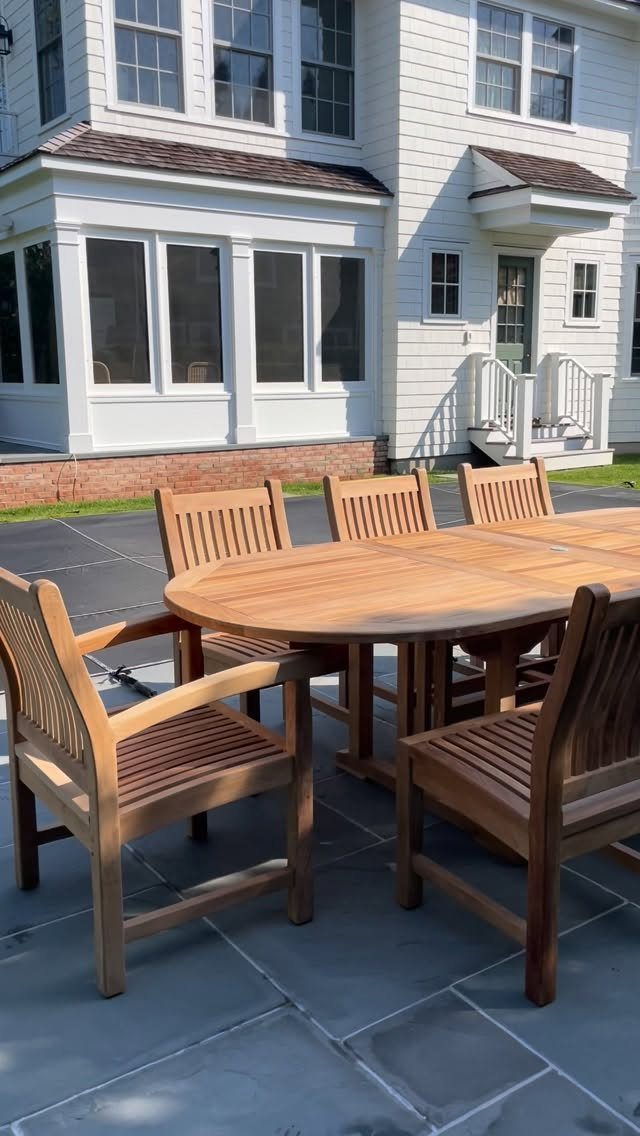
A dining patio needs flat, stable stone underfoot.
Cut flagstone, with its relatively uniform thickness and tight joints, gives chair legs solid purchase and keeps the table from rocking. Irregular fieldstone looks more rustic but fights you every time you slide a chair back.
I would not squeeze a table that size onto anything smaller; people end up brushing against planted beds or the house wall with every trip to the grill.
The grey tone of the stone reads neutral against the white siding, a combination that forgives splashes and pollen better than pale limestone would.

Widely Used: This 12V AC/DC retaining wall light are versatile and perfect for various applications, including fire pits, pavers, decks, outdoor steps, landscapes, patio walls and so on. Featuring a cuttable stainless steel plate, you can easily adjust the width to fit your needs

Widely Used: Powered by 12-24V AC/DC, this LED low voltage landscape light can be used to light barbecue fire pits, landscape steps, retaining walls, decks, rock brick column, outdoor kitchen, flowerbeds, and masonry walls. This hardscape paver light can be rotated to fits more applications

✅【Light Direction Adjustable】Unlike other retaining wall lights, this upgraded 7 inch retaining wall light can adjust the lighting direction 270°. Avoid any glare, suitable for landscape steps, retaining walls, fire pits, outdoor kitchens, garden masonry walls, decks, etc.
5. Flagstone with Water Features
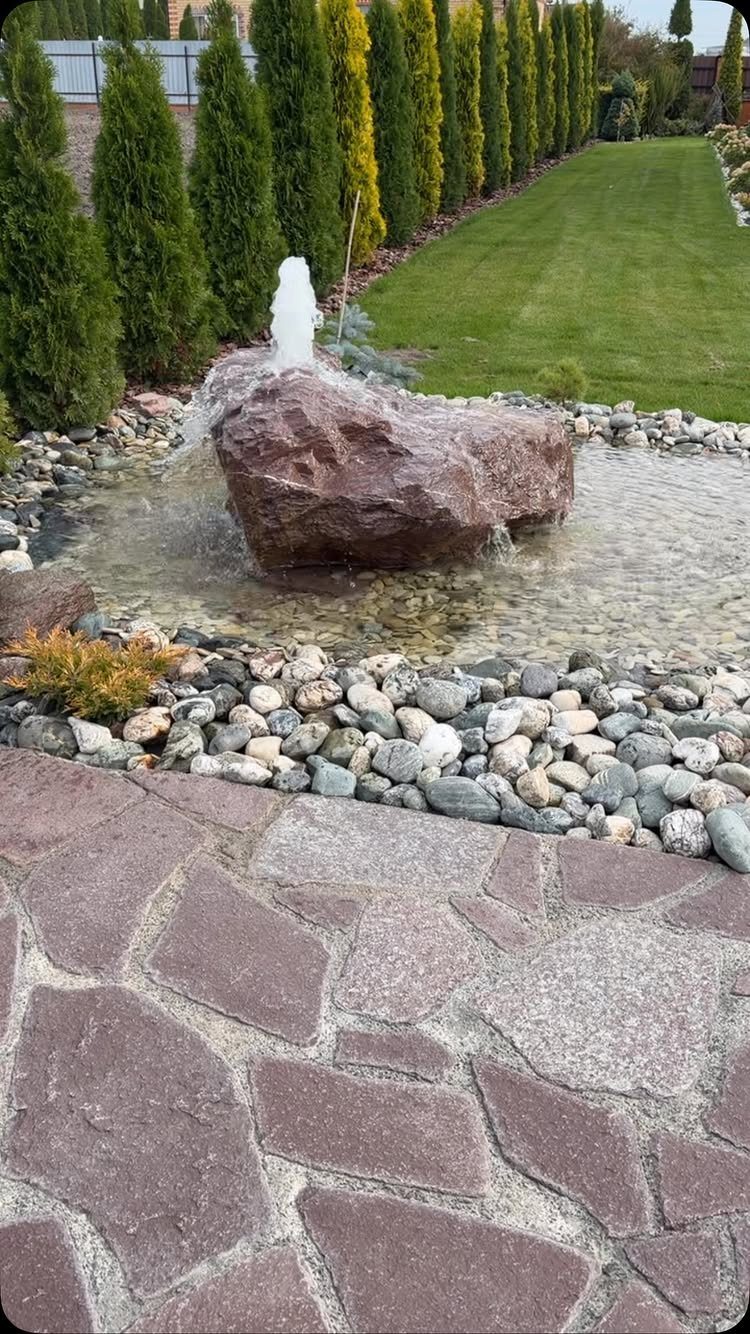
A bubbling rock fountain set into flagstone brings moving water without the maintenance load of a pond. A shallow basin recirculates water through the stone; there is no standing depth to breed mosquitoes or drop leaves into.
I always locate the pump access before finalizing the layout. The photo hides it well, but somewhere near that fountain sits a vault or disguised hatch for the submersible pump, check valve, and electrical connection.
I prefer a remote reservoir set below frost line rather than fighting frozen plumbing each November. The river stone surround catches splatter and keeps the lawn from turning to mud; without it, you will be reseeding every spring.

[Complete Square Drop-In Fire Pit Kit] - This 18" x 18" square drop-in fire pit kit is designed for compact fire pit tables and DIY fire pit builds, offering a balanced all-in-one solution. The kit includes a square burner, fire pit pan, upgraded spark ignition system with shut-off valve, regulator hose, air mixer, sealing tape, plus a tempered glass wind guard and stainless steel lid—no additional accessories required

Fire Pit Burner Ring Diameter 24-inch

[Complete Drop-In Fire Pit Kit] - This 36" x 12" drop-in fire pit kit is designed for DIY fire tables and fire pits, offering a true all-in-one solution. The set includes a linear burner, fire pit pan, upgraded spark ignition system with shut-off valve, regulator hose, air mixer, sealing tape, plus a tempered glass wind guard and stainless steel lid—no extra accessories needed
6. Flagstone and Grass Combos
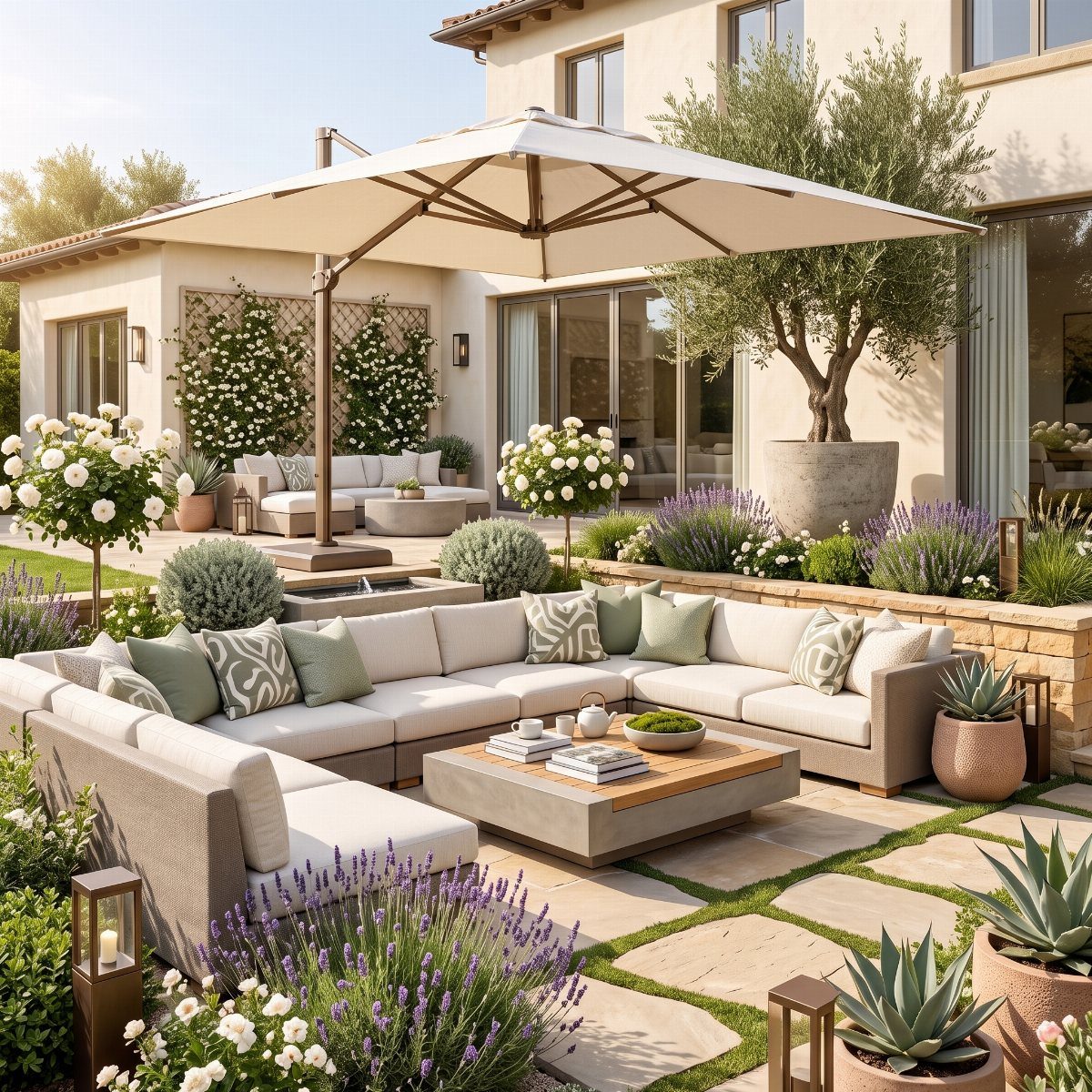
Grass joints between flagstones soften a patio and cut the stone bill, since you are buying less material. Wide spacing, enough for dwarf turf or creeping thyme, needs a soil base and irrigation that the stone itself does not.
I would not use standard Kentucky bluegrass between stones; its root mat heaves stones out of level within 2 seasons.
Drainage is the tradeoff. Water runs off solid flagstone but saturates the joints, so the base course must be deeper and better drained than usual.
Skip that prep and you will watch your nice level patio turn into a stepping stone path through mud by July.

Versatile Outdoor Lighting: Powered by 12-24V AC/DC low voltage, these 7-inch LED retaining wall lights are ideal for fir pits, landscape steps,retaining walls, patio, deck stairs, outdoor kitchens, brick columns, flowerbeds,rock brick column and garden pathways. High CRI90 gives a natural color to objects.

【Durable Quality & IP65 Rated】With a sturdy die-cast aluminum housing and IP65 waterproof design, this LED landscape Deck Light has good weather resistance, corrosion resistance and heat dissipation performance. The built-in LEDs have a working life of over 25,000 hours without frequent bulb replacements. Durable Heavy Duty cast aluminum construction with Powder Coated finish and protective tempered glass lens are built specifically to withstand rainy and snowy weather, providing a maintenance-free and worry-free exterior lighting solution.
7. Inlay Patterns Patio Design
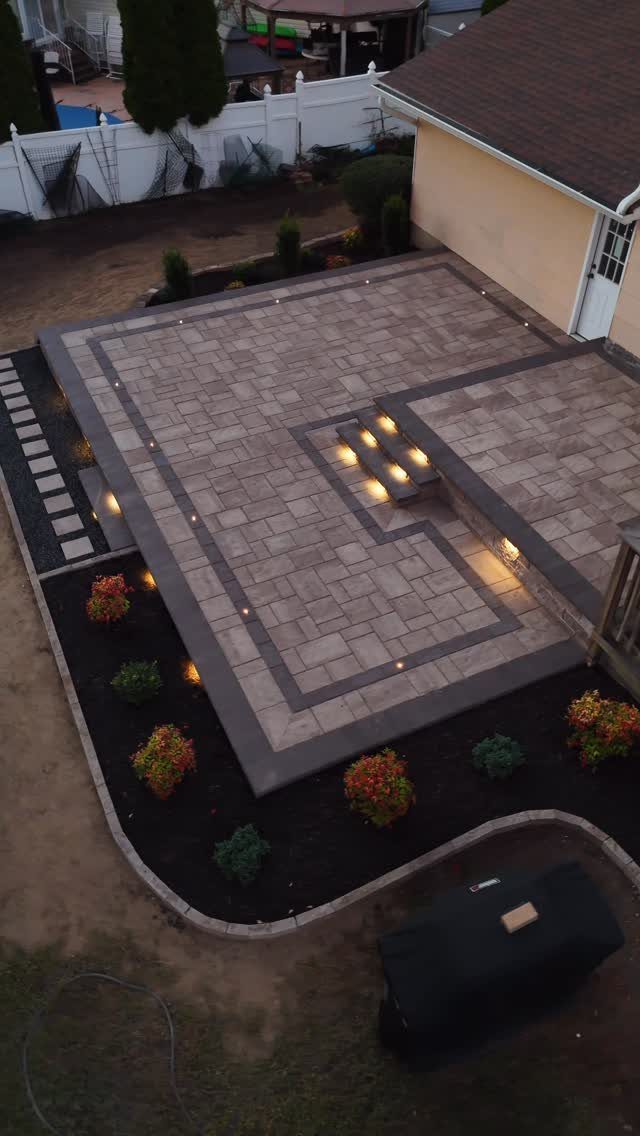
Dark inlaid borders turn a plain flagstone field into something intentional. Geometric banding reads as trim on a jacket: it defines edges and makes the whole layout feel designed rather than dumped.
I would not attempt this pattern freehand. The lines need to stay true over a long run, so I use a string line and temporary stakes before cutting any stone.
The border stone needs to sit flush with the fieldstone, so the setting bed gets adjusted stone by stone rather than leaving any edge proud, or water will pool along the lip.
Plan the pattern on paper first; changing your mind with half the patio laid means buying new material.
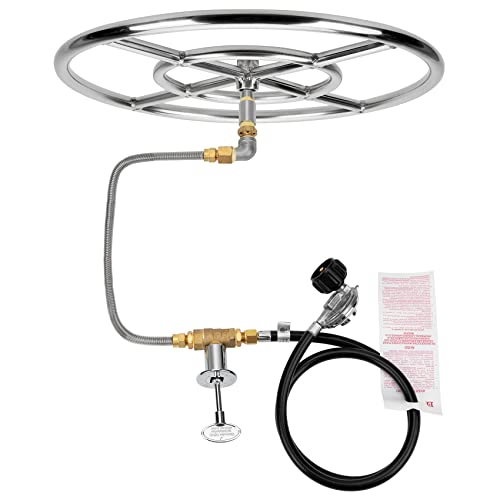
Fire Pit Burner Ring Diameter 18-inch Ring Burner Material: Durable 304# Stainless Steel, Female 1/2 Inch Gas Inlet, 147,000 BTU Max Stylish Design: New cross-bar design for...
8. Flagstone with Outdoor Kitchen
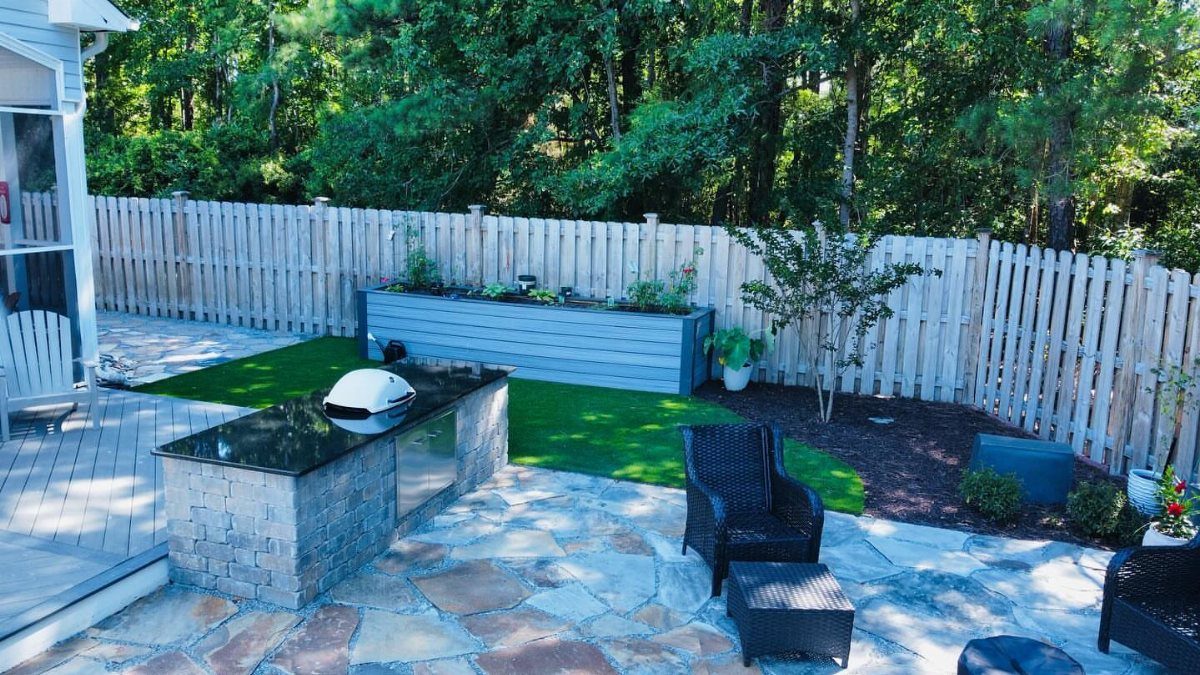
An outdoor kitchen island on flagstone keeps the cook in the conversation instead of exiled to a corner. Carrying the patio material vertically on the stone base ties the structure to the ground plane without matching everything too tightly.
The countertop overhang matters more than most people expect. I want plenty of knee room and chair clearance on the bar side; too little space and guests perch instead of sit.
The grill placement needs to account for prevailing wind, or smoke blows straight into the seating area every evening. Artificial turf near cooking grease is a maintenance choice I would skip; it stains and flattens where drippings land.
9. Bluestone Flagstone Patio Around a Pool
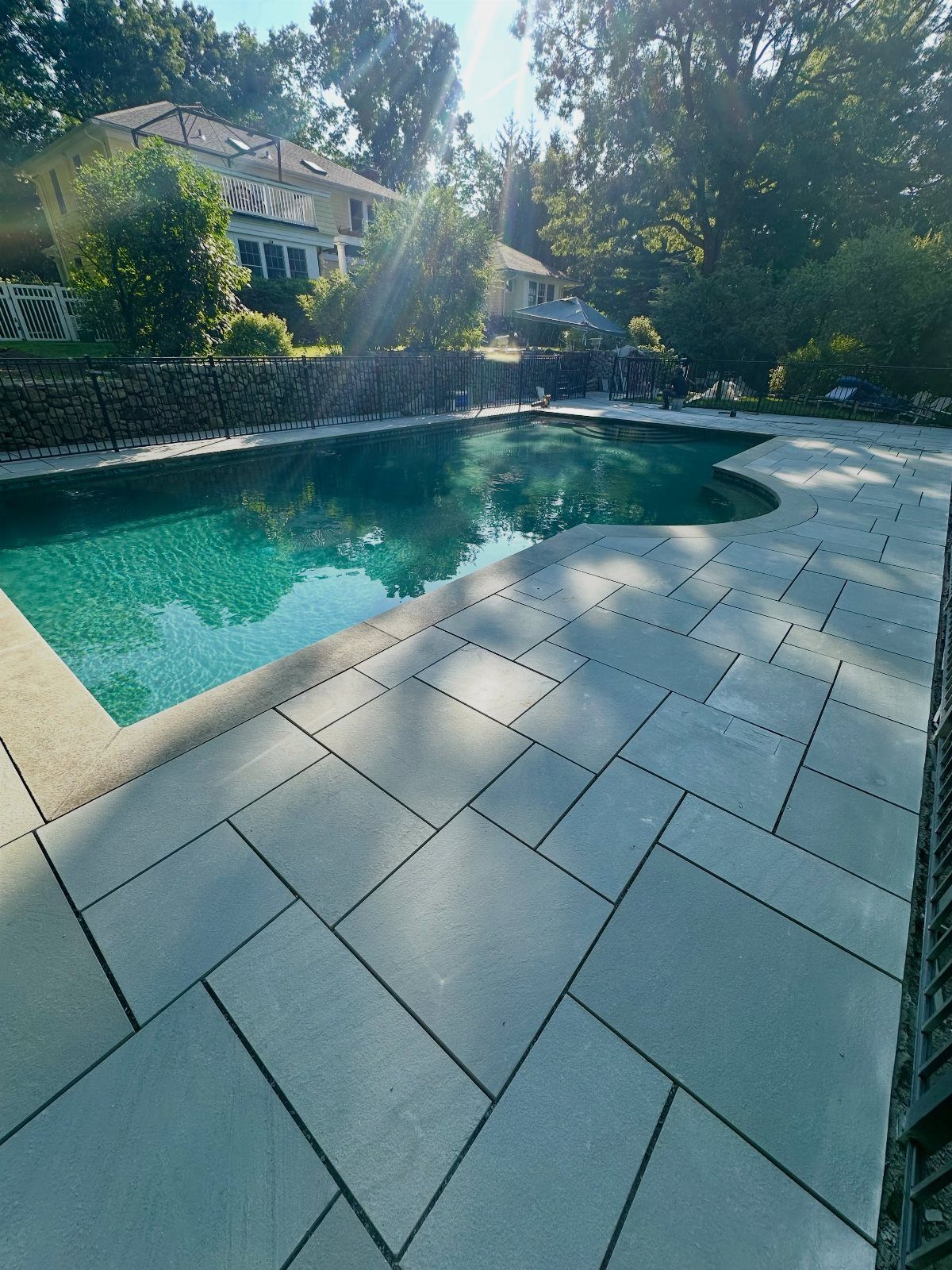
Bluestone around a pool stays cooler underfoot than concrete pavers, which matters on hot afternoons when bare feet are the only option. Rectangular cut stone gives clean lines that echo a pool’s geometry better than irregular flagstone would.
The safety fence is non-negotiable in most jurisdictions for pools over a certain depth, so I plan the stone layout knowing that black metal uprights will interrupt sight lines.
Expansion joints between stone and pool coping need to be flexible, not mortar; the pool shell and patio move on different schedules, and rigid joints crack within 2 seasons.
Sealing the stone cuts down on chlorine staining, though I reapply every other year.
10. Flagstone Stepping Stones
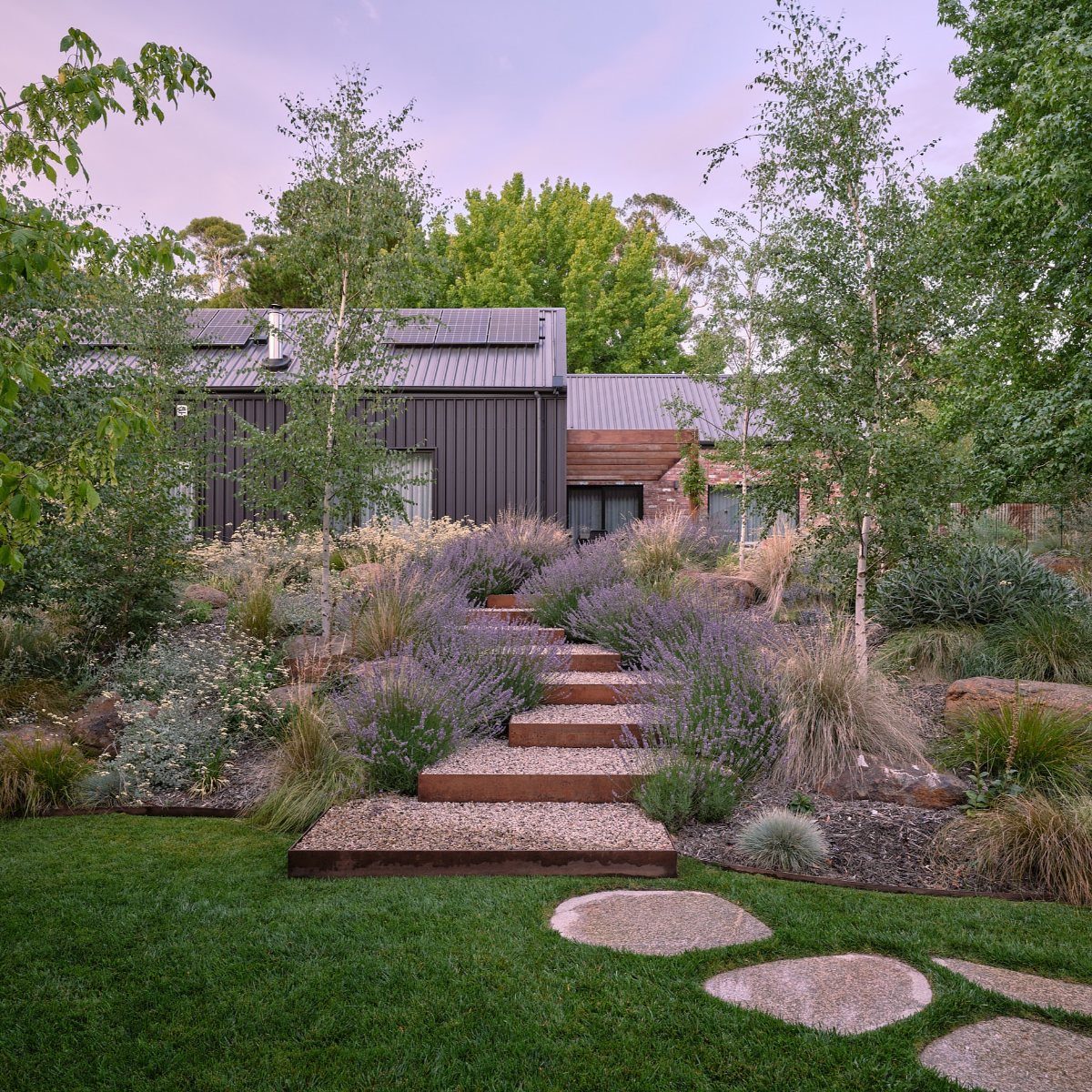
Round flagstone discs set into grass make a path that reads as garden first, walkway second. Lavender and birch tell you this is a secondary route, not a main approach, and that is exactly where this idea belongs.
Thickness is the detail that decides whether this works. Thin stones ride up on grass roots within a season; I prefer thicker pieces so the mower can pass over without catching blades.
The grass between stones needs to be the same variety as the surrounding lawn, or you get two-tone stripes. Set each stone on a compacted sand base, not directly on topsoil, or they tilt toward the lowest spot by fall.
11. Flagstone with Low-Voltage Lighting
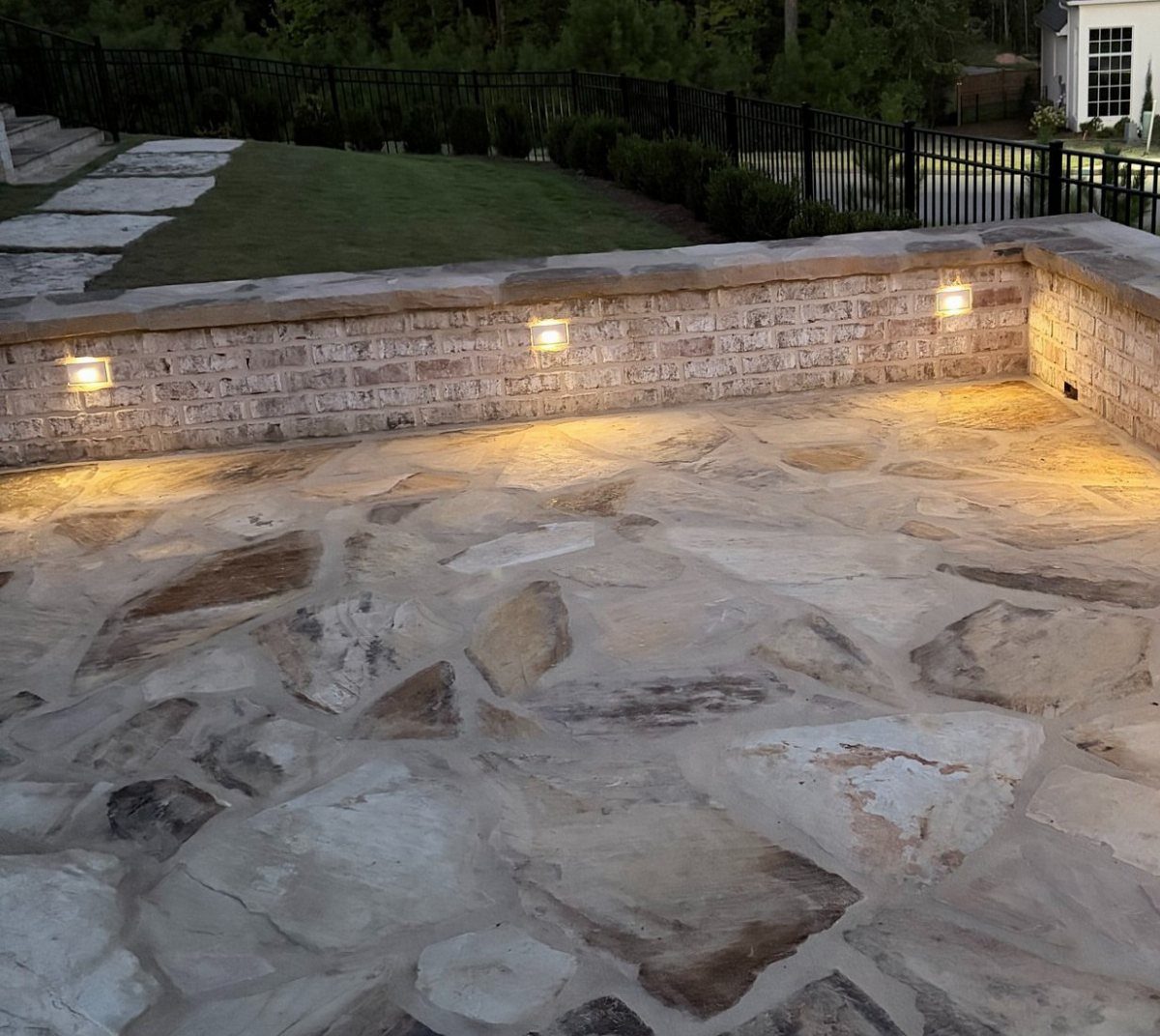
Recessed lights in a low wall wash the patio surface without throwing glare into anyone’s eyes. A brick cap that hides the fixture housings completely beats surface-mounted units that collect leaves and need re-aiming after every storm.
Low-voltage cable is simple to run but not trivial to plan. I map the transformer location first, usually near an exterior GFCI outlet, then figure voltage drop over the cable length.
Long wire runs need heavier gauge wire or the last fixture dims noticeably. The retaining wall must be hollow or built with a chase; solid masonry means surface-mounted conduit, which defeats the clean look that makes this worth doing.
Flagstone Installation Tips
Flagstone installation starts with excavation 3–6 inches below finished grade, then a compacted gravel base topped with decomposed granite. I lay stones like a puzzle, cutting where needed and leveling each piece individually before filling joints.
The base matters more than the stone itself.
A patio that heaves or holds water was almost always skimped on prep. I check drainage with a hose before setting the first stone; water should run off, not pool.
Joint spacing depends on your fill. Wide joints with groundcover need deeper, better-drained base courses than tight mortar work.
Sand-set joints need periodic weeding unless you use polymeric sand, which I prefer for the reduction in maintenance. Mortar-set patios need less weeding but cracked joints must be repointed promptly or water gets behind the stone.
For high-traffic dining areas, mortar on a concrete slab gives the stable surface chairs need. Dry-lay over gravel suits secondary paths and garden seating where some unevenness reads as character.
Flagstone Cost Considerations
Flagstone runs $15–$30 per square foot installed, with the Northeast typically 20–30% above national averages. Material choice and installation method split that range more than most people expect.
Mortaring flagstone to a concrete slab runs higher than dry-laying over sand and gravel, but I find the extra cost pays off when you want a surface that stays flat under furniture and heavy foot traffic.
I direct clients toward mortared installs for primary dining and entertaining areas; the unevenness plants and gravel create under chair legs gets old fast.
Using flagstone selectively cuts the bill without losing the look.
Many homeowners combine it with concrete, brick, or manufactured pavers, letting flagstone define gathering areas while cheaper materials handle secondary space. The stone itself is the expensive part; every square foot you can reasonably substitute matters on a real budget.
Maintenance for Flagstone Patios
Sealing schedule depends on the stone.
Winter care means skipping rock salt entirely; calcium chloride handles ice without the slow surface damage salt causes. Natural stone tolerates freeze-thaw cycles fine when drainage is adequate, which comes back to that base prep.
Staining happens. Organic stains lift with diluted hydrogen peroxide; oil needs a poultice draw it out.
Uneven surfaces usually trace to poor installation or ground heave from deep freezes.
The fix is resetting on proper base, not just adding sand on top. For irregular patterns with groundcover joints, wide wooden furniture suits the surface better than narrow metal legs that catch between stones.
Frequently Asked Questions
What are the downsides of using flagstone?
Flagstone costs more than concrete pavers or manufactured alternatives, and installation is not beginner-friendly work.
The unevenness that reads as character in a garden path becomes a nuisance under dining chairs. Sealing, repointing mortar joints, and resetting heaved stones all take time or money down the line.
Can I lay flagstone directly on dirt?
I would not.
Stones laid on bare soil tilt and settle within a season as the ground shifts. Water that pools instead of draining off will heave the whole patio over a winter or two.
Is flagstone cheaper than pavers?
No. Mixing flagstone with concrete or brick is my usual recommendation when the budget is tight; the stone carries the visual weight where people gather, and the cheaper material fills in everywhere else without looking like an afterthought.