
These ideas run from a box of baking soda to a robot vacuum, and the one that belongs in your routine depends on whether you’re fighting a daily mess or the buildup that accrued while you were busy.
What I keep coming back to is the cleaning caddy: a plastic or wire basket with handles high enough to clear your tallest spray bottle, so you’re not walking back to the closet every time you switch rooms.
1. Use a Cleaning Caddy

A cleaning caddy keeps me from walking back to the closet for supplies every time I switch rooms.
Pick a material that won’t collapse under a full load of spray bottles; felt works for light supplies, but I prefer plastic or wire when I’m carrying glass bottles of cleaner.
Check that the handles sit high enough to clear your tallest bottle, or you’ll be gripping by the body every time you move rooms.

DAMAGE FREE HANGING- Easily keep your spray bottles out of sight but within reach without causing damage to your wood, paint, or tiled surfaces
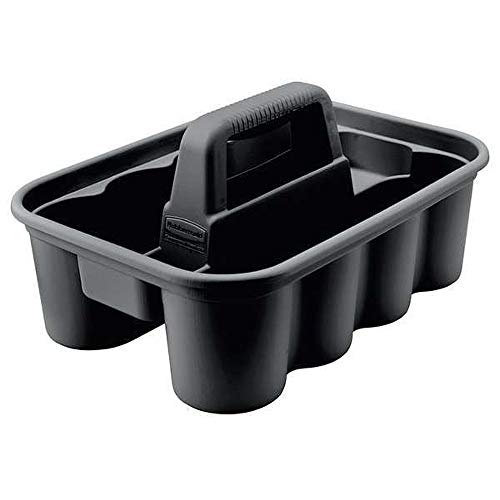
ALL-PURPOSE: Heavy-duty caddy conveniently fits on cleaning and housekeeping carts

Sturdy Material: Made of metal with powder coated finish, wear-resistant and rustproof, solid construction provides long lasting durability
2. Use Microfiber Cloths

Microfiber cloths pick up dust instead of pushing it around, which is why I keep a roll in the kitchen and another under the bathroom sink.
The perforated tear-off style works well if you go through them fast, though I find loose cloths last longer and wash better. Either way, skip fabric softener when you launder them; it coats the fibers and ruins the grab.

[Tearable Plush Cleaning Cloth Roll – Replaces 117 Rolls of Paper Towels] Effortlessly tear off a fresh cloth along the perforations; hold the roll steady and pull along the line for a clean edge. This 20-piece roll works like paper towels but delivers a plush, thicker 4 mm microfiber—thicker than regular microfiber shop towels and not a thin shop rag—for superior kitchen wiping. One roll can replace 117 rolls of paper towels for everyday wiping.

【Fast Absorption & Effective Cleaning】Made microfiber cleaning cloth with soft, dense fibers that quickly soak up water, soup, oil, and everyday spills while helping lift stains from countertops, tables, sinks, and other surfaces

【Tear-Off Convenience】 Get a fresh cloth in seconds with the perforated tear-off roll. Each of the 20 pre-cut 9.8x9.8-inch sheets detaches cleanly without scissors, so you can handle spills, countertop touch-ups, or car interior wipes immediately.
3. Use Baking Soda for Cleaning

Baking soda handles the jobs where I’m not sure a stronger cleaner is worth the risk.
For a sink drain, I pour about half a cup directly into the opening, let it sit while I clean something else, then flush with hot water.
It won’t clear a real clog, but it breaks up the grease and residue that turn sour over time. I keep a box under every sink so I’m not walking across the house to find it.

Aunt Fannie's Sink Refresher: Lemon scented powder packed with the power of baking soda to scrub away stubborn food, grease and stains while also deodorizing sinks & drains

A HOUSEHOLD CLASSIC: This 2.7 lb resealable bag of ARM & HAMMER Baking Soda unlocks 100+ uses across your home—from kitchens and laundry rooms to crafting tables and beyond

Effective Odor Elimination: Absorbs and destroys big odors in small spaces, keeping your home smelling fresh and clean.
4. Invest in a Steam Cleaner

A handheld steam cleaner makes sense for someone who wants to sanitize without keeping a cabinet full of different chemicals on hand.
The small pad attachment I see here works on carpet spots, grout lines, and the greasy film that builds up around stove knobs.
What I’d check before buying is the heat-up time and whether the tank holds enough for more than one room; some models cool down fast and force you into shifts.
I reach for mine when someone in the house is sensitive to fragrances or when a surface just needs heat and water, not a product.

Powerful Steam Cleaner: This steam cleaner heats up in just 15 seconds, releasing high-temperature steam at 221°F (105°C) and 3 bar of pressure, instantly dissolving stubborn grease, grime, stains, and bacteria. With a power output of 1500 watts, it effortlessly removes dirt and is a reliable helper for everyday household cleaning.Suitable voltage: 110 V–120 V

EVERY PURCHASE SAVES PETS. Every purchase makes it possible for BISSELL to continue our support of BISSELL Pet Foundation and its mission of saving pets in need.

10-Second Heat-Up for Instant Cleaning: Say goodbye to long waits! Steam Cleaner heats up in just 10 seconds, releasing powerful 248°F (120°C) steam to soften stubborn stains. Perfect for busy households, this feature ensures quick and efficient cleaning without the hassle— making it the ideal choice for effortlessly refreshing your home before Christmas gatherings and ready for the New Year.
5. Wipe Down Kitchen Counters
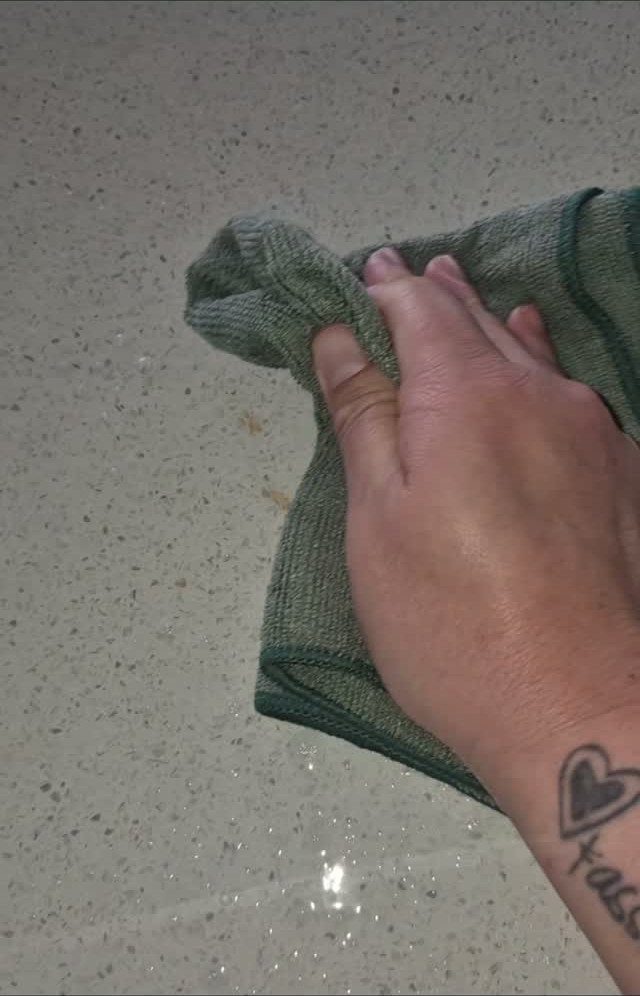
Wiping counters daily takes almost no time and saves me the heavy scrub when crumbs have bonded to the surface.
A microfiber cloth, damp, is usually enough; I add a drop of dish soap only if there was raw meat or something sticky.
The speckled pattern on this counter hides a lot, which I consider a warning, not a comfort. I work left to right and don’t lift the cloth until I’ve reached the edge, or I’m just moving debris in circles.

ULTRA SOFT MATERIAL & SCRATCH FREE - Ultra soft and highly absorbent microfiber cleaning cloths, great for cleaning windows, kitchenware, car or other delicate surfaces.

Super Absorbent:With a high quality short-pile microfiber design, these microfiber cleaning cloths are ultra Absorbent, They can easily absorb large amounts of liquid and wring out spills easily, perfect for wiping surfaces without leaving marks, Even after repeated cleaning, they retain water absorption and softness, ensuring lasting durability

SCRATCH-FREE CLEAN: Ultra-soft microfiber fabric gives a scratch-free clean and traps dirt and debris. Use these lint-free cleaning cloths dry for dusting furniture and wiping down surfaces, or for quick wipe-downs on glass and mirrors.
6. Use Lemon for Cleaning
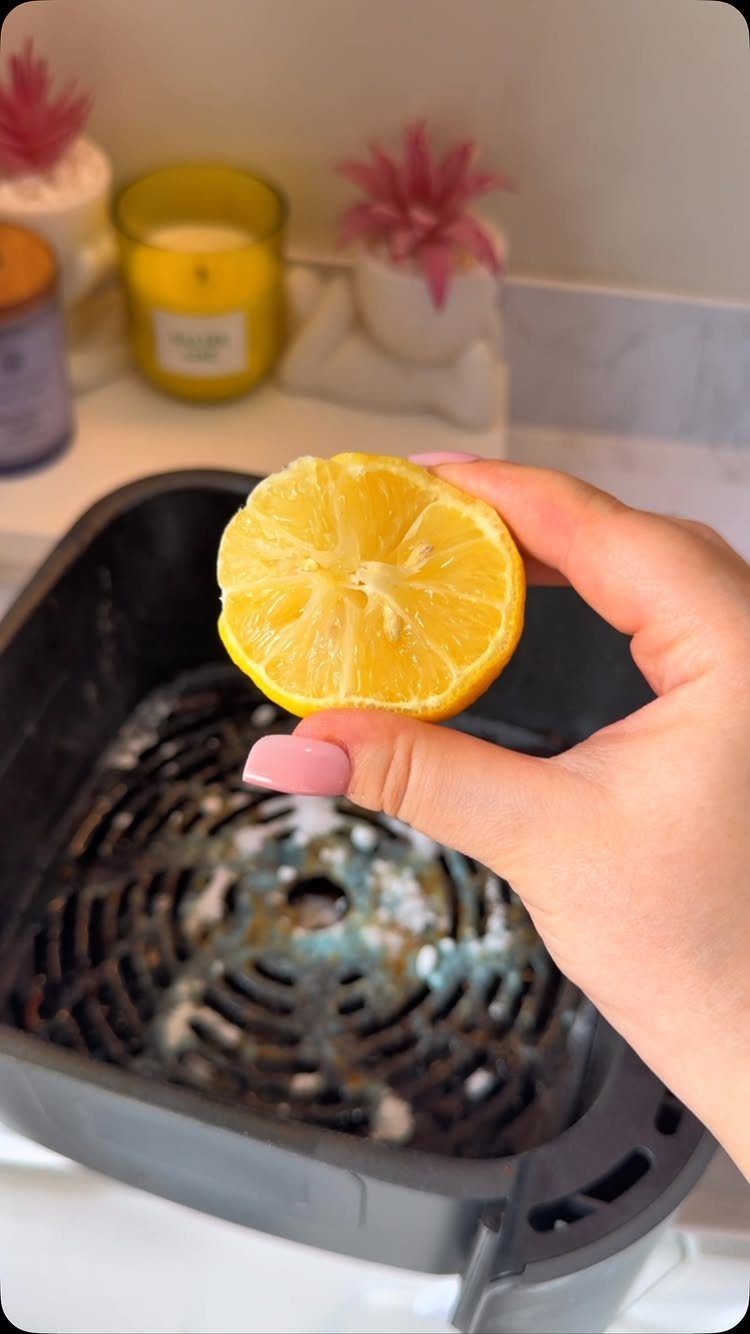
Lemon juice cuts through the baked-on residue that soap alone won’t touch, which is why I rub a cut half over air fryer baskets and oven racks before the final rinse.
The acid works fast, so I don’t let it sit more than a few minutes on anything aluminum or nonstick; it will etch the surface if you forget it.
I use this method when the smell of vinegar would linger in food I cook later, since lemon fades clean.

ALL-IN-ONE CLEANING CADDY ORGANIZER Designed to carry everything you need in one trip—perfect for housekeeping, janitorial crews, and professional cleaning services.

INCLUDES - 1 black stainless steel hangers, 2 screws and anchors.

Sturdy Material: Made of metal with powder coated finish, wear-resistant and rustproof, solid construction provides long lasting durability
7. Use an Electric Spin Scrubber

An electric spin scrubber saves my wrists when I’m cleaning grout or a shower floor that hasn’t seen attention in months.
The extension handle matters more than I expected; without it, I’m kneeling on tile and the tool becomes half as useful.
Check that the head angle adjusts, or you’ll fight to keep contact on vertical corners. I reach for mine when the job is too big for a hand brush but not enough to justify calling someone in.

PERFORATED ROLL, TEAR OFF ONE WIPE AT A TIME: Designed with perforation like kitchen paper, each cloth tears off easily in single sheets, with 20 sheets per roll and each sheet measuring 25 x 25 cm for everyday cleaning jobs

【20 REUSABLE SHEETS】This reusable tear-off cleaning cloth roll includes 20 absorbent microfiber cloths for daily wiping.

Tear Off What You Need:When spills interrupt meal prep, the pre-perforated tear away roll lets you pull off one cleaning sheet at a time without scissors, making everyday kitchen cleanup more convenient
8. Deep Clean Toilet with Foam

Thick foam clings to vertical surfaces long enough to actually loosen buildup, which liquid cleaners often fail to do.
I let it sit a few minutes before scrubbing, but not so long it dries; once the foam collapses, you’re back to rubbing paste.
A wand brush with a curved neck keeps my hands out of the bowl and reaches under the rim without contorting my wrist.

Stop The Stink: Clean and freshen any drain in your home with quick deodorizing tablets. The unique fizzing and fragrance technology helps eliminate foul drain odors and boosts fragrance to freshen the room.

ELIMINATES ODORS: Arm & Hammer garbage disposal cleaner works to deodorize your sink leaving behind a fresh citrus scent

A HOUSEHOLD CLASSIC: This bulk 7 lb resealable bag of ARM & HAMMER Baking Soda unlocks 100+ uses across your home—from kitchens and laundry rooms to crafting tables and beyond
9. Cover Broom Bristles for Sweeping

A mesh cover over broom bristles turns the sweep itself into the dustpan, which saves me a step on tile where dust lines collect in grout.
The elastic has to grip tight or it slides off mid-stroke; I check that by pulling the cover over the widest part of the bristle fan.
I use this mainly for hair and fine debris that would otherwise float past a dustpan edge. Wash it out, or the trapped load dumps on your next sweep.

Material: Steam cleaner features a heat resistant ABS housing with an integrated design that combines the main unit, handle, and transparent water tank into one compact structure. Steamer for cleaning with a streamlined body is easy to carry and move around the home, while the compact profile takes up less space during storage. The smooth exterior is also easy to wipe clean after use

POWERFUL HOT STEAM - 1050 watts with 3-5 minutes fast heat-up and emits pressurized powerful hot steam 230℉ for up to 8-12 minutes

19PCS All-Purpose Kit – Clean Anything, Anywhere! - Conquer every mess with 17 targeted tools – including scrub brushes, nozzles for delicate surfaces, crevice cleaners, and multi-angle adapters. Perfect for car dashboards, greasy stovetops, grimy tile, and more!
10. Vacuum Mattresses with Handheld Vacuum

A handheld vacuum on a bare mattress pulls out what sinks in over time: skin cells, dust, and the grit that works into tufting.
I run it across the whole surface, then lift and hit the sides; most people stop at the top and leave half the job.
The small head on these units fits between tufts better than an upright attachment, though I have to make more passes. Do this when you strip the bed, not after you remake it, or you’re fighting sheets.
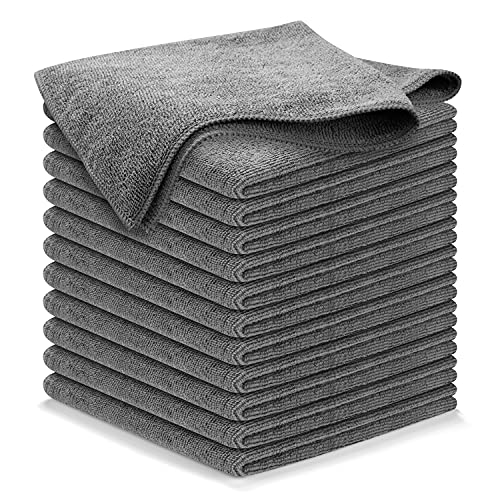
10x GRIP-ROOT WEAVE - TRAP MORE, WORK LESS: Ultra-absorbent microfiber towels for car Grip Root weave works like PLANT ROOT FOLLICLES, sucking up & LOCKING AWAY 8x to 10x its weight in liquid, particulates, moisture, grime and dirt in far LESS TIME than traditional ‘Heavy Duty’ Cleaning Rags. Each towel features a 2.5mm thick design, providing enhanced durability and better grip during use.

Strong Absorbent & Streak-Free: Crafted with premium microfiber, these cleaning rags quickly absorb water and wipe away spills, dust, grease, and dirt without leaving streaks. Ideal for drying dishes, cleaning countertops, or polishing surfaces in the kitchen, car, or around the home.

[Streak Free & Versatile Cleaning] The amazing absorbency to clean any surfaces in few wipes, quickly also non-scratch without streak and on glass, mirrors, dishes & cups, counters, sink or kitchenware
11. Mop Floors with Bucket System

A spin mop and bucket system keeps my hands out of dirty water and wrings the head drier than I can by hand, which matters on wood-look floors that puddle easily.
The pedal or crank mechanism varies by brand; I prefer the crank style when my hands are already wet, since foot pedals slip.
Empty the bucket while it’s still light, or you’re carrying 2 gallons across the kitchen and testing the handle.
12. Scrub Outdoor Tiles with Long Brush

A long-handled brush lets me scrub outdoor tile standing up, which I appreciate on a balcony where kneeling puts me close to the edge.
Stiff bristles suit textured tile that holds grime in its pits; for smoother stone I’d go softer to avoid etching.
I work soapy water in sections and rinse before it dries, or the residue films over and the job doubles. This is the tool I grab when a hose alone won’t lift the season’s buildup.
13. Run a Robot Vacuum Cleaner

A robot vacuum handles the daily debris I would otherwise push around with a broom on wood-look floors like this one.
The round profile and low height let it pass under sofas where dust collects for weeks unnoticed, though I still pull the handheld out for corners and edges the machine misses.
What I’d check before buying is whether the model maps rooms or bounces randomly; mapping saves time and battery, especially in an open living room with furniture to navigate.
Empty the bin every run, or the suction drops fast and you’re picking up after the helper.
I see this as maintenance between real vacuums, not a replacement, particularly with a dog in the house. Pet hair fills small bins quickly and tangles in brushes that need cutting free.
Set a schedule that runs while you’re out, since the motor noise carries and the thing will bump your ankle if you walk through mid-cycle.
Importance of Consistency
A weekly schedule matters more than any single tool because buildup is what turns a quick job into an afternoon.
I break tasks into assigned days: dusting here, vacuuming there, laundry on its own slot. That way nothing sits long enough to become a project.
The real enemy is the pile-up.
A layer of dust becomes grime; grime needs scrubbing, which takes 4 times as long as wiping. I treat consistency as the actual cleaning method, with the products and tools as support.
Benefits of Professional Cleaning
Professional cleaning makes sense when time is the missing ingredient, not know-how. A recurring service keeps the baseline steady; a deep service handles what weekly maintenance cannot reach, like built-up residue in grout or behind appliances.
I see the value most clearly in transitions: a new baby, a job change, a move.
Those are the moments when the routine breaks first. Hiring out then is not a luxury; it is a way to keep the standard from collapsing while life reorders itself.
Cleaning Tools Maintenance
A tool that is not maintained becomes half a tool.
I check vacuum bags before the machine loses suction; a full bag does not pull debris, it pushes it around. The same logic applies to mop heads, scrub brushes, and filters.
Supplies stay gathered in one portable container, whether that is a caddy or an apron with pockets and loops.
The format matters less than the principle: every second spent hunting for a bottle is a second not spent cleaning, and those seconds add up across a whole house.
Frequently Asked Questions
What’s a good house cleaning schedule?
I assign each task its own day: dusting on Tuesday, floors on Thursday, laundry on Saturday.
That way nothing accumulates into a weekend-eating mess. A quick wipe beats a scrub every time; once dust turns to grime, you are looking at 4 times the work for the same surface.
Daily jobs like counters and dishes, weekly jobs like floors and bathrooms, and monthly hits for appliances and windows keeps the load even.
What’s the easiest way to clean a house?
Work top to bottom and left to right so you’re not cleaning the same debris twice. I start high with dusting, move to counters and surfaces, then finish floors last; gravity does the work instead of me.
A cleaning caddy keeps supplies moving with me so I’m not walking back to a closet between rooms, which is where half the time goes.
Is $50 an hour good for house cleaning?
That rate sits in the middle of what I see quoted for independent cleaners in most US metro areas, though it varies by region and whether the service brings supplies.
A pro makes sense when you are out of hours, not out of ideas. A weekly visit holds the line; a quarterly visit resets what daily life lets slide.
What is the 5-5-5 rule for cleaning?
This rule suggests spending five minutes on five tasks for five days, which keeps the load light enough that you don’t dread starting.
I don’t follow it exactly, but the principle matches what I do: small daily jobs prevent the pile-up that turns cleaning into an afternoon project.
The 5-5-5 rule works because showing up regularly matters more than what you hold in your hand.