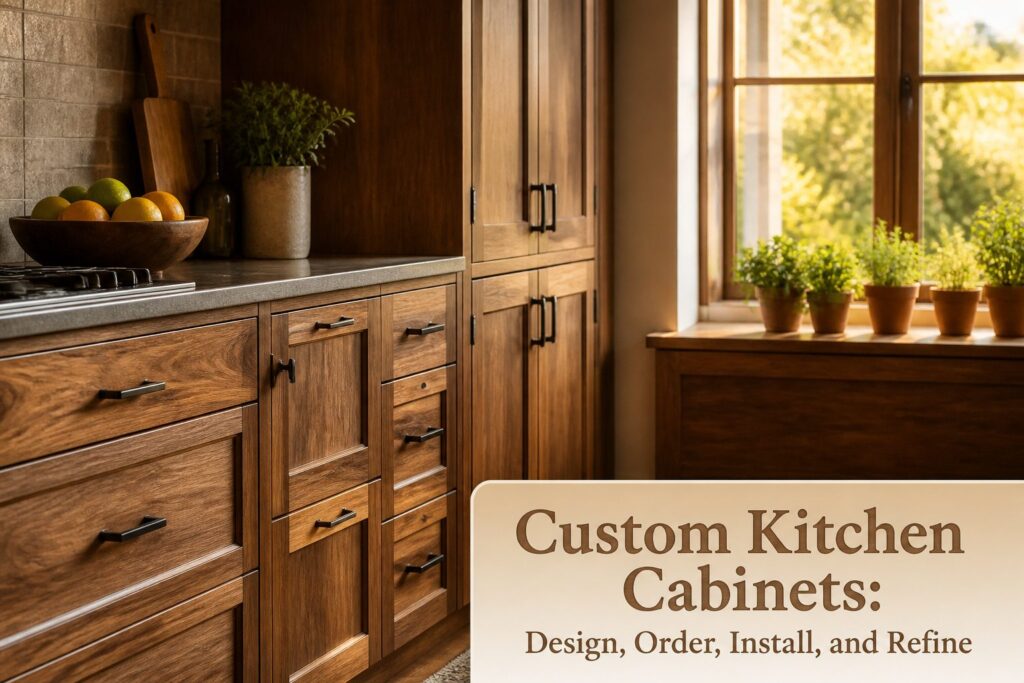
Custom kitchen cabinets are built-to-order storage units sized and finished for a specific kitchen rather than pulled from warehouse stock.
The difference shows in the installation, where custom sizing eliminates the filler strips stock layouts need to span an uneven wall, and in the cost, which runs $500 to $1,200 per linear foot once labor is included.
That price only holds if your measurements are final before the 4–6 week production clock starts; a refrigerator arriving two inches wider than planned will throw off an entire run of drawers and reset your place in line.
Define

The process for ordering custom kitchen cabinets starts with definition, and this stage is where most homeowners either save themselves two weeks or cost themselves two months.
If you are working with new construction or a full gut renovation, submitting construction plans upfront is the single move that prevents the showroom visit from becoming a guessing exercise.
Without them, you are selecting door styles against a blank wall while the designer tries to reverse-engineer your room from memory and a phone photo.
The showroom visit itself is not where you finalize anything.
It is where you handle materials, open drawers, and learn which finishes scuff and which ones merely smudge. I make preliminary selections there based on how the kitchen actually functions, not how it photographs.
A painted finish that looks crisp under showroom LEDs can read chalky in north-facing daylight, and a shaker profile that feels timeless on a small sample can look busy at full wall scale.
Budget and timeline discussions happen in the same sitting, and they should. A common mistake is treating the budget as a ceiling to edge under rather than a tool for ordering decisions.
When I establish project timelines with a cabinet supplier, I want hard dates for shop drawings, not just a delivery window.
The four-step process only works if this first step locks down what you need, what it costs, and when the shop needs your sign-off to stay on schedule.

Complete Cabinet Protection: Protect your kitchen and bathroom cabinets from stains, drips, scratches, and everyday messes. The SIKADEER under sink mat helps keep shelves and floors clean, dry, and easy to maintain for a tidy storage space.

Non-Slip No Edge Warping: We understand the frustrations of slippery, dirty, and wet shelves. That’s why we offer comprehensive protection.Our non-slip and No Edge Warping design ensures stability, while the stain-resistant fabric makes cleaning a breeze

Order

The order stage is where a 50% deposit locks your place in production and the real work of refinement begins.
Your cabinetmaker will collect every appliance specification down to the inch, because a refrigerator that arrives two inches wider than planned will throw off an entire run of drawers.
From there the design gets revised, usually through one or two rounds of layout adjustments, until you are looking at 3D cabinet drawings that show exactly how the finished kitchen will sit in your actual space.
Door samples come next for color and profile approval, and a site visit confirms measurements before anything is cut. Once you sign off on layout, style, and features, the 4–6 week lead time starts.
Once you sign, you are committed. National brands running overseas production often quote 12–16 weeks, so the shorter timeline is one advantage of working with a domestic shop, provided your drawings are truly final.
I would not give that approval until I had walked the room with a tape measure in hand and checked every window casing and baseboard the drawings need to clear.
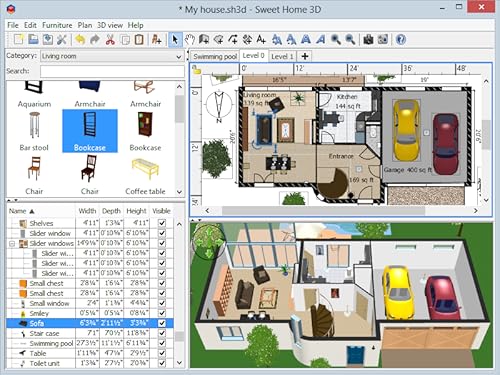
Draw walls and rooms on one or more levels


1. 🎭2×3 Modular Mural Kits: Create 14.5x33" Custom Wall Art These reusable wild flower stencils, Snap 3 interchangeable 14.5x11" stencils into a massive mural for living rooms, kitchens, or bathrooms – or use individually for focused accents (e.g., cabinet doors, garden signs). Designed for DIY Wall Art enthusiasts, each stencil maintains crisp edges even when used separately.
Install

Custom kitchen cabinets usually arrive within a week of the install date you set with the shop.
I schedule delivery for a morning when I can be on site, because the crew needs clear access and decisions about any last-minute adjustments to trim or filler pieces.
Delivery day also typically triggers the second payment, around 40% of the total in most workflows I’ve seen.
Labor runs $70 to $175 per hour depending on whether the work is standard installation or specialized fitting, and that labor accounts for 25% to 40% of the total project cost.
The crew hangs boxes, levels, and anchors, then fits doors and drawers. I watch for consistent reveal lines and soft-close hardware engaging evenly; those details separate professional work from rushed jobs.
Once installation is complete, do a walkthrough with the foreman.
Open every drawer, check alignment under natural and artificial light, and note anything that needs adjustment. That punch list might include a sticky hinge, a touch-up to a corner, or a shelf pin hole that needs plugging.
Most shops allow about a week for cabinets to settle before returning to close out those items and collect final payment.
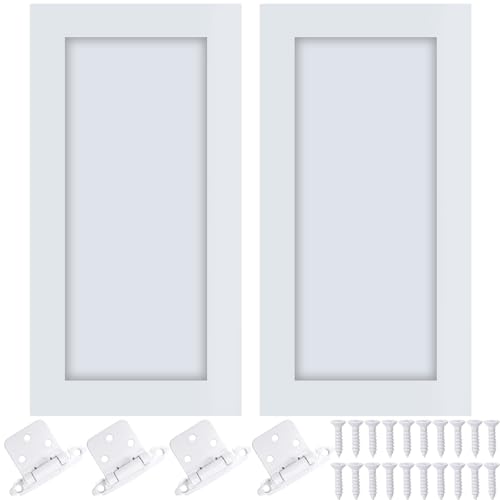
Complete Package: the package includes 2 white pine kitchen cabinet doors and 4 cabinet hinges, providing you with a convenient set for effortless installation; No need to source additional doors, sufficient for your cabinet door replacement upgrades

【Sturdy and Stable】Cabinet door is made of high quality density board material, strong and sturdy, long time to use. Special surface treatment, smooth and full, easy to clean.

Complete Package: the package includes 2 unfinished pine kitchen cabinet doors and 4 cabinet hinges, providing you with a convenient set for effortless installation; No need to source additional doors
Refine

A week of settling time lets the joints, glue, and hardware find their natural resting point before anyone loads a cabinet with plates. I always schedule the final walk-through for day eight or nine, not the morning after install.
The foreman runs through every door, drawer, and shelf with the punch list in hand, and the homeowner marks off only what they have actually touched and tested.
Signing off means the last ten percent payment is due, so the incentive to rush past a sticky drawer or a misaligned pull works against you. Slow down.
Custom cabinets run higher than stock, but the return holds up.
Figure 70 to 80 percent ROI at resale, which stock rarely matches, because buyers notice when a kitchen fits the room instead of fighting it. The money you put in comes back in function now and in offers later.

Click "Customize Now " and follow the steps to create your custom cabinet doors today!

Used Book in Good Condition

【Premium 100% Solid Wood Construction | Outperforms Particleboard, MDF & Veneer Plywood】 Built with genuine high‑grade solid wood, different from low‑end cabinets made of particleboard, MDF, density board or thin veneer plywood. Reinforced metal connection plates strengthen the whole cabinet frame. Excellent moisture‑resistant performance for humid under‑sink environment, effectively avoids warping, swelling and deformation for long‑term kitchen use.
Prime Series

The Prime Series is where I would point anyone who wants real hardwood construction without the markup that usually comes with it.
The box is half-inch birch plywood, the face frame is solid three-quarter-inch lumber assembled with screws, and the drawer boxes are reinforced three-quarter-inch plywood with soft-close guides and hinges included.
Those details matter because they are the parts that take daily abuse, and skimping there is how a budget cabinet fails in year three.
The sizing runs in three-inch increments, which is standard enough that you can plan a layout in an afternoon without fighting odd dimensions. Upper and tall cabinets get two adjustable three-quarter-inch shelves; base cabinets carry a fixed shelf.
The door panel ships as MDF prepped for paint unless you opt for plywood, a choice I would make every time if the budget allows. MDF holds paint fine, but plywood handles moisture and the occasional bump without swelling.
Soft-close hardware at this tier is the feature I would not give up, even if it meant trimming elsewhere. Drawer slides and hinges are the first things a user notices every morning, and cheap ones go sloppy fast.
You give something to get something: the finish choices are limited, not open, and you are stuck with standard sizes instead of asking for a quarter-inch tweak to fit an old house.
For a first kitchen or a rental refresh on a few hundred to a thousand dollars, that is a fair bargain. Spend the savings on layout efficiency and a better sink; the bones here are sound enough to carry it.


CUTE HOME AND OFFICE DECOR: These Inspirational magnets aren’t just for your refrigerator! They have MULTIPLE USES. This fridge magnets set can be used to decorate your kitchen's refrigerator, office whiteboards and classroom lockers. Ideal for holding printer paper, notes, photos, posters and cards on whiteboards, fridge, bulletin boards, magnetic maps, calendars, lockers, file cabinets and other magnetic surfaces.
Signature Series

The Signature series lands where most first-home buyers actually want to be: real custom design and installation without the top-tier markup.
You get more modifications than Prime, which means spice racks, rollout trays, and custom sizes that let you build around the quirks of an older kitchen rather than forcing the room to fit the cabinet.
The construction steps up in ways that matter for daily use. Doors move from standard construction to solid lumber panels, and the face frame is ¾-inch solid lumber assembled with screws rather than staples.
The box itself is ½-inch birch plywood with a natural finish, and shelves are ¾-inch adjustable: two in uppers, five in tall cabinets. Base cabinets include a fixed ¾-inch full-depth shelf.
Hardware is Blum soft-close throughout, including the heavy-duty drawer guides, and drawer boxes are reinforced ¾-inch plywood. These are the details that separate cabinets you tolerate from cabinets you stop noticing because they simply work.
For a weekend-timeline project with a few hundred to a thousand dollars in play, this is the line I would point to. Prime handles the basics; Signature handles the kitchen you actually cook in.

BUILT IN THE USA: GRITLY drawer boxes are proudly manufactured domestically, ensuring quality craftsmanship and reliable construction.

We understand that every space is different, which is why our shelves are custom-cut to your desired dimensions. This ensures a perfect fit and a seamless integration into your interior design

✅ 2 Pack Set! All-in-One Kitchen Measurement Guide - Save Time and Cook with Confidence! Say goodbye to the hassle of searching for measurement conversions while baking or cooking! Our premium vinyl kitchen conversion chart stickers provide an all-in-one solution for quick and easy reference to essential kitchen conversions. Whether you need to convert gallons to quarts, pints to cups, or tablespoons to teaspoons, these baking conversion chart stickers make it effortless.
Craftsman Series
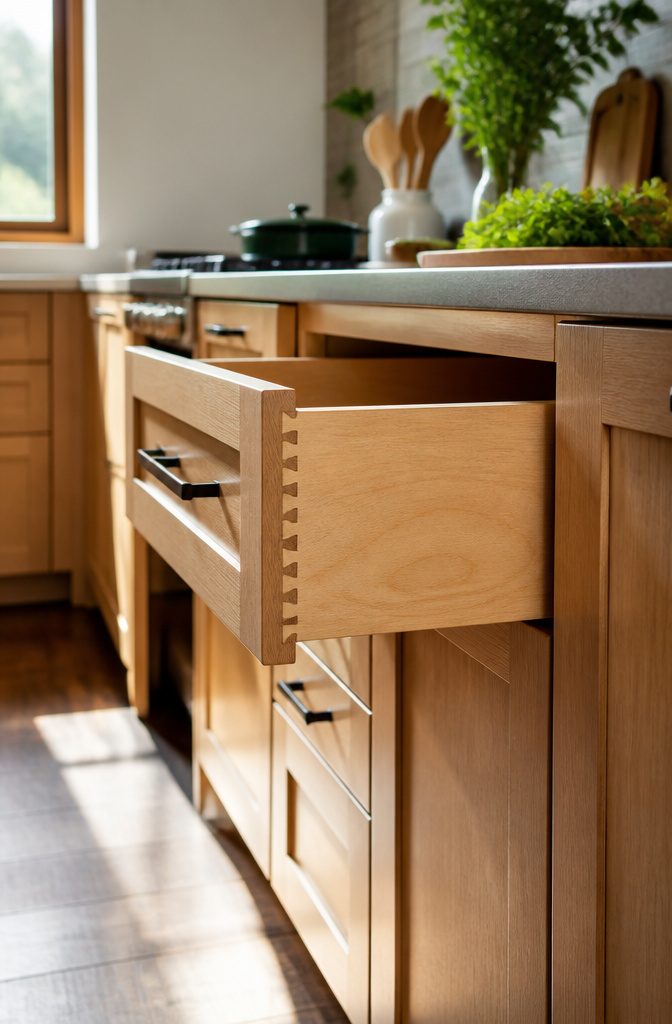
The Craftsman tier is where I start pointing people who open a drawer fifty times a day and are tired of the rattle.
A 5/8-inch solid maple dovetail drawer is the difference. Dovetail means the front and side panels interlock in a fan of angled fingers, front and back, so the joint grips itself even before glue goes in.
A stapled or butt-jointed drawer will work loose over a few years of plates and utensils; a dovetail box stays square because the wood itself locks it together.
This series builds the cabinet box from 1/2-inch birch plywood, which is a step up from the particleboard you find in stock lines that carry a 10–15 year lifespan. The face frame is 3/4-inch solid lumber, screwed rather than stapled.
That assembly matters if you lean on a drawer front while you’re digging out a heavy Dutch oven. The shelves adjust on 3/4-inch pins in uppers, with two shelves standard and five in tall cabinets.
Blum soft-close hinges and heavy-duty soft-close guides come standard, which I think is non-negotiable at this tier. You’re already paying for the box; skimping on the hardware that carries the load would miss the point.


Master Craftsman Series
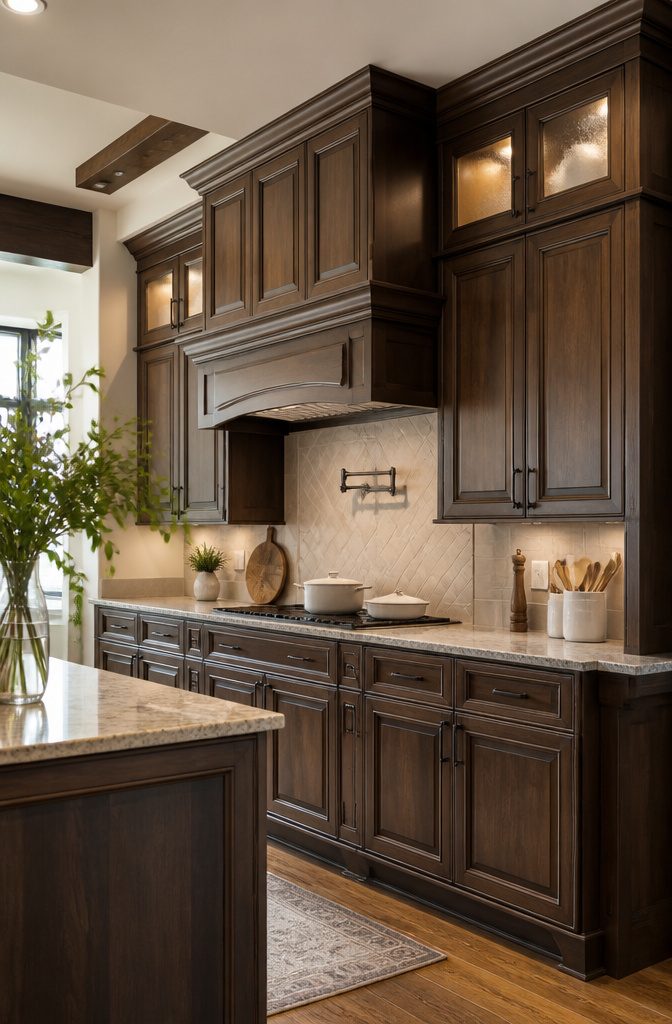
The Master Craftsman line sits at the top of the custom kitchen cabinet stack, and the specs make clear why.
3/4-inch birch plywood boxes, 1-inch solid lumber doors and drawer fronts, and a 5/8-inch solid oak dovetail drawer that the maker calls the "100-year drawer" with its furniture walnut finish.
Blum soft-closing hinges and heavy-duty drawer guides come standard, not upgraded.
This is the tier for homeowners who plan to stay put and want the kitchen to outlast the mortgage. Inset doors, custom profiles, and enough premium modifications to personalize down to the smallest detail.
The solid lumber panel doors and 1-inch face frame, screw-assembled, are built for someone who opens the same drawer twenty years from now and still hears the same soft click.
For most renters and first-home owners, this is money misplaced. The budget that buys a full Master Craftsman run could cover two kitchen refreshes in a lower line, or a bathroom overhaul alongside a mid-tier kitchen.
I would skip it unless this is the forever home and the kitchen is the room where that permanence shows.
The Craftsman series below it, with its 1/2-inch birch plywood boxes and 3/4-inch face frame, handles the same daily load at a lower entry point.
The Master Craftsman upgrade pays off only when the cabinets are the feature you want guests to notice first.

MEASUREMENTS: Measurements are EXACT. This replacement raised panel kitchen cabinet door measures 24-inches Wide, 12-inches high, and 3/4-inches thick

100% Solid Wood: Constructed of high-quality Maple wood, this cabinet door is strong and durable, and the surface is smooth and easy to clean

SAMPLE ONLY: Allows evaluation of color, quality, and style without significant up-front costs.
Ready-to-Assemble Cabinets

RTA cabinets are where I send renters and anyone who needs a working kitchen by Sunday night without a contractor’s bill.
You trade assembly time for labor savings, and the gap can hit 15% or more if you catch winter discounts. The boxes are standard sizes, usually in 3-inch increments, so the fit is never quite as tailored as made-to-order work.
Corners get cut in the hardware and the box itself, half-inch birch plywood instead of three-quarter, and the drawer slides are functional rather than exceptional.
Soft-close hinges and full-extension guides are the upgrades worth buying even here, because they are what you touch every morning.
For a rental or a first home you will sell in five years, RTA is the rational choice. For a kitchen you want to feel built-in, the saved money shows in the proportions and the seams.

Measurements are exact. Please ensure that you measure your existing cabinet doors. Refer to our video above on the proper way to measure cabinet doors

【Premium 100% Solid Wood Construction | Outperforms Particleboard, MDF & Veneer Plywood】 Built with genuine high‑grade solid wood, different from low‑end cabinets made of particleboard, MDF, density board or thin veneer plywood. Reinforced metal connection plates strengthen the whole cabinet frame. Excellent moisture‑resistant performance for humid under‑sink environment, effectively avoids warping, swelling and deformation for long‑term kitchen use.

Choose Your Perfect Look: Available in Raw Maple, Raw Hickory, and Raw Rustic White Oak—each with unique grain and character for a one-of-a-kind finish.
What Custom Costs

Custom kitchen cabinets run $500 to $1,200 per linear foot installed, with most complete kitchens landing between $35,000 and $80,000. The spread is wide because a few variables push the needle hard.
Labor eats 25% to 40% of the total, and specialized work can jump to $175 per hour against a more typical $70 to $100. Material choice matters just as much: high-end hardwoods carry a premium over laminate or MDF that shows up in every box.
To estimate your own linear footage, measure the wall length where cabinets will run, base and upper together, then add island runs if you have them.
A standard 25-foot kitchen sits in the $15,000 to $30,000 range. Where stock layouts need multiple filler strips to span a wall, custom sizing often closes the price gap because you are paying for finished length, not wasted gaps.
The low end of the range usually means simpler door styles, domestic materials, and a straightforward box construction.
The high end comes from complex storage integrations, premium hardwood species, and extensive finish work. I would put my money toward better materials and a clean install over ornate door profiles that read dated in five years.


Used Book in Good Condition
Solid Wood, Plywood, or MDF

Solid wood, plywood, and MDF each carry a different price tag and a different tolerance for kitchen life.
Oak and birch sit at the top of the cost range, and they earn it in one specific way: they handle humidity swings without warping, which matters when your kettle is steaming near the cabinet edge every morning.
The grain also takes stain beautifully, though paint sits on top of it and can telegraph texture through the finish.
Plywood lands in the middle on price and performs like it.
Cross-layered construction gives it strength that particleboard never matches, and it holds screws from hinges and drawer slides better than either alternative. It is not furniture-grade pretty on the face, so it works best when you plan to paint.
MDF is the cheapest of the three and the smoothest under a brush. It has no grain to fight through, so you get that sprayed-factory look with less effort.
Water is the problem. Steam from a dishwasher or a forgotten spill will swell MDF at the edges faster than you would think, and once it bulges, it does not recover.
For a kitchen that sees real use, I would put plywood boxes with solid wood face frames and doors.
You get the humidity resistance where it counts, the paintable surface where it shows, and you are not paying solid wood prices for structure no guest ever sees. MDF I would skip for anything below the countertop line.
Hardware That Lasts
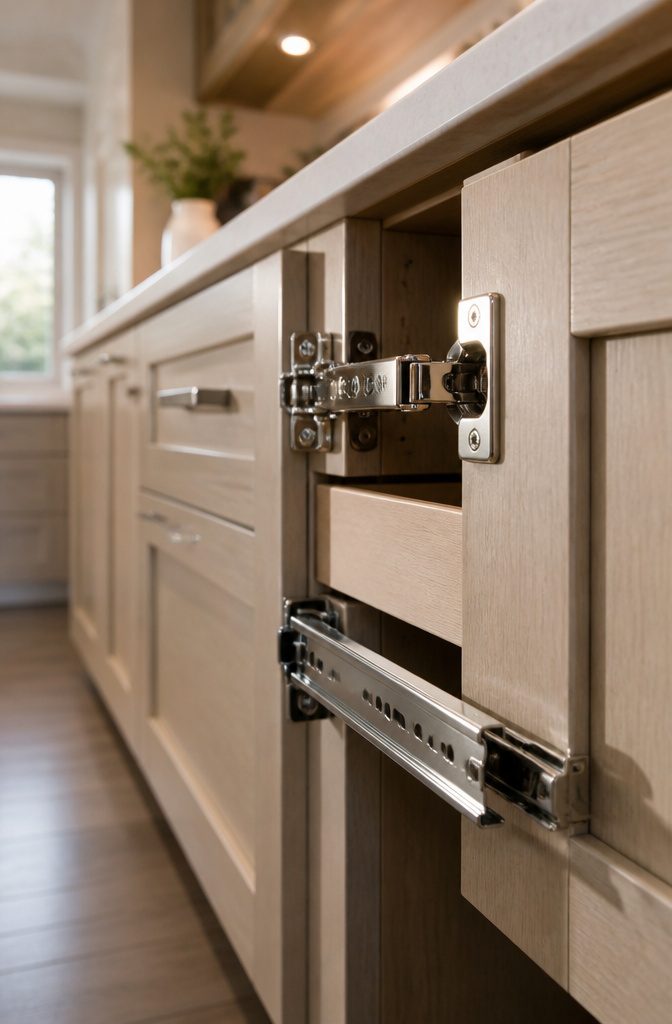
Soft-close hinges are the one hardware upgrade I would never skip, even on a tight budget.
The difference between cabinets that slam and cabinets that glide shut is the difference between a kitchen that feels cheap and one that feels finished.
Blum is the name that keeps coming up from makers who warranty their work, and for good reason: the mechanism lasts through thousands of cycles without going slack.
Drawer slides are the same story. ¾-inch plywood drawer boxes paired with soft-close guides hold up where particleboard and standard runners start to sag in year three.
If I had to cut somewhere, I would drop pull-out spice racks and lazy Susans before I touched the hinge or slide quality.
Those organizers are genuinely useful, but they are add-ons you can retrofit later when the budget loosens. The core hardware is structural; everything else is convenience.
One practical limit: soft-close features add cost upfront, and on a rental refresh or a kitchen you plan to leave inside five years, the payback is questionable.
For a first home you intend to stay in, though, the upgrade pays for itself in daily use.
Cabinet makers often run winter discounts around 15%, which is the window I watch for clients ready to spec the better hardware without paying full freight.
Finishes and What They Demand

Stained finishes let the wood grain show through, which means every scratch and water ring shows up too. In a kitchen that gets scrubbed hard on Saturday morning, that honesty becomes a maintenance burden.
Painted finishes hide the small stuff better because the uniform surface doesn’t telegraph wear the way open grain does. A satin or semi-gloss sheen wipes clean without the streaking you get with matte.
Glazed finishes sit in between. The glaze settles into corners and details, which looks aged and intentional on day one, but that same recess collects grease and requires a soft brush to clean properly.
For someone who attacks the kitchen with a rag and spray cleaner once a week, glazed cabinets add time.
Painted cabinets in a mid-sheen finish win for the hard-cleaning household. What you give up is easy fixes: stain can be blended, but paint either matches or it does not.
I would keep the original paint formula labeled inside a cabinet door. For stained wood, the maintenance is upfront and constant; for glazed, it’s the detailing that slows you down.
Smart Add-Ons and Green Choices
Automated drawer systems in custom kitchen cabinets still feel like a showroom trick more than a kitchen reality. I have looked at the hardware, and the soft-close slides most people already have are reliable.
The motorized versions that open with a hip bump or voice command cost several times more, and in a busy kitchen they add a point of failure I would rather not own.
If you have mobility limitations, they make sense. For most weekend projects, the money belongs elsewhere.
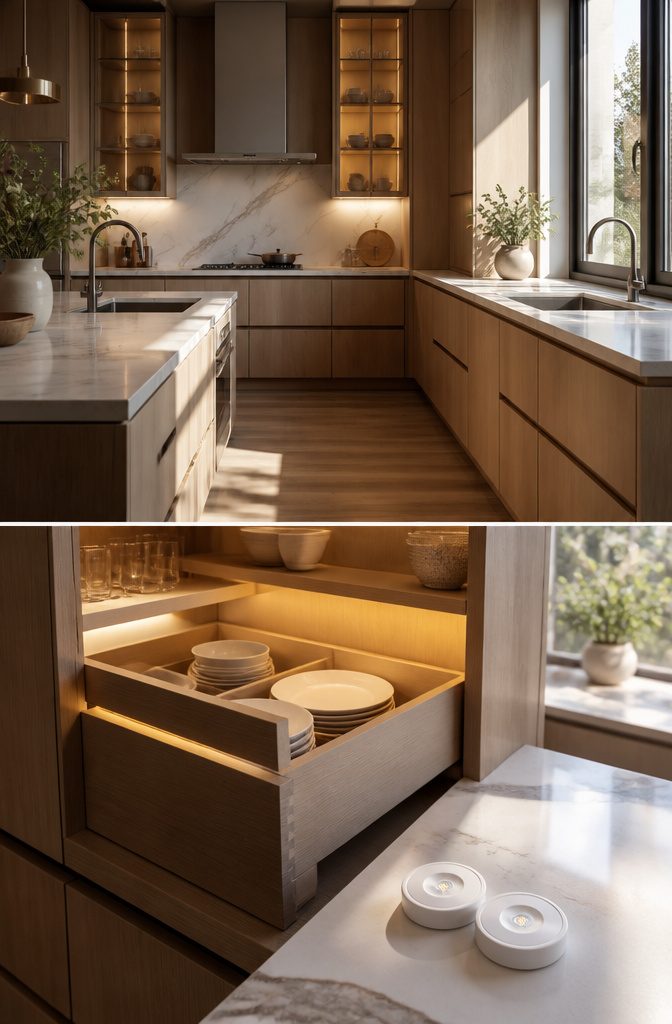
LED lighting strips inside cabinets are a different story. They are inexpensive to add during build, hard to retrofit cleanly later, and the warm 2700K tape I specify turns a dark corner into usable space.
Battery-powered puck lights are the fallback, but replacing batteries in overhead cabinets grows old fast. Hardwired LED tape, installed at the build stage, is the upgrade that actually earns its keep.
On the green side, I have seen cabinet makers advertise FSC-certified plywood and low-VOC finishes, and I think those claims matter if you have chemical sensitivities or young children.
What I have not seen enough of to recommend is solid tracking: a shop that says "sustainable" without naming its certifier or showing chain-of-custody paperwork is selling a feeling, not a fact.
Reclaimed wood can look beautiful in custom work, but supply is unpredictable and the premium runs high.
For most budgets, the honest green choice is simply durable construction that does not land in a landfill in fifteen years. A well-built plywood box with a repairable finish outlasts a trendy "eco" cabinet that warps in a humid summer.
Frequently Asked Questions
How much do custom kitchen cabinets cost?
Custom kitchen cabinets run $500 to $1,200 per linear foot installed, with most complete kitchens landing between $35,000 and $80,000.
Labor accounts for 25% to 40% of the total, and material choice pushes the needle just as hard. A standard 25-foot kitchen sits in the $15,000 to $30,000 range.
How long does it take to get custom cabinets?
Domestic shops typically deliver in 4 to 6 weeks after you sign off on final drawings, while national brands running overseas production often quote 12 to 16 weeks.
The clock starts only when drawings are truly final, so walking the room with a tape measure before approval keeps the timeline honest.
What materials are used in custom cabinets?
Solid wood, plywood, and MDF are the three common choices, each with different price tags and tolerances for kitchen life.
Oak and birch handle humidity swings without warping, plywood holds screws better than particleboard, and MDF gives the smoothest painted finish but swells at the edges when wet.
For a kitchen that sees real use, plywood boxes with solid wood face frames and doors strike the right balance.
What are the benefits of custom kitchen cabinets?
Custom cabinets fit specific dimensions and styles, offering greater functionality and aesthetic appeal than stock options that force filler strips and wasted gaps.
They also return 70 to 80 percent ROI at resale, which stock rarely matches, because buyers notice when a kitchen fits the room instead of fighting it.
Do you offer financing for custom cabinet projects?
Financing options are available for custom cabinet projects, including interest-free periods and fixed monthly payments.
The 50% deposit that locks your place in production and the staged payments around delivery and final walkthrough can be structured through these plans to spread the cost across the build timeline.