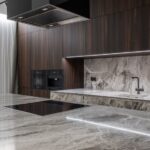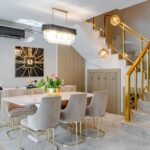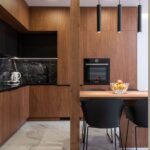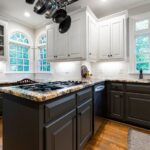
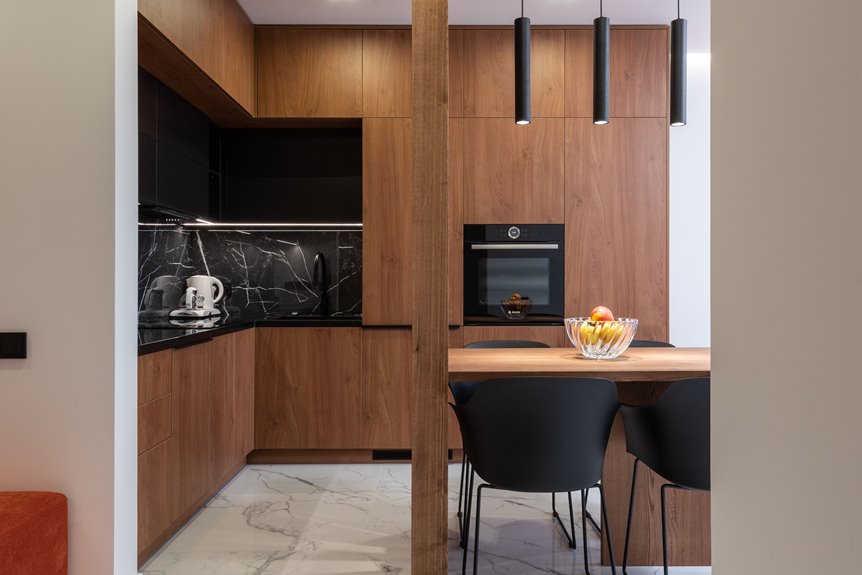
Two-tone kitchens are leading kitchen design in 2027. White uppers with navy or sage green lowers deliver designer appeal without the custom cost. Slim Shaker cabinets maintain classic style while incorporating thinner profiles and integrated pulls for a contemporary feel. Warm woods such as white oak and walnut dominate current preferences, while frameless construction maximizes storage with a seamless, edge-to-edge appearance. Additional trends including hidden charging stations and glass-front displays are covered in the sections below.
Are All-White Kitchens Dated? What Designers Predict for 2027
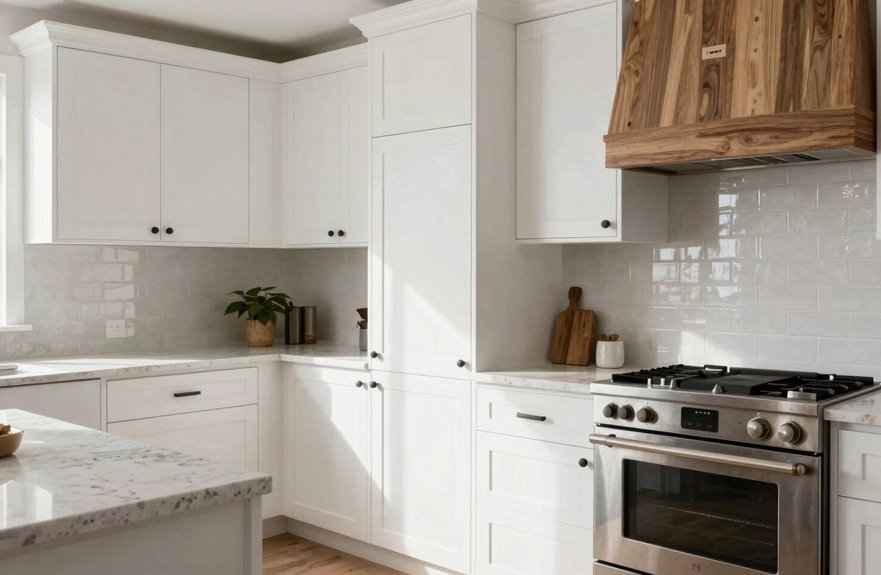
Why does everyone keep asking me if white kitchens are dead? We all want to feel like we’re making the right choice. White cabinets aren’t disappearing in 2027, but they’re definitely sharing the spotlight.
White kitchens aren’t dead in 2027—they’re simply learning to share the spotlight.
Designers are focusing on two-tone configurations. Consider this: crisp white uppers with a deep navy island, or warm oak lowers that ground the whole space. This approach offers both freshness and accessibility.
Warmer finishes are trending widely. Natural wood grains, creamy off-whites, and terracotta accents create a welcoming atmosphere in kitchen spaces.
You can keep your white cabinets and stay current with 2027 design. Layer in some texture, swap your hardware for matte black or brass, and your kitchen reflects intentional design choices rather than dated selections.
Frameless vs. Shaker: Choosing Your 2027 Cabinet Construction
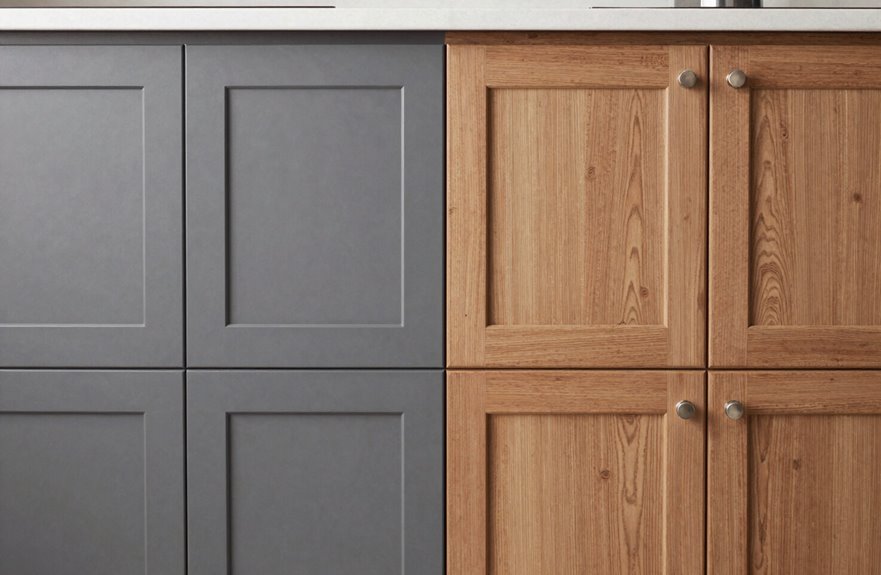
I’ve gotta talk to you about how frameless and Shaker cabinets actually work differently under the hood, because getting this right sets up everything else in your kitchen. Frameless gives you that sleek, flat Euro look with zero frame showing and significantly more drawer space inside. You’re looking at full 3/4-inch thick side panels that accommodate 22-inch pullouts without issue. Shaker is the practical choice when you want that classic recessed panel vibe that works with any hardware style, and you can find it in frameless or framed boxes. This choice fundamentally changes your hinge game and edge profile options. You’re basically choosing between maximum modern sleekness and timeless flexibility. Understanding how to match your construction to your 2027 goals requires weighing these specific structural differences.
Construction Comparison Essentials
Your kitchen’s personality starts with two big construction choices. Frameless cabinets give you that sleek, European vibe with edge-to-edge doors and bigger storage inside, perfect for a modern look. Shaker brings timeless charm with its simple recessed panels, working in any kitchen style.
Key factors when choosing your cabinet style:
- Access vs. Tradition — Frameless opens wide for pots and pans, while Shaker’s frame adds classic aesthetic appeal.
- Hardware Heroes — Frameless requires tougher hinges (such as Blum 110° soft-close), while Shaker accommodates almost any knob or pull.
- Installation Reality — Frameless requires tight tolerances (1/8 inch accuracy), while Shaker tolerates small wall irregularities.
Both construction methods produce durable kitchens built to last.
Style Selection Tips
How do I pick between frameless and Shaker when both look stunning? I consider what aesthetic I want for my space. Frameless gives me that sleek, seamless look with edge-to-edge doors and maximum storage space, perfect for minimalist interiors. Shaker is timeless, versatile, and fits any home style.
Here’s my quick comparison:
| Feature | Frameless | Shaker |
|---|---|---|
| Look | Sleek, European, seamless | Classic, clean, adaptable |
| Storage | Maximum interior space | Standard framed construction |
| Best Pairing | Flat-panel doors | Any finish or color |
| Hinge Type | Hidden, full-access | Traditional overlay or inset |
| 2027 Tip | Add texture to avoid starkness | Go bold with trending colors |
I balance frameless systems with warm hardware for a modern aesthetic with traditional warmth. Both options deliver functional, stylish cabinetry that suits different design preferences.
Slim Shaker Cabinets: How Traditional Styles Are Evolving
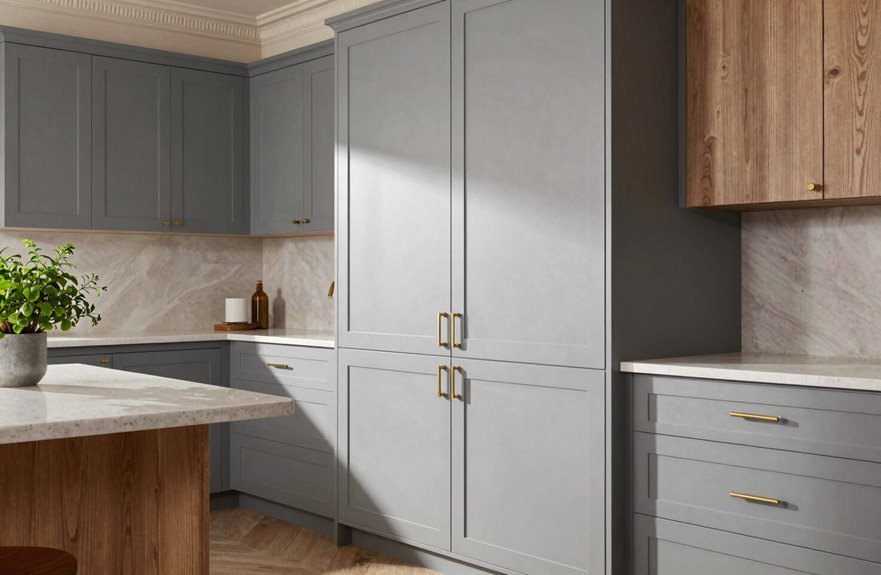
Why choose ordinary cabinetry when Slim Shaker offers a refined alternative? This evolved style successfully combines traditional Shaker elements with contemporary design principles.
What defines this approach:
- Thinner profiles keep that clean Shaker DNA but lose the bulky vibes
- Flatter panels with barely-there detailing nail minimalist goals without going cold
- Smart hardware choices like integrated pulls or slim 3-inch bar handles complete the look
Slim Shaker options are increasingly available, including at CCC Cabinets, and work effectively with two-tone setups and matte finishes. This style functions well in small kitchens and open-plan spaces while maintaining a timeless aesthetic with contemporary appeal.
Warm Wood Cabinet Tones: White Oak, Walnut, and Rift-Cut Finishes
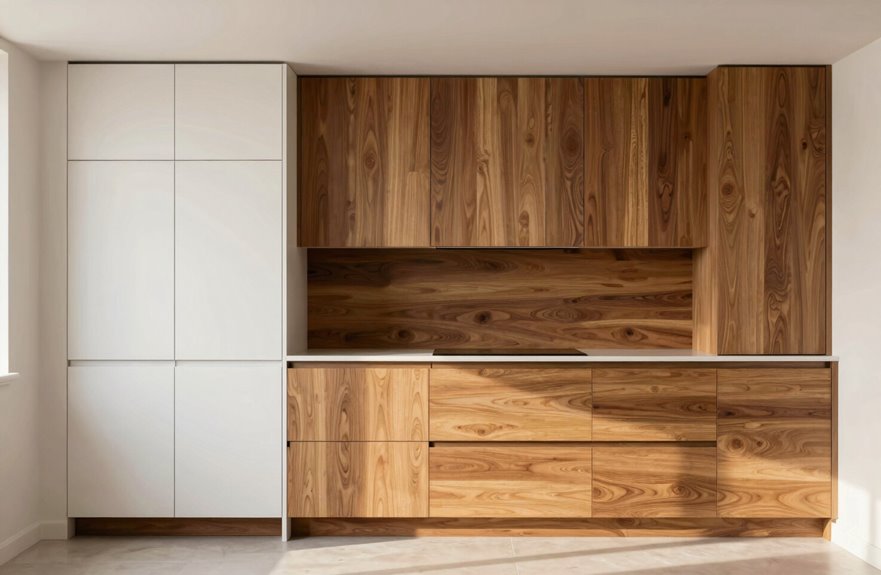
Where do I even start with how much I love this trend. Warm wood cabinet tones are back, and I’m excited about it.
White oak has become my absolute favorite. It’s light but cozy, with that gorgeous linear grain that feels so natural. Walnut brings impressive depth and richness to a kitchen.
Rift-cut finishes are where things get really exciting. They show off the wood’s texture without being too busy, and they connect to that hygge feeling many people want right now.
Oak is making such a comeback, but not your grandma’s orange oak from the 90s. This is understated, elegant, and timeless. These finishes feel authentic and crafted, like you’re building something that will last. They create a space that reflects your personal style.
Two-Tone Kitchen Cabinets: Mixing Colors Without Visual Chaos
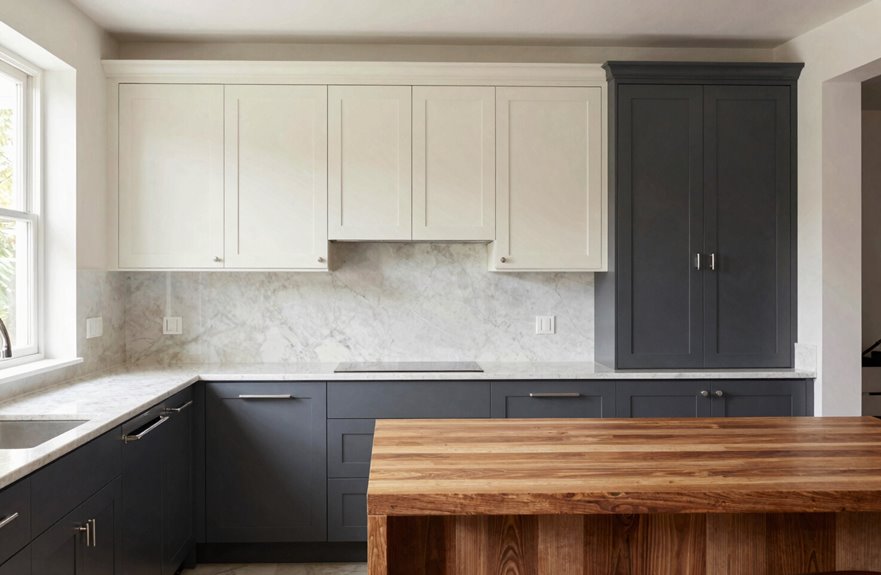
Two-tone kitchens offer a sophisticated approach to kitchen design. This color mixing technique allows for personality expression while maintaining visual balance. Pairing lighter uppers with deeper lowers, such as white cabinets on top and navy or charcoal below, creates depth that feels intentional and refined.
Two-tone designs provide several practical advantages:
- They welcome experimentation. You’re not locked into one bold choice forever.
- They fit every home style. Traditional, modern, or any aesthetic in between.
- They demonstrate design awareness. The contrast showcases intentional color selection.
Two-tone cabinets represent a practical approach to introducing color variation into kitchen design without overwhelming the space.
2027 Cabinet Color Trends: Navy, Sage, and Bold Designer Picks
How do you pick a cabinet color that still feels fresh five years from now? This guide covers what’s actually working in 2027 kitchens.
Navy is the island hero appearing everywhere. Pair it with white perimeter cabinets or warm wood tones for that gorgeous high-contrast two-tone look that feels totally custom. Sage creates soft, nature-inspired greens on lower cabinets or islands that establish calm, balanced spaces conducive to cooking.
Bold designer picks are becoming increasingly popular. Deep blues and forest greens as statement cabinetry anchor your whole room without going overboard. Matte or satin finishes with contrasting hardware add serious depth. Two-tone setups keep everything cohesive while letting these cabinet colors shine. Your kitchen will reflect current design standards.
Drawer-Base Cabinets: Why Deep Drawers Are Replacing Doors
I’m seeing deep drawers take over base cabinets everywhere, and I understand why. You just pull them out and your pots, pans, and lids are right there, with no need to crawl on the floor or dig through dark corners. It’s a significant improvement; the kitchen finally works with your back instead of against it.
Ergonomic Access Advantages
Why are we still crawling into dark cabinets like we’re spelunking for a saucepan? I’ve switched to deep drawers, and my back thanks me every single day.
What changes when you join the drawer revolution:
- You see everything at once — no more lost lids hiding in shadowy corners
- You grab without bending — full-extension slides bring the goods to you
- You move naturally — no awkward twisting or kneeling required
Deep drawers pair beautifully with open shelving, creating that layered, collected look we’re all craving in 2027. CCC Cabinets gets it. Their designs flow between these two elements seamlessly. We’re building kitchens that welcome us, not fight us. Once you experience that smooth glide and instant visibility, you’ll understand why traditional cabinet doors create unnecessary friction in daily use.
Storage Organization Benefits
Where did I put that lid? I’ve asked myself this a thousand times while digging through dark cabinets on my hands and knees. Deep drawers changed everything for me. Now I just pull and see everything at once. No more lost Tupperware or buried skillets.
Drawer organization is about function. I stack my pots in 24-inch deep drawers using simple dividers, and suddenly my kitchen works. My friend Jen added a pull-out trash bin right next to her prep zone. The soft-close slides are practical and reduce wear on cabinet hardware.
Designers consistently recommend the same approach: defined compartments for lids, utensils, and small appliances reduce daily cooking frustration and improve workflow efficiency. Deep drawers eliminate the inefficiency of cabinet doors.
Glass-Front and Open Cabinets: Display Storage for 2027 Kitchens
How exactly do you want your kitchen to feel in 2027? I want mine to feel like me: curated, warm, and totally welcoming. Glass-front and open cabinets deliver this aesthetic.
Mixing glass-front upper cabinets with open shelves breaks up heavy walls and showcases favorite dishes. It’s like creating a gallery in your own home.
Here’s how I made it work:
- I measured my wall space and chose 30-inch glass-front cabinets for the center, flanking them with 24-inch open shelves from IKEA’s ENHET line.
- I kept everyday dishes behind solid doors below, but displayed my grandma’s vintage plates in the glass-front section.
- I added battery-powered puck lights inside the cabinets for ambient lighting.
The result is a kitchen that feels personal rather than perfect. This approach creates a space that reflects who you are and how you actually live.
Smart Cabinets: Charging Stations and App-Controlled Lighting
Glass-front cabinets let you show off your style, but smart cabinets make your life easier through practical functionality. Charging stations are increasingly integrated inside drawers and shelves, eliminating visible cords across your counter.
Here’s what you’re getting with smart cabinets:
| Feature | What It Does |
|---|---|
| USB-C & Wireless Pads | Charges your phone and tablet hidden away |
| App-Controlled LED Lighting | Sets moods and schedules with your phone |
| Voice Control | Works with Alexa or Google for hands-free adjustments |
Manufacturers design these systems with a seamless aesthetic; everything hides behind clean panels. Programming cabinet lights to warm up at 6 PM creates specific ambient conditions in your kitchen. Smart cabinets combine aesthetic appeal with functional technology for everyday use.
Sustainable Cabinet Materials: Reclaimed Wood and Eco-Friendly Options
Reclaimed wood and bamboo are transforming kitchens in 2027. Cabinets made from salvaged barn wood or fast-growing bamboo stalks, harvested at just 3-5 years old, reduce environmental impact while providing warm, one-of-a-kind character. Durability and style remain uncompromised. White oak cabinets feature visible grain patterns and are built to last decades.
Reclaimed Wood Appeal
Why settle for cabinets that look like everyone else’s when you can have something with real soul? Reclaimed wood and eco-friendly cabinetry offer distinctive character and environmental benefits.
Each piece tells its own story through natural textures and unusual grain patterns you just can’t fake. There is real beauty in those irregular slabs.
These cabinets shrink your environmental footprint without sacrificing warmth or style. Plus, authentic finishes actually improve with age, unlike particleboard that warps easily.
What makes this choice special:
- Every cabinet is literally one-of-a-kind. No two kitchens match.
- You’re joining a community that values craftsmanship and environmental stewardship.
- Natural or sealed finishes let you customize without losing that earthy character.
Reclaimed wood cabinetry delivers lasting value and visual distinction your kitchen deserves.
Bamboo Alternatives
Beyond reclaimed wood, bamboo is another eco-friendly option worth considering. This material grows rapidly, so new supplies don’t require the decades needed for tree regrowth. It offers a modern, clean aesthetic without environmental compromise.
When selecting bamboo alternatives for cabinets, solid ¾-inch panels are essential; anything thinner tends to warp. Brands like Plyboo and Teragren offer quality options with low-VOC finishes that maintain indoor air quality. The grain pattern is subtle yet distinctive and complements both warm and cool color schemes.
Combining reclaimed wood accents with bamboo cabinets creates an effective rustic-contemporary design. This pairing appeals to environmentally conscious homeowners seeking both style and sustainability.
Environmental Impact Reduction
The cabinet world is waking up to environmental responsibility. Kitchens that feel good and do good are increasingly achievable through eco-friendly materials.
Reclaimed wood offers distinctive character; every scratch carries history, and you’re literally saving trees. Brands like CCC Cabinets combine customization with sustainable sourcing without sacrificing style.
This movement delivers concrete benefits:
- Reclaimed wood gives your kitchen distinctive character with natural variation across cabinets
- Lower embodied energy reduces environmental impact from factory to installation
- Non-toxic finishes protect your family’s health while reducing planetary harm
Kitchens built with sustainable materials last generations while minimizing environmental cost. This approach represents a meaningful shift in how we design our homes.
Integrated Appliance Cabinets: New Construction Standards
How’s this for a kitchen upgrade that’ll make your jaw drop? Integrated appliances completely vanish into your cabinetry, eliminating the visual disruption of stainless steel surfaces in your kitchen design.
Panel-ready cabinets are now standard in new builds, not luxury add-ons. Your fridge, dishwasher, and microwave all hide behind matching cabinet fronts. Builders are stocking “appliance-ready” modules, usually 24 or 36 inches wide, that fit flush with zero gaps.
To implement this design, specify cabinets pre-cut and reinforced for proper ventilation and service access. The result is a seamless, high-end aesthetic that makes your kitchen feel larger and more sophisticated.
Hidden Cabinet Storage: Pull-Outs, Corners, and Pantry Solutions
Once you’ve got those sleek integrated appliances tucked away, it’s time to tackle the stuff you actually use every day. Storage should work for you, not against you. Hidden storage and pull-outs have significantly improved kitchen functionality for home cooks.
Here’s what you need to know:
- Pull-out trash systems and roll-out shelves bring everything to you without requiring you to crawl into cabinets.
- Corner storage solutions transform those awkward blind spots into usable space for pots and pans.
- Matte finishes on these components resist fingerprints and provide a warm, natural appearance.
CCC Cabinets designs these features to create streamlined workflows and clutter-free surfaces. Multi-tier pull-outs with integrated dividers organize your lids and small appliances while preserving cabinet depth. Your kitchen becomes more functional and personalized.
Mix-and-Match Cabinets: Custom Looks Without Custom Prices
Step into any kitchen showroom and you’ll spot designers pairing completely different cabinets together. This mix-and-match trend offers personalized style without custom pricing.
The approach combines two standard finishes instead of ordering custom pieces. White cabinets paired with navy or charcoal bases create depth and visual interest. A 36-inch flat-front island with contrasting perimeter Shaker cabinets delivers dimensional style. CCC Cabinets offers a modular system that simplifies this mixing process.
Since you’re selecting from stock pieces, delivery typically takes weeks rather than months. Two-tone configurations, contrasting hardware, and layered visual interest are all achievable within standard timelines. This method works for anyone wanting a personalized kitchen without the expense of full customization.