
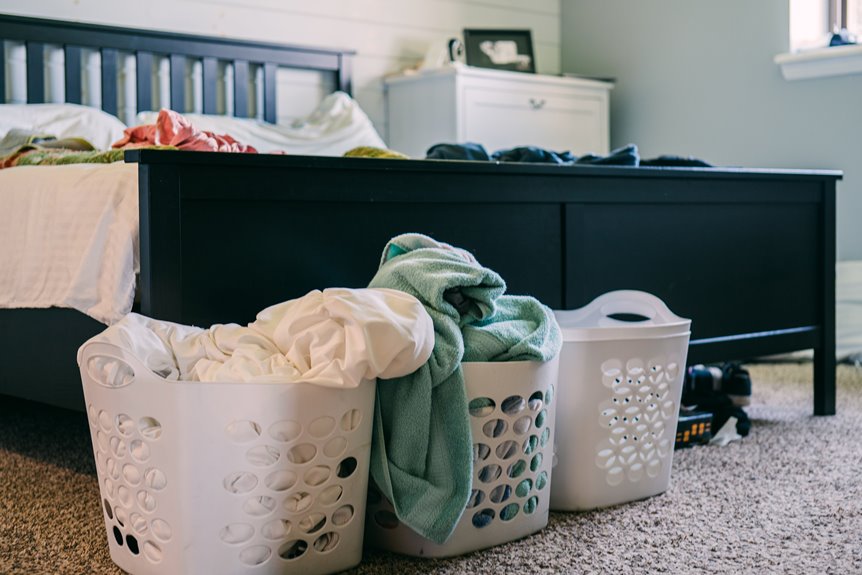
I wash my sheets every single week. Once I learned what’s actually living in there with me, I started setting phone reminders so I’d never forget.
You shed about 1.5 grams of dead skin cells each night, and dust mites thrive on that material. Hot water kills those mites and removes body oils, so I always choose the hottest setting my sheets can handle.
I can show you exactly how I keep things fresh and what changed my routine.
Why Wash Sheets Weekly: The Hidden Dirt Problem
How much do you really know about what’s happening in your bed while you’re snoozing? I used to think my sheets stayed pretty clean, but I was wrong. Every night, I’m shedding about 1.5 grams of dead skin cells. That’s like sprinkling tiny crumbs all over my mattress. And guess who loves those crumbs? Dust mites. These microscopic roommates multiply fast, and they trigger my allergies.
My body also leaves behind sweat and oils, creating this perfect storm of unwanted buildup. Washing weekly isn’t just about freshness; it’s about evicting those dust mites before they multiply further. When I skip a week, I wake up stuffy and itchy. Sleeping in sheets infested with millions of dust mites accelerates allergy symptoms and reduces sleep quality.
How Often to Wash Your Sheets (And When Twice Weekly)
There’s something satisfying about sliding into fresh, clean sheets at the end of a long day. I wash my sheets weekly because that’s what most experts recommend, but biweekly is my absolute maximum. When summer hits or my dog jumps on the bed, I bump it to twice weekly. Heat and pets mean more sweat and allergens everywhere.
Here’s when I wash more often:
- Hot weather rolls in and I’m sweating through the night
- My furry friend decides my bed is their bed
- I’m sick or my allergies are acting up
- I’ve been hiking and track pollen home
Fresh sheets provide a clean sleeping surface that reduces dust mites and allergens.
Choose Hot Water to Kill Mites and Deep Clean
I always crank my washer to hot when I’m tackling my sheets, and you should too. Hot water is your secret weapon for eliminating dust mites and getting that deep-down clean. After someone’s been sick or you’re dealing with potty-training accidents, hot water tackles those nasty germs effectively. It melts away oils, sweat, and all the body buildup that accumulates while you sleep. Got white sheets. Hot water plus a splash of bleach keeps them bright and fresh.
| Hot Water Perks | Why It Matters |
|---|---|
| Kills dust mites | Bye-bye, allergens! |
| Removes body oils | No more greasy buildup |
| Fights germs after illness | Stay healthy together |
| Brightens whites | Fresh hotel vibes |
| Deep cleans fibers | Sleep better tonight |
Hot water washing is the most effective approach for sheet cleaning and bed hygiene.
Pretreat Stains Before You Wash Sheets
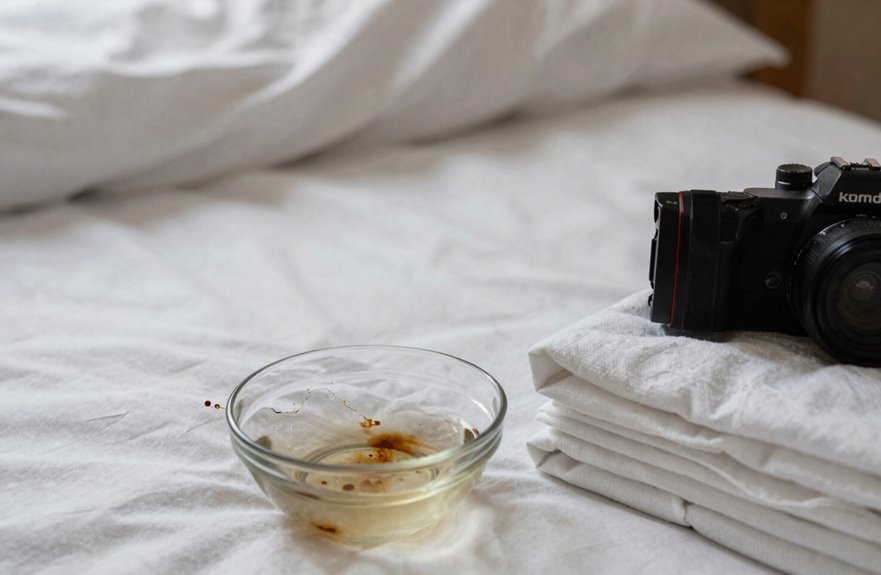
Why let a stubborn spot ruin your whole set of sheets? Pretreating stains before washing sheets saves you from having to replace them.
Here’s my battle plan:
- I grab Zout and saturate the stain, then rub it in good so it really soaks through
- For nasty stuff like blood or wine, I fill my sink with OxiClean and let those sheets soak overnight
- Grease splatters? Dish soap is my secret weapon. Just apply a dab and scrub gently
- Always check stains after washing sheets, because heat sets them permanently if you miss a spot
Taking five minutes to pretreat means your favorite sheets last for years.
Pick White Sheets for Easier Bleach Stain Removal
Sometimes I wonder why I ever bought those pretty patterned sheets, because white sheets have completely changed my laundry routine. I used to panic when benzoyl peroxide left its mark, but now I just grab my Clorox Regular Bleach and proceed.
My system is straightforward: I fill my washer with hot water (about 140°F), add ¾ cup bleach, and let my white sheets soak for 5 minutes before the full cycle. I can see whether the stain has disappeared. Plus, white sheets never fade, so my investment won’t turn muddy gray.
I spot-treat with a bleach pen first (Shout Ultra Gel works too), then wash. When I tested sheet sets for my blog, I kept coming back to white. They provide a fresh start with every single wash.
Skip Fabric Softener to Avoid Residue Buildup
I used to pour liquid Downy into every load until I noticed my cotton sheets felt almost waxy and weren’t soaking up sweat like they should. Fabric softeners leave behind a coating that builds up with each wash, trapping oils and actually making your bedding less breathable over time. Skipping the Snuggle keeps your sheets fresher longer. If you’re looking for that “clean laundry” smell without the residue, there are effective alternatives available.
Fabric Softener Risks
How often do you reach for that bottle of Downy or Snuggle without thinking twice? I used to do it every single load. Fabric softeners aren’t as beneficial as they seem.
That “fresh” residue sticks to your sheets and transfers right onto your skin while you sleep. This buildup can wreck your bedding’s superpowers.
Here’s what I’ve discovered about skipping the softener:
- Your skin stays happier without mystery chemicals rubbing against it all night
- Moisture-wicking sheets actually work instead of getting clogged up
- Your washing machine runs more efficiently
- Stains come out easier when detergent isn’t fighting through gunk
For babies or sensitive folks, skip it entirely. Clean sheets feel amazing on their own.
Residue Prevention Tips
Out of all the laundry mistakes I’ve made, relying on fabric softener was one of the sneakiest. I thought I was making my sheets cozy, but I was actually creating residue buildup that irritated my skin and ruined my favorite set.
What I learned works better:
| Instead of This | Try This Instead |
|---|---|
| Liquid fabric softener | ½ cup white vinegar in the rinse cycle |
| Dryer sheets | Wool dryer balls (3-4 per load) |
| Scented boosters | 10 drops lavender oil on the balls |
I wash with mild detergent like Tide Free & Gentle, rinse thoroughly, then dry on low heat or outside on the line. My sheets breathe better now, and there’s zero gunky residue buildup transferring to my skin at night. You will notice the difference immediately.
Dry Low to Extend Your Clean Sheets’ Life
I always dry my sheets on low heat for about 45 minutes, and it’s made such a difference. High heat might feel faster, but it breaks down fibers, fades colors, and leaves everything stiff and scratchy. Pull them out when they’re still a tiny bit damp, and you’ll get softer sheets that last way longer without weird wrinkles.
Heat Damage Prevention
The secret to sheets that feel brand-new for years isn’t fancy detergent; it’s all about how you dry them. Blasting bedding on high heat feels faster, but it actually damages the fibers and speeds up deterioration. Switching to 45 minutes on low preserves sheets significantly longer.
Here’s what the laundry routine looks like:
- I toss in ¼ cup white vinegar with new sheets to zap those weird factory finishes
- I skip the dryer sheets because residue buildup is not ideal
- I air-dry when I can, saving energy AND my fabric
- I stick with low heat cycles even when in a rush
Once you switch to low-heat drying, the difference in sheet longevity becomes clear.
Fabric Longevity Tips
Why let your favorite sheets fall apart when a simple switch keeps them cozy for years. I dry my sheets on LOW heat for 45 minutes instead of blasting them, and the difference is significant. High heat damages the fibers, but low and slow keeps them soft and strong.
I skip the fabric softener too. It leaves gunk behind that makes sheets less breathable. I only use hot water when I’m fighting dust mites or sickness. Otherwise cold or warm water keeps fibers happy.
Got a coffee spill. I pre-treat stains right away so I don’t wash the same set twice. I rotate between three sheet sets. Less washing means longer life, and your bedding will last noticeably longer.
Optimal Drying Methods
You’ve washed your sheets just right, and now it’s time to dry them without turning them into scratchy sandpaper. Dry sheets on low heat for about 45 minutes. High heat breaks down fibers over time, despite seeming faster. Air drying works too if you have the space.
What keeps bedding in good condition:
- Set your dryer to low heat only. Your sheets will retain extra softness.
- Pull them out right when they’re done to skip wrinkles and avoid ironing.
- Skip heavy fabric softener. It leaves residue that blocks airflow.
- Make sure they’re completely dry before making the bed to prevent mildew growth.
Gentle drying extends the life of your sheets and maintains their softness for many nights of comfortable sleep.
Make Your Bed Later to Cut Moisture and Mold Risk
I used to jump out of bed and yank up the covers immediately, like some kind of morning drill sergeant, but then I learned a weird trick that actually helps my sheets stay fresher. Now I wait 30 minutes before making my bed, and the difference is noticeable.
Here’s why it works: we sweat at night, and that moisture gets trapped under the covers along with dead skin cells. When I make my bed right away, I’m basically sealing in that dampness. This creates ideal conditions for mold and funky smells.
Instead, I pull back my comforter and let everything air out while I brush my teeth and make coffee. In summer or after a tough workout, I might wait a full hour. My bedroom feels drier, my sheets smell better, and I’m not inviting gross fungi to grow in my bedding.