The ideas below run from solar caps you can press into the ground to a full low-voltage rail system that needs a transformer and a cable plan, so the right choice depends on whether you own the deck or answer to a landlord.
I would start with that question every time, because it eliminates half the list before you compare lumen counts or color temperatures.
For built-in bench lighting, 2700K LED tape only makes sense if you are free to rout a shadow gap and hardwire a dimmer; a renter on a weekend timeline gets a better return from a weighted pole and damp-rated globe bulbs overhead.
1. Solar Lights

Solar lights charge through the day and switch on after dark without wiring, which makes them the easiest starting point for renters or anyone who wants light this weekend.
Small black fixtures like these mount flat against a railing cap, so check that your ledge width matches the base before ordering. I would space them for even coverage; too close looks cluttered, too far leaves gaps.
The output is the weakness. Warm as the glow looks, it is enough for ambiance and edge visibility, not for reading or cooking.

【WARM LED LIGHT】Warm white deck light, just the right amount of warm glow which is safer for the whole family to go downstairs at night

Warm White & Bright Lighting: The solar deck lights feature a 3000K warm white glow with 40 lumens for clear and comfortable lighting. They create a warm and inviting atmosphere for pathways, railings, walls, gardens, and balconies. These fence lights solar powered options are ideal deck solar lights for reliable outdoor use.
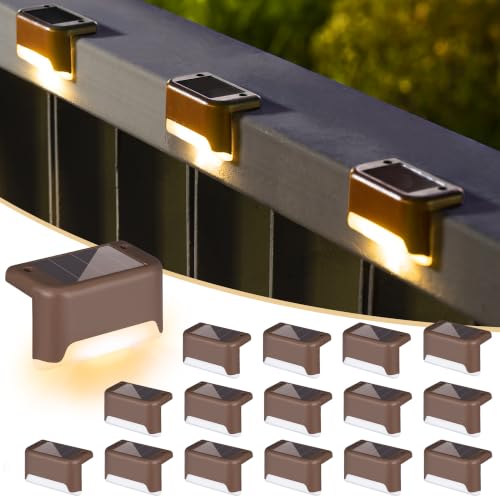
【Warm Light without Dazzling】This deck light features a 𝐁𝐫𝐨𝐰𝐧 𝐬𝐡𝐞𝐥𝐥 and warm white LED, decorate and illuminate your fence, deck, stairs, patio, balcony, yard, or garden. It ensures safer nighttime navigation for the whole family when going downstairs
2. String Lights

A freestanding pole with a weighted base lets you run string lights where there is nothing to hang them from, which solves the most common problem on open decks.
Globe bulbs at this spacing read relaxed rather than carnival. I would buy LED filaments rated for damp locations, and I would skip short strands for a space this size; they look skimpy stretched overhead.
The pole needs serious ballast, sand or water in the base, or a gust will take the whole scene sideways.

Deck Install: Wall mounting straps is sturdy enough to secure deck light poles to your fence or deck posts for creating an enchanting outdoor atmosphere that can manage to hold up lights through rain and wind.

Unique Easy Open and Close Design: the part for fixing the lights is a fully enclosed circle that's easy to open; Once the lights are secured, close the ring to keep them firmly in place; It's so stable that you won't have to worry about your string lights falling, even in strong winds and heavy rain; (note: suitable for decks with a width not exceeding 3 inches)
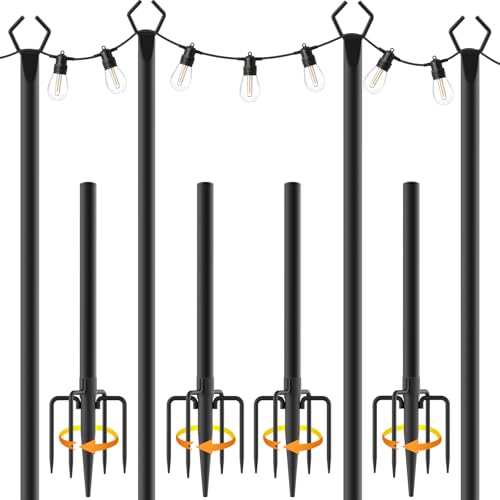
No height restrictions:Made of high quality metal, it will not bend or wobble. The poles for string lights is not limited by its own length, and the excellent load-bearing properties allow you to install it on high fences and walls. Get rid of the general height limitation. You can also hang more number of strings of lights. Also can be applied to banners, lanterns, wind chimes, all kinds of light decoration, etc.
3. Deck Accent Lighting

Built-in LED strip lighting turns the underside of a bench or platform into a floating plane of warm light, which is the cleanest way to make a deck feel finished after sunset.
Strips tucked into the shadow gap between seat and frame hide the source so you see only the glow on the decking below.
I would use 2700K tape for this warmth, and I would add a dimmer even though it costs extra, full brightness on a covered patio this intimate reads harsh.
The strip needs a channel or at minimum a recess deep enough that you cannot spot individual diodes when seated.

★【𝐁𝐫𝐢𝐠𝐡𝐭 𝐔𝐧𝐝𝐞𝐫 𝐂𝐚𝐛𝐢𝐧𝐞𝐭 𝐋𝐢𝐠𝐡𝐭𝐢𝐧𝐠 𝐁𝐚𝐫𝐬】The whole set of cabinet light is 903lumens(Pack of 3 pieces) , soft white daylight 2700K, can illuminate any vignette-ting angle, No glare, no LED dots, no flicker; It is the perfect lighting for kitchen counter cabinet, closet, sink, bookcase, TV cabinet, shelf and so on.

DIY cabinet strip lights:Great way to upgrade your Cabinets,Closet,Desk,Desk-hutch,Bookshelf,Wardrobe,Bedroom,Workbench,kitchen island etc

REQUIRES 24V DC POWER SUPPLY — Designed for 24V DC systems only. Not compatible with 12V power supplies. Power supply, dimmer, controller are not included. Ideal for under cabinet lighting, shelving, cove lighting, architectural accents, and professional low-voltage lighting applications.
4. Low Voltage Deck Lights
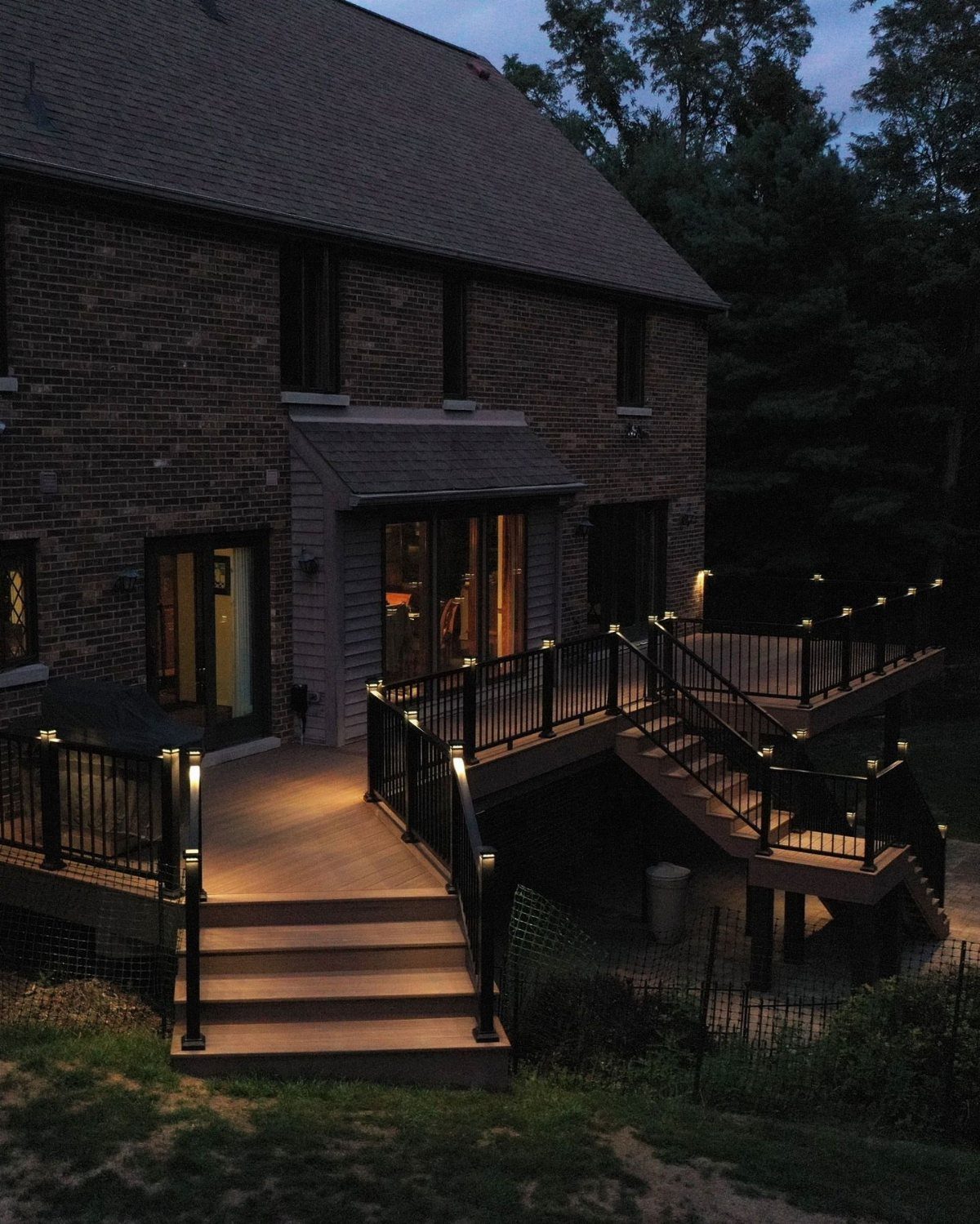
Low voltage fixtures on railing posts draw power from a transformer stepped down from standard household current, so you can run the cable yourself without an electrician in most jurisdictions.
Black metal posts with lights integrated at cap height keep the glow above the deck surface and out of your eyes when seated.
I would budget for a transformer with headroom even if your first run is small; expansion is cheaper when the hub already has capacity.
The weakness is planning. You need a route from outlet to first post that does not cross active traffic.

【Waterproof & Shatterproof, Safe For Use】With fully sealed and waterproof design socket, The outdoor string lights can stay under the sun, rain, even in the worst weather conditions. Unlike other string lights that made by glass which easy to crack and heavy, the bulbs of our 25ft G40 outdoor backyard lights are made by plastic. It won’t be easily broken while dropping down or blow away by the wind, much safer for using, keep you away from dangerous shards

【 100ft LED Connectable String Lights 】- This outdoor light comes with 100+2 G40 LED bulbs. Each bulb is 2 feet apart for a total length of 100 feet. It supports an end-to-end connection of up to 7 strings, allowing you to customize the length you need. With the size of 1*1*2 ft, these lightweight and convenient patio lights are easy to carry and store

【Versatile Lighting Options】The G40 outdoor lights feature 16 single-color and 8 multi-color settings, offering a total of 128 automatic cycling modes and 8 manual lighting modes. Perfect for creating the ideal ambiance for any outdoor occasion.
5. Step Lights

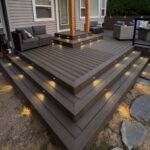
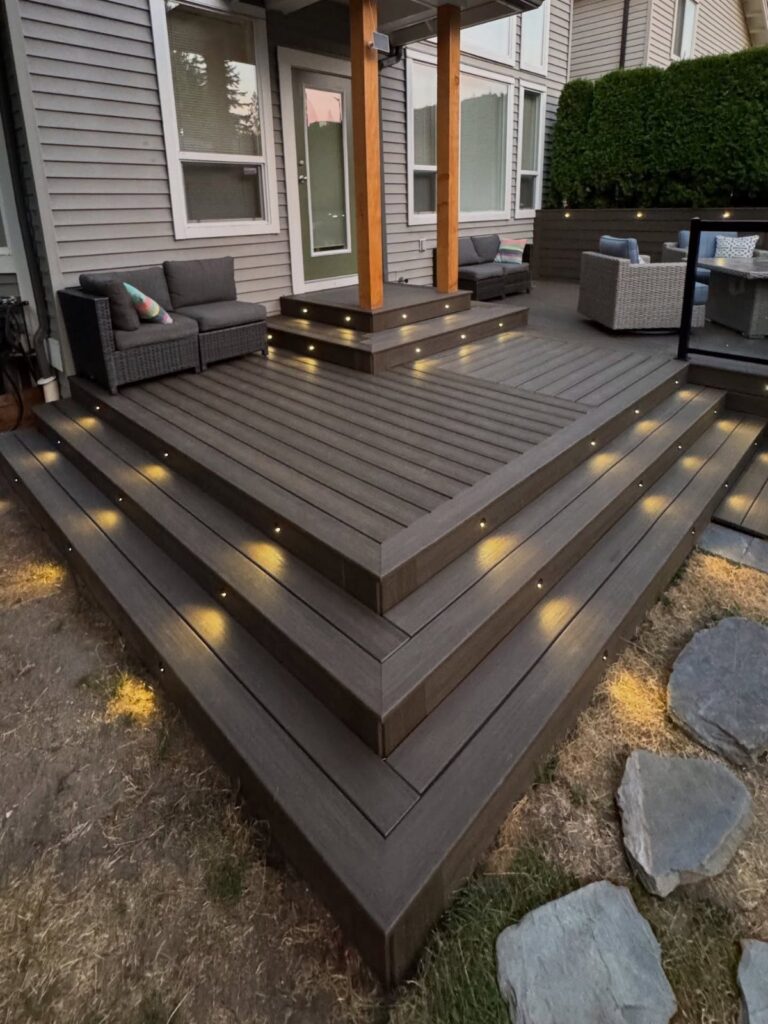
Recessed step lights mount flush into the riser face, which keeps the walking surface clear and marks each tread without glare.
Small squares set above the step nose, high enough to wash the tread below, low enough that the fixture itself does not catch a toe.
I would wire these to the same switch as any overhead deck lighting, not to a motion sensor, consistent light is safer when you are carrying a tray.
The cutout has to be precise, a gap around the housing lets moisture in and looks sloppy.

Complete Accessories, All-in-One Kit: Each set of low voltage deck lights includes 1 x 24W transformer, 1 x screw, 1 x wall anchor, 1 x instruction manual, 1 x nut, 8 x 2.5W LED deck lights, and 1 x extension cable. Everything you need is included for a quick and easy installation to create a cohesive and well-lit outdoor space

【Complete 24V Plug-in Deck Step Lights Kit】Includes 6 × 2.5W LED deck step lights, a 24W plug-in transformer with dusk-to-dawn timer and photocell sensor, mounting hardware, user manual, and 1 × 39.3 in extension cable. Each light has dual 39.3 in pre-wired cables with waterproof connectors for light-to-light connection. Ideal for deck stairs, outdoor steps, railings, fences, patio edges, and walkways.

All-In-One Recessed Deck Lights Kit: HIBOITE deck lights Kit contains: 0.6W deck light *20, 15W low voltage transformer *1 and 86FT cable. HIBOITEC low voltage deck lighting kit contains everything you need. One product manual is included. No need to buy additional accessories. Our low voltage deck lights set are the ultimate solution for enhancing your outdoor living space
6. Deck Lanterns

Glass lanterns with rope handles move where you need them, which matters on a deck where the party shifts from dining to lounging as the night goes on.
3 lanterns sitting on gravel, not the deck boards, is a smart placement that keeps wax drips and heat off the wood and reduces tipping on uneven planks.
I would use battery-operated LED candles inside; the real thing is romantic briefly and then someone is relighting it. The rope is decorative, not structural, lift from the base when you move them.

𝐍𝐞𝐰 𝐃𝐞𝐬𝐢𝐠𝐧: The solar fence lights boast an exquisite and revitalized design that radiates cozy charm. Complemented by warm white lighting that's gentle on the eyes, it effortlessly enhances various environments while creating an inviting, warm ambiance

Small and Bright:Create staircase safety with IP44 solar step lights that emit a 3000K warm white glow, perfectly illuminating pool decks, garden pathways, and wooden patio stairs. The low-profile design (3”L x 2.2”W) casts glare-free lighting to enhance outdoor aesthetics without light pollution. Ideal for vinyl railing or wooden step edges.

Warm White & Bright Lighting: The solar deck lights feature a 3000K warm white glow with 40 lumens for clear and comfortable lighting. They create a warm and inviting atmosphere for pathways, railings, walls, gardens, and balconies. These fence lights solar powered options are ideal deck solar lights for reliable outdoor use.
7. Color-Changing Lights

Wall-mounted fixtures with RGB diodes let you wash a wall or ceiling plane in whatever tone fits the evening, which is useful when one deck serves dinner parties and quiet nights equally.
Most units run through an app, so check whether your Wi-Fi reaches the fixture location before mounting.
The novelty wears thin fast, and the hardware costs more than fixed-white equivalents. I would buy one fixture to test the effect before committing to a full run.

Material: Stainless steel 304(black finished), this material is durable and anti-rusty

PREMIUM CONSTRUCTION: Our string light poles are made of top - grade galvanized steel, ensuring outstanding durability. This material can withstand the test of time and various weather conditions. Its remarkable rust - resistant properties mean that, whether installed on a humid lakeside or in an area with extreme weather, the poles will remain intact and rust - free for a long time.

Anchor Based Light Poles: There is a heavy-duty flat bottom attachment that secures to a deck with anchor bolts, nuts, and washers, which is strong enough for mounting to concrete or other hard surfaces.
8. Railing and Post Accent Lights

Integrated lights built into white composite railing, at post cap and baseboard both, give a deck its outline after dark without any fixture visible from the seating area.
The glow runs low and warm, which keeps the light out of your eyes and marks the deck edge for safety.
I would check that the rail system you are considering offers the lighting as a factory option; retro-fitting a standard post cap is possible but the parts never line up cleanly.
Composite railings with built-in channels cost more upfront than wood, and the color choice is fixed. I would go with white or light gray only; darker railings swallow the light and read as broken when a diode fails.

Super-Bright Illumination:Our Under Cabinet Strip Lighting Plug in emits intense light, effectively brightening up your workspace. With its high - luminosity LEDs, it provides excellent visibility, whether you're cooking in the kitchen, working on a DIY project in the garage, or reading in the study. Say goodbye to dimly lit areas

FOR CUSTOM INSTALLS (STRIP ONLY): Includes one 16.4ft (5-meter) reel of LED light strip, designed for professional and custom installations. This component-only option allows you to integrate the strip with your own preferred power supply, dimmers, and control systems. Note: A power source is required for operation and is sold separately. For a plug-and-play package, please select our "Kit" option

DIY Design: 8 pcs 20inches light strips(L:20in, W: 0.3in), 4 pcs 5.9inches connectors and 4 pcs 2.8inches connectors available, many kinds of connection options. 8 pcs connectors are designed to bend and fold around corners and they can freely combine to cross different gaps.
Choosing the Right Lighting
Start with how you actually use the deck after dark.
Dinner parties need dimmable, warm light around the table; a reading nook needs more output than solar or string fixtures usually deliver. Match the intensity to the activity, not the other way around.
Size shapes the decision more than people expect. A 200-square-foot deck can run on battery and solar; anything larger and the cost of enough wireless fixtures to cover it evenly starts to approach a low-voltage wired system that performs better.
Wired versus wireless is the fork in the road. Wired low-voltage gives consistent brightness and takes expansion, but you need an outlet, a transformer location, and a cable route that avoids traffic.
Wireless trades performance for flexibility. Renters should weigh that hard.

2 PACK, 25 feet long string with 25 clear G40 Bulbs, end to end connectable. Light bulbs have candelabra (E12) socket base, UL listed

100 FT 50 Sockets Outdoor String Lights: Our 100 Feet G40 globe bulb string lights contains 53 durable clear bulbs(3 spare), providing a warm and inviting ambiance for your patio, garden or backyard. With shatterproof plastic bulbs, safer than glass bulbs, less breakage during installation and no fear of shattering if dropped on the ground, our bulbs are totally sturdy! These outdoor patio lights are not only practical but also add a touch of elegance to any outdoor parties or events

G50 Outside String Light: Battery operated globe string lights total length 7ft with 10 ultra-bright Led white Edison bulbs, 11in lead and 7in spacing between lights. Fairy string lights powered from 3 AA batteries(not included), giving off a soft warm white light, romantic lighting atmosphere will make you feel relaxed and happy.
Installation Tips
Draw the plan before touching a fixture.
Mark where people walk, where they sit, where steps change level. Light should follow those paths, not fight them.
Every connection in a wired system needs waterproofing rated for outdoor use. Heat-shrink tubing and dielectric grease are standard; skipping either is where installs fail in year two.
Turn the breaker off, use insulated tools, and check local code. Some jurisdictions require an electrician for anything past the transformer.
Test from a seated position for rail and post lights; if the source is visible, move it.
Fixtures must carry an outdoor rating, not just look rugged.
IP65 or wet-location listed is the minimum for exposed mounting. After install, walk the deck after full dark and adjust angles before the adhesive sets or the screws tighten for good.

【Dusk to Dawn Auto On/Off – No Daily Switching】Built-in photocell sensor turns your fence lighting on at dusk and off at dawn automatically. Set the auto-off timer from 2 to 12 hours. Ideal for deck stair lights and deck step lights — never come home to a dark yard.

【All-In-One Deck Lights Kit】Includes 8 x 2.5W smart deck lights, 1x 24W transformer, 1 x extension cable, 1 x nut, 1 x screw, 1 x wall anchor, and 1 x instruction manual. This complete IP67 waterproof low voltage landscape lighting kit delivers soft, flicker-free warm light to enhance outdoor spaces without additional accessories

All-In-One Deck Lights Kit: HIBOITE deck lights Kit contains: 0.8W deck light *10, 15W low voltage transformer *1 and 58.4FT cable. HIBOITEC low voltage deck lighting kit contains everything you need. One product manual is included. No need to buy additional accessories. Recessed deck lights set are the ultimate solution for enhancing your outdoor living space.
Benefits of Deck Lighting
A lit deck gets used.
Unlit decks empty out at dusk; add even modest light and the same space holds dinner, conversation, or a quiet hour outside. The extension of usable hours is the return that justifies the project.
Safety is the practical half. Steps, level changes, and uneven planks are hazards only when you cannot see them.
Consistent light on treads and edges prevents the stumble that happens in pooled shadow. For security, lit spaces are occupied spaces; a deck with visible light reads as active from the street.
Aesthetically, the deck joins the house after dark instead of floating as a dark shape beyond the windows. Warm light against wood grain or composite texture gives the outdoor area the same finished feel as an interior room.
I don’t add deck lighting for drama; I add it so the outside feels like part of the same house as the inside.
Frequently Asked Questions
What is considered accent lighting?
Accent lighting is light that highlights specific features or areas rather than flooding a whole space.
On a deck, that means strips tucked under a bench to make it float, step lights that mark each tread, or post caps that trace the railing line.
The source stays hidden so you notice only the effect on the surface below.
How do you hang outdoor string lights on a deck?
I use stainless steel cable clips for wood posts, masonry brackets for stone or brick, and a weighted galvanized pole anywhere the run needs an anchor but the architecture doesn’t give me one.
I would fill the base with sand or water; a gust will topple anything light. For damp-rated LED strands, I look for 2,700K filaments and at least 24 feet between anchor points; anything shorter sags or looks skimpy overhead.
What are common mistakes installing deck lights?
The big ones are skipping waterproof connections, placing fixtures where the source glares into seated eyes, and not drawing the traffic pattern before mounting.
I sit in the chairs myself to check glare from rail fixtures, then walk the full perimeter with the deck lights off and only the new ones on.
Moving a housing 2 inches before final mounting beats living with a hot spot for years.