
The non toxic kitchen essentials below cover everything from cookware that touches heat to containers that store food and utensils that only stir it, and the one that belongs in your drawer first depends on what job you are trying to replace.
I start most clients with ceramic-coated pans and glass containers because they handle daily cooking without the weight or maintenance that heavier pieces demand.
1. Ceramic-Coated Cookware

Ceramic-coated cookware gives you a slick cooking surface without the PTFE and PFOA concerns that come with traditional nonstick.
I look for sets where the ceramic layer is thick enough to last, because thin coatings chip and lose their release within a year or two of regular use.
Gold handles are a style choice that reads mid-range; I would pick them if the coating underneath is actually ceramic and not just colored nonstick.
Before buying, I would check whether the coating is pure ceramic or a ceramic-reinforced PTFE hybrid.
Some brands blur that line. I would also confirm the cookware works on my stove type; not every ceramic-coated pan handles induction well.

Healthy Ceramic Cookware Set - Upgraded Swiss Granite Ceramic non-stick surface, safe and non toxic, free of PFOA, PTFE, PFAS, PFOS, lead, cadmium and other toxic substances that can leach into food.

12” FRYING PAN: Perfect for slide-off-the-pan eggs, sauteing veggies, flipping pancakes and more. This durable non-stick pan makes cooking easier than ever, cleaning (dare we say) enjoyable, and adds a pop of color to any home.

Swiss Ceramic Nonstick Coating – PFAS/PTFE/PFOA-Free – Our premium Swiss-formula turns this ceramic frying pan into an effortless nonstick pan. Achieve perfect eggs or fish with little oil. SGS-verified for safety, it’s a healthy choice of non-toxic cookware for your family
2. Glass Food Storage Containers
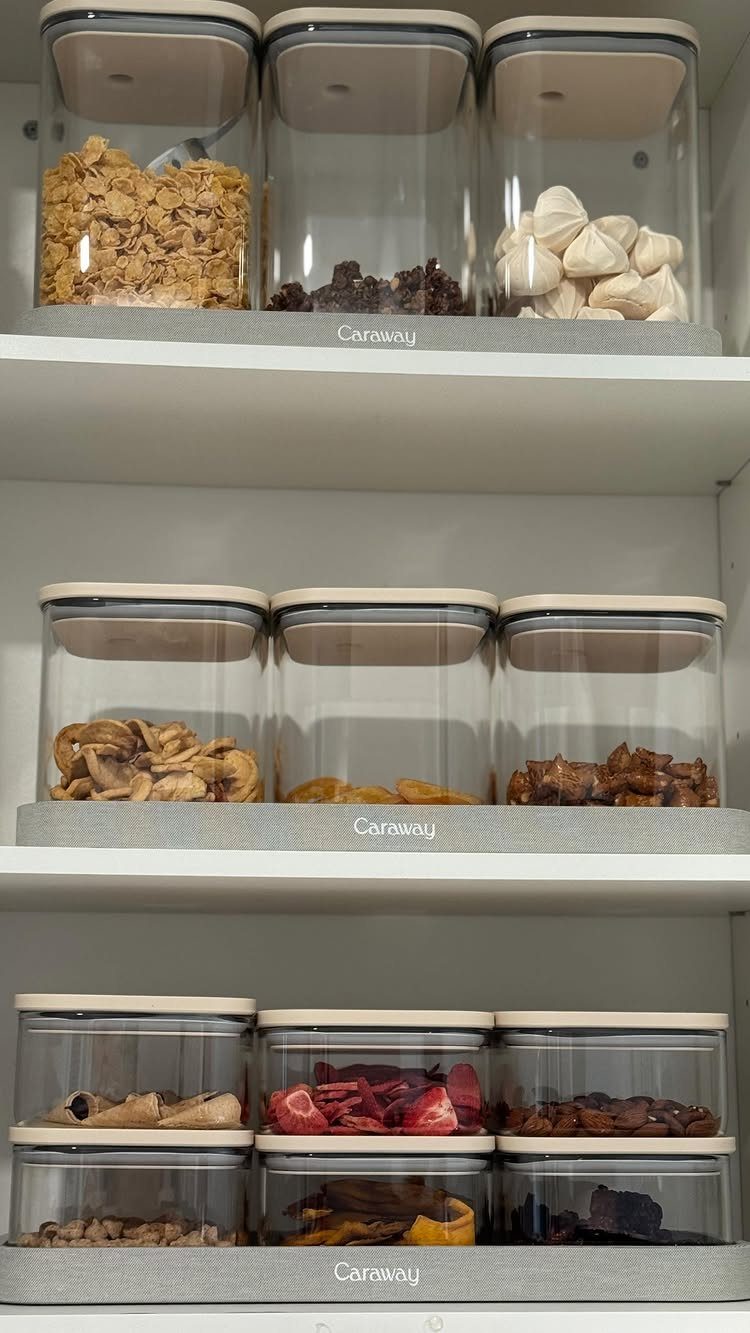
Glass containers with fitted lids solve the leaching problem entirely, and they transition straight from fridge to oven without the warping or staining that ruins plastic over time.
The wooden lids visible here add a pantry-worthy look, though I find they need more care than snap-on plastic to keep their seal tight.
For anyone building a set from scratch, I would start with two or three sizes that nest and share one lid type.
Glass lets you see what you have without opening anything, which is the real win for keeping shelves organized. I would skip the decorative labels and use masking tape instead; it peels clean and costs next to nothing.

DIAMOND BOND HYBRID TECHNOLOGY: Our proprietary technology fuses tri-ply stainless steel with a laser-etched, diamond-textured surface and a PFAS-free ceramic nonstick coating. This combination delivers 10X more durability, 6X faster heat response, and 4X longer-lasting nonstick.

17 PIECE SET: Includes 5.5” Mini Egg Pan, 8” and 11” Frying Pans, 10” Frying Pan with Lid, 1QT and 2QT Saucepans with Lids, 2.8QT Sauté Pan with Lid, 11” Square Griddle, 5.15QT and 8QT Stockpots with Lids, Stainless Steel Steamer

BOBBY FLAY x GREENPAN: Legendary chef Bobby Flay partnered with GreenPan to create innovative cookware that brings pro cooking to any home
3. Cast Iron Cookware
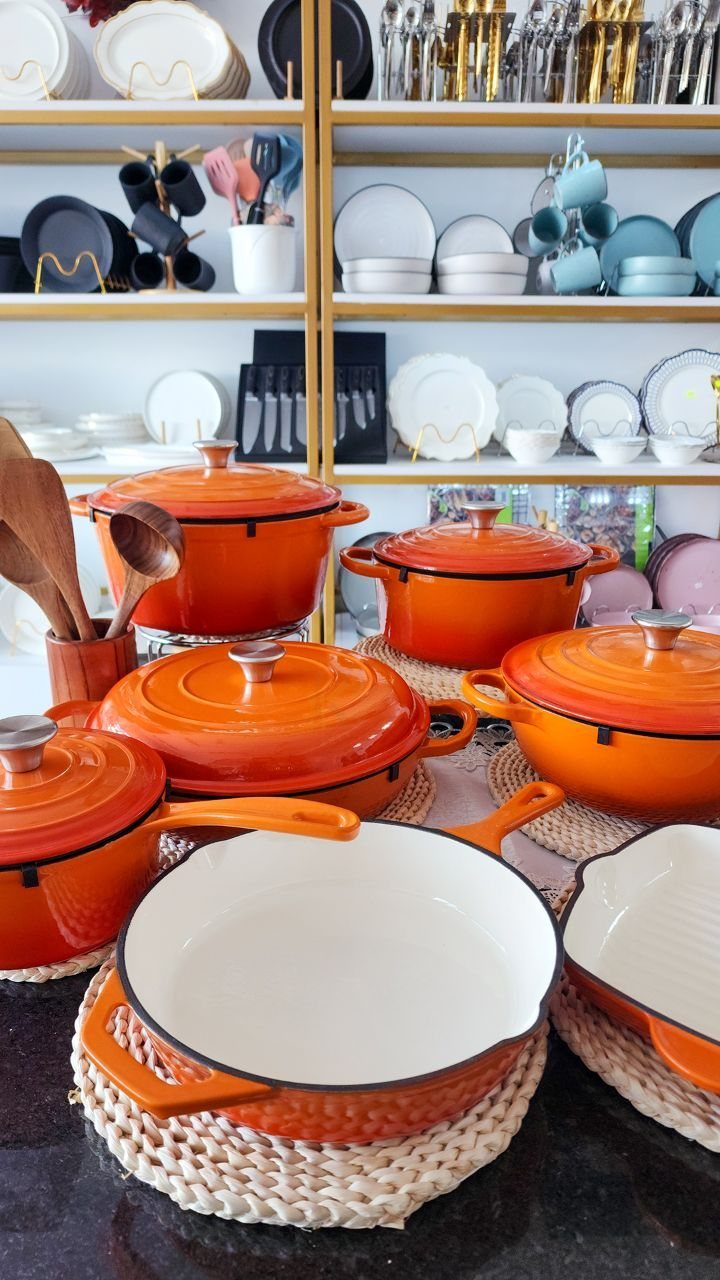
Enameled cast iron is the one pot I would keep if I had to give up everything else.
The enamel coating eliminates the seasoning maintenance that scares people away from bare cast iron, and it handles acidic sauces without pulling iron into the flavor.
The orange finish is a style choice, not a function one; I would pick a color I could live with, because cast iron does not wear out.
The woven trivets underneath matter more than they look. Enameled cast iron stays hot for a long time, and a trivet saves your counter from scorch marks I have seen permanently damage laminate.
Weight is the real tradeoff. A filled Dutch oven gets heavy fast, so I would think twice before assigning it to a high shelf or a wall-mounted pot rack.

LEAK-PROOF AND AIRTIGHT: Rubbermaid Brilliance Glass Food Storage Containers have crystal-clear lids that are 100% airtight and leak-proof, plus odor and stain resistant

LEAK-PROOF AND AIRTIGHT: Rubbermaid Brilliance Glass Food Storage Containers have crystal-clear lids that are 100% airtight and leak-proof, plus odor and stain resistant

【10-Pack Value Combo】 This value package includes 5 large 36 oz containers and 5 small 12 oz containers with matching lids. It is the perfect choice for your daily meal preparation, batch cooking, and kitchen leftovers organization.
4. Silicone Kitchen Utensils
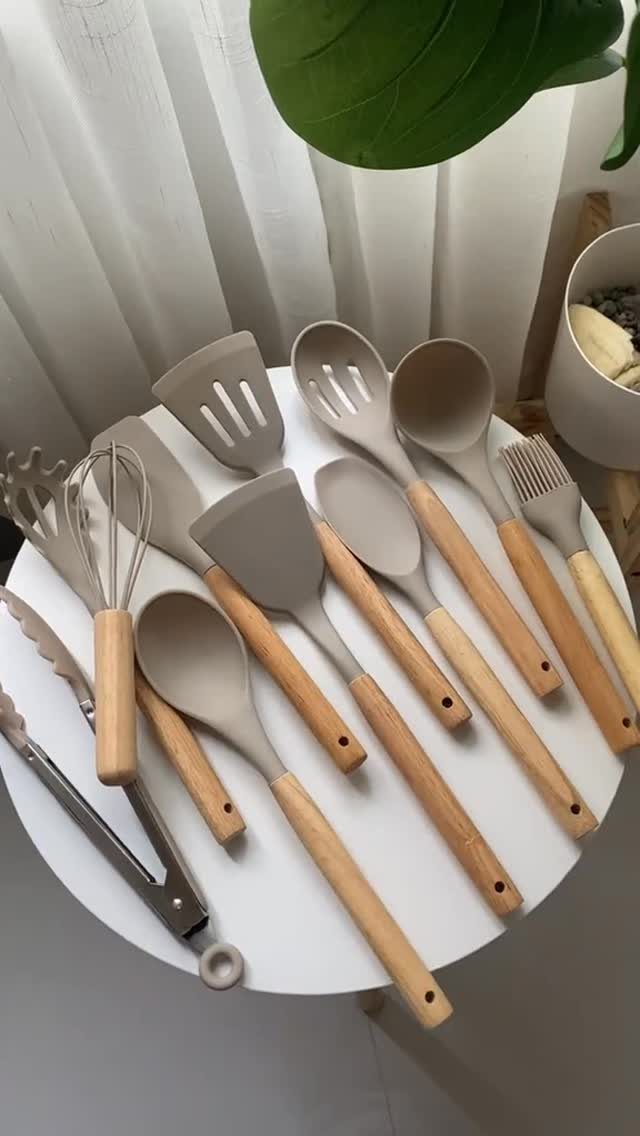
Silicone utensils let you scrape and stir without scratching the ceramic or enameled surfaces you just paid for.
Silicone heads with wood handles are what I prefer to all-silicone designs; the wood stays cooler in your hand and gives the tool some balance.
I would check the temperature rating before buying cheap sets. Food-grade silicone should handle high heat, but not every manufacturer hits the same mark, and a melted utensil ruins a pan and a dinner at once.
The beige and grey tones here are easy to match, though I would worry about staining with lighter colors if I cook with turmeric or tomato sauce regularly.

Quality Enameled Dutch Oven: The Lodge Essential Enamel Cast Iron Dutch Oven gives you all the benefits of cast iron cooking, great heat retention and durability, without fear of rust; it's also PFAS free

Quality Enameled Dutch Oven: The Lodge Essential Enamel Cast Iron Dutch Oven gives you all the benefits of cast iron cooking, great heat retention and durability, without fear of rust; it's also PFAS free

IDEAL FOR FAMILY MEALS - Perfectly sized for families of 3–5 people, this 5.5QT Dutch oven handles everything from hearty soups and stews to one-pot dinners, pasta dishes, and Sunday pot roasts. Spacious enough for a whole chicken yet practical for everyday cooking, it delivers the ideal balance between daily family meals and weekend entertaining. Also well-sized for artisan bread bakers who want one pot for both family dinners and sourdough baking.
5. Air Fryer
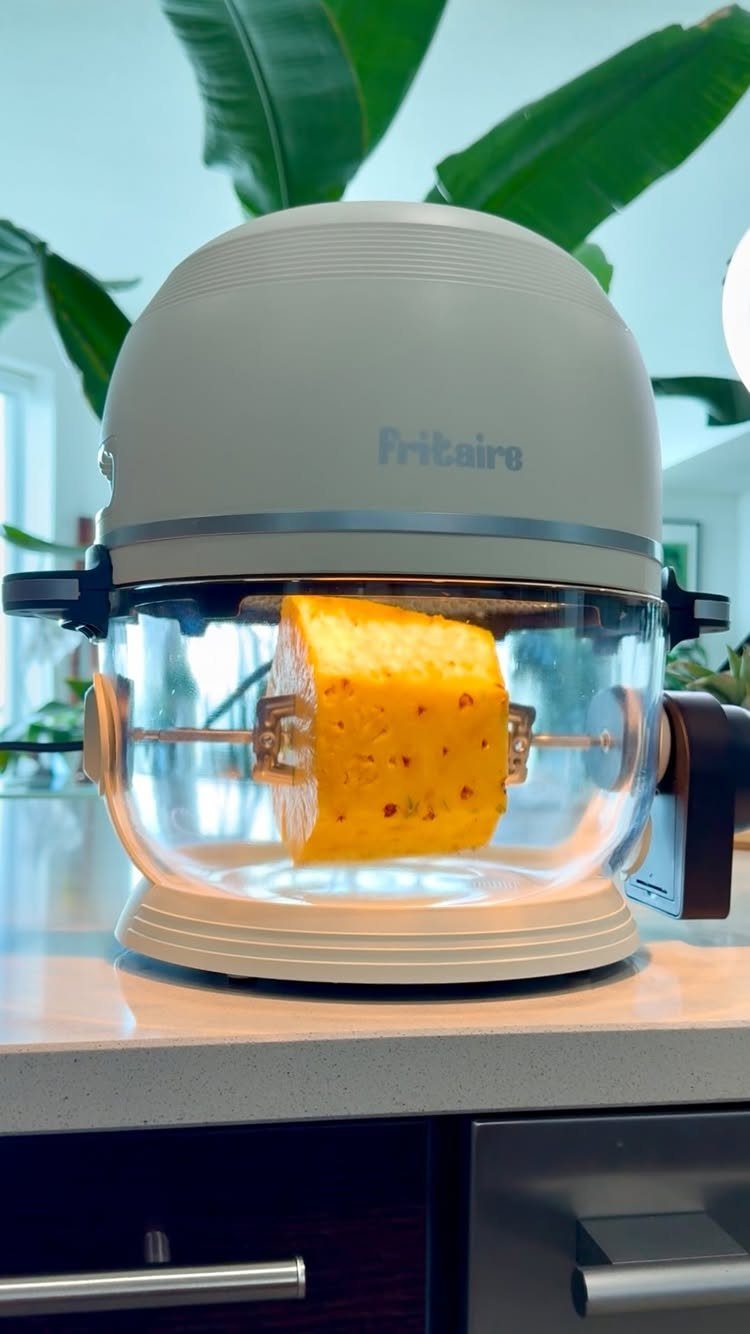
A glass-bowl air fryer lets you watch the food without opening the drawer and losing heat, which matters more than I expected once I started using one.
The rotisserie function visible here is a real addition; most basket-style air fryers cannot turn a pineapple or a small chicken evenly.
I would measure my counter depth before ordering. The glass bowl makes this unit wider front-to-back than it looks, and an air fryer that blocks the cabinet above it becomes annoying fast.
For the price of a rotisserie model, I would also compare whether a small convection oven does more of what I already need. The air fryer wins on speed and crisping, but the oven wins on capacity and versatility.
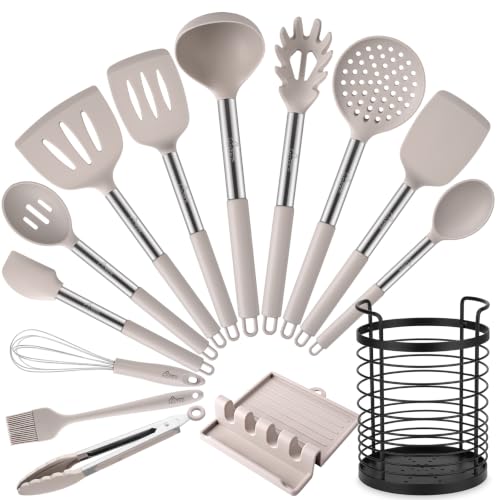
HIGH QUALITY MATERIALS: Made of food grade silicone with non-rust stainless steel, BPA Free, and sturdy construction. Unlike nylon or wooden materials that break easily, this utensils set is built to last long

【Food Grade Silicone】Our silicone cooking utensils set uses food-grade silicone, BPA free, safety and healthy, you can use the utensils set to cook any type of food. Washing the silicone part in time after cooking will not leave odors or stains.

✅ SAFE FOR NON-STICK COOKWARE: Soft silicone heads will not scratch, gouge, or peel your non-stick pans. Stir, scrape, fold, and toss without leaving marks. The full set is BPA-free, food-grade silicone with no seams or cracks, so cleanup is fast and nothing gets trapped where food can sit.
6. Beeswax Wraps

Beeswax wraps replace plastic cling film for covering bowls and wrapping solid foods, and they last about a year with regular use before the wax coating thins too much.
The shaped sandwich pouch works better than flat sheets for packed lunches; it actually stays folded.
I would not use beeswax wraps for raw meat or anything that needs a tight seal for days, because they are porous and they breathe.
Warm hands soften the wax enough to mold the wrap, so cold kitchens make them harder to shape.
For the cost of a starter set, I would also buy a few sizes rather than one large one cut down; the edges fray and the wax flakes faster on cut wraps.

HEALTHY CERAMIC SKILLET - Made of natural ceramic coating, free of intentionally added PFOA, PTFE, PFAS, lead and cadmium, safe and healthy. No toxic substances will be produced even overheated. No coating to come off into your food.

TOXIC-FREE CERAMIC NONSTICK COATING: Free of intentionally added PFAS, PTFE, PFOA, PFOS, APEO, lead, cadmium and other toxic substances that can leach into food. Ultra non-stick coating allows food to slide off effortlessly for healthier cooking every day.

StickProofX Ceramic Coating (3X Longer Nonstick):Inspired by nature’s lotus-leaf effect, this advanced ceramic surface forms a protective layer that locks in nonstick power—lasting 3x longer for effortless, oil-light cooking
7. Reusable Straws

Glass straws with butterfly charms are decorative enough that someone might actually use them instead of grabbing plastic by habit.
I would check the inner diameter before buying; too narrow and smoothies clog, too wide and they feel clumsy for everyday drinks.
Glass breaks, so I would keep one or two in a cup by the sink rather than tossing them loose in a drawer.
For households with kids or tile floors, stainless steel or silicone might survive better, though neither looks like this.

NON-TOXIC & EASY TO CLEAN: Carote Ceramic Cookware Set without PTFE, PFOA, PFAS, lead, or cadmium. Its slick, nonstick surface prevents sticking for easy wipe-and-go cleaning.
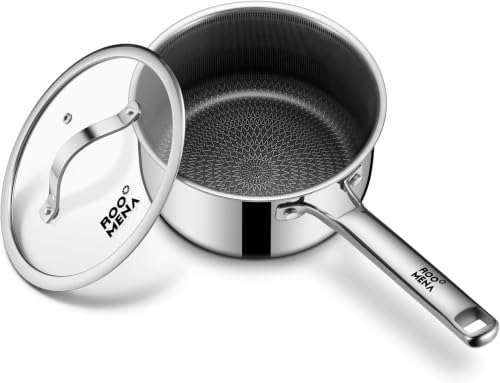
[Advanced Ceramic Nonstick Interior] Featuring a premium ceramic coating, this sauce pan provides seamless food release and straightforward cleaning. Its resilient surface maintains performance over time, supporting the use of various utensils for daily cooking tasks.

OXO HYBRID NON-STICK STAINLESS STEEL: This versatile collection features diamond-infused PFAS-free nonstick, tri-ply stainless steel for fast, even heating, and raised etched patterns for flawless browning and searing. Oven safe, induction compatible, dishwasher safe, and metal utensil friendly, each piece is designed with smart details for effortless cooking and cleanup.
8. Natural Dish Brushes and Soap
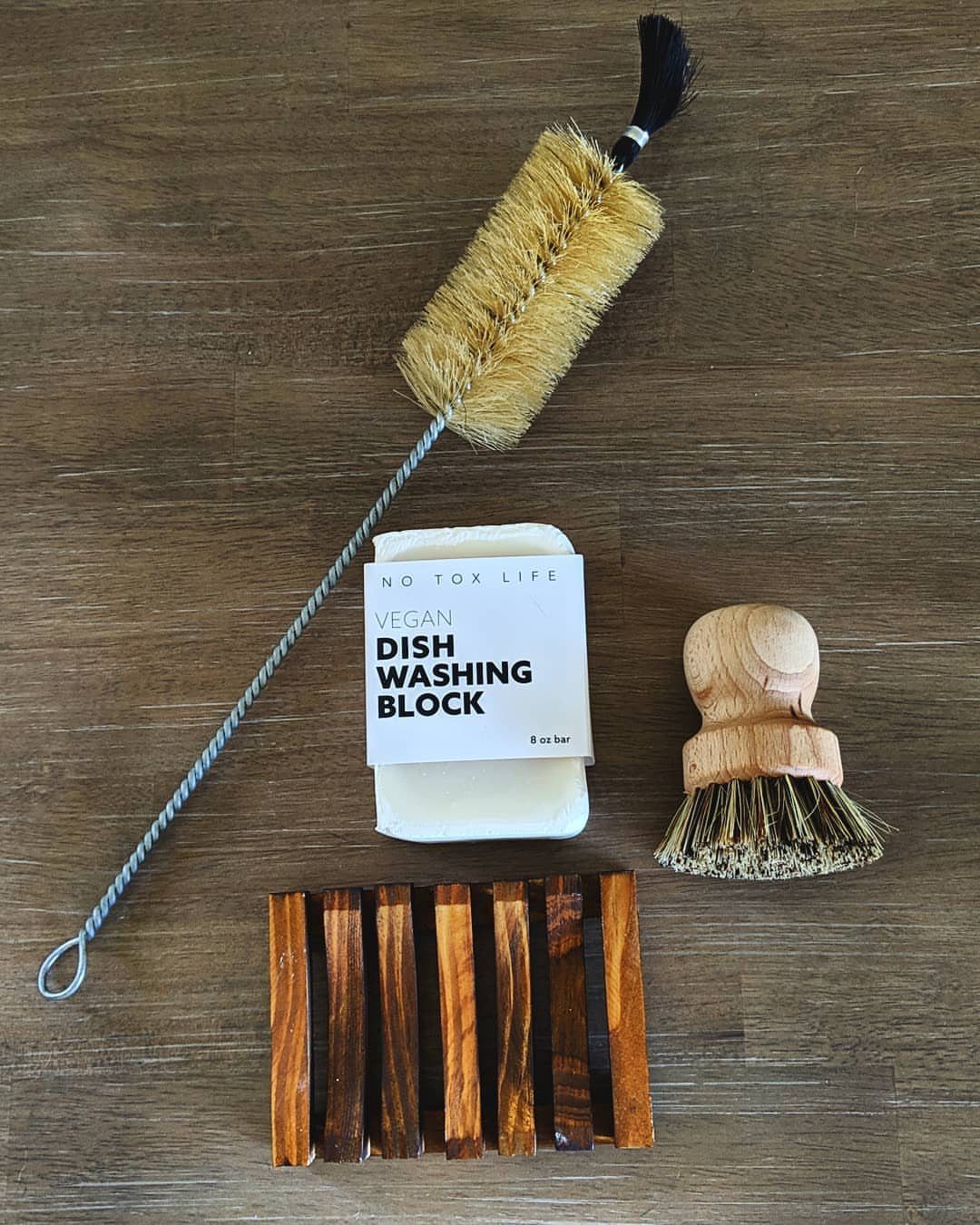
A solid dish block and wooden brush pair cut out the petroleum-based surfactants and plastic bottles that standard dish soap comes in.
The block lasts longer than liquid ounce for ounce, though it needs a slatted dish to dry between uses or it turns soft and wastes fast.
I would test whether the bristles feel stiff enough for my usual messes; natural fibers vary, and some coconut-based ones soften quickly in hot water. The wire bottle brush handles narrow-necked jars better than any sponge.

【Large Family Size Glass Containers - 4 Pack 63oz】This glass food storage containers set (63oz / 1860ml each) is ideal for family meal prep, baking for lunch, storing roasted chicken, pasta, leftovers and more. The containers feature a wide opening for easy scooping or pouring.

PREMIUM, FOOD-GRADE MATERIALS: Crafted from durable borosilicate glass, this larger-capacity bowl is wrapped in the highest quality protective silicone while the screw-top lid prevents leaks and spills; Dimensions: 4.33” x 4.45”, Capacity: 24 oz.

【Meal Prep Glass Containers - 5 Pack 35oz】Ideal for family meals, hearty portions, or long-day fuel, these large 35oz containers effortlessly store casseroles, grilled meats, pasta dishes, and layered salads. Perfect for meal prep enthusiasts, outdoor gatherings, or storing bulk ingredients while maintaining organized portioning.
9. Silicone Dish Cleaning Pads
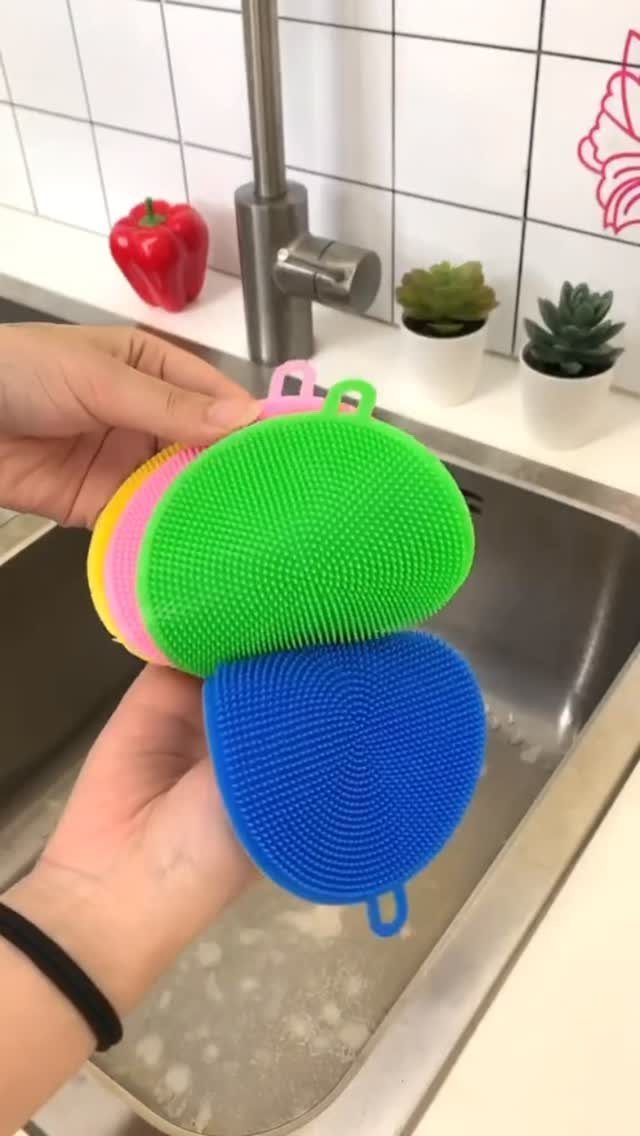
Textured silicone pads scrub without holding food smells the way sponges do, and they go through the dishwasher flat instead of breeding bacteria in a damp caddy.
The bright colors here are easy to assign by task; I would pick one for dishes, one for produce, and stop cross-contamination without thinking.
Heat resistance matters less here than with utensils, though I would still check that the silicone is food-grade and not industrial scrap. The texture on these flattens eventually with daily use, which is your signal to replace it.

Quality Enameled Dutch Oven: The Lodge Essential Enamel Cast Iron Dutch Oven gives you all the benefits of cast iron cooking, great heat retention and durability, without fear of rust; it's also PFAS free

Quality Enameled Dutch Oven: The Lodge Essential Enamel Cast Iron Dutch Oven gives you all the benefits of cast iron cooking, great heat retention and durability, without fear of rust; it's also PFAS free

IDEAL FOR FAMILY MEALS - Perfectly sized for families of 3–5 people, this 5.5QT Dutch oven handles everything from hearty soups and stews to one-pot dinners, pasta dishes, and Sunday pot roasts. Spacious enough for a whole chicken yet practical for everyday cooking, it delivers the ideal balance between daily family meals and weekend entertaining. Also well-sized for artisan bread bakers who want one pot for both family dinners and sourdough baking.
10. Wooden Kitchen Utensils
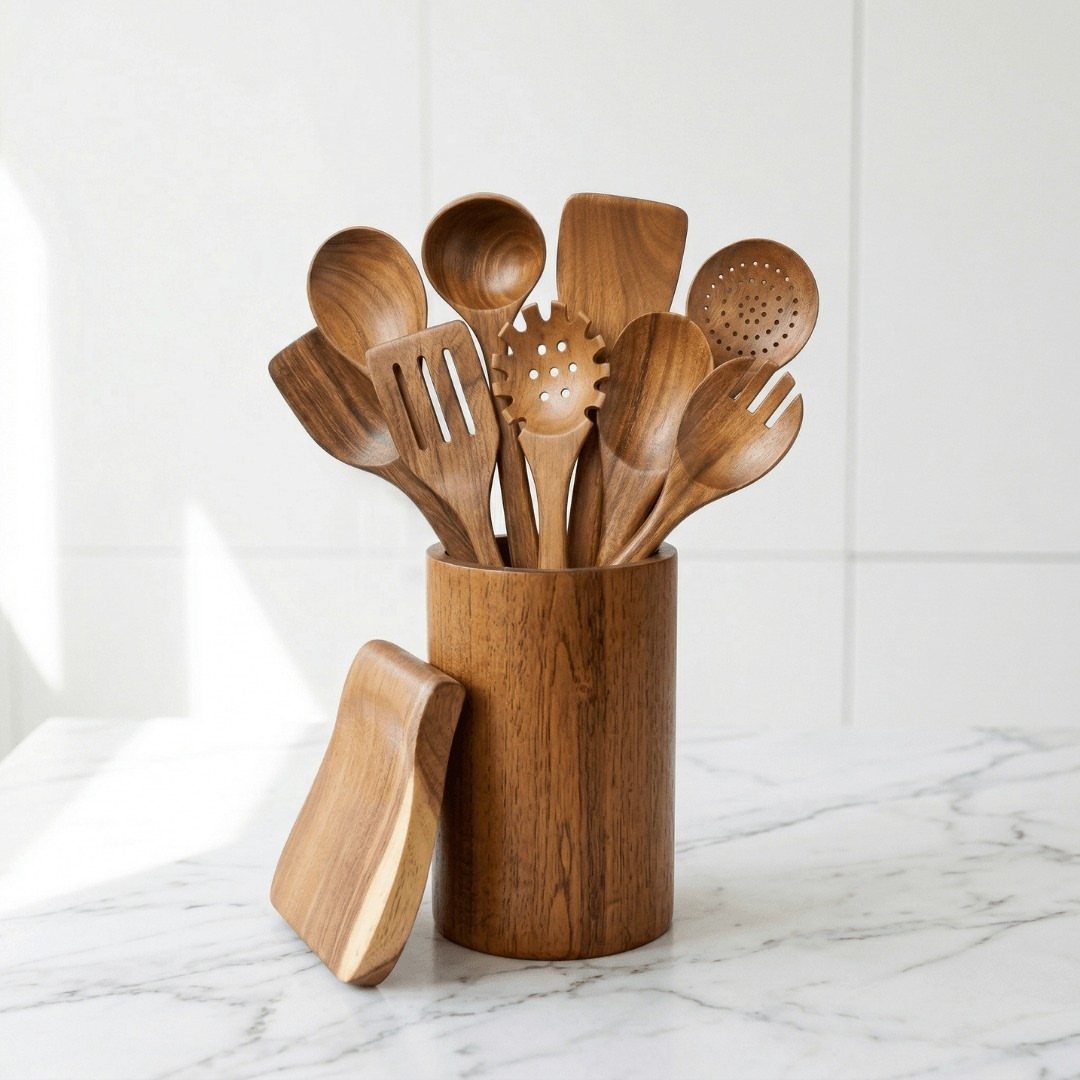
Wooden utensils in a matching canister keep tools visible and counters tidy without the synthetic look of plastic crocks.
I would choose hardwood over softwood; beech and maple resist splitting where pine spoons fray and splinter within a year of stirring thick batters.
The canister needs air circulation or the tools mildew.
A solid cylinder looks cleaner but traps moisture; I would rather see a slight gap at the base or drill a few holes myself. Oiling the wood monthly with food-grade mineral oil prevents the dry cracking that ruins the set.

HIGH QUALITY FOOD GRADE MATERIAL: 100% made of Food Grade Silicone Material. Non-toxic, lead free, odorless. Smooth flexible thin edges ensure no scratches and no damage for your pots and pans

[14-Piece Silicone Kitchen Utensil Set with Holder]: This complete cooking utensils set includes slotted and solid turners, spoons, spatulas, a spaghetti server, skimmer, and storage holder. Designed for stirring, mixing, flipping, serving, baking, and meal preparation, it provides the essential kitchen tools needed for everyday cooking

33 COOKING UTENSILS - Utensil Set includes everything you need to cook that perfect dish,includes Slotted Spatula ,Slotted Spoon,Flexible Spatula,Slotted Turner, Solid Turner, Pasta Server,Solid Spoon, Kitchen Tongs, Draining Spoon, Whisk ,Deep Soup Ladle,Spatulas,Brush,Peeler,Pizza Cutter,Bottle Opener,Potato,Pusher,Ice-cream spoon,Can opener,Grater,Scissors,measuring cups and spoons set,Small Brush,,Small spatula,Spatula,Holder
Avoiding Toxic Materials
PFAS, PFOA, and PTFE are the coatings I would avoid first. They persist in the environment and raise real health concerns, especially under high heat where a damaged surface releases more than you want near your food.
Ceramic coating and stainless steel are my go-to replacements.
Cast iron, enameled surfaces, and glass round out the set. I would skip unlined aluminum entirely; it reacts with acidic foods and offers no barrier against migration into what you are cooking.
Poorly regulated imports sometimes carry heavy metal contamination, so I would buy from brands that state their materials plainly.
Stainless steel costs more upfront but outlasts every coating. For anyone keeping score, that matters more than the sticker price.
Maintaining Non-Toxic Cookware
Hand washing extends the life of any coated pan. A dishwasher cycle beats ceramic faster than a year of normal cooking.
Metal utensils are what I would ban from the drawer entirely.
Sharp edges scratch ceramic and nonstick alike, and a compromised coating flakes into food. Wooden or silicone tools cost little and spare the surface.
Bare cast iron needs seasoning maintenance, which is why I lean toward enameled for most clients.
Transitioning to Non-Toxic Products
I would replace cookware first, then food storage, then utensils. The items touching heat and food directly matter most, and the rest can wait.
Every swap adds up. I would not toss functional plastic into landfill just to feel virtuous; use it until it fails, then replace with the safer option.
I replace one thing at a time, starting with whatever touches food most often. A full swap overnight costs too much and burns most people out before the second week.
Frequently Asked Questions
What makes cookware non-toxic?
The coatings I watch for first are PFAS, PTFE, and PFOA; these are the ones non-toxic cookware leaves out entirely.
In their place I specify ceramic, stainless steel, cast iron, enameled finishes, or glass. Unlined aluminum is another material I avoid, since acids in food trigger a reaction that lets metal migrate straight into the meal.
What are the best materials for non-toxic kitchen utensils?
For scraping and stirring without marring ceramic or enamel, I reach for silicone heads fixed to wood handles.
Hardwood beats softwood for spoons and spatulas; beech and maple hold up to thick batters while pine frays and splinters inside a year. Not every silicone set tolerates real heat, so I verify the temperature rating before buying budget options.